
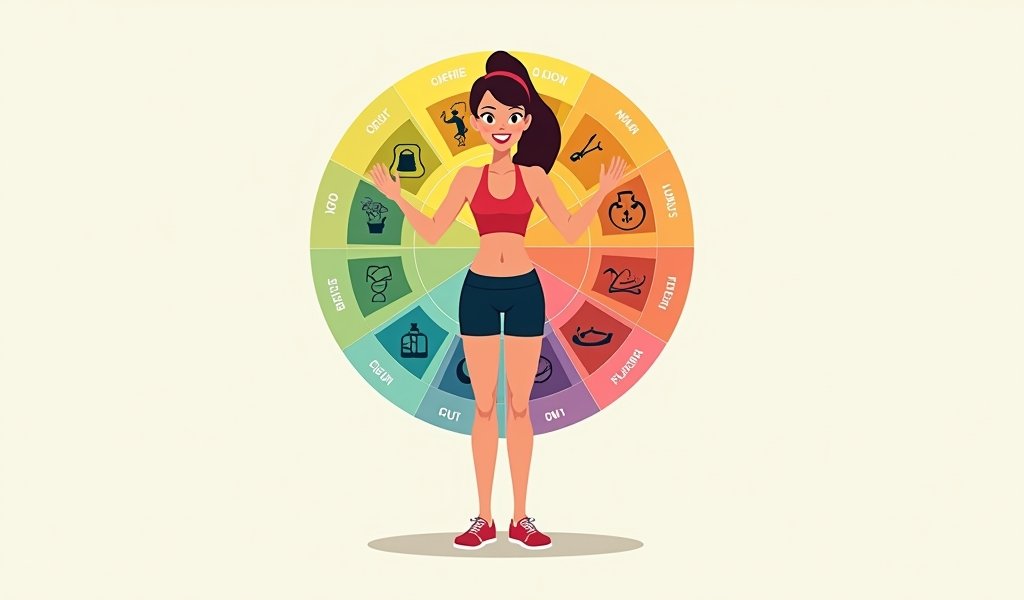
Overview
Like trying to ride a unicycle while juggling flaming torches, achieving wellness requires balance across seven dimensions—physical, emotional, intellectual, social, spiritual, occupational, and environmental. The article presents seven practical “hacks” for improving each area through small, consistent actions like micro-movements, mindful moments, and environmental microshifts that can be easily integrated into daily routines without major lifestyle changes.
Table of Contents
- Understanding the Wellness Wheel: Your Guide to Holistic Health
- The Importance of Balance in Your Wellness Journey
- Hack #1: Micro-Movement Revolution for Physical Wellness
- Hack #2: Emotional Wellness Through Mindful Moments
- Hack #3: Intellectual Stimulation for Mental Sharpness
- Hack #4: Meaningful Connection for Social Wellness
- Hack #5: Spiritual Alignment Through Daily Practices
- Hack #6: Occupational Harmony Techniques
- Hack #7: Environmental Wellness for Lasting Health
- Integrating These Hacks Into Your Daily Life
- Conclusion: Your Path to Wellness Wheel Mastery
- Frequently Asked Questions
Understanding the Wellness Wheel: Your Guide to Holistic Health
The wellness wheel represents a comprehensive approach to health that extends far beyond just physical fitness or nutrition. As a holistic framework, it encompasses multiple dimensions of well-being that work together to create a balanced, fulfilling life. When one aspect of your wellness wheel is neglected, the entire system can feel off-kilter—like a bicycle with an unaligned wheel that makes the whole journey bumpy.
Most wellness wheel models include seven core dimensions: physical, emotional, intellectual, social, spiritual, occupational, and environmental wellness. Each dimension contributes uniquely to your overall health, and together they create a synergistic effect that can significantly enhance your quality of life. The beauty of the wellness wheel lies in its holistic nature—it reminds us that true wellness isn’t just about eating your vegetables or getting enough exercise.
In my years as a health professional, I’ve seen countless patients focus exclusively on diet and exercise while neglecting other crucial aspects of their wellness. They often wonder why they don’t feel fully well despite their rigorous physical regimens. The answer typically lies in the imbalance across their wellness wheel dimensions. True health emerges when all facets receive adequate attention.
The Importance of Balance in Your Wellness Journey
Achieving balance across your wellness wheel isn’t just beneficial—it’s essential for sustainable health. When your wheel is balanced, you experience resilience against life’s challenges, greater energy reserves, and a profound sense of well-being that permeates all aspects of your life. This isn’t just theory; research has repeatedly confirmed that integrated approaches to wellness yield superior outcomes compared to isolated interventions.
In my practice, I’ve observed that wellness imbalance often manifests as mysterious symptoms that conventional medicine struggles to address. Chronic fatigue, persistent low mood, or recurrent minor illnesses can all signal a wellness wheel that needs realignment. Balance doesn’t mean perfect equilibrium at all times—life naturally ebbs and flows. Instead, it represents a dynamic harmony where you’re conscious of all dimensions and actively nurturing each one.
The seven hacks I’m about to share have been proven to create meaningful shifts toward better balance. They don’t require radical life changes or hours of additional time in your day. Instead, they work by strategically targeting each dimension of the wellness wheel with efficient, evidence-based practices that deliver maximum impact with minimum effort. Let’s dive into these game-changing approaches.

Hack #1: Micro-Movement Revolution for Physical Wellness
Physical wellness forms the foundation of your wellness wheel, but contrary to popular belief, you don’t need marathon workouts to cultivate it. The micro-movement revolution offers a refreshing alternative that’s both science-backed and sustainable. This approach focuses on integrating brief movement bursts throughout your day rather than relying solely on dedicated exercise sessions.
The science behind micro-movements is compelling. Research shows that breaking up sedentary time with just 2-5 minutes of movement every hour can significantly improve metabolic health markers and energy levels. These micro-movement sessions help maintain your fitness fundamentals even on your busiest days.
Here’s how to implement this hack effectively:
- Set an hourly reminder to stand up and perform 20 bodyweight squats, 10 desk push-ups, or a minute of stretching
- Take all phone calls standing or walking when possible
- Use the “kitchen counter workout” – do 10 calf raises while waiting for your coffee to brew or water to boil
- Practice “toothbrush squats” – perform gentle squats while brushing your teeth morning and night
These micro-movements maintain muscular engagement, circulation, and joint mobility throughout the day. Combined with proper nutrition focusing on essential nutrients for health, this approach creates sustainable physical wellness without requiring major time commitments or elaborate gym setups.
Hack #2: Emotional Wellness Through Mindful Moments
Emotional wellness doesn’t require hours of therapy or meditation (though both can be valuable). The mindful moments approach recognizes that emotional regulation can be cultivated through brief, intentional practices integrated throughout your day. These practices help you develop emotional intelligence and resilience incrementally.
The effectiveness of this approach stems from neuroscience. Each mindful moment activates your parasympathetic nervous system, gradually strengthening your brain’s emotional regulation pathways. Over time, this creates greater emotional stability and responsiveness rather than reactivity.
Try these simple implementations:
- Practice the “3-3-3 technique” when feeling stressed: name three things you see, three things you hear, and move three parts of your body
- Create emotion check-in prompts tied to regular activities (like waiting at traffic lights or washing hands)
- Use the “RAIN” method for difficult emotions: Recognize, Allow, Investigate, Nurture
- Implement a one-minute breathing practice before meals to transition mindfully
These practices help regulate your emotional landscape without demanding significant time. According to Harvard Medical School researchers, even brief mindfulness practices can measurably reduce stress hormones and improve emotional regulation when practiced consistently.
Hack #3: Intellectual Stimulation for Mental Sharpness
Intellectual wellness often gets overlooked in conventional health discussions, yet cognitive stimulation is crucial for long-term brain health and satisfaction. The key is creating “learning microhabits” that challenge your brain in novel ways without overwhelming your schedule.
Neuroscience has demonstrated that intellectual novelty—exposure to new ideas, skills, or knowledge—stimulates neuroplasticity and builds cognitive reserve. This mental flexibility becomes increasingly important as we age, acting as a protective factor against cognitive decline.
Implement these accessible intellectual wellness practices:
- Adopt the “article a day” habit – read one thought-provoking article with your morning coffee
- Practice the “skill-stacking” approach – learn skills that build on each other rather than disconnected ones
- Use “commute learning” with audiobooks or educational podcasts during travel time
- Implement the “curiosity conversation” – ask one person each day something you genuinely want to learn about them
These practices stimulate cognitive function without requiring formal education or classes. Learning about nutrition science basics can be both intellectually stimulating and practically useful for your wellness journey. The intellectual dimension thrives on curiosity and mental flexibility rather than rote accumulation of facts.
Hack #4: Meaningful Connection for Social Wellness
Social wellness doesn’t require an extensive social calendar or large friend groups. Instead, it thrives on meaningful connection—the quality of your interactions rather than their quantity. The “connection multiplier” approach focuses on enhancing the depth and authenticity of your existing relationships rather than expanding your social network.
Research in social neuroscience confirms that deep social connections significantly impact health outcomes, with some studies suggesting their influence rivals that of smoking cessation or physical activity. Even brief but meaningful social interactions can trigger positive hormonal cascades that benefit your entire physiological system.
Try these social wellness multipliers:
- Practice “device-free dialogue” – establish regular times when phones are put away during conversations
- Use the “appreciation expression” habit – share one specific thing you appreciate about someone daily
- Implement “story circles” – gather friends or family periodically to share personal stories around a theme
- Try “parallel activity bonding” – do activities alongside loved ones rather than always facing each other in conversation
These approaches enhance connection without requiring extroversion or elaborate social planning. According to Mayo Clinic experts, even small improvements in social connection quality can significantly enhance mental and physical health outcomes.

Hack #5: Spiritual Alignment Through Daily Practices
Spiritual wellness doesn’t necessarily involve organized religion—though it certainly can. At its core, spiritual wellness involves connecting with something larger than yourself and finding meaning in your existence. The “micro-transcendence” approach offers accessible entry points to spiritual practice without requiring major lifestyle changes.
Spiritual wellness has been linked to improved health outcomes, greater resilience, and enhanced well-being. Even brief spiritual practices activate brain regions associated with compassion, gratitude, and perspective-taking—all beneficial for mental health.
Consider these accessible spiritual wellness practices:
- Implement the “threshold gratitude” practice – express thankfulness when crossing doorways into new spaces
- Try “values-based decision making” – consciously check major choices against your core values
- Practice “nature immersion moments” – take 30 seconds to fully absorb natural beauty when you encounter it
- Use “purpose reminders” – create visual cues that remind you of your deeper purpose in life
These practices cultivate spiritual wellness without requiring religious affiliation or lengthy meditation retreats. According to research published in the Journal of Religion and Health, even secular spiritual practices can significantly improve mental health outcomes when practiced consistently.
Hack #6: Occupational Harmony Techniques
Occupational wellness extends beyond just job satisfaction—it encompasses the sense of purpose, engagement, and balance you find in your work life. The “work alignment” approach focuses on bringing greater intentionality to how you structure and experience your professional activities, regardless of your current job situation.
Occupational wellness significantly impacts your overall health, as most adults spend a substantial portion of their waking hours working. Research shows that even small improvements in work engagement and meaning can reduce stress hormones and improve immunity.
Try these occupational wellness enhancers:
- Implement “skill-joy mapping” – identify which work tasks energize you and strategically expand these areas
- Practice “boundary rituals” – create clear transitions between work and personal time
- Use the “contribution journal” – briefly note how your work positively impacted others each day
- Try “micro-learning integration” – spend 10 minutes weekly learning something that makes your work more engaging
These approaches enhance occupational wellness without requiring a career change or major professional overhaul. They focus on bringing greater consciousness and intention to your existing work situation while gradually moving toward greater alignment with your strengths and values.
Hack #7: Environmental Wellness for Lasting Health
Environmental wellness encompasses both your immediate surroundings and your broader relationship with the natural world. The “environmental microshift” approach focuses on making small but significant changes to your living and working environments that support your overall wellness goals.
Our physical environments profoundly influence our behaviors, emotions, and physiological responses—often below our conscious awareness. Research in environmental psychology shows that even minor environmental adjustments can significantly impact stress levels, sleep quality, and health behaviors.
Try these environmental wellness enhancers:
- Create “wellness zones” in your home dedicated to specific aspects of health (relaxation corner, movement space)
- Implement “nature proximity” by adding plants, natural materials, or nature imagery to spaces where you spend time
- Practice “clutter clearing rituals” – spend 5 minutes daily addressing one small area of disorganization
- Use “light hygiene” techniques – optimize your exposure to natural light during the day and reduce blue light at night
These approaches enhance your environmental wellness without requiring relocation or expensive renovations. According to research from the American Psychological Association, even modest environmental improvements can significantly reduce stress and improve cognitive function.
Integrating These Hacks Into Your Daily Life
The true power of these wellness wheel hacks emerges when they’re thoughtfully integrated into your daily routine rather than approached as separate initiatives. The “wellness integration” approach focuses on creating natural connections between different dimensions rather than compartmentalizing your health practices.
Start by identifying natural connection points in your current routine. For example, your morning routine might combine physical wellness (stretching), emotional wellness (gratitude practice), and environmental wellness (exposure to natural light). These combined approaches create a multiplicative rather than merely additive effect.
Consider these integration strategies:
- Use “habit stacking” – attach new wellness practices to existing habits you already perform consistently
- Create “wellness themes” for different days of the week, focusing more deeply on specific dimensions
- Implement “transition wellness” – use the transitions between activities as opportunities for brief wellness practices
- Practice “social wellness multipliers” by engaging in physical, intellectual, or spiritual activities with others
The goal isn’t perfection across all dimensions simultaneously—that’s neither realistic nor necessary. Instead, aim for conscious attention to each aspect of your wellness wheel over time, with a flexible approach that responds to your changing needs and circumstances.
Conclusion: Your Path to Wellness Wheel Mastery
The wellness wheel offers a powerful framework for understanding and enhancing your overall health. By implementing these seven proven hacks—micro-movements for physical wellness, mindful moments for emotional balance, learning microhabits for intellectual stimulation, connection multipliers for social wellness, micro-transcendence for spiritual alignment, work alignment for occupational wellness, and environmental microshifts—you can create meaningful improvements across all dimensions of your well-being.
Remember that wellness wheel balance isn’t a destination but an ongoing journey. Some dimensions may need more attention at certain times in your life, and that’s perfectly normal. The key is maintaining awareness of all aspects and making conscious choices that support your holistic health.
Start small with just one or two practices that resonate most strongly with you. As these become habitual, gradually expand your wellness practices across other dimensions. The compound effect of these small, consistent actions will create significant positive change over time. Your wellness wheel journey is uniquely yours—honor your individual needs and celebrate your progress along the way.
Frequently Asked Questions
What exactly is a wellness wheel?
A wellness wheel is a holistic health model that divides well-being into interconnected dimensions, typically including physical, emotional, intellectual, social, spiritual, occupational, and environmental aspects. It provides a framework for understanding and addressing overall health balance.
How often should I assess my wellness wheel?
A monthly review of your wellness wheel is ideal for most people to identify areas needing attention. During major life transitions or challenges, more frequent check-ins can help maintain balance.
Can I focus on just one dimension at a time?
Yes, focusing intensively on one dimension is sometimes beneficial, especially if it’s significantly out of balance. However, completely neglecting other dimensions for extended periods can create new imbalances.
Do all wellness wheel dimensions need equal attention?
Equal attention isn’t necessary—some dimensions may naturally require more or less focus depending on your life circumstances and personal values. The goal is conscious awareness rather than perfect equality.
How long does it take to see results from these wellness wheel hacks?
Minor improvements are often noticeable within 1-2 weeks of consistent practice. More substantial shifts in wellness balance typically emerge after 4-8 weeks of implementing these approaches.
Pingback: 4 Month Old Wake Window: 7 Proven Tips for Better Baby Sleep - achievehealthgoals.com
Pingback: Essential 8 Month Sleep Routine to Supercharge Your Fitness - achievehealthgoals.com
Pingback: Unlock What Is Social Wellness? 5 Proven Fitness Benefits - achievehealthgoals.com
Pingback: Ultimate Comprehensive Wellness Center Review: 7 Benefits - achievehealthgoals.com
Pingback: Ultimate Mind Body Wellness Review: 7 Proven Fitness Hacks - achievehealthgoals.com
Pingback: What Is Spiritual Wellness? 7 Proven Ways to Boost Health - achievehealthgoals.com
Pingback: How to Do a Wellness Check: 7 Proven Steps for Total Health - achievehealthgoals.com
Pingback: Ultimate Social Wellness Definition: 7 Proven Fitness Perks - achievehealthgoals.com
Pingback: Ultimate my wellness & Fitness Guide: 7 Proven Energy Hacks - achievehealthgoals.com
Pingback: Ultimate Wellness Wheel Worksheet: 7 Proven Steps for Health - achievehealthgoals.com
Pingback: 10 Proven First Responder Wellness Hacks for Peak Fitness - achievehealthgoals.com
Pingback: Ultimate Review: Difference Between Health and Wellness - achievehealthgoals.com
Pingback: Which of These Choices Is Not a Cultural Influence on Our Wellness? - achievehealthgoals.com
Pingback: The Ultimate Innovative Wellness Review: Top 5 Fitness Hacks - achievehealthgoals.com
Pingback: 5 Best Wellness Pills Proven to Boost Health & Fitness - achievehealthgoals.com
Pingback: Ultimate Guide: 7 Dimensions of Wellness for Peak Health - achievehealthgoals.com
Pingback: What Are the Eight Areas of Wellness and How Can They Be Incorporated Into One’s Daily Life? - achievehealthgoals.com
Pingback: 7 Proven Wellness Wheel Secrets for Optimal Fitness - achievehealthgoals.com