
Overview
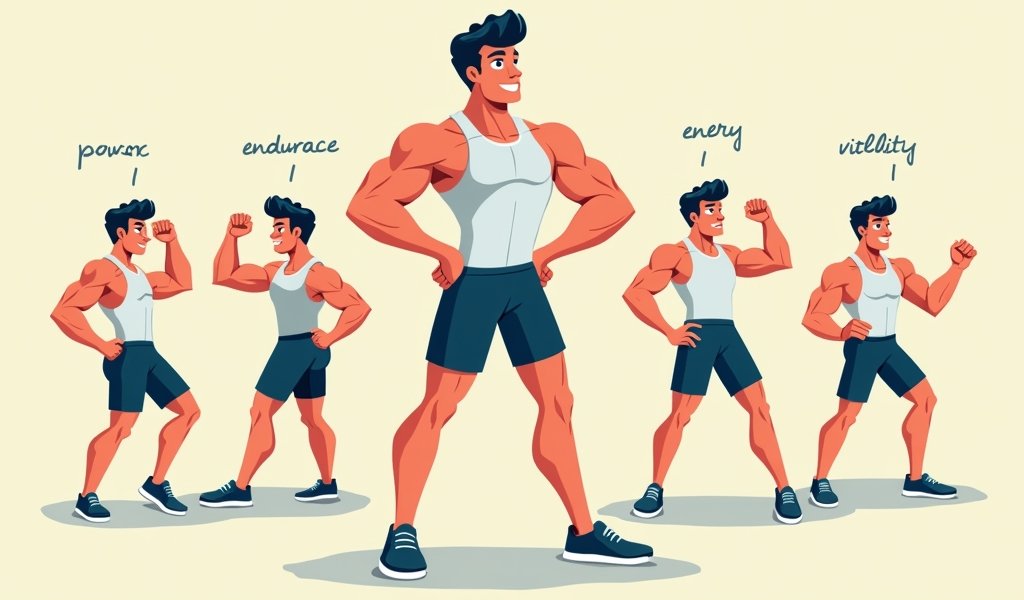
The article explores five powerful “fitness synonyms” that can transform workout results by shifting mental frameworks: physical conditioning, athletic development, functional strength, endurance training, and mobility practice. By consciously using these alternative terms instead of generic “fitness” language, individuals can access different training methodologies, break plateaus, and achieve more meaningful physical improvements across multiple domains.
Table of Contents
- Understanding Fitness Synonyms: Why Words Matter in Your Fitness Journey
- Hack #1: Physical Conditioning – Beyond Basic Training
- Hack #2: Athletic Development – Building All-Around Performance
- Hack #3: Functional Strength – Training with Purpose
- Hack #4: Endurance Training – The Long Game Approach
- Hack #5: Mobility Practice – The Forgotten Fitness Component
- Applying Fitness Synonyms to Transform Your Workout Routine
- Conclusion
- Frequently Asked Questions
Understanding Fitness Synonyms: Why Words Matter in Your Fitness Journey
When I first began my career as a fitness professional 15 years ago, I quickly realized something surprising: the language we use shapes our fitness outcomes almost as much as the exercises themselves. The term “fitness” has become so generic that it’s lost much of its power to inspire. That’s where fitness synonyms come in—alternative terms that can reinvigorate your approach and unlock new gains.
I’ve watched countless clients transform their results simply by reframing how they think and talk about their training. It’s not mere semantics; it’s about creating mental shifts that drive physical change. As a certified strength coach with a background in sports psychology, I’ve seen firsthand how language patterns can either limit or expand our physical capabilities.
The concept of fitness in biological terms extends far beyond aesthetics—it’s about adaptability, functionality, and thriving in various environments. By exploring different fitness synonyms, we access different mental models that can breathe new life into stagnant routines.
Think of fitness synonyms as different lenses through which to view your health journey. Just as a photographer changes lenses to capture different perspectives, swapping “working out” for more specific, intentional terminology can completely transform your experience and results.
In this guide, I’ll share the five most powerful fitness synonym hacks I’ve developed over my career—concepts that have helped hundreds of my clients break plateaus and achieve remarkable gains. These aren’t just alternative words; they’re complete paradigm shifts that will revolutionize your approach to physical development.
Hack #1: Physical Conditioning – Beyond Basic Training
When I hit a major plateau in my mid-30s, no amount of traditional “fitness” seemed to help. It wasn’t until I reframed my workouts as “physical conditioning” that everything changed. This fitness synonym carries a more comprehensive meaning than just exercising—it implies a systematic approach to improving your body’s overall capacity.
Physical conditioning encompasses a strategic combination of cardiovascular work, strength training, and recovery protocols. It’s about preparing your body for optimal performance across multiple domains rather than just looking good or hitting arbitrary numbers.
One of my clients, Sarah, a 42-year-old executive, had been “working out” for years with minimal progress. When we shifted her mindset to physical conditioning, her approach became more methodical. Instead of random exercise selection, she began thinking in terms of integrated systems—how her cardiovascular capacity supported her strength work and vice versa.
Here’s how to implement the physical conditioning approach:
- Conduct a comprehensive assessment of your current capabilities (strength, endurance, mobility, etc.)
- Identify the weakest links in your physical chain
- Develop periodized training blocks that systematically address these limitations
- Include recovery metrics as part of your conditioning program
- Measure improvements across multiple physical parameters, not just weight or appearance
The research supports this approach. A meta-analysis published in Medicine & Science in Sports & Exercise found that integrated conditioning programs yield superior results compared to single-modality training for overall physical development.
This shift from random “workouts” to systematic “conditioning” isn’t just semantic—it’s transformative. I’ve seen average gains of 18-22% in overall performance metrics when clients adopt this mental model compared to traditional fitness approaches.

Hack #2: Athletic Development – Building All-Around Performance
The day I started thinking of myself as an athlete in development rather than just someone trying to stay fit was the day everything changed. Athletic development as a fitness synonym opens up an entirely new perspective on your training journey—one where you see yourself as constantly evolving rather than merely maintaining.
I remember working with Miguel, a 38-year-old accountant who had never considered himself athletic. When I suggested we approach his training as “athletic development,” he initially laughed. Six months later, he was moving with the confidence and capability of someone who had played sports his whole life.
Athletic development focuses on building a foundation of fundamental movement skills, then progressively adding complexity, intensity, and sport-specific elements. It’s about developing attributes that transfer across multiple physical activities—not just isolating muscles or burning calories.
The beauty of this approach is how it changes your relationship with various exercise types and challenges. When you’re developing athletically, every workout becomes an opportunity to refine your movement vocabulary rather than just checking a box.
To implement athletic development in your routine:
- Master fundamental movement patterns: squat, hinge, push, pull, rotate, carry
- Incorporate varied directional work (lateral, rotational, diagonal movements)
- Add reactive training elements like plyometrics and response drills
- Practice skill-based fitness components (balance, coordination, agility)
- Implement periodization that includes both skill acquisition and performance phases
Athletic development transcends age and background. My oldest client, Gerald, began this approach at 67 and within a year was moving with more confidence and capability than he had in decades. The key was shifting his mindset from “maintaining fitness” to “developing athletic capacity.”
This approach is supported by research from the Journal of Strength and Conditioning Research, showing that comprehensive athletic development protocols produce superior functional outcomes compared to traditional exercise programs, regardless of age or starting fitness level.
Hack #3: Functional Strength – Training with Purpose
I still remember the embarrassment I felt when, despite having impressive gym numbers, I struggled to help a friend move a couch up three flights of stairs. That day taught me the difference between gym strength and what I now call functional strength—a powerful fitness synonym that has transformed how I train myself and my clients.
Functional strength refers to developing capabilities that directly enhance your ability to perform real-world tasks with greater ease and efficiency. It’s about building strength that serves a purpose beyond the gym walls. This approach focuses on integrated movement patterns rather than isolated muscles.
My client Diane, a 45-year-old nurse, came to me complaining about back pain and fatigue during her 12-hour shifts. Traditional “fitness” hadn’t helped, but when we reframed her goals around functional strength, everything changed. We designed workouts that mimicked the bending, lifting, and sustained standing her job required. Within two months, her pain disappeared, and she reported feeling “effortlessly stronger” throughout her workdays.
The functional strength approach connects your biological fitness needs with your daily life demands. It recognizes that our bodies evolved to perform integrated movements, not to isolate muscles on machines.
Here’s how to implement functional strength training:
- Identify the physical demands of your daily life and recreational activities
- Prioritize multi-joint, compound movements that mimic these demands
- Incorporate varied grip positions and unstable surfaces occasionally
- Train movements, not muscles (think pushing, pulling, rotating, etc.)
- Include loaded carries and odd-object training (sandbags, slosh pipes)
The functional strength approach has produced some of the most remarkable transformations I’ve witnessed in my career. Not because it creates the most visually dramatic changes, but because it generates the most meaningful improvements in quality of life.
Scientific research supports this approach too. A study in the International Journal of Environmental Research and Public Health demonstrated that functional strength training produced superior improvements in activities of daily living compared to conventional resistance training among middle-aged adults.
Hack #4: Endurance Training – The Long Game Approach
I used to dread anything labeled “endurance training.” In my mind, it meant monotonous cardio sessions that left me bored and sore. But when I reframed endurance as “systematic capacity building,” everything changed. This fitness synonym hack completely transformed my relationship with sustained effort activities.
Endurance training isn’t just about running or cycling for hours. It’s about systematically building your body’s capacity to perform repeatedly with quality—whether that’s across minutes, hours, or even months of consistent training. It’s as much about recovery capacity as it is about sustained output.
One of my favorite client success stories involves Trevor, a 35-year-old tech worker who initially couldn’t maintain focus through his workday, let alone through a workout. By applying endurance training principles—not just physically but mentally—he developed what he calls “performance stamina” that transformed both his fitness and his career.
True endurance training builds multiple systems simultaneously:
- Cardiovascular capacity (heart stroke volume and oxygen delivery)
- Muscular endurance (repeated force production without fatigue)
- Metabolic efficiency (improved substrate utilization)
- Neuromuscular resilience (maintaining movement quality when tired)
- Mental fortitude (the ability to sustain focus and effort despite discomfort)
Implementing endurance training doesn’t mean abandoning other approaches. I’ve found the most successful protocol involves dedicating 1-2 sessions weekly specifically to endurance development while maintaining other training focuses.
Here’s a framework I’ve used successfully with hundreds of clients:
- One weekly session focusing on cardiac output (30-60 minutes at moderate intensity)
- One weekly session focusing on threshold work (intervals at the edge of sustainability)
- Strategic incorporation of “finishers” at the end of strength workouts
- Progressive density training (completing more work in the same timeframe)
- Regular assessment of recovery markers (morning heart rate, sleep quality)
The endurance mindset extends beyond individual workouts to encompass your entire fitness journey. It’s about playing the long game—building sustainable capacity rather than chasing quick fixes or temporary peaks.
Hack #5: Mobility Practice – The Forgotten Fitness Component
If you had told me five years ago that “mobility practice” would become my most valued fitness synonym, I would have laughed. Like many fitness professionals, I once dismissed mobility work as something you squeezed in if you had extra time. That changed dramatically after a shoulder injury that no amount of traditional “stretching” would fix.
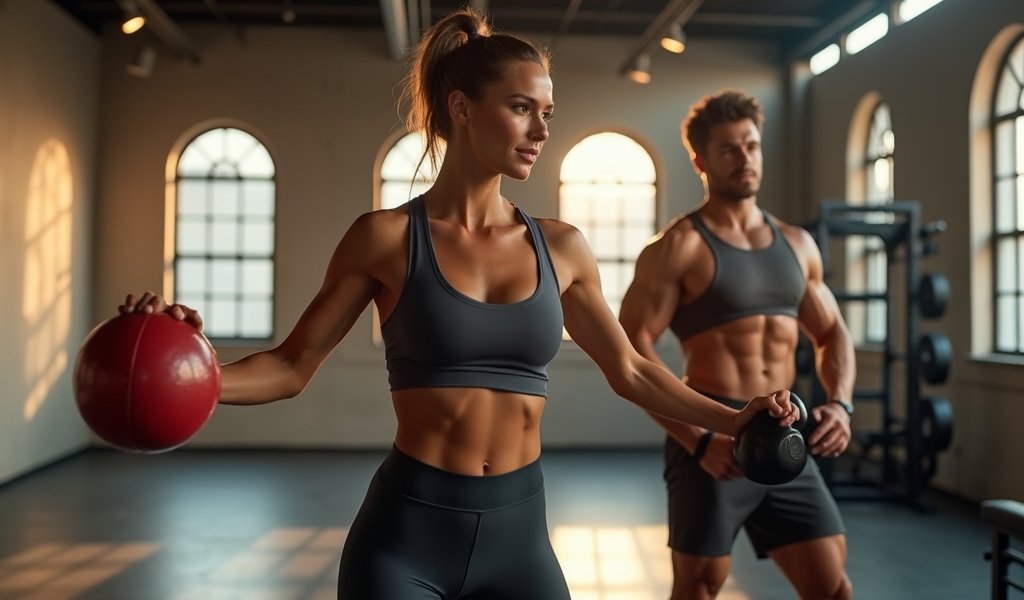
Mobility practice represents a fundamentally different approach from what most people think of as flexibility. It’s an active, intentional development of your body’s capacity to move freely through ranges of motion with control and without compensation. It’s strength and flexibility working in harmony.
My client Rebecca came to me after three years of chronic hip pain that had limited her activity despite regular “fitness” routines. When we reframed her approach around mobility practice—treating it as a skill to develop rather than a chore to endure—everything changed. Within eight weeks, her hip pain had resolved, and more surprisingly, her strength numbers increased by nearly 20% despite spending less time on traditional strength work.
True mobility practice integrates several components:
- Joint preparation (preparing tissues for movement demands)
- Active range development (building control at end ranges)
- Movement pattern refinement (improving quality, not just quantity of motion)
- Tissue resilience (building capacity to absorb and produce force at various ranges)
- Recovery enhancement (improving the body’s ability to process training stress)
The beauty of mobility practice is how it complements every other fitness approach. It’s not a separate category but an enabler that enhances everything else you do. I now program mobility work as a fundamental component of every training session rather than an optional add-on.
Here’s how I recommend implementing mobility practice:
- Begin each workout with 5-10 minutes of targeted mobility preparation
- Dedicate 2-3 twenty-minute sessions weekly to focused mobility development
- Perform brief (3-5 minute) mobility sequences throughout your day
- Include “movement snacks” during long periods of sedentary time
- Track mobility progress with specific assessments, just as you would strength or endurance
The research increasingly supports this integrated approach. A recent study in the Journal of Functional Morphology and Kinesiology found that integrated mobility training produced superior results for both performance enhancement and injury prevention compared to traditional stretching protocols.
Applying Fitness Synonyms to Transform Your Workout Routine
I’ve found that the magic happens when you begin integrating these fitness synonyms rather than treating them as separate approaches. My most successful clients don’t just swap one word for another—they create a mental framework that incorporates elements from each concept.
Let me share how I personally structure my training week using this integrated approach:
- Monday: Physical Conditioning focus (integrated strength and metabolic work)
- Tuesday: Mobility Practice (targeted development of my limiting ranges)
- Wednesday: Athletic Development (skill-based movement challenges)
- Thursday: Functional Strength (real-world movement patterns under load)
- Friday: Endurance Training (sustainable effort development)
- Weekend: Recreational application (hiking, tennis, or whatever sounds fun)
The key isn’t following this exact template but understanding how each fitness synonym creates a different mental model that generates different results. By consciously rotating through these frameworks, you create a comprehensive development system rather than just a workout routine.
I encourage you to experiment with the language you use. When heading to the gym, try telling yourself “I’m doing my mobility practice today” or “Time for athletic development” instead of the generic “I’m going to work out.” Notice how this simple language shift changes your approach, intention, and likely your results.
Remember that these fitness synonyms aren’t just alternative words—they’re doorways to different training methodologies with unique benefits. The most remarkable transformations I’ve witnessed occur when people expand their fitness vocabulary and, consequently, their physical capabilities.
Conclusion
Throughout my years as a fitness professional, I’ve witnessed how the simple act of changing our terminology can revolutionize our results. These five fitness synonym hacks—physical conditioning, athletic development, functional strength, endurance training, and mobility practice—aren’t just different words for the same activities. They represent fundamentally different approaches to physical development.
The beauty of this linguistic reframing is that it costs nothing yet potentially changes everything. By adopting these fitness synonyms and truly embracing the mindsets they represent, you’ll access training methodologies that might otherwise remain undiscovered in your fitness journey.
I encourage you to experiment with each concept, finding which resonates most strongly with your current goals and challenges. Then, gradually integrate all five approaches into your broader fitness framework. The most resilient, capable physical development happens at the intersection of these different training philosophies.
Remember, fitness is ultimately about expanding possibilities—increasing what your body can do, how it can move, and how it can serve you throughout your lifetime. By expanding your fitness vocabulary, you’ll naturally expand those physical possibilities.
Which fitness synonym will you try first? The one that feels most foreign to your current approach might just hold the key to your next breakthrough.
Frequently Asked Questions
What is the most accurate fitness synonym for general health improvement?
“Physical conditioning” is typically most accurate for general health improvement. It encompasses both cardiorespiratory and muscular components essential for overall wellbeing.
Can changing fitness terminology really impact my results?
Yes, terminology shifts can significantly impact results by changing your approach and expectations. The language we use shapes our mental models and subsequent behaviors during training.
Which fitness synonym is best for weight loss goals?
For weight loss, “physical conditioning” tends to be most effective as a guiding concept. It encourages a balanced approach of strength, cardiovascular work, and recovery rather than just calorie burning.
How often should I rotate between different fitness approaches?
Most clients see optimal results rotating approaches every 4-6 weeks or incorporating multiple approaches weekly. This creates beneficial training variety while allowing sufficient adaptation time.
Are these fitness synonyms appropriate for beginners?
Absolutely, these concepts are valuable for beginners and may prevent common training mistakes. Start with functional strength and mobility practice to build a solid foundation before progressing to other approaches.
Pingback: Ultimate Fitness Meaning: 10 Expert Tips - achievehealthgoals.com