
Overview
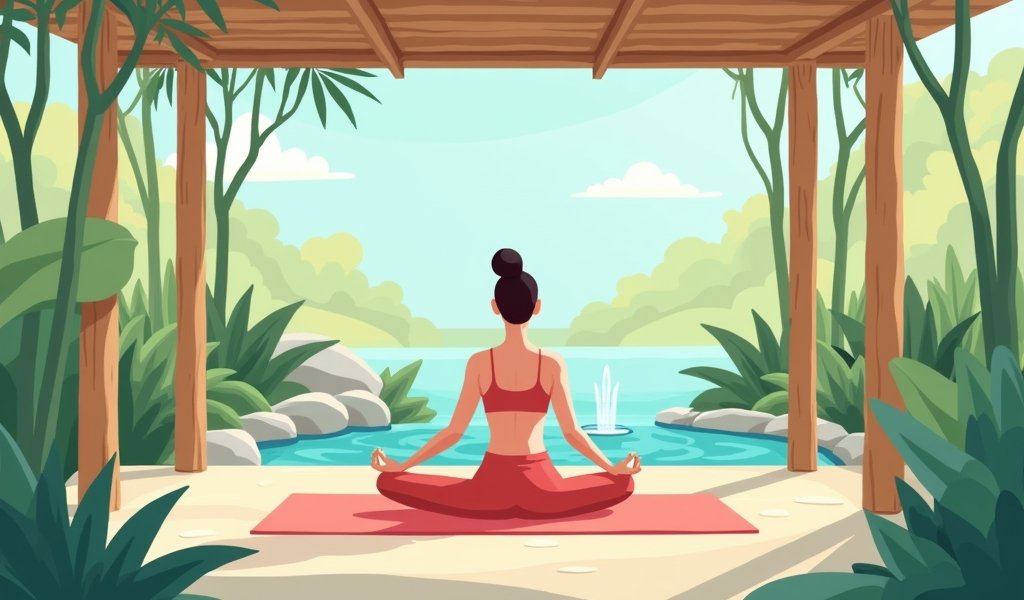
This article offers seven quick stress-relief techniques borrowed from wellness retreats—including breathwork, progressive muscle relaxation, grounding methods, visualization, movement breaks, sound therapy, and pressure point activation—that can be performed anywhere in minutes without booking a flight to Bali (though who wouldn’t prefer that option?). These science-backed “emergency stress extinguishers” help readers create personalized stress-relief toolkits for different situations, emphasizing that while modern stress is inevitable, suffering through it is optional.
Table of Contents
- Introduction
- Understanding Stress and Its Impact
- Hack #1: Breathwork for Instant Calm
- Hack #2: Progressive Muscle Relaxation
- Hack #3: Mindful Grounding Techniques
- Hack #4: Visualization and Guided Imagery
- Hack #5: Strategic Movement Breaks
- Hack #6: Sound Therapy On-the-Go
- Hack #7: Pressure Point Activation
- Creating Your Personal Stress Relief Toolkit
- Conclusion
- Frequently Asked Questions
Introduction
We’ve all been there – racing heart, tightening chest, mind swirling with a thousand thoughts at once. Modern life has become a pressure cooker of deadlines, notifications, and responsibilities that never seem to end. According to recent studies, over 77% of people regularly experience physical symptoms caused by stress. The irony? Just as our need for relaxation increases, our time for self-care shrinks.
But here’s the good news: you don’t need a week-long wellness retreat in Bali to find your calm (though wouldn’t that be nice?). These seven stress-relief hacks can be your pocket-sized sanctuary, available whenever and wherever you need them. Think of them as your emergency stress extinguishers – small but mighty tools that can help you breathe easier in minutes.
Understanding Stress and Its Impact
Stress isn’t just an uncomfortable feeling – it’s a full-body experience. When stress hits, your body floods with cortisol and adrenaline, your muscles tense, your breathing shallows, and your digestive system practically goes on strike. It’s your body’s ancient alarm system, designed for running from predators – not dealing with passive-aggressive emails or traffic jams.
How do you know when you need immediate stress relief? Your body sends clear signals: headaches that feel like tiny construction workers hammering at your temples, shoulders so tense they’re practically touching your ears, irritability that makes a grumpy cat look cheerful, or a mind that races faster than a caffeinated squirrel.
Taking just 5-10 minutes for quick stress-relief practices can lower blood pressure, reduce muscle tension, improve concentration, and even boost your immune system. These micro-breaks aren’t luxuries – they’re essential maintenance for your mental and physical machinery, as Harvard Health researchers confirm.

Hack #1: Breathwork for Instant Calm
The simplest tool for stress relief is literally right under your nose. Breathwork is like a remote control for your nervous system, switching it from “freak out” to “chill out” mode with remarkable speed.
The 4-7-8 breathing technique, developed by Dr. Andrew Weil, works like magic for many people. Here’s how: Inhale quietly through your nose for 4 counts, hold your breath for 7 counts, then exhale completely through your mouth for 8 counts, making a whooshing sound. The beauty of this technique lies in its simplicity – it forces your racing mind to focus on counting rather than worrying.
Try incorporating breathwork during “transition moments” in your day: before starting your car, while waiting for coffee to brew, or during commercial breaks. These natural pauses become opportunities for reset rather than more scrolling time.
Hack #2: Progressive Muscle Relaxation
Progressive Muscle Relaxation (PMR) works on a simple principle: you can’t be physically relaxed and stressed at the same time. It’s like trying to be both soaking wet and completely dry – physically impossible.
To practice PMR, start at either your toes or your head and systematically tense each muscle group for 5-10 seconds, then release completely. The contrast between tension and relaxation helps your body recognize what true relaxation feels like. Many of us carry tension for so long we’ve forgotten the alternative!
Beyond stress relief, regular PMR can improve sleep quality, reduce chronic pain, and even help with conditions like IBS that worsen under stress. It’s particularly effective for people who tend to “hold” stress physically – the jaw-clenchers, shoulder-hunchers, and tooth-grinders among us.
Hack #3: Mindful Grounding Techniques
When stress sends your mind time-traveling to worst-case scenarios, grounding techniques act as anchors to the present moment. The 5-4-3-2-1 technique engages all your senses: identify 5 things you can see, 4 things you can touch, 3 things you can hear, 2 things you can smell, and 1 thing you can taste.
This mental scavenger hunt works because your brain can’t simultaneously focus on sensory input and worry about that presentation next week. It’s like trying to watch two movies at once – your attention naturally shifts to what’s immediate and concrete.
For discreet grounding in public settings, try the “feet, seat, hands” variation: feel your feet on the floor, your body in the chair, and your hands wherever they rest. This stripped-down version works well during meetings or other situations where you need to maintain external focus while calming your internal state.
Hack #4: Visualization and Guided Imagery
Your brain doesn’t always distinguish between what you imagine vividly and what you actually experience – a quirk we can exploit for stress relief. Creating a mental sanctuary gives you an instant vacation from whatever’s overwhelming you.
To create your personal stress-relief visualization, think of the most peaceful place you’ve ever been – maybe a beach at sunset, a mountain vista, or even your grandmother’s kitchen. Add sensory details: the temperature, sounds, smells, textures. The richer the mental picture, the more effective the relaxation response.
For those times when creating your own visualization feels like too much work, apps like Calm, Headspace, and Insight Timer offer guided imagery sessions ranging from 2 to 20 minutes. These audio guides can be particularly helpful when stress has already diminished your mental energy.

Hack #5: Strategic Movement Breaks
Your body wasn’t designed to remain stationary for hours, hunched over keyboards and screens. Movement isn’t just good for your physical health – it’s a stress-relief superpower, breaking the cycle of tension and rumination.
Even in a tiny office or cubicle, you can do desk stretches like seated spinal twists, neck rolls, or wrist and ankle rotations. The “chairflow” series (think chair yoga) combines several stretches in sequence: reach arms up, side bend, twist right, twist left, forward fold.
The magic of movement for stress relief comes from its dual impact: physically releasing tension while mentally shifting focus. It’s hard to maintain catastrophic thinking when you’re concentrating on not toppling over in a modified tree pose next to your filing cabinet! For more comprehensive movement strategies, our fitness retreat guide offers extended techniques.
Hack #6: Sound Therapy On-the-Go
Sound affects us profoundly, influencing everything from our heart rate to our hormones. The right sounds can trigger your relaxation response almost instantly, making sound therapy one of the most accessible stress-relief tools.
Different sounds work for different people and situations. Nature sounds like rainfall or ocean waves mimic the random-yet-patterned sounds our ancestors evolved hearing. Binaural beats, which play slightly different frequencies in each ear, can help induce specific brain states. And music that matches your current mood before gradually shifting to a calmer tempo can be particularly effective, as research in neuropsychology has demonstrated.
Create a stress-relief playlist with several short options (3-5 minutes each) for different scenarios: one for focusing during chaotic open offices, another for calming pre-presentation jitters, and perhaps a third for unwinding after difficult conversations.
Hack #7: Pressure Point Activation
Acupressure brings the benefits of ancient Chinese medicine to your fingertips (literally). By stimulating specific points on your body, you can trigger natural relaxation responses and energy flow.
The space between your eyebrows (called the third eye point or Yintang) responds well to gentle circular massage during stressful moments. For quick relief during meetings, try pressing the point between your thumb and index finger (LI4 or Hegu point), which helps release tension in your head, neck, and shoulders.
Self-massage techniques extend beyond traditional pressure points. Try using a tennis ball between your shoulders and a wall, rolling your feet over a golf ball under your desk, or simply massaging your earlobes, which contain multiple stress-relief points and can be done discreetly anywhere.
Creating Your Personal Stress Relief Toolkit
The most effective stress management comes from having multiple techniques ready for different situations. Think of these seven hacks as your stress-relief wardrobe – you wouldn’t wear a swimsuit in a snowstorm or a parka to the beach. Different stressors and settings call for different approaches.
We recommend creating context-specific mini-routines. For morning stress, you might combine breathwork with visualization. For workplace tension, pair pressure point activation with strategic movement. For evening wind-down, progressive muscle relaxation with sound therapy can be particularly effective.
Start small – attempting to implement all seven techniques at once is a recipe for overwhelm. Choose one hack that resonates with you, practice it for a week, then add another. Small, consistent actions build resilience much more effectively than sporadic intensive efforts.
Many find that combining these stress-relief techniques with nourishing food choices amplifies the benefits. Our plant-based meal plan and whole food meal plan provide anti-inflammatory options that support your body’s natural stress-management systems.
Conclusion
Stress might be inevitable in our modern world, but suffering through it isn’t. These seven wellness retreat-inspired hacks give you practical, science-backed tools to reclaim moments of calm throughout your day. They won’t eliminate your deadlines or family responsibilities, but they can change how these challenges impact your mind and body.
Remember that stress management, like any skill, improves with practice. The first time you try 4-7-8 breathing during a crisis might not feel miraculous – but the twentieth time might. Your nervous system learns through repetition, as psychologists at the American Psychological Association point out.
Which of these techniques resonates most with your personal stress patterns? Have you discovered other quick stress-relief hacks that work for you? We believe sharing these personal experiences helps build a community of support around wellness practices. Your journey toward better stress management isn’t just personal – it’s part of a broader movement toward healthier, more balanced living.
Frequently Asked Questions
What exactly is a wellness retreat?
A wellness retreat is a dedicated getaway focused on improving physical, mental, and spiritual health. It typically offers structured programs including meditation, yoga, nutrition, and stress management techniques in a peaceful environment.
How long should a wellness retreat last?
Wellness retreats can range from weekend getaways to month-long immersions. A minimum of 3-4 days is recommended to truly disconnect and begin experiencing benefits.
Are wellness retreats worth the money?
When chosen carefully to match your specific needs, wellness retreats can provide lasting benefits that justify their cost. Many participants report improved habits, reduced stress levels, and renewed perspective that continues long after returning home.
Can I create a DIY wellness retreat at home?
Absolutely! Set aside dedicated time, create a peaceful environment, disconnect from technology, and follow a schedule of stress-relieving activities. The key is full commitment to the experience without daily distractions.
How often should I practice these stress relief techniques?
Ideally, incorporate at least one technique daily for preventive stress management. During particularly stressful periods, use these techniques multiple times throughout the day as needed.
Pingback: Ultimate Guide to 6 Month Old Wake Windows for Better Sleep - achievehealthgoals.com
Pingback: 8 Affordable All-Inclusive Wellness Retreats to Boost Energy - achievehealthgoals.com
Pingback: Sedona Wellness Retreat Review: 7 Proven Health Benefits - achievehealthgoals.com
Pingback: Ultimate Natural Wellness Guide: 5 Proven Ways to Thrive - achievehealthgoals.com
Pingback: 5 Top-Ideen für dein wellness wochenende – Ultimativer Guide - achievehealthgoals.com
Pingback: Top 10 Wellness Resorts Near Me: Ultimate Fitness Retreats - achievehealthgoals.com
Pingback: 5 Proven Lifestyle Influencer Secrets to Transform Fitness - achievehealthgoals.com