

Overview
Like trying to fix a leaky boat with just duct tape and a prayer, addressing only one aspect of wellness while ignoring the others is a recipe for sinking health outcomes. This article explores how the seven dimensions of wellness—physical, mental, emotional, social, spiritual, environmental, and occupational—function as an interconnected ecosystem rather than isolated components, demonstrating how changes in one area create ripple effects throughout our entire wellbeing.
Table of Contents
- The Holistic Nature of Wellness: More Than the Sum of Parts
- Physical Wellness: Your Body’s Foundation
- Mental Wellness: Your Health’s Command Center
- Emotional Wellness: The Heart of the Matter
- Social Wellness: Humans as Social Creatures
- Spiritual Wellness: Finding Meaning and Purpose
- Environmental Wellness: The World Around Us
- Occupational Wellness: Purpose in Daily Work
- The Wellness Domino Effect: How Everything Connects
- Practical Strategies for Balanced Wellness
- Conclusion: Embracing the Whole Person
- Frequently Asked Questions
The Holistic Nature of Wellness: More Than the Sum of Parts
In today’s fast-paced world, we often approach health like a mechanic fixing isolated car parts, not realizing our wellbeing functions more like an ecosystem. At Achieve Health Goals, I’ve witnessed countless clients tackle one dimension of wellness while unwittingly neglecting how deeply interconnected these elements truly are.
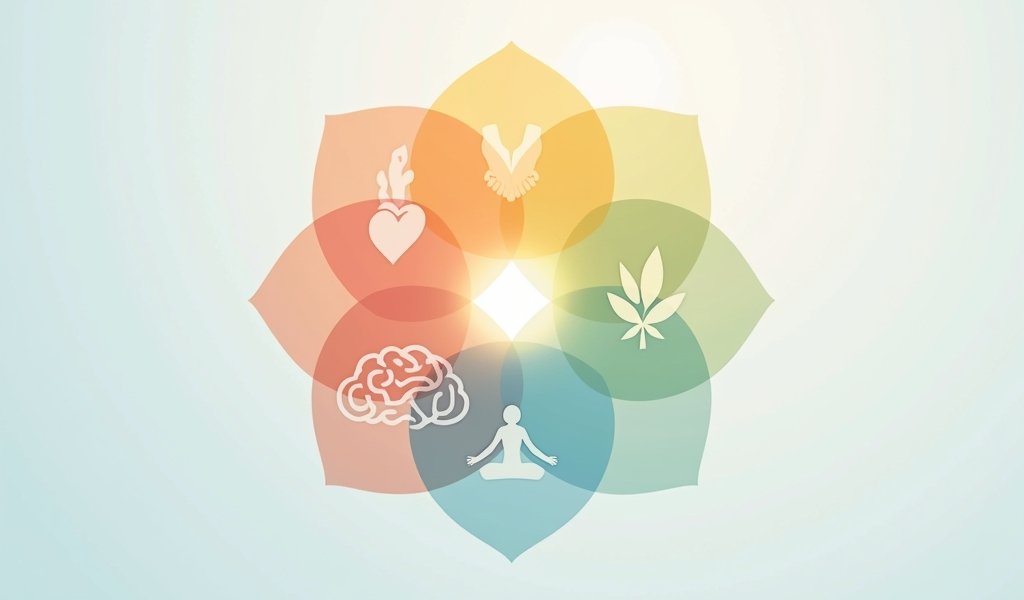
True wellness isn’t merely the absence of illness—it’s a dynamic, ever-evolving harmony between different aspects of our lives. Physical, mental, emotional, social, spiritual, environmental, and occupational wellness don’t exist in isolation; they constantly influence and respond to one another, creating a complex web of wellbeing.
Think of wellness as an intricate tapestry. Pull one thread, and you’ll notice movement throughout the entire fabric. This interdependence explains why focusing solely on physical fitness while ignoring chronic stress rarely yields lasting results, or why addressing emotional health often improves physical symptoms that medication alone couldn’t resolve.
According to the World Health Organization, health is “a state of complete physical, mental and social wellbeing and not merely the absence of disease or infirmity.” This definition acknowledges what many ancient healing traditions have recognized for millennia—we are whole beings whose health components are inseparable.
Let’s explore how these wellness components interact and influence each other, creating either upward spirals of health or downward cycles of distress.
Physical Wellness: Your Body’s Foundation
Physical wellness serves as the foundation upon which other dimensions build. This includes proper nutrition, regular exercise, adequate sleep, and avoiding harmful substances. When your body functions well, it creates favorable conditions for other aspects of wellness to thrive.
Consider sleep as a perfect example of this interdependence. Poor sleep doesn’t just leave you physically tired—it impairs cognitive function, weakens emotional regulation, reduces social engagement, and diminishes productivity at work. One night of inadequate rest can trigger a cascade affecting virtually every wellness domain.
Similarly, what we eat doesn’t just fuel our bodies; it feeds our brains and impacts our moods. The emerging field of nutritional psychiatry is uncovering powerful connections between diet and mental health, showing how essential nutrients directly influence brain function and emotional wellbeing.
Exercise offers perhaps the most visible demonstration of wellness interdependence. Beyond building strength and cardiovascular health, physical activity releases endorphins that elevate mood, reduces stress hormones, improves sleep quality, enhances cognitive performance, and can even serve as a form of moving meditation. As one of my clients aptly put it: “My morning run keeps both my body and mind in shape.”
Mental Wellness: Your Health’s Command Center
Mental wellness encompasses our cognitive abilities, learning capacity, problem-solving skills, and thought patterns. It functions as the operating system for our overall health, constantly processing information and guiding our responses to life’s challenges.
The mind-body connection isn’t alternative health theory—it’s established science. When anxiety fills your thoughts, your digestive system responds with stomach upset. When chronic stress dominates, inflammation increases, immune function weakens, and sleep disturbances follow. These physical manifestations aren’t “all in your head”—they’re real physiological responses to mental states.
Conversely, regular physical activity significantly improves mental clarity and cognitive function. Studies show exercise increases brain-derived neurotrophic factor (BDNF)—often called “fertilizer for the brain”—which supports learning, memory, and overall brain health. This explains why a short walk can sometimes solve a problem that hours of desk-bound thinking couldn’t crack.
Mental wellness also directly impacts our emotional landscape. Cognitive distortions like catastrophizing or black-and-white thinking can transform manageable situations into emotional landmines. By addressing these thought patterns through practices like cognitive behavioral therapy, many find that emotional volatility decreases even without directly targeting emotions themselves.
Emotional Wellness: The Heart of the Matter
Emotional wellness involves recognizing, understanding, and constructively managing our feelings. This dimension serves as both a barometer for other aspects of wellness and a powerful influence on them.
Our emotional states trigger immediate physical responses. Feel anxious? Your heart rate increases, muscles tense, and digestion slows as your body prepares for perceived danger. Experience joy? Your immune system gets a boost, inflammation decreases, and tension melts away.
Long-term emotional patterns can literally reshape our physical health. Research from the Harvard Medical School shows that chronic stress can contribute to high blood pressure, heart disease, diabetes, and a host of other conditions. Meanwhile, positive emotional states correlate with increased longevity, reduced disease risk, and faster recovery from illness.
Emotional wellness also influences our social connections profoundly. When we’re emotionally balanced, we communicate more effectively, navigate conflicts more skillfully, and form deeper relationships. Emotional intelligence—the ability to understand and manage emotions in ourselves and others—predicts success in relationships, career, and overall life satisfaction more accurately than traditional IQ measures.
Social Wellness: Humans as Social Creatures
We are inherently social beings, with brains wired for connection. Social wellness involves creating and maintaining healthy relationships, contributing to community, and building support networks that enrich our lives.
The quality of our social connections profoundly affects physical health. Strong social ties correlate with lower rates of heart disease, stronger immune function, and increased longevity. One landmark review found that social isolation increased mortality risk by 29%—comparable to the risk associated with smoking 15 cigarettes daily.
The relationship works both ways. Physical wellness directly impacts our social capacity; when energy is depleted by illness or poor health habits, social withdrawal often follows. Mental and emotional wellness shape our social interactions; anxiety or depression can lead to isolation, while emotional intelligence enhances relationship quality.
During challenging times, social support serves as a crucial buffer against stress. People with strong social networks typically recover more quickly from illness, surgery, and psychological distress. As one client reflected after recovering from a serious accident: “My body healed because of medical care, but my spirit healed because of the people who showed up.”
Spiritual Wellness: Finding Meaning and Purpose

Spiritual wellness extends beyond religious affiliation to encompass our sense of purpose, values, and connection to something larger than ourselves. It involves exploring life’s deeper questions and developing a personal framework that gives meaning to our experiences.
This dimension often provides resilience during health challenges. Research consistently shows that patients with strong spiritual practices report better quality of life during illness, recover more quickly from surgery, and demonstrate greater resilience in facing health crises. When physical wellness falters, spiritual resources often sustain emotional and mental wellness.
Spiritual practices like meditation, prayer, or time in nature create measurable effects across wellness dimensions. Regular meditation reduces inflammation markers, lowers blood pressure, improves sleep quality, and enhances immune function. These practices also calm mental chatter, regulate emotional responses, and foster deeper social connections through increased compassion and presence.
Many find that addressing spiritual wellness creates a powerful organizing principle for other dimensions. When we clarify our core values and purpose, decisions about physical health habits, mental priorities, emotional regulation, social boundaries, and environmental and occupational choices become more aligned and integrated.
Environmental Wellness: The World Around Us
Environmental wellness acknowledges that our surroundings significantly impact our health. This includes both our immediate settings (home, workspace) and our relationship with the broader natural world.
Our physical environments directly affect physical and mental health. Air quality impacts respiratory function, noise levels affect stress and sleep, and exposure to natural light regulates crucial hormones and circadian rhythms. Even something as simple as desk positioning or bedroom arrangement can influence productivity, sleep quality, and stress levels.
Connection with nature offers particularly powerful wellness benefits. Studies show that spending time in natural settings reduces cortisol levels, lowers blood pressure, improves mood, enhances cognitive function, and speeds recovery from mental fatigue. The Japanese practice of “forest bathing” (shinrin-yoku) has been shown to boost immune function and reduce stress hormone levels.
Our treatment of the environment also connects deeply with spiritual and social wellness. Living in alignment with environmental values reduces cognitive dissonance and increases sense of purpose, while participating in community environmental efforts fosters social connections and shared meaning.
Occupational Wellness: Purpose in Daily Work
Given that adults spend roughly a third of their waking hours working, occupational wellness significantly impacts overall health. This dimension involves finding satisfaction, meaning, and appropriate challenge in our work while maintaining work-life balance.
Occupational stress doesn’t stay at the office—it follows us home, affecting sleep, relationships, and emotional stability. A toxic work environment or misaligned career can create chronic stress that cascades through every wellness dimension. As one client described it: “I didn’t just hate my job; my job was making me hate my life.”
Conversely, work that utilizes our strengths and aligns with our values contributes positively to mental, emotional, and spiritual wellness. Even in challenging positions, finding meaning in contribution can transform the experience. Healthcare workers during the pandemic often cited meaning and purpose as crucial factors in maintaining resilience despite overwhelming stress.
Occupational wellness also directly influences our physical health through factors like sedentary behavior, exposure to environmental hazards, stress levels, and access to health-supporting resources. The science of workplace wellness continues to show how occupational factors shape virtually every aspect of health.
The Wellness Domino Effect: How Everything Connects
The interconnected nature of wellness dimensions creates what we might call the “wellness domino effect”—changes in one area inevitably trigger changes in others. This effect works in both positive and negative directions.
Consider Sarah, a client who began addressing chronic stress through regular meditation and yoga. Not only did her anxiety symptoms improve, but she also experienced better sleep, reduced inflammation from an autoimmune condition, improved concentration at work, and more patience in relationships. One intervention created a positive cascade through multiple wellness dimensions.
Conversely, when James suffered a back injury that limited physical activity, he soon noticed increased irritability, difficulty concentrating, withdrawal from social activities, and disconnection from his usual sources of meaning. His physical limitation triggered negative effects across multiple wellness dimensions.
Research consistently demonstrates these connections:
- Regular exercise reduces symptoms of depression and anxiety by up to 30% in some studies
- Chronic sleep deprivation impairs emotional regulation, increases stress hormones, and reduces work performance
- Strong social connections correlate with 50% increased odds of longevity
- Mindfulness practices reduce inflammation markers and improve immune function
Understanding these interconnections allows us to leverage the domino effect intentionally, choosing interventions that create positive ripples throughout our wellness ecosystem.
Practical Strategies for Balanced Wellness
Given the interdependent nature of wellness dimensions, how can we approach health more holistically? Here are practical strategies to honor these connections:
- Conduct a regular wellness audit across all dimensions to identify areas needing attention and recognize patterns between different aspects of your health
- Start with your strengths—leverage dimensions where you’re already thriving to support growth in challenging areas
- Address root causes, not just symptoms—when experiencing persistent issues in one dimension, explore how other dimensions might be contributing
- Practice “cross-training” for wellness by combining activities that address multiple components simultaneously (like hiking with friends, which nurtures physical, social, and environmental wellness)
- Create supportive environments that reinforce wellness priorities across dimensions
- Develop a personalized wellness plan that acknowledges interconnections between dimensions rather than treating each in isolation
- Practice patience and self-compassion, recognizing that positive changes may take time to cascade through your wellness ecosystem
Remember that small changes can create significant ripple effects. Something as simple as a 10-minute daily walk can improve cardiovascular health, boost mood, clear mental fog, provide time for reflection, and connect you with your environment—addressing multiple wellness dimensions through one simple practice.
Conclusion: Embracing the Whole Person
As our understanding of health evolves, the artificial boundaries between wellness dimensions continue to dissolve. The future of effective wellness approaches lies in honoring these interconnections rather than fragmenting care into specialized silos.
We don’t experience life as separate categories of “physical health” and “mental health”—we live as whole beings, with each aspect of wellness coloring and influencing the others. True wellness isn’t about perfecting isolated components; it’s about nurturing the complex, beautiful ecosystem that is your whole self.
The next time you consider making a health improvement, think about its potential ripple effects across your life. That regular meditation practice might not just calm your mind—it could improve your sleep, strengthen your immune system, enhance your relationships, and even spark creative solutions to work challenges.
By honoring the interdependence of wellness components, we create the conditions for lasting, meaningful health that permeates every dimension of our lives. Like instruments in a symphony, each component contributes to the masterpiece of your most vibrant, authentic life.
Frequently Asked Questions
What are the main components of wellness?
The main components typically include physical, mental, emotional, social, spiritual, environmental, and occupational wellness. These seven dimensions interact continuously to create our overall wellbeing experience.
How does physical wellness affect mental health?
Physical wellness directly impacts mental health through brain chemistry, hormone regulation, inflammation levels, and energy availability. Regular exercise, proper nutrition, and adequate sleep all improve cognitive function, mood stability, and stress resilience.
Can improving one wellness component really affect all others?
Yes, due to the interconnected nature of wellness, positive changes in one dimension create ripple effects throughout your entire system. This “domino effect” explains why addressing chronic stress often improves physical symptoms that seemed unrelated.
Which wellness component should I focus on first?
Start with the dimension where you feel most capable of making consistent changes or the one creating the most significant challenges in your life. Many find that physical wellness provides a concrete foundation that makes other dimensions easier to address.
How long does it take to see wellness improvements across multiple dimensions?
Some interconnections manifest quickly, like the immediate mood boost after exercise, while others develop gradually over weeks or months. Patience is essential, as positive cascades often build momentum over time as multiple dimensions begin reinforcing each other.