
Overview
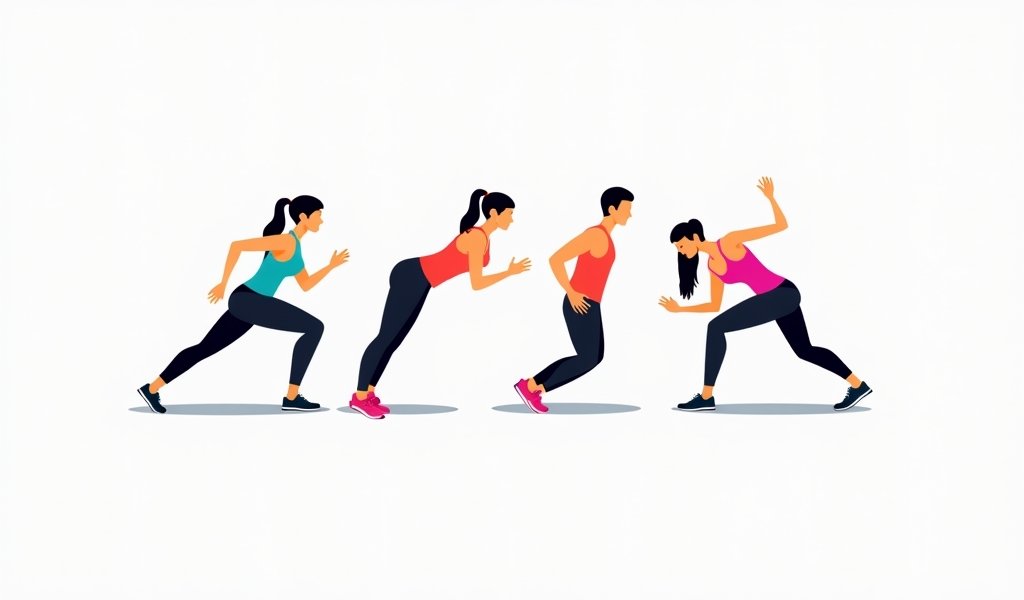
This article, written from an exercise physiologist’s perspective, presents five foundational movements (squats, deadlifts, push-ups, rows, and planks) as essential exercises for building functional strength and mobility throughout life. Each movement targets key muscle groups and movement patterns that transfer to everyday activities, with detailed instructions on proper form and a recommended routine combining all five exercises for optimal results.
Table of Contents
- What is an Exercise Physiologist?
- Why These Five Moves Matter
- Essential Move 1: Squat – The Foundation of Functional Strength
- Essential Move 2: Deadlift – The Ultimate Posterior Chain Developer
- Essential Move 3: Push-Up – The Upper Body Powerhouse
- Essential Move 4: Row – Balance Your Body
- Essential Move 5: Plank – Core Stability for Life
- Putting It All Together: Your Exercise Physiologist-Approved Routine
- Conclusion
- Frequently Asked Questions
What is an Exercise Physiologist?
As an exercise physiologist with over a decade in the field, I’ve seen fitness fads come and go like seasonal fashion trends. But certain foundational movements stand the test of time, much like that perfect pair of jeans that never goes out of style. Exercise physiologists aren’t just gym enthusiasts with fancy degrees; we’re movement scientists who understand how the body responds to physical activity at the cellular level.
Think of us as the mechanics of the human body—we don’t just know which exercises to recommend; we understand precisely why they work and how they transform your physiology. Unlike personal trainers who might focus primarily on aesthetics or performance, exercise physiologists bridge the gap between medical science and fitness, working closely with physicians to develop exercise prescriptions that are as personalized as your fingerprint.
When you’re working with an exercise physiologist, you’re not just getting a workout plan—you’re receiving a customized blueprint based on health-related fitness factors that considers your medical history, biomechanics, and metabolic profile. We’re the professionals who can explain why your knees crack during lunges or design a program that helps manage your diabetes while building strength.
Why These Five Moves Matter
In my practice, I’ve observed that the human body thrives on fundamental movement patterns that mirror our evolutionary design. These five essential moves I’m about to share aren’t just exercises; they’re the building blocks of human movement itself. They’re like the primary colors of the movement world—all other exercises are simply variations or combinations of these foundational patterns.
What makes these five movements special is their functional transferability to real life. They train your body in the ways it was designed to move, addressing what exercise physiologists call “movement competency”—your ability to move safely and efficiently in all directions. These aren’t isolated bodybuilding moves that look impressive but serve little practical purpose; they’re functional powerhouses that strengthen your body in integrated ways.
Moreover, these movements stimulate the greatest hormonal response, effectively turning your body into a natural pharmacy that dispenses growth hormone, testosterone, and endorphins. They engage multiple joints and large muscle groups simultaneously, creating what we call “global movements” that provide the highest metabolic bang for your buck. When programmed correctly, they create the perfect storm of strength, mobility, stability, and coordination improvements.
Essential Move 1: Squat – The Foundation of Functional Strength
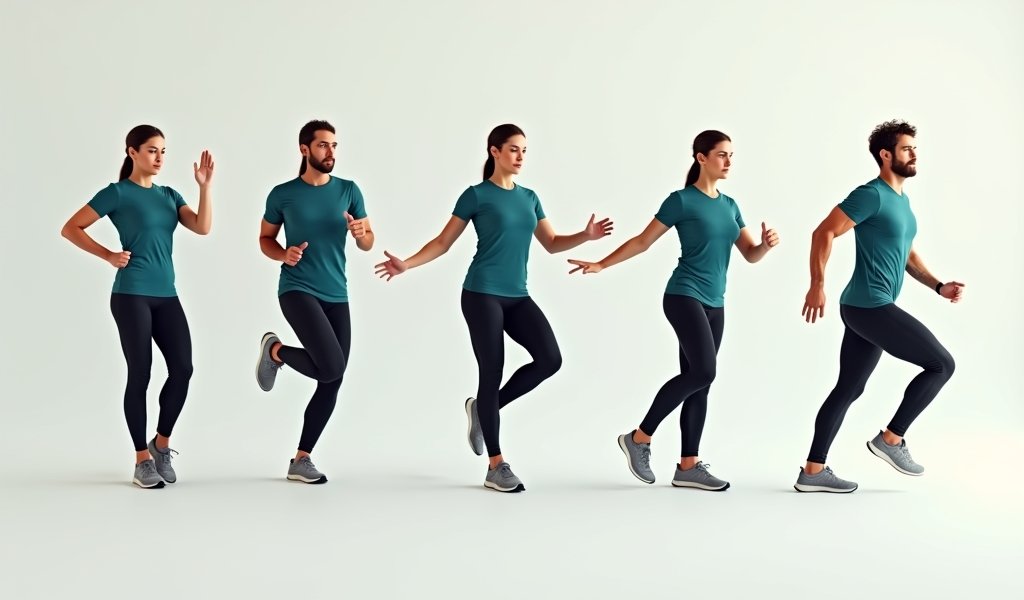
The squat isn’t just an exercise; it’s practically written into our DNA. Watch a toddler pick something up from the floor—that perfect squat form comes naturally before chairs and modern living reshape our movement patterns. As an exercise physiologist, I consider the squat the cornerstone of any effective exercise program, the foundation upon which all other lower body training is built.
The beauty of the squat lies in its magnificent simplicity and profound effect. Like a symphony conductor coordinating dozens of musicians, the squat orchestrates over 200 muscles working in perfect harmony. Your quadriceps, hamstrings, glutes, and core all fire simultaneously, creating what we call “kinetic linkage” throughout the body. This integrated chain of muscle activation mirrors how we naturally move in daily life.
Here’s how to perform a perfect bodyweight squat:
- Stand with feet shoulder-width apart, toes slightly turned outward
- Extend arms forward for counterbalance (imagine you’re sitting in an invisible chair)
- Initiate the movement by sending your hips backward, not just down
- Lower until thighs are at least parallel to the ground (or as low as comfortable while maintaining form)
- Keep your chest proud and spine neutral—think “proud posture”
- Drive through your heels to return to standing, squeezing your glutes at the top
For beginners, start with 2-3 sets of 10-12 repetitions, focusing on form rather than speed. As you progress, you can add resistance with dumbbells, kettlebells, or a barbell. The squat’s versatility is unmatched—it can be modified for rehabilitation or intensified for elite athletic performance.
What makes the squat particularly valuable is its carryover to daily functions like sitting, standing, and lifting. It also promotes what exercise physiologists call “bone mineral density adaptation,” strengthening not just muscles but your skeletal system as well. In my clinical experience, regular squatting has been like a fountain of youth for my older clients, helping them maintain independence and mobility well into their golden years.
Essential Move 2: Deadlift – The Ultimate Posterior Chain Developer
If the squat is the king of exercises, the deadlift is certainly the queen. Despite its intimidating reputation, the deadlift is simply the formal name for picking something up off the ground—an action you probably perform dozens of times daily without a second thought. As an exercise physiologist, I’ve seen few movements transform physiques and prevent injuries as effectively as a properly executed deadlift.
The deadlift targets what we call the “posterior chain”—that powerful collection of muscles running along the back of your body from your calves through your hamstrings, glutes, and all the way up your spine. In our desk-bound society where the posterior chain often hibernates like a bear in winter, deadlifts are the wake-up call these muscles desperately need.
Here’s how to perform a basic deadlift (starting with a lightweight or even just a broomstick to master form):
- Stand with feet hip-width apart, weight (barbell, dumbbells, or kettlebell) positioned over mid-foot
- Hinge at the hips, maintaining a neutral spine (this isn’t a rounded-back bend)
- Grip the weight with hands just outside your legs
- Brace your core as if preparing for someone to punch your stomach
- Drive your feet into the floor while lifting the weight by extending hips and knees
- Stand tall at the top, shoulders back, but don’t hyperextend your lower back
- Return the weight to the floor by hinging at the hips first, then bending the knees
The deadlift offers benefits that extend far beyond muscle development. Research from peer-reviewed studies shows that deadlifting significantly improves bone mineral density, particularly important for women at risk of osteoporosis. It also enhances what exercise physiologists call “rate of force development”—your body’s ability to generate power quickly, which translates to better athletic performance and reduced fall risk as you age.
When I work with clients recovering from lower back pain, a carefully progressed deadlift program often becomes their rehabilitation salvation. By strengthening the entire posterior support system, we create a muscular corset that protects the spine better than any back brace could. The deadlift isn’t just an exercise; it’s preventive medicine disguised as strength training.
Essential Move 3: Push-Up – The Upper Body Powerhouse
The humble push-up may seem like the plain vanilla of exercise, but in my exercise physiologist’s toolkit, it’s more like a Swiss Army knife of upper body development. This classic movement has survived centuries of fitness trends for good reason—it works like nothing else for developing functional pushing strength. The push-up is to your upper body what the squat is to your lower half: foundational, functional, and frankly, phenomenal.
What makes the push-up special is its closed kinetic chain nature, meaning your hands are fixed while your body moves through space. This creates unique stabilization demands that open-chain movements like bench presses can’t match. Your core must work overtime as a stabilizer, making the push-up as much a core exercise as it is a chest, shoulder, and tricep developer.
Here’s how to perform a proper push-up:
- Start in a plank position with hands slightly wider than shoulder-width
- Position hands directly under your shoulders or slightly wider
- Create a straight line from head to heels—imagine balancing a glass of water on your back
- Lower your body as a single unit until your chest nearly touches the floor
- Maintain tension throughout your body—no sagging hips or lifted chins
- Press back to starting position, fully extending your arms without locking elbows
If standard push-ups feel too challenging, begin with elevated hand positions (using a bench, counter, or wall) and gradually work your way down to floor level. Progression, not perfection, is the goal. As an exercise physiologist, I’ve seen remarkable improvements in clients who start with wall push-ups and eventually graduate to standard or even advanced variations.
The beauty of push-ups lies in their endurance training adaptability. By changing hand position, elevation, tempo, or adding external resistance, you can make this exercise appropriate for anyone from rehabilitation patients to elite athletes. According to research published in the American College of Sports Medicine’s Health & Fitness Journal, push-ups can be modified into more than 30 functional variations, making them perhaps the most versatile exercise in existence.
Essential Move 4: Row – Balance Your Body
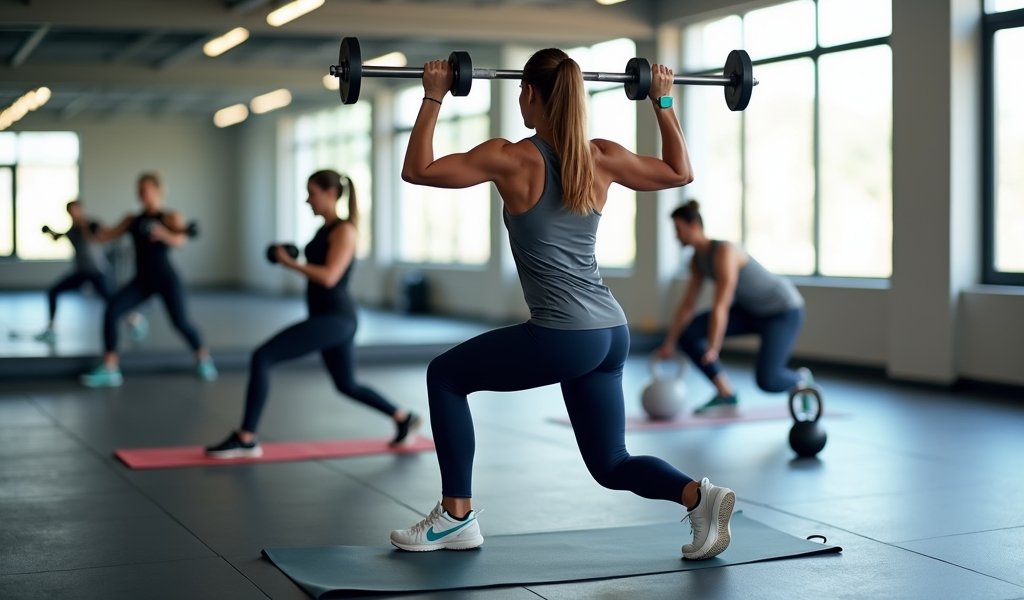
In my years as an exercise physiologist, I’ve observed one universal truth: humans push far more than they pull in daily life. We push doors, shopping carts, and lawnmowers, but rarely perform the opposing movement. This imbalance creates what we call “upper crossed syndrome”—that rounded shoulder, forward head posture that’s become the unofficial stance of the digital age. Enter the row: your postural salvation and the perfect counterbalance to all that pushing.
Rowing movements target your “pulling muscles”—the rhomboids, rear deltoids, trapezius, and latissimus dorsi—that function as postural support columns for your upper body. These muscles are like the architectural flying buttresses of Gothic cathedrals, providing critical support that prevents structural collapse. When strengthened properly, they pull your shoulders back into alignment, creating that confident, upright posture that both looks and feels better.
Here’s how to perform a basic dumbbell row:
- Place one hand and knee on a bench, keeping your spine parallel to the floor
- Hold a dumbbell in your free hand, arm fully extended toward the floor
- Keeping your elbow close to your body, pull the weight up until your elbow passes your torso
- Squeeze your shoulder blade toward your spine at the top of the movement
- Lower the weight with control—imagine setting a glass down without making a sound
- Complete all repetitions on one side before switching
For those without equipment, inverted rows using a sturdy table, TRX straps, or even a horizontal bar at a playground can be equally effective. The key principle remains the same: pull with intention, focusing on the contraction of the back muscles rather than merely moving weight from point A to point B.
What makes rowing movements particularly valuable is their relationship to what exercise physiologists call “reciprocal inhibition”—as you strengthen your pulling muscles, you naturally release tension in the chronically tight pectoral muscles. This neurological reset helps restore proper muscle balance across the shoulder joint, reducing impingement risks and improving overhead reaching capacity.
In my practice, I’ve seen regular rowing exercises transform clients’ postures within weeks, alleviating chronic neck tension and shoulder discomfort that massage therapy alone couldn’t resolve. The row isn’t just an exercise; it’s corrective medicine for our modern lifestyle.
Essential Move 5: Plank – Core Stability for Life
The plank may appear deceptively simple—almost boring compared to flashy abdominal exercises—but as an exercise physiologist, I recognize it as perhaps the most neurologically sophisticated core exercise in existence. Unlike crunches that focus primarily on spinal flexion (a movement pattern that some research suggests may contribute to disc issues when overdone), the plank trains what the body truly needs: stability through the core while the extremities move.
Think of your core muscles as nature’s weight belt, creating 360-degree pressure around your spine. The plank activates this entire system—not just the visible “six-pack” muscles, but the deeper transversus abdominis, multifidus, and pelvic floor muscles that create what we call “intra-abdominal pressure.” This pressure stabilizes your spine like properly inflated tires support a car, allowing force to transfer efficiently between upper and lower body.
Here’s how to perform a proper plank:
- Position forearms on the ground with elbows directly beneath shoulders
- Extend legs behind you, creating a straight line from head to heels
- Engage your core by drawing your navel slightly toward your spine
- Squeeze your glutes and quadriceps to enhance stability
- Keep your gaze toward the floor to maintain neutral neck alignment
- Breathe normally throughout—no holding your breath!
For beginners, start with 10-second holds and gradually build up. The quality of your plank matters far more than the duration. I’d rather see a perfect 20-second plank than a sagging 2-minute effort that reinforces poor motor patterns. Remember, we’re training the nervous system as much as the muscles.
The plank’s functional carryover to daily life is immense. Every time you carry groceries, lift a child, or perform yard work, you’re essentially executing a “real-world plank” where your core must stabilize while your limbs generate force. Research from the Journal of Orthopaedic & Sports Physical Therapy demonstrates that core stability exercises like the plank significantly reduce lower back pain incidence and improve performance in both athletes and non-athletes alike.
What I find most fascinating as an exercise physiologist is how the plank creates what we call “irradiation”—the neurological spillover of tension that strengthens connections between core and extremities. This enhanced neural communication improves coordination throughout the entire body, making the plank not just a core exercise but a full-body integrator.
Putting It All Together: Your Exercise Physiologist-Approved Routine
Now that we’ve dissected these five foundational movements, let’s assemble them into a cohesive routine that an exercise physiologist would prescribe. The beauty of these movements lies in their complementary nature—they work together like instruments in an orchestra, each playing a vital role in creating the symphony of human movement.
Here’s a simple yet effective routine incorporating all five movements:
- Warm-up: 5 minutes of dynamic movements (arm circles, leg swings, gentle squats)
- Squats: 3 sets of 10-12 repetitions
- Push-ups: 3 sets of 8-10 repetitions (modify as needed)
- Rows: 3 sets of 10 repetitions per side
- Deadlifts: 3 sets of 8-10 repetitions
- Planks: 3 sets, holding for 20-30 seconds each
- Cool-down: 5 minutes of gentle stretching focusing on major muscle groups
Perform this routine 2-3 times weekly, allowing at least one day between sessions for recovery. As an exercise physiologist, I emphasize that progression should be systematic and patient. Increase repetitions before adding weight, and prioritize movement quality over quantity every single time.
For beginners, this routine can be modified by decreasing volume (perhaps starting with 2 sets instead of 3) or using assisted versions of exercises. For advanced fitness enthusiasts, you can increase the challenge by adding weight, incorporating single-leg variations, or manipulating tempo (slower lowering phases, for example).
The true magic happens when you understand how these movements interconnect. The posterior chain strength you develop in deadlifts enhances your plank stability. The core strength from planks improves your squat mechanics. The postural improvements from rows optimize your push-up form. They create what exercise physiologists call “movement synergy”—a beautiful cascade of improvements that elevate your overall function.
I recommend tracking your progress not just through traditional metrics like repetitions or weight, but also through movement quality assessments. Can you maintain better posture during your plank? Is your squat depth improving while maintaining proper form? These qualitative improvements often precede and predict the quantitative gains in strength and endurance training exercises.
Conclusion
As an exercise physiologist, I’ve witnessed the transformative power of these five fundamental movements across populations ranging from post-surgical rehabilitation patients to elite athletes. They aren’t trendy exercises that will disappear with the next fitness fad—they’re the timeless foundations of human movement that have sustained our species for millennia.
What makes these movements so powerful is their neurological complexity disguised as simplicity. Each one creates what we call “global movement patterns” that educate your nervous system as much as they strengthen your muscles. They train movement, not just muscles—a critical distinction that separates exercise physiology from conventional fitness approaches.
Remember that consistency trumps intensity every time. A regular practice of these five movements, performed with proper form and progressive overload, will yield greater results than sporadic high-intensity workouts that often lead to burnout or injury. Your body adapts to what you do consistently, not occasionally.
If you’re just beginning your fitness journey, be patient with yourself. These movement patterns may feel awkward at first if your body has adapted to modern sedentary living. That initial awkwardness isn’t failure—it’s your body rediscovering its natural movement heritage, like dusting off an old but valuable skill.
The greatest gift these five movements offer isn’t just physical strength or aesthetics—it’s freedom of movement throughout life. They’re investments in your future mobility, independence, and capacity to engage fully in life’s activities. In my years as an exercise physiologist, I’ve seen no better insurance policy against age-related decline than mastery of these fundamental human movements.
Frequently Asked Questions
What exactly does an exercise physiologist do?
An exercise physiologist specializes in analyzing how the body responds to physical activity at the cellular and systemic levels. They develop evidence-based exercise prescriptions for both clinical populations (those with chronic conditions) and healthy individuals seeking optimal performance.
How is an exercise physiologist different from a personal trainer?
Exercise physiologists typically hold advanced degrees in exercise science and can work in clinical settings with patients who have medical conditions. Personal trainers generally focus on fitness for healthy populations and may have varying levels of certification.
Do I need special equipment to perform these five essential moves?
No, all five movements can be performed with bodyweight only to start, making them accessible for home workouts. As you progress, basic equipment like dumbbells or resistance bands can be added for additional challenge.
How quickly will I see results from doing these exercises?
Most people notice improved movement quality and energy levels within 2-3 weeks of consistent practice. Significant strength gains typically become apparent after 4-6 weeks of regular training.
Can these exercises help with back pain?
Yes, when performed correctly, these movements strengthen the core and posterior chain muscles that support proper spinal alignment. Many clients report reduced back pain after establishing proper movement patterns through these exercises.