

Overview
Wellness coordinators—the professional cheerleaders for healthy habits who turned “drink more water” into an actual career—work across diverse settings including corporate offices, healthcare facilities, universities, community centers, fitness clubs, senior living communities, and digital platforms. These roles typically require degrees in health-related fields, pay $40,000-$85,000 annually, and focus on creating programs that transform individual and community health through behavior change strategies, with successful coordinators possessing strong communication skills, program development expertise, and genuine passion for helping others achieve optimal wellbeing.
Table of Contents
- What Are Wellness Coordinator Jobs?
- Corporate Wellness Coordinator
- Healthcare Facility Wellness Coordinator
- University/Campus Wellness Coordinator
- Community Health Center Wellness Coordinator
- Fitness Center Wellness Program Coordinator
- Senior Living Wellness Coordinator
- Remote/Digital Wellness Program Coordinator
- Qualifications for Wellness Coordinator Success
- Frequently Asked Questions
What Are Wellness Coordinator Jobs?
Wellness coordinator jobs have transformed from nice-to-have positions to essential roles in organizations worldwide. These professionals create environments where health flourishes and fitness becomes integrated into daily routines rather than an afterthought. With the global wellness economy valued at $4.5 trillion and growing at 5-10% annually according to the Global Wellness Institute, the job market is expanding rapidly for those passionate about helping others achieve optimal health.
For health enthusiasts looking to transform their passion into a profession, wellness coordinator positions offer the perfect blend of purpose and career stability. These roles allow you to leverage your personal commitment to health while developing professional skills that lead to rewarding careers with genuine impact.
Let’s explore seven proven wellness coordinator positions where your health and fitness expertise can truly make a difference in people’s lives.
Corporate Wellness Coordinator
Corporate wellness coordinators serve as health champions in workplace settings, designing programs that help desk-bound professionals trade sedentary habits for healthier alternatives. This role has gained significant importance as companies recognize the connection between employee wellbeing and productivity.
As a corporate wellness coordinator, you’ll develop comprehensive initiatives tailored to specific company cultures. Your day might include organizing health screenings, launching fitness challenges, conducting workshops, and tracking program metrics to demonstrate return on investment to leadership.
Qualifications typically include a bachelor’s degree in health promotion or exercise science, along with certifications such as Certified Wellness Practitioner (CWP). Strong communication skills and program management experience are essential, as is the ability to analyze data for outcomes reporting.
Salary ranges from $45,000 to $75,000 annually, with higher compensation in larger corporations or for specialists. The growth potential is excellent, with many corporate wellness coordinators advancing to wellness director positions or moving into HR leadership roles focused on employee benefits and wellbeing strategies.
Success in this field comes from creating programs that genuinely engage employees. The most effective corporate wellness coordinators establish “Wellness Champions” within departments who become advocates for healthy habits among their peers, creating sustainable culture change rather than short-lived initiatives.
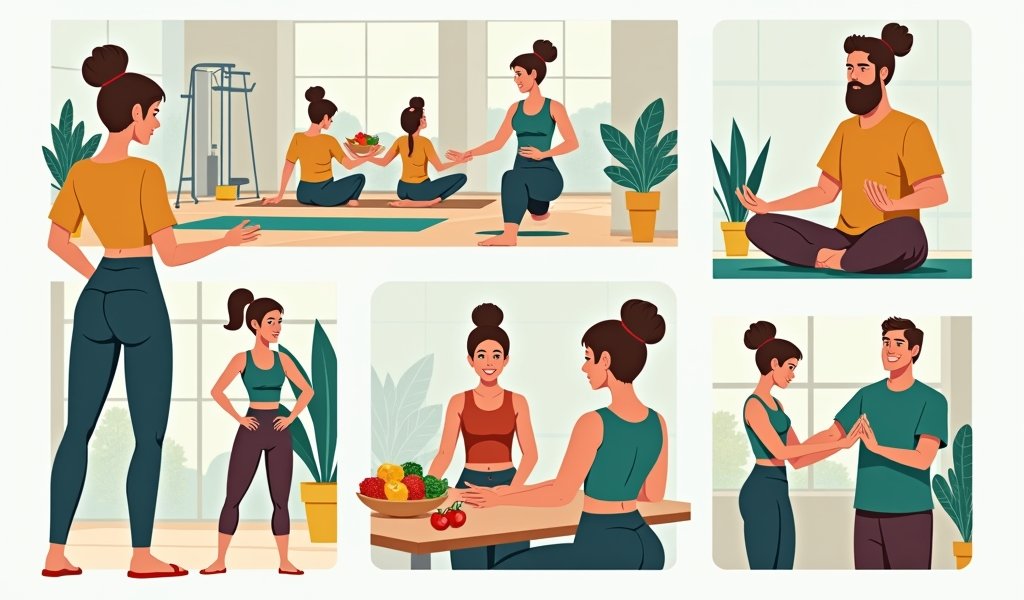
Healthcare Facility Wellness Coordinator
Ironically, healthcare workers often struggle with their own wellbeing while caring for others. Healthcare facility wellness coordinators help these healers prioritize self-care while also developing programs for patients.
In this role, you’ll create wellness initiatives for both staff and patients, develop chronic disease prevention programs, facilitate lifestyle medicine interventions, and coordinate with clinical teams for integrated care approaches. You’ll bridge the critical gap between clinical care and everyday health behaviors.
Required qualifications typically include a bachelor’s or master’s degree in health sciences, nursing, or public health. Clinical backgrounds (RN, RD, PT) are often preferred, along with health coaching certification and thorough understanding of healthcare regulations and terminology.
The impact of this role is significant—by supporting patients in implementing physician recommendations, you’ll help improve medication adherence, reduce hospital readmissions, and enhance quality of life. According to CDC research, well-designed wellness programs can yield $3-$6 return for every dollar invested.
Salary expectations range from $50,000 to $80,000, depending on clinical credentials and facility size. The most successful healthcare wellness coordinators serve as translators between medical jargon and real-life application—doctors tell patients what to do, while wellness coordinators help them figure out how to actually implement changes.
University/Campus Wellness Coordinator
College campuses provide unique opportunities for fitness meaning and wellness innovation, where young adults form habits that may last a lifetime. Campus wellness coordinators shape health behaviors during this formative period.
The position addresses specific concerns of young adults, including stress management, sleep optimization, and substance use prevention. You’ll create peer education programs, collaborate with academic departments, and balance mental health initiatives with physical wellness programming.
Program development focuses on stress-reduction techniques, sexual health education, nutrition guidance for diverse student populations, and sleep health strategies to support academic performance. The most successful campus programs connect wellness to academic success, a connection supported by numerous research studies.
Qualifications typically include a master’s degree in public health, health education, or student affairs, along with experience working with young adult populations. Understanding developmental health needs of college-age individuals is essential, as is expertise in event planning and crisis intervention.
Compensation ranges from $48,000 to $65,000 with excellent benefits, including tuition remission for further education. Success is measured through student health surveys, program participation rates, and reduced health-risk behaviors, with the best programs demonstrating contributions to student retention and academic achievement.
Community Health Center Wellness Coordinator
For those passionate about serving underserved populations, community health centers offer mission-driven environments where wellness coordinators make health accessible to everyone, regardless of socioeconomic status.
This role focuses on addressing social determinants of health and reducing health disparities. You’ll create culturally appropriate programs, conduct community needs assessments, develop partnerships with local organizations, and work to overcome barriers to wellness access.
Grant writing often comprises a significant portion of the job, requiring skills in identifying funding opportunities, preparing compelling proposals, and managing reporting requirements. Creative resource leveraging becomes essential when funding is limited.
Requirements typically include a bachelor’s or master’s in public health, community health, or social work, plus experience with diverse populations. Understanding health equity principles is crucial, as are group facilitation skills and community organizing abilities. Bilingual capabilities are highly valued in many communities.
Salaries range from $40,000 to $60,000, with non-profit sector benefits including loan forgiveness programs. The real compensation comes from seeing tangible community transformation—like converting unused urban spaces into community gardens that provide fresh produce while serving as outdoor classrooms for nutrition education.

Fitness Center Wellness Program Coordinator
Beyond counting reps and leading classes, fitness centers are evolving into holistic wellness hubs. As a fitness director or wellness program coordinator in these settings, you’ll develop programs addressing all dimensions of wellbeing.
This role differs from traditional fitness positions by focusing on lifestyle change rather than just physical exercise. You’ll develop mind-body programs, integrate nutrition and stress management strategies, build long-term member relationships, and create evidence-based programs rather than following fitness trends.
Responsibilities include conducting comprehensive wellness assessments, developing progressive wellness journeys for members, training fitness staff on coaching approaches, and establishing partnerships with healthcare providers for referrals. According to the International Health, Racquet & Sportsclub Association, facilities offering comprehensive wellness programs see 60% higher member retention rates.
Required certifications include standard fitness credentials (ACSM, NSCA, ACE) as foundation, plus wellness coaching certification and specialized training in behavior change methodologies. Medical fitness training becomes increasingly important as more members seek support for specific health conditions.
Income potential ranges from $45,000 to $70,000 plus incentives based on program enrollment. The most successful coordinators understand that physical transformation begins with addressing all factors affecting health—stress management, sleep quality, nutrition, and social connection—rather than focusing solely on exercise.
Senior Living Wellness Coordinator
With our aging population, senior living communities are evolving from care facilities to vibrant wellness centers—creating growing demand for specialized wellness coordinators who understand the unique needs of older adults.
This role requires specialized knowledge of age-related physiological changes, common chronic conditions, medication interactions with exercise, social connection programming to combat isolation, and cognitive health strategies. The wellness coordinator becomes integral to enhancing both longevity and quality of life.
Program development focuses on creating adaptive fitness options for varying mobility levels, implementing fall prevention initiatives, designing brain health activities, and balancing safety concerns with quality of life enhancement. Intergenerational programs often provide particularly meaningful engagement for residents.
Necessary certifications include Senior Fitness Specialist credentials, training in balance and fall prevention, dementia education, and CPR specifically for older adults. The International Council on Active Aging provides valuable resources for professionals in this field.
Compensation ranges from $45,000 to $65,000 with excellent stability and advancement potential as the senior population grows. The true reward comes from transforming the aging narrative from one of decline to growth and continued development, with research showing that comprehensive wellness programs can significantly extend independent living.
Remote/Digital Wellness Program Coordinator
The wellness industry has embraced digital transformation, creating exciting opportunities for coordinators who can translate in-person experiences into engaging virtual programs with global reach.
Digital wellness coordination has evolved beyond passive content consumption to interactive experiences that create genuine community in virtual spaces. You’ll integrate wearable technology, develop accountability systems for remote participants, and create personalized experiences at scale through technology.
Essential technology skills include proficiency with video conferencing tools, understanding of learning management systems, basic data analytics for program evaluation, and social media capabilities. Troubleshooting abilities become crucial when working with participants of varying technical comfort levels.
Program development focuses on creating engaging on-demand and live streaming content, building online community and social support networks, designing virtual challenges, and implementing digital tracking systems that promote accountability. Research from the Journal of Medical Internet Research shows that digital wellness programs with strong social components achieve outcomes comparable to in-person interventions.
Earning potential ranges from $50,000 to $85,000 with the added benefits of location independence and schedule flexibility. Success metrics include engagement analytics, completion rates, behavior change assessments, and testimonials. The most effective digital wellness programs combine automated content with live coaching and peer support to achieve higher-than-average completion rates.
Qualifications for Wellness Coordinator Success
Across all seven wellness coordinator positions, certain qualifications consistently emerge as essential for success. Strong communication skills serve as the foundation—you must articulate complex health concepts in accessible ways that inspire action rather than overwhelm.
Program development expertise allows you to create structured wellness journeys rather than one-off events. Foundational health knowledge provides credibility, while understanding of behavior change psychology helps you move participants from intention to action. Data analysis capabilities enable you to demonstrate program impact and continuously improve offerings.
For those preparing for a wellness coordinator career, consider these steps:
- Obtain foundational education in health promotion or related field
- Acquire relevant certifications targeting your desired work environment
- Gain practical experience through internships or volunteer opportunities
- Develop program management and evaluation skills
- Build communication abilities through presentations and group facilitation
The future outlook for wellness coordination remains exceptionally bright as organizations increasingly recognize the return on investment from supporting health. As healthcare costs continue rising, preventive approaches will only grow in importance and value.
In all wellness coordinator roles, the most successful professionals share one defining characteristic—genuine passion for helping others achieve their health potential. This authentic commitment becomes the foundation for creating systems of sustainable wellness that transform individuals and communities.
Frequently Asked Questions
What education do I need to become a wellness coordinator?
Most positions require a bachelor’s degree in health promotion, exercise science, public health, or related field. Advanced roles or specialized positions may require a master’s degree or specific clinical credentials.
What is the average salary for wellness coordinator jobs?
Salaries typically range from $40,000 to $85,000 depending on the setting, your qualifications, and geographic location. Corporate and digital wellness positions generally offer higher compensation than community-based roles.
Do I need certifications to work as a wellness coordinator?
While not always required, certifications significantly enhance your employability. Popular options include Certified Wellness Practitioner (NWI), WELCOA certifications, and ACSM credentials.
What skills are most important for wellness coordinators?
Essential skills include strong communication, program development, basic health knowledge, behavior change understanding, and data analysis capabilities. Empathy and relationship-building abilities are equally important for participant engagement.
Is there good job growth for wellness coordinator positions?
Yes, the wellness industry continues to experience strong growth across all sectors. The Bureau of Labor Statistics projects faster-than-average growth for health education specialists and community health workers through 2030.
Pingback: 7 Proven Tips to Maximize Mental Health Technician Salary - achievehealthgoals.com