
Overview
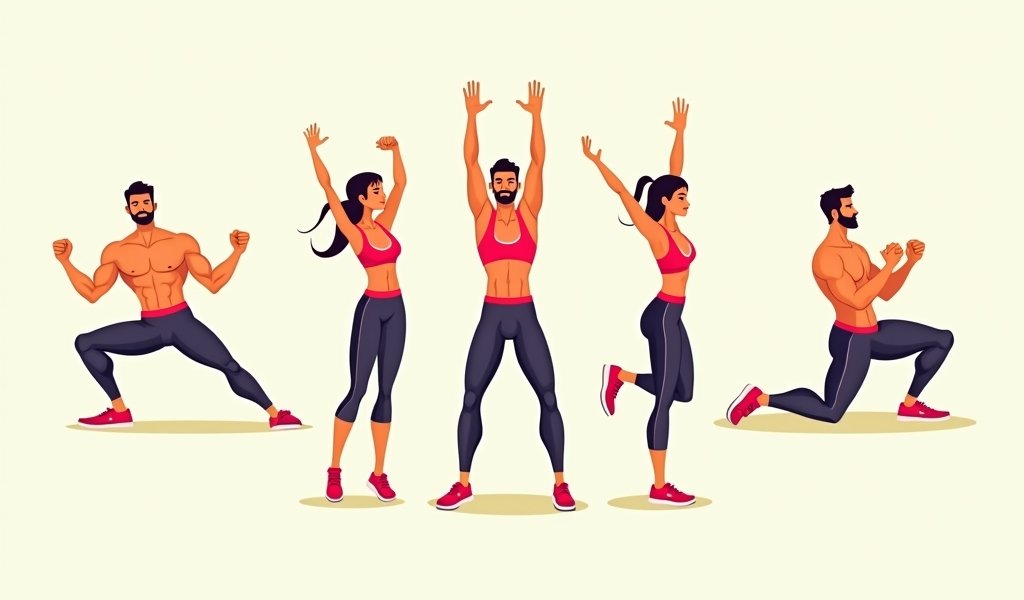
While fitness fads come and go faster than your motivation after buying expensive workout clothes, this article outlines ten evidence-based exercise approaches that consistently deliver results: HIIT, strength training, functional fitness, cardio, mobility work, circuit training, sports-specific training, mind-body exercises, metabolic resistance training, and recovery-focused training. The key to success lies not in choosing a single method but in combining multiple approaches into a balanced, sustainable routine that addresses all fitness components while matching your personal goals and preferences.
Table of Contents
- Introduction
- What Makes a Workout Effective
- High-Intensity Interval Training (HIIT)
- Strength Training Fundamentals
- Functional Fitness Training
- Traditional Cardio Done Right
- Mobility and Flexibility Work
- Circuit Training Protocols
- Sports-Specific Training
- Mind-Body Exercise Approaches
- Metabolic Resistance Training (MRT)
- Recovery-Focused Training
- Implementation Strategy
- Conclusion
- Frequently Asked Questions
Introduction
In a world where fitness trends emerge and fade faster than you can say “burpee,” finding workout routines that deliver tangible results can be overwhelming. I’ve spent over 15 years as a health professional watching countless exercise crazes come and go, while a core set of evidence-based approaches consistently prove their worth.
This comprehensive review cuts through the noise to present the 10 most effective workout methodologies supported by scientific research. Whether you’re just starting your fitness journey or looking to optimize an established routine, these proven approaches will transform your body and enhance your overall health.
The beauty of these methods lies in their adaptability – they work for virtually everyone, can be modified for any fitness level, and deliver measurable results when performed consistently. Let’s dive into what makes a truly effective workout before exploring each approach in detail.
What Makes a Workout Effective
Effective workouts share several key characteristics that separate them from less productive exercise approaches. First and foremost, they create progressive overload – gradually increasing demands on the body that stimulate adaptation and improvement. Without this progression, results quickly plateau.
Second, truly effective workouts align with your specific goals. Building strength requires different approaches than enhancing endurance or improving flexibility. The principle of specificity means your body adapts precisely to the demands you place upon it.
Third, sustainable workouts strike the optimal balance between intensity and recovery. Too little stimulus won’t trigger change, while too much leads to burnout or injury. According to research published in Frontiers in Physiology, proper recovery is just as crucial as the workout itself for producing results.
Finally, effective workouts must be consistent and enjoyable enough that you’ll actually perform them regularly. The best exercise program on paper means nothing if it’s abandoned after two weeks.

High-Intensity Interval Training (HIIT)
HIIT has revolutionized fitness by delivering remarkable results in minimal time. This approach alternates short bursts of near-maximum effort with brief recovery periods, creating what exercise physiologists call “metabolic disruption.”
The magic of HIIT lies in excess post-exercise oxygen consumption (EPOC) – the “afterburn effect” that continues burning calories long after your workout ends. Studies show properly designed HIIT sessions can elevate metabolism for up to 48 hours post-workout, making it incredibly efficient for fat loss.
A simple yet effective HIIT routine might look like:
- 3-5 minute warm-up with dynamic movements
- 30 seconds all-out effort (burpees, mountain climbers, or sprints)
- 30 seconds active recovery (walking or gentle movement)
- Repeat for 4-8 rounds
- 5-minute cool-down with light movement and stretching
While HIIT delivers impressive benefits, its intensity requires respect. Most health professionals recommend limiting HIIT sessions to 2-3 non-consecutive days weekly. Research from the American College of Sports Medicine suggests exceeding this frequency often leads to diminishing returns and increased injury risk.
Strength Training Fundamentals
Strength training remains the most reliable method for reshaping body composition and improving functional capacity throughout life. Despite common misconceptions, lifting weights won’t make women “bulky” – rather, it creates the lean, defined physique most people desire.
The most efficient strength programs center around compound movements that engage multiple muscle groups simultaneously. These include:
- Squats (targeting quadriceps, hamstrings, glutes, and core)
- Deadlifts (engaging the entire posterior chain)
- Push-ups or bench press (developing chest, shoulders, and triceps)
- Rows (building back strength and improving posture)
- Overhead pressing (strengthening shoulders and upper body)
For optimal results, follow the principle of progressive overload by gradually increasing weight, reps, or difficulty as your body adapts. A beginner might start with 2-3 sets of 10-12 reps, while more advanced trainees often benefit from varied rep ranges (4-6 for strength, 8-12 for hypertrophy).
Contrary to popular belief, strength training benefits extend far beyond aesthetics. Regular resistance work improves bone density, enhances metabolic health, and helps maintain functional independence as we age. As the National Institute on Aging emphasizes, strength training becomes increasingly important after age 30 when muscle mass naturally begins declining.
Functional Fitness Training
Functional fitness bridges the gap between gym exercises and real-world movements. Unlike isolated machine exercises, functional training develops strength in movement patterns we use daily – lifting, carrying, pushing, pulling, and rotating.
The core principle of functional training is transferability – the idea that your workout should improve your capacity outside the gym. This approach is particularly valuable for injury prevention and maintaining independence throughout life.
Effective functional exercises include:
- Farmer’s carries (walking while carrying weights)
- Turkish get-ups (moving from lying to standing while controlling weight overhead)
- Medicine ball throws and rotations (developing explosive power and rotational strength)
- Single-leg exercises (enhancing balance and stability)
- Crawling patterns (improving coordination and core control)
I’ve seen remarkable improvements in clients who switched from traditional bodybuilding-style workouts to functional training. One 58-year-old client eliminated chronic back pain and regained the ability to play with his grandchildren on the floor after just eight weeks of functional movement training.
Traditional Cardio Done Right
While newer exercise modalities grab headlines, traditional cardiovascular training remains essential for health and performance. The key lies in understanding how to optimize cardio for your specific goals.
For general health, moderate-intensity cardio (where you can talk but not sing) builds aerobic capacity efficiently. The American Heart Association recommends at least 150 minutes weekly, which can be divided into multiple sessions as short as 10 minutes.
For fat loss, research increasingly supports zone 2 training – working at 60-70% of maximum heart rate for longer durations. This intensity optimizes fat utilization while remaining sustainable. A simple way to identify zone 2: you should be able to maintain a basic conversation, though with some effort.
Effective cardio modalities include:
- Walking (particularly on inclines or varied terrain)
- Cycling (stationary or outdoor)
- Swimming (excellent for joint-friendly full-body conditioning)
- Rowing (engaging approximately 85% of the body’s muscles)
- Elliptical training (providing low-impact options)
Remember that consistency trumps intensity for cardiovascular health. Five 30-minute moderate sessions weekly typically produces better long-term outcomes than two exhausting high-intensity workouts.

Mobility and Flexibility Work
Mobility work is the unsung hero of fitness – rarely exciting but absolutely essential for long-term progress and injury prevention. While flexibility refers to a muscle’s ability to lengthen, mobility encompasses a joint’s ability to move through its full range of motion with control.
The most effective mobility routines combine several approaches:
- Dynamic stretching (moving through ranges of motion rather than holding static positions)
- Myofascial release (using foam rollers or massage balls to release tissue restrictions)
- Joint articulation (systematically moving each joint through available ranges)
- Loaded stretching (using light resistance to actively strengthen end ranges)
I recommend incorporating 5-10 minutes of targeted mobility work before workouts, focusing on the areas you’ll be using most. Additionally, dedicated mobility sessions of 20-30 minutes 1-2 times weekly can dramatically improve movement quality and reduce pain.
Consider mobility as an investment in your fitness future. Those who neglect it often find themselves sidelined with preventable injuries, while those who prioritize mobility tend to train consistently for decades.
Circuit Training Protocols
Circuit training brilliantly bridges the gap between strength and cardiovascular training by cycling through multiple exercises with minimal rest. This approach maximizes calorie burn while developing multiple fitness components simultaneously.
An effective circuit typically includes 5-10 exercises targeting different movement patterns or muscle groups, performed sequentially with little or no rest between movements. After completing the circuit, you rest briefly (60-90 seconds) before repeating for 3-5 total rounds.
The beauty of circuit training lies in its versatility – it can be designed using bodyweight exercises, free weights, machines, bands, or any combination thereof. For example, a simple but effective bodyweight circuit might include:
- Push-ups (12-15 reps)
- Bodyweight squats (15-20 reps)
- Plank (30-45 seconds)
- Lunges (10-12 per leg)
- Mountain climbers (30 seconds)
- Glute bridges (15-20 reps)
This approach is particularly valuable for those with limited workout time. Research published in the Journal of Strength and Conditioning Research found well-designed circuit sessions can provide comparable benefits to traditional split routines in significantly less time.
Sports-Specific Training
Whether you’re a weekend warrior or competitive athlete, tailoring your fitness regimen to your sport’s specific demands can dramatically enhance performance and reduce injury risk. Sports-specific training applies the principle of specificity – training the exact movement patterns, energy systems, and stabilizers used in your activity.
Effective sports training analyzes the fundamental components of your activity and develops them systematically. For instance, a tennis player might focus on:
- Rotational power (for serves and groundstrokes)
- Lateral agility and deceleration (for court movement)
- Single-leg stability (for directional changes)
- Shoulder mobility and stability (for overhead motions)
Even recreational athletes benefit substantially from this targeted approach. One of my clients, a weekend golfer, added 15 yards to his drive and eliminated his back pain after just six weeks of golf-specific mobility and power training.
Importantly, sport-specific training shouldn’t completely replace fundamental fitness work. Rather, it should build upon a solid foundation of general strength, conditioning, and mobility to create a well-rounded athletic profile.
Mind-Body Exercise Approaches
Mind-body approaches like yoga, Pilates, and tai chi offer profound benefits by enhancing the connection between mental focus and physical movement. These methods emphasize precision, breathing, and awareness over external metrics like weight lifted or calories burned.
These approaches deliver unique benefits, including:
- Enhanced proprioception (your body’s positional awareness)
- Improved movement efficiency and control
- Reduced stress and improved nervous system regulation
- Greater mind-muscle connection for more effective training
Pilates particularly excels at developing core strength and spinal alignment. Its focus on controlled, precise movements creates what founder Joseph Pilates called “uniform development” – balanced strength without bulky muscles.
Similarly, yoga’s combinations of strength, flexibility, and breath work provide comprehensive conditioning. Research consistently shows these mind-body practices deliver measurable physical benefits while simultaneously reducing stress and improving mental well-being.
I recommend incorporating at least one mind-body session weekly, either as a standalone practice or as recovery between more intense training days. This balanced approach enhances results across all fitness domains.
Metabolic Resistance Training (MRT)
Metabolic Resistance Training represents the evolution of circuit training, strategically combining resistance exercises to maximize calorie burn, hormonal response, and muscle development. MRT sessions typically use moderate weights (60-75% of maximum) with limited rest to create substantial metabolic demand.
What separates MRT from traditional circuits is its strategic exercise selection. Effective MRT programs pair opposing movement patterns (push/pull, lower/upper) to maintain intensity while managing fatigue. For example:
- A1: Goblet squats (12 reps)
- A2: Dumbbell rows (12 reps per side)
- B1: Push-ups (maximum quality reps)
- B2: Kettlebell swings (15 reps)
Each pairing is performed with minimal rest between exercises and a short rest (60-90 seconds) between pairings. This approach creates substantial cardiovascular demand while preserving sufficient recovery for quality movement.
Research in the Medicine & Science in Sports & Exercise journal demonstrates that MRT can elevate metabolism for up to 38 hours post-workout – significantly longer than traditional cardio. This makes it particularly effective for body composition changes.
MRT sessions typically last 30-45 minutes and can be performed 2-3 times weekly for optimal results without overtraining. This efficiency makes them perfect for busy professionals seeking maximum return on their exercise investment.
Recovery-Focused Training
In our achievement-oriented fitness culture, recovery is often mistakenly viewed as “doing nothing.” In reality, strategic recovery training actively accelerates adaptation, prevents overtraining, and enhances long-term results. Think of recovery not as the absence of training, but as a different type of training.
Effective recovery approaches include:
- Active recovery (light movement that promotes blood flow without creating fatigue)
- Mobility work (addressing restrictions that limit performance)
- Stress reduction techniques (managing cortisol levels that impair recovery)
- Sleep optimization (when most physical rebuilding occurs)
Implementing scheduled deload weeks every 4-6 weeks of intensive training dramatically improves long-term progress. During these periods, reduce volume and intensity by approximately 40% while maintaining movement patterns.
Listen for warning signs that indicate insufficient recovery: persistent fatigue, declining performance, disrupted sleep, increased resting heart rate, or decreased motivation. Addressing these signals promptly prevents the more serious consequences of overtraining syndrome.
As elite strength coach Dr. Mike Israetel frequently notes, “The goal isn’t to see how much training you can survive, but how little training you need to make optimal progress.”
Implementation Strategy
Having explored 10 proven workout approaches, the question becomes how to implement them effectively. Rather than viewing these as separate systems, consider them complementary tools in your fitness toolkit, each addressing specific aspects of physical development.
For most people, a balanced approach might include:
- 2-3 strength-focused sessions weekly (including functional elements)
- 1-2 cardio sessions (traditional or HIIT, depending on preferences)
- 1 dedicated mobility/recovery session
- Integrated warm-ups and cool-downs with each workout
A sample weekly structure might look like:
- Monday: Strength training with compound movements (45 min)
- Tuesday: HIIT or metabolic resistance training (30 min)
- Wednesday: Light cardio and mobility work (40 min)
- Thursday: Strength training with different movement patterns (45 min)
- Friday: Circuit training or sport-specific work (40 min)
- Saturday: Longer, moderate-intensity cardio (45-60 min)
- Sunday: Complete rest or gentle yoga/mobility (30 min)
The most important principle is consistency over perfection. A moderately effective program followed consistently will outperform the “perfect” program done sporadically. Start with manageable frequency, build the exercise habit, then gradually increase complexity and intensity as your capacity improves.
Using quality fitness trackers can help monitor progress and ensure you’re advancing appropriately. Track not just workouts completed, but also subjective measures like energy levels, sleep quality, and motivation.
Conclusion
The 10 workout approaches we’ve explored represent the most evidence-backed, time-tested methods for improving fitness and transforming body composition. Their effectiveness stems not from trendy equipment or flashy marketing, but from their alignment with how the human body actually adapts and improves.
The true power comes not from selecting just one approach, but from strategically combining multiple methods to create a comprehensive program that addresses all fitness components – strength, endurance, mobility, power, and recovery.
Remember that sustainable results come from consistency rather than intensity. The most effective workout is always the one you’ll actually perform regularly. Start where you are, progress gradually, and celebrate improvements in how you feel and function, not just how you look.
Your body is remarkably adaptive – give it the right stimuli consistently, and it will respond with improved strength, enhanced endurance, greater mobility, and better overall health. These 10 proven approaches provide the roadmap to your healthiest, most capable self.
Frequently Asked Questions
How quickly will I see results from these workout approaches?
Most people notice improved energy and mood within 1-2 weeks, while visible physical changes typically emerge after 4-8 weeks of consistent training. The rate of progress depends on your starting point, consistency, nutrition, recovery quality, and genetic factors.
How many days per week should I exercise to get results?
For most people, 3-5 days weekly provides optimal results while allowing sufficient recovery. Quality matters more than quantity – three focused, progressive workouts will outperform six mediocre sessions.
Do I need a gym membership to follow these workout approaches?
Absolutely not! While equipment provides more options, effective versions of all 10 approaches can be implemented at home with minimal equipment. Bodyweight exercises, resistance bands, and a few basic items can provide years of progressive training.
Which approach is best for weight loss?
The most effective weight loss approach combines HIIT or metabolic resistance training with strength work and moderate cardio, supported by proper nutrition. This comprehensive approach preserves muscle while creating the caloric deficit necessary for fat loss.
Can seniors safely perform these workouts?
Yes, with appropriate modifications. Seniors particularly benefit from strength training, mobility work, and mind-body approaches. Start with professional guidance to establish safe movement patterns, then progress gradually based on individual capacity.