
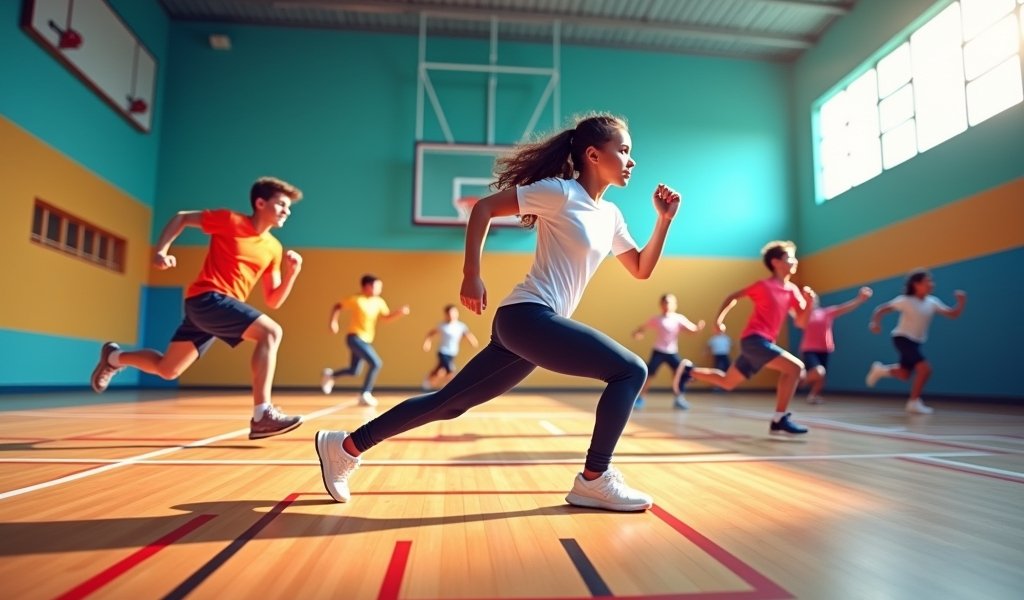
Overview
This article presents seven effective workout routines specifically designed for school gym settings, including circuit training, strength training, HIIT, cardio, flexibility, partner exercises, and equipment-free options. The guide emphasizes how school gyms provide accessible, cost-effective fitness opportunities that can improve physical health, academic performance, and mental well-being for students and staff alike.
Table of Contents
- Introduction to School Gym Workouts
- Benefits of Working Out in the School Gym
- Workout 1: Full-Body Circuit Training
- Workout 2: Basic Strength Training
- Workout 3: HIIT for Maximum Efficiency
- Workout 4: Cardio Blast
- Workout 5: Flexibility and Mobility
- Workout 6: Partner Exercises
- Workout 7: Equipment-Free Workouts
- Conclusion
- Frequently Asked Questions
Introduction to School Gym Workouts
The school gym offers an incredible, often underutilized opportunity for students and staff to maintain fitness without the cost of a commercial gym membership. As a physical education professional with over a decade of experience, I’ve seen firsthand how the right school gym workouts can transform not only physical health but also academic performance and mental well-being. Many people walk past their school gym daily without realizing the gold mine of fitness potential waiting inside those doors.
School gyms typically offer a surprising variety of equipment, from weight machines to cardio options, and sometimes even specialized training areas. Whether you’re a student looking to stay active between classes, a teacher seeking convenient workout options, or a parent utilizing community resources, the school gym environment provides a supportive setting for various fitness goals.
In this comprehensive guide, we’ll explore seven proven, time-tested workouts specifically designed for the school gym setting. I’ve personally implemented these with hundreds of students and colleagues, refining them based on real-world feedback and results. Let’s dive into these accessible routines that can fit into even the busiest school schedules.
Benefits of Working Out in the School Gym
Before jumping into specific workouts, let’s understand why the school gym deserves your attention. Convenience tops the list—it’s already where you spend much of your day, eliminating travel time and excuses. For students, it’s literally steps away from classrooms, making lunchtime or after-school workouts extremely practical.
Cost-effectiveness can’t be overlooked either. School gyms are typically free for students and staff, and sometimes available to community members for a nominal fee—a significant advantage over commercial gym memberships that can run hundreds of dollars annually. This accessibility democratizes fitness, making it available regardless of economic status.
Research from the Centers for Disease Control and Prevention confirms that regular physical activity improves academic performance, enhances concentration, and reduces behavioral issues among students. For teachers and staff, on-site workout options have been shown to reduce stress and improve job satisfaction.
School gyms also foster a unique sense of community. Working out alongside peers creates natural accountability partners and strengthens school relationships. I’ve witnessed unlikely friendships form between students from different social circles, united by their shared commitment to fitness goals.
Workout 1: Full-Body Circuit Training
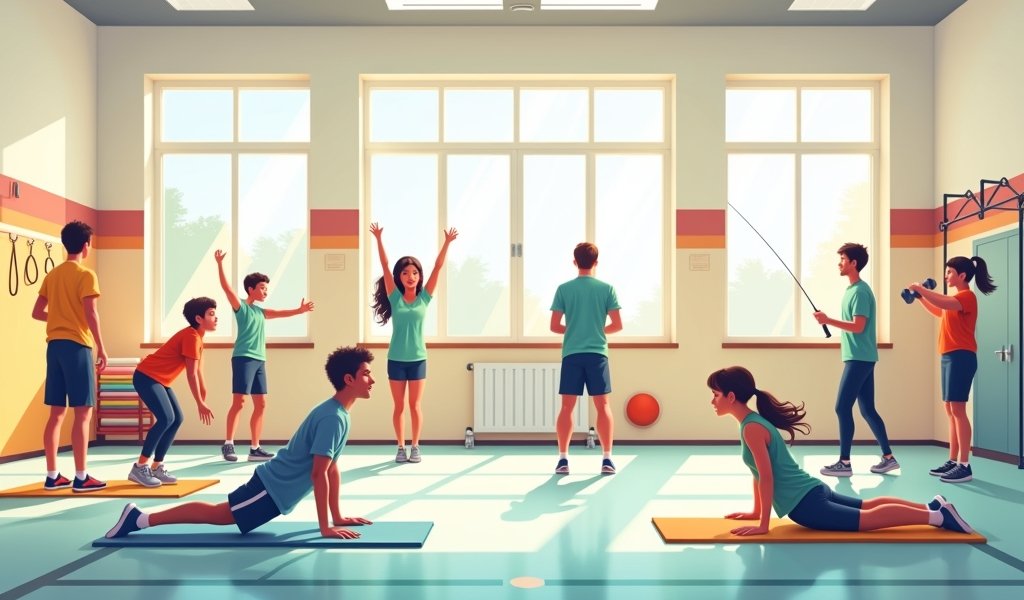
Circuit training shines in the school gym setting where time is often limited. This workout rotates through 6-8 stations targeting different muscle groups, with minimal rest between exercises. The beauty of circuit training lies in its efficiency—you’ll get both cardiovascular and strength benefits in one session.
A well-designed school gym circuit might include:
- Station 1: Push-ups or chest press (15 reps)
- Station 2: Bodyweight squats or leg press (15 reps)
- Station 3: Pull-ups or rowing machine (12 reps or 45 seconds)
- Station 4: Walking lunges across the gym floor (20 steps)
- Station 5: Plank or ab crunches (30-45 seconds)
- Station 6: Jump rope or jumping jacks (45 seconds)
Complete this circuit 3-4 times with a one-minute rest between rounds. The entire workout takes approximately 25-30 minutes, making it perfect for a lunch break or before-school session. Studies published in the Journal of Sports Medicine and Physical Fitness have demonstrated that this style of training burns more calories per minute than traditional steady-state exercises.
For beginners, I recommend focusing on proper form rather than speed, gradually increasing pace as movements become more familiar. Advanced exercisers can add weights or increase repetitions to maintain challenge. The versatility of circuit training allows for endless variations, keeping workouts fresh even with limited equipment.
Workout 2: Basic Strength Training
Don’t let the word “basic” fool you—this foundational strength routine delivers serious results. School gyms typically provide the essential equipment needed for an effective strength program, including dumbbells, barbells, and sometimes weight machines. This workout focuses on compound movements that engage multiple muscle groups simultaneously, maximizing your gym time.
A balanced, twice-weekly strength program might include:
- Squat variations: 3 sets of 10-12 reps
- Push-ups or bench press: 3 sets of 10-12 reps
- Deadlifts or hip hinges: 3 sets of 8-10 reps
- Overhead press: 3 sets of 8-10 reps
- Rows or pull-ups: 3 sets of 10-12 reps
Rest 60-90 seconds between sets, and aim to progressively increase weight or repetitions every 2-3 weeks. I’ve found that maintaining a workout journal in your school locker helps track progress and provides motivation as strength increases become visible over time.
For adolescents, strength training offers particular benefits when done correctly. The American Academy of Pediatrics now endorses appropriately designed resistance training for youth, noting improvements in bone density, sports performance, and even self-confidence. Always ensure proper technique is prioritized over heavy lifting, especially for developing bodies.
If you’re new to strength training, consider asking a physical education teacher for form checks or partnering with a more experienced friend. Most school staff are more than willing to provide guidance during a planning period or after classes end. The exercise bike benefits can also complement your strength routine on recovery days, providing low-impact cardio that won’t interfere with muscle development.
Workout 3: HIIT for Maximum Efficiency
High-Intensity Interval Training (HIIT) has revolutionized fitness approaches, particularly in time-constrained environments like schools. These workouts alternate between short bursts of intense activity and brief recovery periods, creating a metabolic effect that continues burning calories long after you’ve showered and headed to class.
A sample 20-minute HIIT workout perfect for the school gym:
- Warm-up: 3 minutes of light jogging or dynamic stretching
- Work interval: 30 seconds of burpees, mountain climbers, or sprint
- Rest interval: 30 seconds of walking or complete rest
- Repeat for 14 minutes (14 total intervals)
- Cool-down: 3 minutes of light activity and stretching
The beauty of HIIT lies in its adaptability. Students preparing for sports can incorporate sport-specific movements, while those focusing on general fitness can select exercises that match their current abilities. Research published in the Journal of Obesity has demonstrated that HIIT produces comparable fat loss to endurance training in less than half the time.
I particularly recommend HIIT for those struggling with motivation or workout consistency. The brief, intense nature keeps boredom at bay, while the constantly changing intervals create a psychological advantage—you’re always just seconds away from your next rest period!
One important note: quality trumps quantity with HIIT. It’s better to perform fewer intervals with proper form and true intensity than to complete more repetitions with compromised technique. Listen to your body and adjust accordingly, especially when first introducing this demanding training style.
Workout 4: Cardio Blast
While strength training and HIIT rightfully receive significant attention in fitness circles, dedicated cardiovascular exercise remains foundational to any complete fitness program. School gyms typically offer several cardio options, from traditional treadmills to more engaging alternatives like exercise bikes, rowing machines, or basketball courts.
A varied cardio routine might include:
- Monday: 30 minutes of steady-state jogging or cycling
- Wednesday: 20 minutes of rowing intervals (2 minutes moderate, 1 minute intense)
- Friday: 40 minutes of recreational basketball or volleyball
This approach prevents the monotony that often accompanies cardio training while ensuring you’re developing different energy systems. The variety also reduces repetitive stress on joints, particularly important for growing adolescents or those with existing mobility issues.
The social aspect of cardio shouldn’t be overlooked either. Group activities like pickup basketball games or informal running clubs build community within the school environment. I’ve organized before-school running groups that started with just three students and grew to over thirty participants, creating a positive ripple effect throughout the school culture.
For those who find traditional cardio uninspiring, consider using a bike exercise machine while reviewing class notes or listening to educational podcasts. This “two birds, one stone” approach has helped many students maintain consistent exercise habits while supporting their academic goals.
Workout 5: Flexibility and Mobility
Perhaps the most neglected aspect of fitness programming in school gyms is dedicated flexibility and mobility work. Yet this component prevents injuries, improves performance in other activities, and contributes significantly to long-term health outcomes. Research from the National Strength and Conditioning Association indicates that regular flexibility training can reduce injury rates by up to 30% in adolescent athletes.
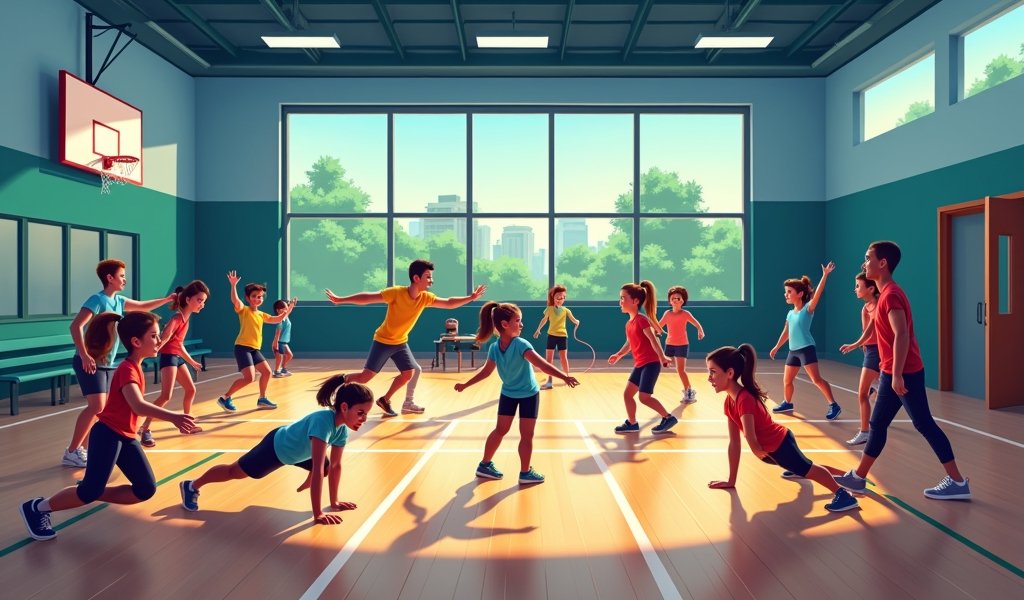
A comprehensive 25-minute flexibility session includes:
- 5 minutes of light cardio to increase core temperature
- 10 minutes of dynamic stretching (leg swings, arm circles, torso rotations)
- 10 minutes of static stretching, holding each position for 30 seconds
- Optional: foam rolling for particularly tight areas
School gyms often have dedicated mats or studio spaces perfect for this type of workout. For best results, perform this routine 2-3 times weekly, ideally after other exercise sessions when muscles are warm and receptive to stretching.
I’ve found that flexibility workouts provide an excellent opportunity to practice mindfulness techniques with students and colleagues. The slower pace allows for focused breathing and body awareness, creating a natural bridge between physical and mental wellness practices.
For those dealing with specific mobility issues like “tech neck” from hours of studying or desk work, targeted stretching protocols can dramatically improve comfort and posture. Physical education teachers can often provide personalized flexibility recommendations based on individual needs and limitations.
Workout 6: Partner Exercises
The social environment of a school gym creates perfect opportunities for partner-based workouts. These exercises leverage the motivation of accountability while often enabling more challenging movements than would be possible solo. As both a physical educator and coach, I’ve seen remarkable progress when students pair up to pursue fitness goals together.
A fun, effective partner workout might include:
- Medicine ball passes: 3 sets of 20 throws
- Partner resistance rows: 3 sets of 12 reps each
- Wheelbarrow walks across gym floor: 2-3 trips each
- Partner squats (holding hands for balance): 3 sets of 15 reps
- Timed plank competitions: 3 attempts to outlast your partner
These workouts naturally inject fun and friendly competition into exercise, making them particularly effective for students who might otherwise avoid the gym. Partner sessions also develop communication and cooperation skills, creating cross-curricular benefits that extend beyond physical fitness.
When implementing partner workouts, match participants of similar fitness levels when possible, and provide modifications for exercises to accommodate different abilities. The goal is challenging, supportive collaboration rather than discouraging competition.
For teachers looking to incorporate partner workouts into physical education classes, I recommend starting with simple activities and gradually introducing more complex movements as students develop confidence and coordination. These sessions often become class favorites, with students requesting them repeatedly throughout the semester.
Workout 7: Equipment-Free Workouts
Despite the availability of equipment in most school gyms, situations arise when machines are occupied or under maintenance. Being prepared with equipment-free workouts ensures you never miss a session due to crowded facilities. These bodyweight circuits require only open floor space, making them versatile options for any school environment.
A challenging no-equipment routine includes:
- Bodyweight squats: 20 repetitions
- Push-up variations (standard, incline, or knee): 15 repetitions
- Walking lunges: 20 steps total
- Mountain climbers: 30 seconds
- Plank: 45 seconds
- Burpees: 10 repetitions
Complete this circuit 3-4 times with minimal rest between exercises and 60-90 seconds between rounds. The entire workout takes just 20-25 minutes but challenges cardiovascular endurance and multiple muscle groups simultaneously.
The simplicity of equipment-free workouts makes them particularly accessible for beginners or those intimidated by complex gym machinery. I often recommend starting with these foundational movements to develop proper form and body awareness before progressing to weighted exercises.
For advanced fitness enthusiasts, these bodyweight circuits make excellent supplementary workouts on recovery days or when traveling without gym access. The fundamental movements train motor patterns that transfer directly to more complex lifting techniques used in competitive sports.
Conclusion
The school gym represents an untapped resource for many students and staff—a convenient, cost-effective space to build lifelong fitness habits. Through implementing these seven proven workouts, you can transform this everyday environment into your personal training center, adapting routines to your specific goals and schedule constraints.
Remember that consistency trumps perfection in fitness. Even three 30-minute sessions weekly in your school gym will yield noticeable improvements in strength, endurance, and overall wellbeing. Start with workouts that appeal to your personal preferences, gradually expanding your repertoire as confidence and abilities grow.
The school gym offers more than just physical benefits—it creates opportunities for community building, stress reduction, and the development of lifelong health habits. Whether you’re a student looking to improve athletic performance, a teacher seeking work-life balance, or a parent utilizing community resources, these seven workouts provide a roadmap to success within the familiar walls of your school’s fitness facility.
I encourage you to treat your school gym with the same respect and intention you would a premium fitness center. With the right approach and these proven workout strategies, remarkable transformations are possible without ever leaving campus. Your journey toward improved fitness begins with a single step through those gymnasium doors.
Frequently Asked Questions
How many times per week should I work out in the school gym?
For beginners, aim for 2-3 weekly sessions of 30-45 minutes each. As your fitness improves, you can gradually increase to 4-5 sessions if your schedule allows and your body recovers adequately between workouts.
Is it better to work out before or after school?
This depends entirely on your personal preference and schedule. Morning workouts often face fewer interruptions and can energize your day, while afternoon sessions might allow for better performance when your body is fully awake and fueled.
Do I need a personal trainer to get started in the school gym?
No, but seeking initial guidance from a physical education teacher or experienced friend can help ensure proper form. Start with basic movements, focus on technique rather than weight, and gradually build confidence before attempting advanced exercises.
How soon will I see results from school gym workouts?
Most people notice improved energy and mood within 1-2 weeks of consistent training. Physical changes typically become visible after 4-6 weeks, though this varies based on workout intensity, nutrition, and individual factors.
Can school gym workouts help with academic performance?
Absolutely! Research consistently shows that regular physical activity improves concentration, memory, and cognitive function. Many students report better focus in afternoon classes following lunchtime workout sessions.