

Overview
The article outlines a comprehensive guide to using Mediterranean diet recipes for weight loss, featuring science-backed strategies, practical meal plans, and real success stories. It emphasizes that the Mediterranean approach offers sustainable weight management through flavorful, nutrient-rich foods that promote satisfaction and metabolic health without deprivation, while providing specific recipes for breakfast, lunch, dinner, and snacks alongside solutions for common implementation challenges.
Table of Contents
- Mediterranean Magic: Where Flavor Meets Weight Loss
- The Science Behind Mediterranean Weight Loss Success
- Sun-Kissed Breakfast Recipes for a Lighter You
- Midday Mediterranean Marvels: Lunch Recipes That Satisfy
- Evening Elegance: Mediterranean Dinner Recipes for Weight Loss
- Guilt-Free Nibbles: Mediterranean Snacks and Desserts
- Setting Sail: Practical Mediterranean Meal Planning
- From Struggle to Success: Real Mediterranean Transformations
- Navigating Choppy Waters: Common Challenges and Solutions
- Embracing the Mediterranean Journey
- Frequently Asked Questions
Mediterranean Magic: Where Flavor Meets Weight Loss
Picture yourself on a sun-drenched terrace overlooking azure waters, a plate brimming with colorful vegetables, a drizzle of golden olive oil, and the aroma of fresh herbs dancing in the air. This isn’t just a vacation fantasy—it’s the everyday reality of the Mediterranean diet, nature’s most delicious prescription for weight loss.
Unlike the typical weight loss journey that feels like trudging through a desert of deprivation, embracing mediterranean diet recipes for weight loss is more like sailing on a pleasure cruise where every meal is an occasion for joy. As a nutritionist who’s guided hundreds through successful weight transformations, I’ve witnessed firsthand how this eating pattern transforms not just bodies but relationships with food.
What makes Mediterranean eating so revolutionary for weight management isn’t complicated science—it’s brilliant simplicity. While other diets demand you count, measure, and restrict, the Mediterranean approach invites you to a table of abundance where the foods that help you slim down are the very ones that make your taste buds dance.
In my clinical practice, I’ve seen patients lose 20, 30, even 50 pounds without feeling like they’re “dieting” at all. The secret? When food is this satisfying, portions naturally regulate themselves, and the endless cycle of craving and guilt simply fades away like footprints on a Mediterranean beach.
The Science Behind Mediterranean Weight Loss Success
The Mediterranean diet isn’t just another food trend—it’s one of the most thoroughly researched eating patterns in scientific literature. Studies consistently show that followers of this diet lose more weight and, more importantly, keep it off compared to those following conventional low-fat approaches.
A landmark study published in The New England Journal of Medicine found that participants following a Mediterranean diet lost an average of 9.7 pounds and significantly reduced their waistlines after just one year—without specific calorie restrictions. That’s right—no calorie counting required!
Why does it work so well for weight loss? The magic happens on multiple levels:
- Rich in fiber from vegetables, fruits, and whole grains that keep you satisfied longer
- Healthy fats from olive oil, nuts, and fish that trigger satiety signals to your brain
- Protein balance that preserves muscle mass during weight loss
- Low in processed foods that trigger inflammation and fat storage
- Moderate in natural carbohydrates that stabilize blood sugar
Perhaps most revolutionary is what the Mediterranean diet does to your metabolism. Research from the Harvard School of Public Health shows that the anti-inflammatory properties of this eating pattern help optimize hormonal function—particularly insulin sensitivity—which is crucial for fat loss.
But let’s be honest—none of this scientific evidence would matter if the food didn’t taste amazing. Fortunately, Mother Nature’s weight loss plan comes packed with the most vibrant flavors on earth.

Sun-Kissed Breakfast Recipes for a Lighter You
Mornings set the metabolic tone for your entire day. These Mediterranean breakfast options deliver the perfect balance of protein, fiber, and healthy fats to fire up your fat-burning engines while keeping hunger at bay until lunch.
Greek Yogurt Parfait with Honey and Walnuts
This protein powerhouse takes just minutes to prepare but keeps hunger locked away for hours. Layer 1 cup of full-fat Greek yogurt (yes, full-fat—it’s more satiating and contains conjugated linoleic acid that supports fat loss) with 1 tablespoon of honey and 1 tablespoon of chopped walnuts. The protein-fat combination stabilizes blood sugar while providing the calcium that research shows can accelerate weight loss.
Shakshuka: Eggs Poached in Spiced Tomato Sauce
This North African breakfast staple is a one-pan wonder that combines protein-rich eggs with lycopene-packed tomatoes. Simmer diced tomatoes with bell peppers, garlic, cumin, and a touch of paprika, then create small wells and crack eggs directly into the sauce. Cover and cook until the whites set but yolks remain runny. Studies show that egg-based breakfasts can reduce calorie intake throughout the entire day by up to 400 calories.
Whole Grain Toast with Avocado and Za’atar
Toast a slice of authentic sourdough bread (true sourdough has a lower glycemic impact than regular bread), top with 1/4 mashed avocado, a squeeze of lemon, and a sprinkle of za’atar—a Middle Eastern spice blend rich in thymus vulgaris, which some research suggests may help boost metabolism. This breakfast provides the perfect balance of complex carbs, healthy fats, and fiber to fuel your morning.
What makes these breakfasts work for weight loss isn’t just their nutritional profile—it’s how they make you feel. The satisfaction factor eliminates the mid-morning snack attack that derails so many weight loss attempts. As my patients often tell me, “When breakfast tastes this good, who needs the doughnut break?”
Midday Mediterranean Marvels: Lunch Recipes That Satisfy
Lunch often becomes the danger zone for weight loss efforts. The Mediterranean approach transforms the midday meal from a potential pitfall into a weight management ally with these simple yet spectacular options.
Lentil Soup with Lemon and Herbs
This humble soup packs a serious weight loss punch. Simmer red lentils with onions, carrots, garlic, and vegetable broth until tender, then finish with fresh lemon juice and a handful of chopped parsley. The combination of plant protein and fiber creates the perfect satiety storm—research shows that starting meals with soup can reduce total calorie intake by up to 20% without increasing hunger.
Mediterranean Tuna Salad Stuffed Tomatoes
Reinvent tuna salad by mixing chunk light tuna with chopped olives, capers, red onion, and a lemon-olive oil dressing instead of mayo. Serve in hollowed-out tomatoes for a lunch that delivers lean protein, vegetables, and healthy fats in one beautiful package. The protein-rich filling helps preserve muscle mass during weight loss, while the monounsaturated fats from olive oil help reduce inflammation that can stall fat loss.
Quick Chickpea and Vegetable Grain Bowl
Combine 1/2 cup cooked farro or barley with roasted vegetables (whatever’s in season), 1/3 cup chickpeas, a handful of fresh herbs, and a simple vinaigrette. This plant-forward bowl provides complex carbohydrates that fuel afternoon energy while delivering the resistant starch that feeds beneficial gut bacteria linked to easier weight management. The protein-fiber combination keeps you feeling full for hours, eliminating the 3 PM vending machine raid.
What distinguishes these Mediterranean lunches from typical diet fare is their vibrance—both in flavor and color. The visual appeal triggers greater satisfaction, while the nutritional profile supports your metabolism through the afternoon slump when willpower often wanes.
Evening Elegance: Mediterranean Dinner Recipes for Weight Loss
Dinner deserves special attention in any weight loss plan—it’s when we’re most likely to overconsume yet also when social enjoyment of food matters most. These Mediterranean dinner recipes strike the perfect balance between pleasure and nutrition.
Baked Fish with Tomatoes, Olives and Capers (Acqua Pazza)
This classic Italian preparation transforms mild white fish into a flavor explosion. Place fish fillets in a baking dish, surround with cherry tomatoes, black olives, and capers, then add a splash of white wine and olive oil. Bake until the fish flakes easily. The lean protein helps rebuild muscle overnight (when most repair happens), while the healthy fats support the production of adiponectin—a hormone that enhances fat burning.
Grilled Vegetable and Quinoa-Stuffed Bell Peppers
Halve bell peppers and remove seeds, then fill with a mixture of cooked quinoa, grilled zucchini, eggplant, and a small amount of crumbled feta. Drizzle with olive oil and bake until peppers are tender. This vegetable-forward meal provides plant protein and complex carbohydrates in controlled portions, naturally limiting calories while maximizing nutrients and fiber that feed the gut microbiome—increasingly recognized as critical for weight management.
Chicken Souvlaki with Greek Salad
Marinate chicken breast chunks in lemon juice, garlic, and oregano, then skewer and grill. Serve with a generous portion of traditional Greek salad—tomatoes, cucumbers, bell peppers, red onion, and a small amount of feta dressed with olive oil and red wine vinegar. This high-protein, vegetable-rich dinner supports muscle maintenance during weight loss while providing satisfying flavors that eliminate evening snack cravings.
What makes these dinners particularly effective for weight management is their balance—they satisfy the desire for a “real meal” while naturally controlling portions of higher-calorie components. The abundance of vegetables creates volume and satisfaction without excess calories.
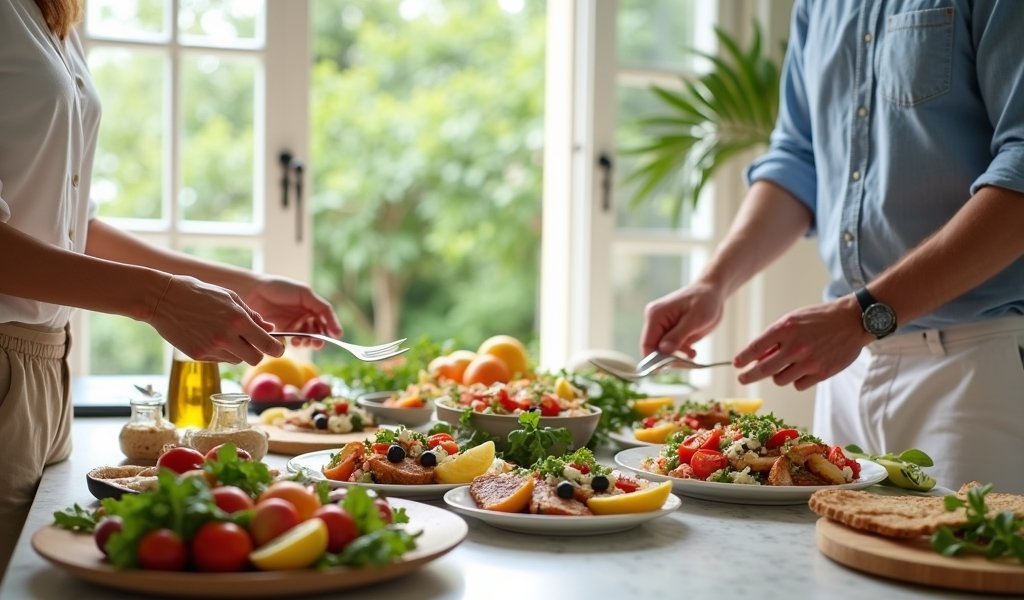
Guilt-Free Nibbles: Mediterranean Snacks and Desserts
The Mediterranean approach doesn’t ban snacks or desserts—it transforms them into allies rather than saboteurs. These options satisfy cravings without derailing progress.
Strategic Snacking
- A small handful (about 15) almonds with a fresh fig or two dates
- Cucumber slices topped with hummus and a sprinkle of sumac
- A few olives with a thin slice of Manchego cheese
- Roasted chickpeas seasoned with herbs and lemon zest
These snack options combine protein or healthy fats with fiber to stabilize blood sugar and prevent the insulin spikes that trigger fat storage. What’s remarkable about Mediterranean snacking is its mindfulness—small portions of nutrient-dense foods rather than mindless consumption.
Sweet Endings
- Greek yogurt drizzled with honey and cinnamon
- Fresh fruit salad topped with a sprinkle of chopped pistachios
- Baked apples stuffed with walnuts, cinnamon, and a touch of honey
- Fresh fruit frozen with a drizzle of dark chocolate
Mediterranean desserts focus on fresh fruit as the star, with sweetness coming primarily from nature rather than refined sugars. The inclusion of nuts provides satisfaction through healthy fats while adding texture and nutritional value. Research from the Journal of the American College of Nutrition shows that people who include small amounts of dessert in their weight loss plans actually lose more weight and maintain their losses better than those who try to eliminate sweets entirely.
Setting Sail: Practical Mediterranean Meal Planning
Even the most delicious diet will fail without practical implementation. Let me share the Mediterranean meal planning strategies that have helped my clients succeed where previous attempts failed.
The Weekly Rhythm
Rather than daily meal planning that can become overwhelming, adopt a Mediterranean weekly rhythm:
- Sunday: Cook a pot of beans or lentils and roast a tray of vegetables
- Monday: Fish night with those pre-prepped vegetables
- Tuesday: Build meals around the pre-cooked legumes
- Wednesday: Vegetable-forward dinner (like stuffed vegetables or ratatouille)
- Thursday: Another fish or seafood meal
- Friday: Poultry-based dish
- Saturday: Mediterranean-inspired dining out or special home cooking
This approach creates structure without rigidity and allows for efficient shopping and preparation.
Pantry Essentials
Stock these Mediterranean staples for easy meal assembly:
- Extra virgin olive oil (use as your primary fat)
- Variety of vinegars (red wine, white wine, balsamic)
- Canned beans (chickpeas, lentils, white beans)
- Canned fish (tuna, sardines)
- Whole grains (farro, quinoa, brown rice, bulgur)
- Nuts and seeds (walnuts, almonds, pine nuts, sesame seeds)
- Dried herbs and spice blends (oregano, thyme, za’atar, sumac)
With this foundation, even on busy nights, you’re just 15 minutes away from a weight-friendly Mediterranean meal.
Batch Cooking Strategy
For busy professionals, batch elements rather than complete meals:
- Roast a large tray of mixed vegetables to use in various dishes
- Cook a pot of whole grains to refrigerate or freeze in portions
- Prepare a large batch of Mediterranean salad (without dressing) to last 3-4 days
- Make a versatile sauce like tzatziki or hummus to use as a snack, spread, or sauce
This approach provides building blocks for quick meals rather than eating the same dish repeatedly. The flexibility prevents the boredom that derails many weight loss efforts.
From Struggle to Success: Real Mediterranean Transformations
Numbers and nutritional science are compelling, but what truly inspires are the real stories of transformation. Here are just a few from my practice:
Maria, a 45-year-old executive, had tried six different diets before discovering the Mediterranean approach. “I was tired of feeling like food was the enemy,” she explains. “With Mediterranean eating, I lost 34 pounds over seven months without counting a single calorie. But what really changed was my relationship with food—I no longer fear social gatherings or stress about every bite.”
James, a 52-year-old with a family history of heart disease, came to me after his doctor warned him about his rising cholesterol and weight. “I was skeptical about losing weight without feeling hungry all the time,” he admits. “But after three months of Mediterranean eating, I was down 18 pounds, my LDL cholesterol dropped 40 points, and my doctor reduced my medication. I’m actually enjoying food more now than when I was eating whatever I wanted.”
Sophia, a 38-year-old mother of two, struggled with post-pregnancy weight that wouldn’t budge despite rigorous exercise. “The Mediterranean diet was a revelation—I could cook one family meal that everyone enjoyed rather than preparing ‘diet food’ for myself. I lost 27 pounds while teaching my children healthy eating habits. The inflammation I’d been battling also disappeared, giving me energy I hadn’t felt in years.”
What connects these stories isn’t just weight loss—it’s the discovery that health and pleasure can coexist at the same table. As Sophia put it, “For the first time, I’m not waiting to finish my diet so I can ‘live again.’ This is living.”
Navigating Choppy Waters: Common Challenges and Solutions
Even the most idyllic journey encounters occasional storms. Here’s how to navigate the common challenges of Mediterranean-style eating for weight loss:
Challenge: “Mediterranean ingredients seem expensive.”
Solution: Focus on the economical backbone of the diet—beans, seasonal vegetables, and whole grains are actually budget-friendly. Save specialty items like imported olives or artisanal cheese for occasional accents rather than daily consumption. The Mediterranean peasant traditions offer the most economical recipes—soups, bean dishes, and vegetable-forward meals that stretch more expensive proteins.
Challenge: “I don’t have time for elaborate Mediterranean cooking.”
Solution: Authentic Mediterranean cooking is actually quite simple—it’s about quality ingredients prepared simply. Many traditional dishes require just 15-20 minutes of active preparation. The vegetable-roasting technique alone (toss with olive oil, season, roast) can transform any weeknight meal with minimal effort. Remember that a simple plate of good tomatoes, olive oil, and a bit of cheese is more authentically Mediterranean than a complicated recipe.
Challenge: “My family/partner won’t eat ‘diet food.'”
Solution: Mediterranean eating is family-friendly by nature—these are traditions built around family meals. Start with familiar crossover dishes like Greek chicken, pasta with vegetables, or fish tacos with Mediterranean flavors. Focus on addition rather than subtraction—add more vegetables, fruits, and herbs to meals rather than emphasizing what’s being limited. Research shows that this positive approach creates less resistance to change.
Challenge: “I miss my favorite comfort foods.”
Solution: Mediterranean traditions offer plenty of comfort food—from Italian pasta (in appropriate portions) to Greek moussaka to Spanish tortilla. Identify the elements that make your comfort foods satisfying (creaminess, heartiness, etc.) and find Mediterranean alternatives that provide those same qualities. For instance, if you crave creamy textures, Greek yogurt-based sauces can provide similar satisfaction to cream-based ones with better nutritional profiles.
Embracing the Mediterranean Journey
As we reach the end of our exploration of mediterranean diet recipes for weight loss, I hope you’re feeling something rarely associated with weight management—excitement. What I’ve witnessed repeatedly in my practice is that when people stop seeing food as the enemy and start embracing these vibrant Mediterranean traditions, weight loss transforms from punishment to pleasure.
The power of this approach isn’t just in its nutritional profile—though the science clearly supports its effectiveness. The true magic lies in sustainability. When losing weight doesn’t mean sacrificing joy or connection, it becomes something you can maintain for life rather than endure for weeks.
In my twenty years as a nutritionist, I’ve seen countless diet trends come and go. What remains constant is human nature—we return to what brings us pleasure. The Mediterranean approach aligns pleasure with health in a rare harmony that explains why these traditions have endured for centuries while fad diets fade within years.
I encourage you to begin your own Mediterranean journey not with rigid rules but with curiosity and pleasure. Perhaps start with just one recipe that calls to you, or experiment with a new Mediterranean ingredient each week. Notice not just how your body changes but how your relationship with food evolves.
Remember that the Mediterranean way isn’t just about the food on your plate—it’s about savoring each bite, sharing meals with loved ones, and honoring the pleasure that comes from nourishing your body with foods that love you back. When approached this way, weight loss becomes not just possible but natural—as inevitable as the tides on those beautiful Mediterranean shores.
Frequently Asked Questions
How quickly can I expect to lose weight on the Mediterranean diet?
Healthy, sustainable weight loss typically ranges from 1-2 pounds per week on the Mediterranean diet. This gradual approach leads to better long-term maintenance and allows your body to adjust without triggering metabolic adaptations that can stall progress.
Can I drink alcohol on the Mediterranean diet while trying to lose weight?
The traditional Mediterranean pattern includes moderate wine consumption, typically one glass with dinner. If weight loss is your primary goal, consider limiting alcohol to special occasions as it provides calories without nutrition and can lower inhibitions around food choices.
Do I need to eat fish to successfully follow a Mediterranean diet for weight loss?
While fish provides valuable omega-3 fatty acids that support metabolic health, you can achieve weight loss success on a plant-forward Mediterranean diet without fish. Focus on other protein sources like legumes, nuts, seeds, and if desired, eggs and poultry.
Is olive oil too high in calories for a weight loss diet?
Despite being calorie-dense, research shows that olive oil actually supports weight loss through increased satiety and metabolic benefits. Use it in moderate amounts (1-2 tablespoons daily) to enhance flavors and absorption of fat-soluble vitamins.
How can I follow the Mediterranean diet when dining out?
Look for grilled fish or chicken, ask for olive oil and vinegar instead of creamy dressings, and request extra vegetables in place of some starchy sides. Mediterranean, Greek, Italian, Spanish, and Middle Eastern restaurants often offer the most compatible menu options.