
Overview
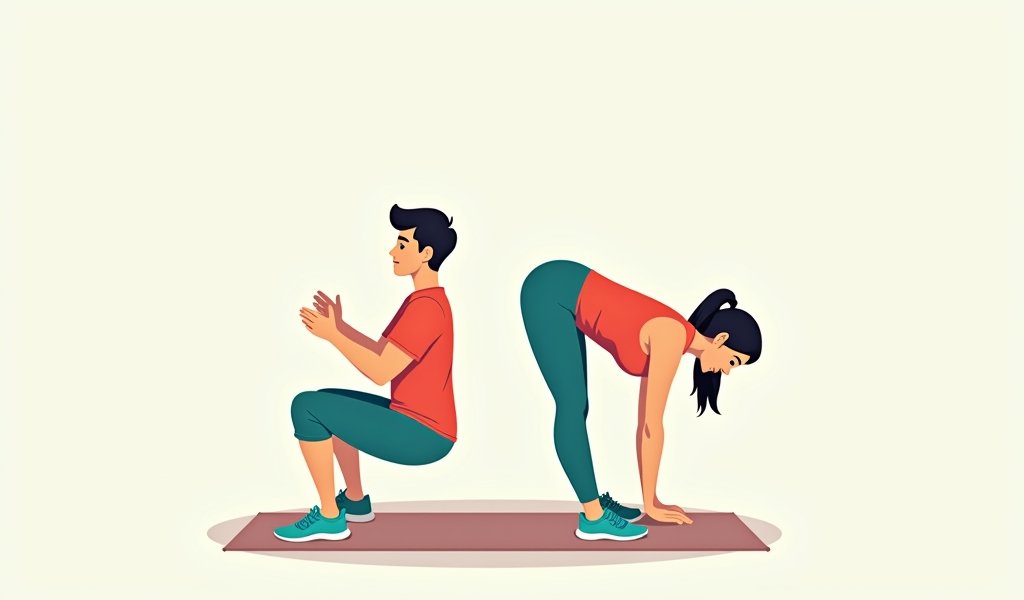
This guide offers ten targeted exercises—including gentle bridges, bird dog, cat-cow stretches, and swimming—specifically designed to relieve lower back and hip pain by improving strength, mobility, and movement patterns. The article emphasizes that consistent practice of these exercises, rather than complete rest, is the key to breaking the pain cycle and regaining functional movement, with most people experiencing improvement within 1-2 weeks and more lasting changes after 4-6 weeks of regular practice.
Table of Contents
- Understanding Lower Back and Hip Pain
- Why Exercise Is Crucial for Managing Lower Back and Hip Pain
- Exercise 1: Gentle Bridges for Foundation Strength
- Exercise 2: Bird Dog for Core Stability
- Exercise 3: Cat-Cow Stretch for Spinal Mobility
- Exercise 4: Piriformis Stretch for Hip Relief
- Exercise 5: Gentle Windshield Wipers for Hip Mobility
- Exercise 6: Wall Sits for Lower Back Support
- Exercise 7: Standing Hip Hinge for Proper Movement Patterns
- Exercise 8: Child’s Pose for Gentle Relief
- Exercise 9: Swimming for Full-Body Relief
- Exercise 10: Standing Quad Stretch for Balance
- Implementing Your Pain-Relief Routine
- Conclusion
- Frequently Asked Questions
Understanding Lower Back and Hip Pain
Living with lower back and hip pain can transform even the simplest activities into challenging ordeals. As a physical therapist for over 15 years, I’ve witnessed how these discomforts can sideline people from the activities they love. The interconnected nature of your lower back and hip anatomy means that pain in one area often affects the other, creating a frustrating cycle that can feel impossible to break.
Nearly 80% of adults experience lower back pain at some point in their lives, according to research from the National Institute of Neurological Disorders and Stroke. What many don’t realize is that hip dysfunction is frequently entangled with these back issues, creating a complex pain pattern that requires targeted intervention.
The good news? You’re not destined to live with this discomfort. Through my clinical practice, I’ve identified ten foundational exercises that consistently help patients find relief and regain mobility. These aren’t just random movements—they’re carefully selected techniques that address the root causes of lower back and hip pain while building the strength and flexibility needed for long-term relief.
Why Exercise Is Crucial for Managing Lower Back and Hip Pain
When pain strikes, your instinct might be to rest completely. While short periods of rest can help during acute flare-ups, extended inactivity actually makes matters worse. Your muscles weaken, joints stiffen, and the pain cycle intensifies—something I’ve seen countless times in my practice.
Strategic movement is medicine for your musculoskeletal system. The right exercises improve blood flow to damaged tissues, strengthen supporting muscles, and restore proper movement patterns. A comprehensive review published in JAMA Internal Medicine found that exercise therapy was consistently effective for reducing lower back pain and improving function.
The exercises I’m sharing target the specific muscle imbalances and movement limitations that typically contribute to lower back and hip pain. Many of my patients are surprised to discover how effectively these simple movements can address even long-standing discomfort when performed consistently as part of their physical wellness routine.
Let’s dive into these pain-relieving movements, starting with one of the most foundational exercises for building lower back stability.

Exercise 1: Gentle Bridges for Foundation Strength
Bridges are my go-to starting exercise for nearly every patient with lower back or hip pain. This movement activates your glutes and core simultaneously—two muscle groups that, when weak, frequently contribute to pain in these areas.
To perform a gentle bridge:
- Lie on your back with knees bent, feet flat on the floor hip-width apart
- Rest arms alongside your body with palms facing down
- Engage your core by gently drawing your navel toward your spine
- Slowly lift your hips toward the ceiling, creating a straight line from shoulders to knees
- Hold for 2-3 seconds at the top, focusing on squeezing your glutes
- Lower with control to the starting position
Start with 10 repetitions, and gradually build to 2-3 sets as your strength improves. I had a patient named Sarah who could barely walk two blocks without hip pain—after six weeks of consistent bridge work, she completed a 5K walk pain-free. The key is maintaining proper form: avoid overarching your lower back or using momentum to lift your hips.
Exercise 2: Bird Dog for Core Stability
The Bird Dog exercise might look simple, but it delivers powerful benefits for core stability while training your brain to maintain proper spinal alignment—a critical component of any holistic guide to wellness approach to back pain management.
To perform the Bird Dog:
- Start on your hands and knees in a tabletop position
- Ensure your wrists are under your shoulders and knees under your hips
- Keeping your spine neutral, simultaneously extend your right arm forward and left leg backward
- Focus on keeping your hips level (imagine balancing a cup of water on your lower back)
- Hold for 2-3 seconds, then return to the starting position
- Repeat with the opposite arm and leg
Aim for 8-10 repetitions on each side. If this is too challenging initially, master one limb at a time—extend just an arm or just a leg until you build enough stability for the full movement. The beauty of Bird Dog is how it trains your core to stabilize your spine during movement, which translates directly to everyday activities that might normally trigger pain.
Exercise 3: Cat-Cow Stretch for Spinal Mobility
After working on stability, we need to address mobility. The Cat-Cow stretch is a gentle, flowing movement that helps lubricate your spinal joints while stretching the muscles along your back and torso. I often prescribe this as a morning ritual for patients with stiffness-related pain.
To perform Cat-Cow:
- Start on hands and knees in tabletop position
- For “Cat,” exhale while rounding your spine toward the ceiling, tucking your chin toward your chest
- For “Cow,” inhale while arching your back, lifting your tailbone and head toward the ceiling
- Move slowly between these positions, letting your breath guide the movement
- Focus on feeling the stretch along different segments of your spine
Perform 10-12 flowing repetitions. This gentle spinal mobilization helps reduce stiffness and can provide immediate relief for many types of back discomfort. One of my clients, a 58-year-old office worker named Michael, incorporated Cat-Cow into his daily routine and reported that his morning back pain decreased by about 70% within just two weeks.
Exercise 4: Piriformis Stretch for Hip Relief
The piriformis muscle lies deep in your buttock and can become a significant source of both hip and lower back pain when tight. When this muscle squeezes the sciatic nerve, it can create shooting pain that radiates down the leg—a condition many of my patients experience before learning this stretch.
To perform the Piriformis Stretch:
- Lie on your back with knees bent, feet flat on the floor
- Cross your right ankle over your left knee, creating a figure-4 shape
- Grasp behind your left thigh and gently pull the leg toward your chest
- Hold for 20-30 seconds, feeling the stretch in your right hip/buttock
- Release and repeat on the opposite side
Perform 2-3 stretches on each side. The intensity should be moderate—a stretching sensation without sharp pain. Research from the Journal of Physical Therapy Science confirms that piriformis stretching can significantly reduce pain and improve function in patients with low back pain, making this a must-have in your pain management arsenal.
Exercise 5: Gentle Windshield Wipers for Hip Mobility
Hip mobility is often overlooked in back pain management, yet restricted hip rotation frequently forces the lower back to compensate during everyday movements. Gentle windshield wipers target the hip rotators while keeping your back protected.
To perform Windshield Wipers:
- Lie on your back with knees bent to 90 degrees and feet lifted
- Keep your knees together and arms out to the sides for stability
- Slowly lower both knees to the right, keeping your shoulders on the floor
- Only go as far as comfortable without lifting your opposite shoulder
- Return to center, then lower both knees to the left
- Move slowly and with control, focusing on rotation at the hips
Perform 8-10 repetitions to each side. This exercise improved hip mobility dramatically for my patient Elena, a yoga instructor who developed back pain after pregnancy. After four weeks of including windshield wipers in her routine, she reported being able to teach full classes without the nagging discomfort that had been limiting her.
Exercise 6: Wall Sits for Lower Back Support
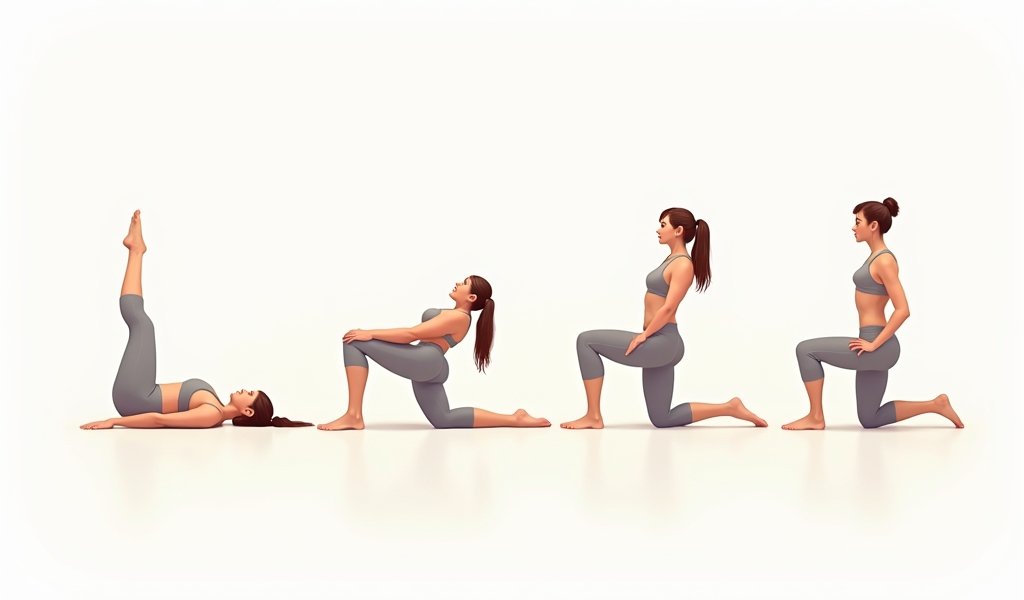
Wall sits might seem like a leg exercise, but they’re actually fantastic for training proper pelvic positioning and building endurance in the muscles that support your lower back. This exercise creates what I call “positional awareness”—teaching your body how to maintain healthy spinal alignment.
To perform Wall Sits:
- Stand with your back against a wall, feet shoulder-width apart and about 2 feet from the wall
- Slowly slide your back down the wall until your knees are bent at approximately 45-60 degrees
- Ensure your lower back is lightly touching the wall (not pressed firmly or arched away)
- Hold this position, starting with 15-20 seconds and building up over time
- Focus on keeping your weight in your heels, not your toes
Begin with 2-3 holds, resting between each. Wall sits are particularly beneficial for people whose occupations involve prolonged sitting, as they can help counteract the effects of poor posture that often contributes to occupational wellness challenges. My patient Robert, an accountant with chronic lower back pain, incorporated wall sits during his work breaks and reported substantial pain reduction after just three weeks.
Exercise 7: Standing Hip Hinge for Proper Movement Patterns
Many back injuries occur during bending and lifting due to poor movement patterns. The standing hip hinge teaches you to bend from your hips rather than your waist, protecting your spine during everyday activities. This fundamental movement pattern is something I teach to virtually every patient.
To perform the Standing Hip Hinge:
- Stand with feet shoulder-width apart, a slight bend in your knees
- Place your hands on your hip bones as feedback
- Keeping your back flat and core engaged, push your hips backward as if closing a door with your buttocks
- Allow a slight forward lean of your torso while maintaining a neutral spine
- Feel the stretch in your hamstrings as you hinge
- Return to standing by driving your hips forward, squeezing your glutes at the top
Perform 12-15 repetitions. The hip hinge is not just an exercise—it’s a movement strategy that, when mastered, can transform how you interact with your environment. Studies from the Journal of Orthopaedic & Sports Physical Therapy have shown that proper hinging mechanics significantly reduce stress on the lumbar spine during lifting activities.
Exercise 8: Child’s Pose for Gentle Relief
Sometimes the best medicine is gentle stretching that allows tight muscles to release. Child’s Pose creates space between vertebral segments while gently stretching the lower back muscles. I often recommend this as a “rescue position” when pain begins to flare.
To perform Child’s Pose:
- Start on hands and knees, then sit back on your heels
- Extend your arms forward or rest them alongside your body
- Allow your torso to relax toward the floor
- Rest your forehead on the mat or turn to either side for comfort
- Breathe deeply, feeling your back expand with each inhale
- Hold for 30 seconds to 2 minutes, depending on comfort
Child’s Pose can be modified by placing a pillow under your knees, torso, or forehead for additional support. This gentle stretch has provided immediate relief for countless patients in my clinic, including Diane, who found it to be the only position that alleviated her sciatica flare-ups enough to allow sleep during a difficult recovery period.
Exercise 9: Swimming for Full-Body Relief
While not a specific exercise per se, swimming deserves a place on this list for its remarkable benefits for back and hip pain sufferers. The buoyancy of water reduces pressure on joints while allowing for strengthening movements that might be painful on land.
Guidelines for Swimming as Therapy:
- Start with water walking in chest-deep water if swimming is too challenging
- Progress to gentle freestyle or backstroke, avoiding strokes that arch your lower back excessively
- Swim for 10-20 minutes, gradually increasing duration as endurance improves
- Use a pull buoy between your legs if kicking aggravates your symptoms
- Consider aquatic therapy classes specifically designed for back pain
Aim for 2-3 water sessions weekly. The effectiveness of aquatic therapy for chronic low back pain has been well-documented in clinical research. My patient James, who couldn’t walk more than 5 minutes without severe hip pain, found freedom of movement in the pool and eventually built enough strength to return to his favorite hiking trails.
Exercise 10: Standing Quad Stretch for Balance
Tight quadriceps pull on the pelvis and can contribute significantly to lower back and hip discomfort. The standing quad stretch helps restore balance between the front and back of your thighs, promoting proper pelvic alignment.
To perform the Standing Quad Stretch:
- Stand near a wall or chair for balance support
- Bend your right knee and bring your heel toward your buttock
- Grasp your right ankle with your right hand
- Keep your knees close together and avoid arching your lower back
- Hold for 20-30 seconds, feeling the stretch along the front of your thigh
- Release and repeat on the opposite side
Complete 2-3 stretches on each leg. If reaching your ankle is difficult, use a towel or strap as an extension. This stretch is particularly beneficial for people who spend extended periods sitting, as prolonged sitting leads to shortened quadriceps muscles. Maria, a long-distance truck driver I worked with, found significant relief by incorporating this stretch into her regular rest stops.
Implementing Your Pain-Relief Routine
Now that we’ve covered these ten essential exercises, let’s talk about how to implement them effectively. Consistency is paramount—sporadic exercise won’t deliver the lasting relief you’re seeking.
Here’s a simple framework to get you started:
- Begin with 3-4 exercises that feel most comfortable and beneficial for your specific pain pattern
- Perform your selected exercises daily, ideally splitting them between morning and evening
- Gradually add the remaining exercises as your comfort and capability increase
- Track your pain levels and function to identify which exercises provide the most benefit
- After 2-3 weeks, aim to incorporate all ten exercises at least 3-4 times weekly
Remember that pain should be your guide—exercises might produce mild discomfort but should never cause sharp or worsening pain. If an exercise consistently increases your symptoms, modify it or consult with a physical therapist for personalized guidance.
For optimal results, complement these exercises with proper hydration, anti-inflammatory nutrition choices, and mindful movement throughout your day. Small adjustments like taking brief walking breaks and maintaining good posture can significantly enhance the benefits of your exercise routine.
Conclusion
Lower back and hip pain doesn’t have to dictate the quality of your life. Through my years of clinical experience, I’ve seen remarkable transformations in patients who committed to these ten foundational exercises. The human body has an incredible capacity for healing when given the right tools and environment to thrive.
What makes these exercises particularly effective is their comprehensive approach—addressing stability, mobility, strength, and proper movement patterns simultaneously. They work together to create a support system for your spine and hips, breaking the cycle of pain that may have seemed inescapable.
Remember that healing is rarely linear. You may experience ups and downs on your journey toward pain-free movement, but persistence pays dividends. Start where you are, respect your body’s signals, and celebrate small victories along the way.
I encourage you to begin implementing these exercises today—even if you start with just one or two that resonate most with your needs. Your future self will thank you for taking this crucial step toward reclaiming your mobility and comfort.
Ready to take control of your lower back and hip pain? Start with 10 minutes today incorporating just two of these exercises into your routine. Build gradually, stay consistent, and watch as your body responds with increased comfort and capability. Your journey to pain-free movement begins with a single stretch!
Frequently Asked Questions
How soon should I expect relief after starting these exercises?
Many people notice some improvement within 1-2 weeks of consistent practice. However, lasting changes typically require 4-6 weeks of regular exercise as your body builds strength and adapts.
Should I exercise during a pain flare-up?
During acute flare-ups, gentle movements like Child’s Pose and Cat-Cow may provide relief. Avoid more challenging exercises until the severe pain subsides, then gradually reintroduce your routine.
Do I need special equipment for these exercises?
Most of these exercises require only your body weight and perhaps a wall or mat for comfort. Simplicity is part of what makes this program accessible and effective for most people.
Can these exercises replace medical treatment for serious back problems?
While these exercises help many people, they aren’t substitutes for proper medical care for serious conditions. Consult with a healthcare provider for persistent, severe, or worsening pain, especially with neurological symptoms.
How often should I perform these exercises?
Aim for daily practice of at least 4-5 exercises when starting out. As you progress, 3-4 full sessions weekly will help maintain your gains and prevent pain recurrence.