
Overview
This article presents a practical approach to incorporating fitness into everyday homemaking tasks, transforming chores like cleaning, cooking, and laundry into effective workout opportunities through mindful movement and proper form. By reframing household responsibilities as fitness opportunities rather than obligations, busy homemakers can achieve physical health benefits without additional time commitments, while potentially involving family members in active household management for shared wellness.
Table of Contents
- Transform Daily Chores into Effective Workouts
- Mindful Movement: Turning Homemaking into Exercise
- Kitchen Fitness Opportunities for Busy Homemakers
- Cleaning Workout Routines That Actually Work
- Laundry Day Fitness: Fold Your Way to Strength
- Multitasking Workout Strategies for Home Management
- Family Fitness Activities Through Household Chores
- Conclusion: Your Homemaking Fitness Journey
- Frequently Asked Questions
Transform Daily Chores into Effective Workouts
Finding time for fitness when you’re managing a household can feel like trying to fit a square peg into a round hole. As a health professional who’s also a mom of two, I completely understand the struggle. Just last month, I found myself staring at a mountain of laundry while my unused gym membership card gathered dust in my wallet. That’s when it hit me – what if the solution wasn’t about finding more time, but about reimagining the time I already had?
The truth is, homemaking activities burn more calories than you might think. According to research from the American Heart Association, everyday activities like vigorous cleaning can count toward your weekly physical activity goals. Household chores are like hidden workout gems – they’re already part of your routine, require no special equipment, and can be surprisingly effective at building strength and endurance.
Think of your home as a fitness center where every room offers different exercise stations. The vacuum cleaner becomes a resistance tool, the laundry basket transforms into a weight, and the kitchen counter serves as a ballet barre. This mindset shift – seeing chores not as obligations but as fitness opportunities – is like discovering a secret passage to better health right in your own home.
This approach has transformed my relationship with homemaking. Instead of dreading the never-ending to-do list, I now see each task as a chance to move my body purposefully. The benefits extend beyond physical fitness too – there’s a special satisfaction in killing two birds with one stone, getting both a cleaner home and a stronger body in the same time block.
Mindful Movement: Turning Homemaking into Exercise
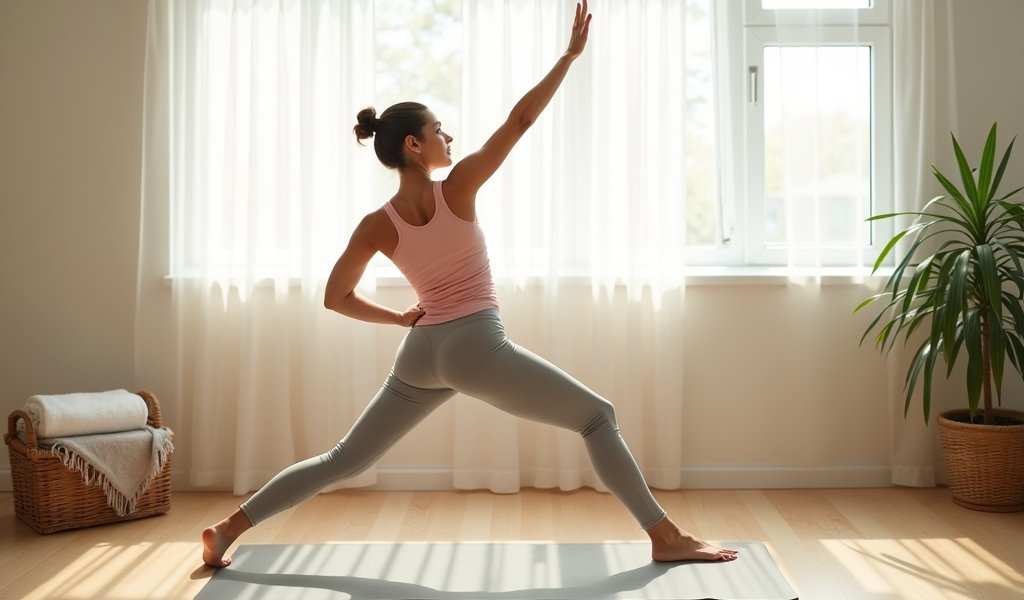
The key to successful homemaking fitness lies in mindful movement – bringing awareness and intention to activities you’re already doing. It’s not just about going through the motions; it’s about engaging the right muscles, maintaining proper form, and finding opportunities to add challenge.
Start by tuning into your body during everyday tasks. Notice your posture while washing dishes – are your shoulders hunched? Is your core engaged? By simply adjusting your stance and activating your muscles consciously, you transform a passive activity into an active one. It’s like turning up the volume on a song that was already playing – the tune was there all along, but now you can fully appreciate it.
Here are three simple ways to bring mindfulness to your movements:
- Focus on your breathing during repetitive tasks
- Engage your core muscles throughout the day
- Maintain proper alignment (shoulders back, spine neutral)
I discovered the power of this approach last year during a particularly hectic holiday season. With family coming to stay, I had to clean the entire house while still meeting work deadlines. Rather than stressing about missing my workouts, I decided to approach cleaning with the same focus I bring to yoga. I was amazed to find my fitness tracker logged over 7,000 steps and 300 calories burned from just two hours of mindful housework.
Remember, consistency trumps intensity in the homemaking fitness world. Small, mindful movements performed regularly will yield better results than occasional cleaning marathons that leave you exhausted and sore. Your body responds to what you do most days, not what you do once in a while.
Kitchen Fitness Opportunities for Busy Homemakers
The kitchen, often called the heart of the home, can also become the core of your fitness routine. This high-traffic area offers countless opportunities for movement if you know where to look for them. Like an urban gym with stations scattered throughout, your kitchen contains everything you need for a comprehensive workout.
Counter push-ups are my personal favorite kitchen exercise. While waiting for water to boil or the microwave to finish, I place my hands shoulder-width apart on the counter and perform 10-15 push-ups. The beauty of counter push-ups is their scalability – the more upright your body, the easier they are, making them perfect for beginners or those building strength. You can gradually increase difficulty by using lower surfaces like a sturdy chair.
Try this quick kitchen circuit during meal prep:
- 10 counter push-ups
- 20 calf raises while washing dishes or chopping vegetables
- 15 standing oblique twists (hands on hips, twist torso side to side)
- 10 pantry squats (squat to reach items on lower shelves)
One of my clients, a mother of three, struggled to find time for formal workouts until she started what she calls “sauce pan bicep curls.” While stirring sauces or soups, she’ll do gentle bicep curls with her free arm, using a can of beans or a small piece of home exercise equipment as weight. Six weeks into this simple practice, she noticed definition in her arms she hadn’t seen in years.
The kitchen also offers natural interval training opportunities. The time between checking on dishes can become recovery periods between more intense movement bursts. This approach turns cooking into a form of HIIT (High-Intensity Interval Training), which research shows may be more effective for fat loss than steady-state exercise.
Cleaning Workout Routines That Actually Work
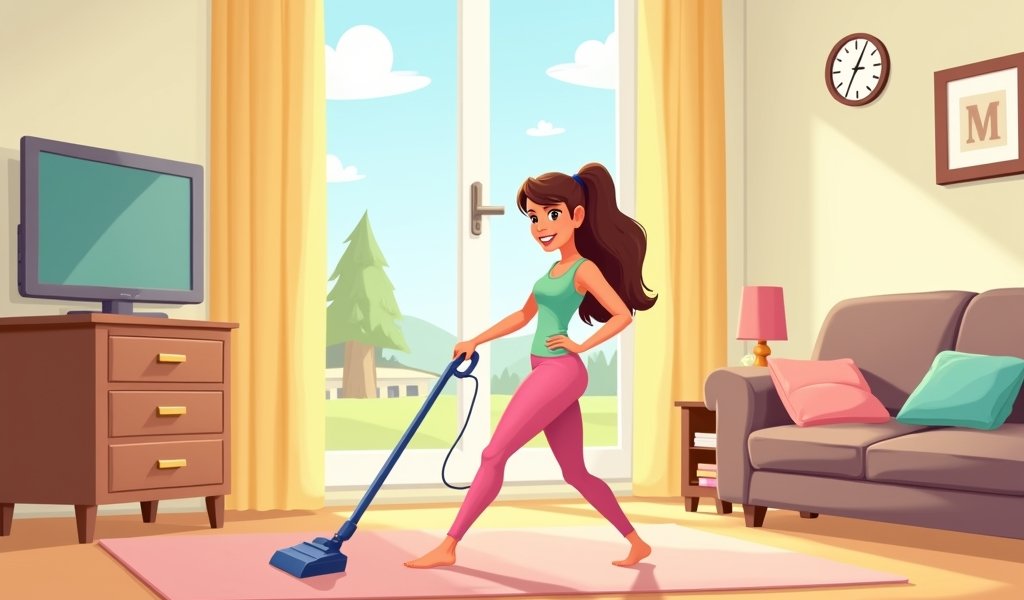
Cleaning activities rank among the most physically demanding household tasks, making them prime candidates for fitness transformation. Vacuuming alone can burn 150-200 calories per hour, and that’s before we add intentional fitness elements!
The “Vacuum Lunge” is a game-changer for lower body toning. Instead of standing statically while vacuuming, step forward into a lunge with each forward push of the vacuum. Alternate legs to ensure balanced muscle development, and remember to keep your front knee aligned with your ankle, not extending beyond your toes. This simple modification turns a mundane chore into a lower-body sculptor.
For upper body focus, window cleaning provides the perfect opportunity. Use large, circular motions that engage your shoulders and arms. Imagine you’re painting broad strokes on a canvas – the wider your movements, the more muscles you’ll activate. Switch arms frequently to ensure balanced development.
Here’s a complete cleaning circuit to try:
- Vacuum lunges: 5 minutes
- Window washing with extended arm movements: 3 minutes
- Scrubbing floors in squat position: 4 minutes
- Dusting high shelves with reaches and stretches: 3 minutes
- Repeat circuit once or twice
The beauty of cleaning workouts is their functional nature – they train your body for movements you use in daily life. After consistently incorporating fitness elements into my cleaning routine, I noticed practical improvements in my strength and mobility. Last spring, I surprised myself by easily moving furniture during a room rearrangement that would have required help before.
To maximize cleaning workouts, focus on proper form over speed. Rushing through chores with poor posture can lead to back strain and other injuries. Instead, move deliberately, engage your core, and use the resistance of cleaning tools as natural weight training.
Laundry Day Fitness: Fold Your Way to Strength
Laundry – that never-ending cycle of washing, drying, folding, and putting away – presents multiple fitness opportunities throughout its process. From the weighted basket carries to the repetitive folding movements, laundry day can become a comprehensive full-body workout.
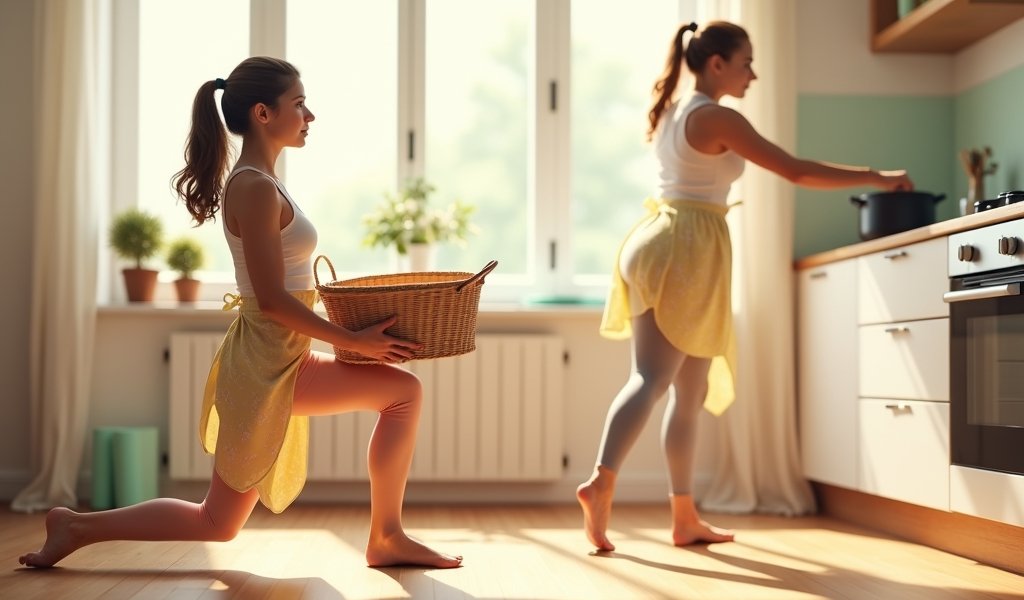
Start by treating your laundry basket as a functional fitness tool. When carrying the filled basket, engage your core, keep your shoulders back, and use proper lifting technique – bending at the knees, not the waist. This turns a simple carry into a functional strength exercise that targets your legs, back, and arms simultaneously. For an extra challenge, try walking lunges while carrying the basket to your laundry area.
The folding process offers perfect opportunities for standing exercises. Instead of sitting on the couch to fold, stand up and add these movements between garments:
- Standing side bends while holding a folded towel
- Calf raises during smaller items like socks and underwear
- Gentle squats between folding larger items
- Shoulder rolls and neck stretches to prevent tension
I’ve found that laundry fitness works best with an “exercise snacking” approach – short bursts of movement spread throughout the task rather than trying to make the entire process intense. This keeps the activity sustainable and prevents burnout. Just last weekend, I incorporated 50 calf raises and 30 standing side bends into my laundry routine without adding any extra time to the chore.
For homemakers with multi-level homes, consider strategically placing laundry baskets to maximize stair use. Stairs provide excellent cardiovascular benefits and lower body strengthening. One study found that just two minutes of stair climbing daily is enough to improve cardiovascular health measures – making those trips with the laundry basket valuable fitness opportunities.
Multitasking Workout Strategies for Home Management
Multitasking gets a bad rap in productivity circles, but when it comes to homemaking fitness, strategic multitasking can be your secret weapon. The key is pairing complementary activities – physical tasks with mental ones – rather than trying to focus on multiple complex tasks simultaneously.
Audio content provides the perfect companion for homemaking workouts. Podcasts, audiobooks, and fitness apps offer guidance and entertainment while leaving your hands and eyes free for household tasks. I’ve transformed my bathroom cleaning routine by listening to a 20-minute workout podcast, following along with the squats, arm circles, and stretches between scrubbing the shower and wiping the mirrors.
For more structured guidance, consider investing in one of the many exercise machines for home that offer audio-guided workouts. These programs are designed to work alongside your daily activities, providing timely prompts for movement without requiring you to watch a screen.
Here are effective multitasking pairs for homemaking fitness:
- Folding laundry while doing standing leg lifts
- Listening to interval timer apps during cleaning (intense cleaning during “work” intervals, lighter tasks during “rest” periods)
- Washing dishes while performing calf raises or balance exercises
- Dusting with exaggerated reaching motions while listening to motivational content
The beauty of this approach is that it often makes both activities more enjoyable. Last month, I got so engrossed in a fascinating podcast that I ended up organizing my entire pantry while completing a series of standing exercises – a task I’d been putting off for weeks. The mental engagement made the physical work feel easier, and the movement helped me focus better on the audio content.
For those who enjoy cycling, consider whether a home exercise bike might fit into your multitasking strategy. Some homemakers successfully pair stationary cycling with activities like folding laundry, meal planning, or even helping children with homework.
Family Fitness Activities Through Household Chores
Homemaking fitness doesn’t have to be a solo endeavor. Involving the entire family creates a powerful opportunity to model healthy habits while teaching responsibility and teamwork. Like a rowing crew working in unison, a family approaching household tasks with a fitness mindset can achieve impressive results together.
Start by reframing chores as “family fitness challenges.” Children respond well to playful competition and clear goals. For example, turn bedroom cleanup into a “Tidy Up Olympics” with events like “Speed Bed Making” or “Toy Put-Away Relay.” The physical activity becomes incidental to the fun, while still delivering genuine fitness benefits.
According to CDC guidelines, children need at least 60 minutes of physical activity daily. Homemaking fitness can contribute significantly to this goal, especially for families with limited access to outdoor spaces or organized sports.
Try these family-friendly homemaking fitness activities:
- Dance cleaning parties – turn on energetic music and clean together with dance moves incorporated
- Garden workout – weeding, digging, and planting provide natural full-body exercise
- Sock matching challenges – have children do five jumping jacks before matching each pair
- Grocery unloading relay races – carefully organized by weight and fragility, of course!
One of my favorite memories from last winter was our family’s “vacuum tag” game – an invention born of necessity when three energetic children were stuck indoors during a snowstorm. We took turns vacuuming while the others did exercises like jumping jacks and burpees in rooms that had already been cleaned. The house got vacuumed, everyone burned energy, and we created a memory much more pleasant than the standard “clean your room” battles.
Beyond the immediate fitness benefits, involving children in active homemaking teaches them to associate physical activity with daily life rather than seeing exercise as a separate, optional activity. This foundation can foster lifelong healthy habits and a more balanced relationship with both fitness and household responsibilities.
Conclusion: Your Homemaking Fitness Journey
Transforming your homemaking routine into an effective fitness practice isn’t about adding more to your already full plate – it’s about reimagining the activities you’re already doing. Like finding hidden pictures in a familiar painting, once you see the fitness opportunities in everyday tasks, you’ll never look at homemaking the same way again.
Start small by incorporating just one or two of these strategies into your routine. Perhaps begin with mindful movement during kitchen tasks or add some deliberate lunges to your vacuuming routine. Once these modifications feel natural, gradually introduce others until active homemaking becomes your default setting.
Remember that homemaking fitness is not about perfection but progress. Some days you’ll have the energy for vacuum lunges and laundry basket carries; other days, simply maintaining good posture while washing dishes is enough. Honor your body’s changing needs while continuing to look for movement opportunities throughout your home.
The most sustainable approach to fitness is one that fits seamlessly into your existing life rather than competing with it. By blending movement with necessary tasks, you create an approach to health that’s as practical as it is effective – a solution as elegant and efficient as a well-organized home.
Your homemaking fitness journey is uniquely yours, shaped by your home’s layout, your family’s needs, and your personal health goals. The common thread that makes this approach work for anyone is intentionality – the conscious decision to view homemaking not just as work to be completed but as an opportunity for physical wellbeing.
So the next time you find yourself facing a sink of dishes or a floor that needs mopping, remember: you’re not just maintaining your home – you’re building a stronger, healthier body, one household task at a time.
Frequently Asked Questions
How many calories can I burn through housework?
Depending on the intensity and your body weight, you can burn between 150-300 calories per hour doing activities like vacuuming, mopping, or scrubbing. Heavier cleaning tasks involving stairs or moving furniture can burn even more.
Can homemaking fitness really replace regular workouts?
For general health maintenance and basic fitness, strategically intensified homemaking can provide sufficient activity for many people. Those with specific athletic goals may need to supplement with more targeted training.
What household chores burn the most calories?
Scrubbing floors, moving furniture, gardening, and tasks involving stairs typically burn the most calories. These activities engage multiple muscle groups and often require sustained effort.
How can I make sure I’m using proper form during homemaking exercises?
Focus on maintaining a neutral spine, engaging your core, and moving from your larger muscle groups rather than straining smaller ones. When in doubt, slow down and pay attention to any discomfort that feels sharp rather than the normal sensation of muscles working.
Will my house actually get clean if I’m focusing on exercise too?
Absolutely! In fact, many homemakers report that adding fitness elements makes cleaning more thorough because they become more engaged in the process. The mindfulness that comes with intentional movement often translates to more careful attention to cleaning details.
Pingback: 10 Proven Lifestyle Lyrics to Transform Your Fitness Routine - achievehealthgoals.com
Pingback: DINK Lifestyle Fitness Review: 7 Best Picks for Busy Couples - achievehealthgoals.com
Pingback: The Ultimate Wellness Room Review: 7 Essential Fitness Tools - achievehealthgoals.com