
Overview
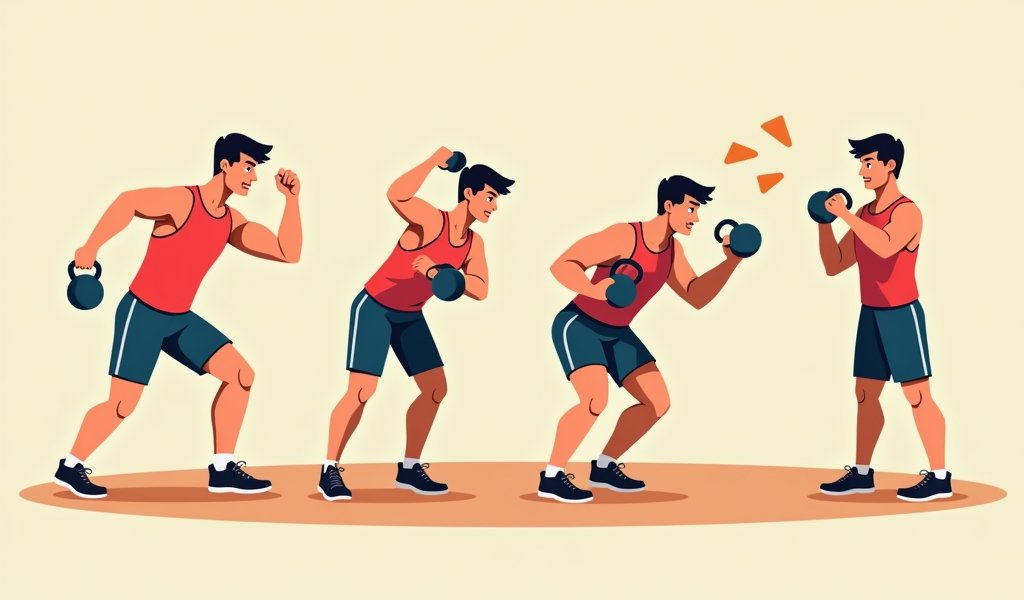
Forget endless treadmill sessions—this article reveals how just 20-30 minutes of HIIT kettlebell training can turn your body into a fat-torching machine that keeps burning calories long after you’ve collapsed on the couch. It details five key kettlebell moves (swings, goblet squats, clean and press, Turkish get-ups, and renegade rows), provides a complete workout routine, and shares success stories of real people who achieved significant weight loss through this time-efficient approach.
Table of Contents
- Introduction to HIIT Kettlebell Training
- The Science Behind HIIT and Kettlebell Training
- Essential Equipment and Safety Tips
- Move #1: Kettlebell Swings
- Move #2: Kettlebell Goblet Squats
- Move #3: Kettlebell Clean and Press
- Move #4: Kettlebell Turkish Get-Up
- Move #5: Kettlebell Renegade Rows
- Sample HIIT Kettlebell Workout Routine
- Real Results and Success Stories
- Conclusion
- Frequently Asked Questions
Introduction to HIIT Kettlebell Training
In today’s fast-paced world, finding time-efficient workouts that deliver maximum results has become essential. This is where HIIT kettlebell training shines as a powerful fat-burning approach that’s gained tremendous popularity among fitness enthusiasts and professionals alike.
High-Intensity Interval Training (HIIT) involves short bursts of intense exercise alternated with brief recovery periods. When combined with kettlebells – those cannonball-shaped weights with handles – you create a metabolic furnace that torches calories and builds functional strength simultaneously.
The beauty of hiit kettlebell training lies in its efficiency. In just 20-30 minutes, you can complete a full-body workout that continues burning calories long after you’ve finished. This makes it perfect for busy professionals, parents, or anyone looking to maximize their fitness results without spending hours in the gym.
The five kettlebell moves we’re about to explore aren’t random exercises—they’re strategically selected to engage multiple muscle groups, elevate your heart rate, and create the optimal stimulus for fat loss. Each movement builds upon functional patterns that translate to improved performance in daily activities while reshaping your physique.
The Science Behind HIIT and Kettlebell Training
What makes HIIT kettlebell training so effective for fat loss? The answer lies in the physiological responses it triggers within your body.
When you perform high-intensity kettlebell exercises, you create what exercise physiologists call Excess Post-Exercise Oxygen Consumption (EPOC), or the “afterburn effect.” Unlike traditional steady-state cardio where calorie burning stops when you finish, HIIT keeps your metabolism elevated for up to 24-48 hours afterward as your body works to restore oxygen levels and repair muscle tissue.
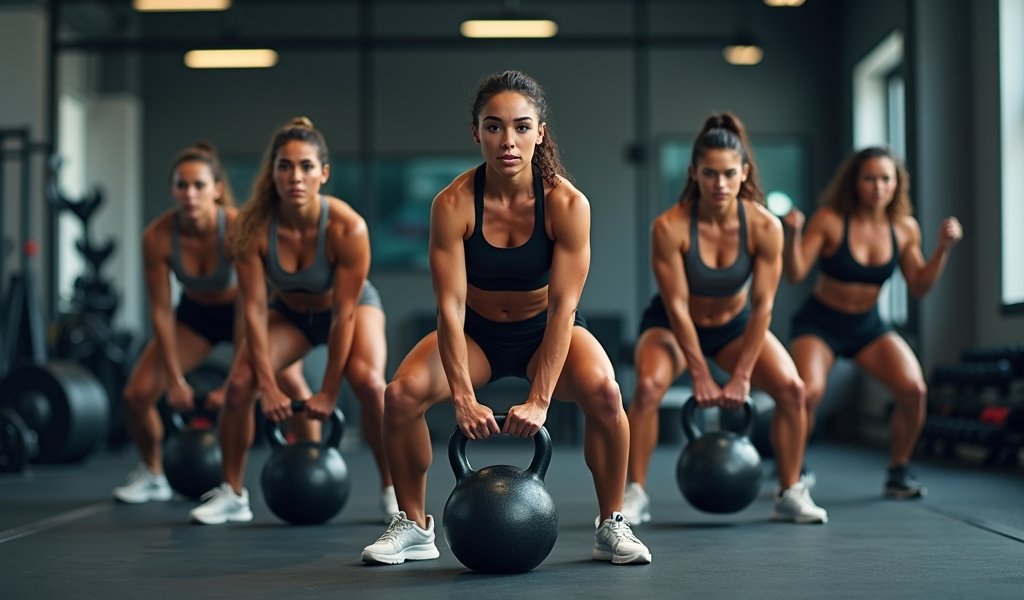
A landmark study by the American Council on Exercise found that participants burned approximately 20 calories per minute during kettlebell workouts—equivalent to running at a 6-minute mile pace! This remarkable calorie burn comes from the full-body, ballistic nature of kettlebell movements.
Kettlebells also offer unique benefits over traditional weights due to their design. The offset handle creates an unstable load that forces your stabilizing muscles to work overtime. This engages more muscle fibers and increases the neuromuscular demand of each exercise.
Furthermore, research published in the Journal of Strength and Conditioning Research demonstrated that regular kettlebell training significantly improved body composition by decreasing body fat percentage while increasing lean muscle mass—the holy grail for sustainable weight management.
This combination of high caloric expenditure during exercise, prolonged metabolic elevation afterward, and increased muscle development creates the perfect storm for fat loss.
Essential Equipment and Safety Tips
Before diving into these fat-torching moves, let’s ensure you have the right equipment and understand proper technique to keep your workout safe and effective.
For beginners, selecting the appropriate kettlebell weight is crucial. Most fitness professionals recommend starting with 8-12kg (18-26lbs) for women and 16-20kg (35-44lbs) for men. However, these are just guidelines—your ideal weight depends on your current strength and experience level.
Quality matters when it comes to kettlebells. Look for ones with smooth handles and a seamless construction to prevent discomfort or injury. Many serious enthusiasts prefer competition-style kettlebells for their consistent dimensions regardless of weight.
Beyond the kettlebell itself, you’ll need:
- A small open space (about 6×6 feet)
- Supportive athletic shoes
- Comfortable, moisture-wicking clothes
- A water bottle for hydration
- Optional: heart rate monitor to track intensity
Safety always comes first with any exercise equipment, so keep these principles in mind:
- Master proper form before increasing weight or intensity
- Maintain a neutral spine throughout all movements
- Engage your core consistently for stability
- Use your hips as the power generator, not your arms or back
- Start with a proper warm-up of 5-10 minutes of dynamic stretching
Perhaps most importantly, listen to your body. The difference between productive discomfort and potential injury can be subtle, but learning to recognize it is essential for long-term success.
Move #1: Kettlebell Swings
The kettlebell swing is the foundation of kettlebell training and possibly the most efficient fat-burning exercise you can perform. This powerful movement builds explosive hip strength while simultaneously engaging your entire posterior chain.
How to Perform:
- Stand with feet slightly wider than hip-width, toes pointing slightly outward
- Place the kettlebell 8-12 inches in front of you
- Hinge at your hips, sending your buttocks back while maintaining a flat back
- Grasp the kettlebell with both hands, tilting the handle toward you
- Pull the kettlebell back between your legs like you’re hiking a football
- Explosively drive your hips forward, allowing the kettlebell to rise to chest height
- Let the weight naturally fall as you hinge again at the hips
- Keep your arms relaxed—they’re just connections to the kettlebell
The swing targets your glutes, hamstrings, core, back, and shoulders simultaneously, creating a metabolic effect that few exercises can match. The explosive nature of the movement elevates your heart rate rapidly while building power and athleticism.
Common mistakes include using your arms to lift the weight (instead of your hips), squatting instead of hinging, and allowing your back to round. Focus on mastering the hip hinge pattern before progressing to heavier weights or more advanced variations.
For maximum fat-burning effect, perform swings for 30 seconds of all-out effort followed by 30 seconds of rest. Repeat for 5-8 rounds, and you’ll feel the difference immediately.
Move #2: Kettlebell Goblet Squats
The goblet squat might be the perfect lower body exercise. It builds leg strength, improves mobility, and reinforces proper squatting mechanics all while creating significant metabolic demand for fat loss.
How to Perform:
- Hold your kettlebell by the horns (the sides of the handle) close to your chest
- Position feet shoulder-width apart or slightly wider
- Turn toes slightly outward for better hip alignment
- Brace your core and maintain a tall spine
- Begin sitting back and down as if reaching for a chair
- Keep your chest up and knees tracking over your toes
- Descend until your thighs are at least parallel to the ground
- Drive through your heels to stand back up, squeezing your glutes at the top
The goblet position creates natural core engagement while the deep squat pattern stimulates your largest muscle groups. This combination yields excellent calorie expenditure and improves functional mobility.
For many people, the goblet squat actually improves squatting form compared to barbell variations because the front-loaded position encourages proper depth and posture. The kettlebell acts as a counterbalance, allowing for a more upright torso.
For optimal fat-burning results, try 15-20 reps with a moderately heavy kettlebell, rest 30 seconds, and repeat for 3-4 sets. You’ll build leg strength while creating the metabolic disturbance necessary for significant fat loss.
Move #3: Kettlebell Clean and Press

The clean and press combines two fundamental kettlebell movements into one comprehensive exercise that builds strength, power, and coordination while maximizing caloric expenditure.
How to Perform:
- Begin with the kettlebell on the floor between your feet
- Hinge at your hips and grasp the handle with one hand
- Pull the kettlebell up by driving your hips forward
- “Clean” it to your shoulder by pulling your elbow tight to your ribs and rotating your hand around the bell
- The kettlebell should rest on your forearm in the “rack position”
- Brace your core and press the kettlebell overhead until your arm is fully extended
- Lower the kettlebell back to the rack position
- Return to the starting position by reversing the clean movement
This exercise recruits muscles throughout your entire body, from your legs and core to your shoulders and arms. The multi-joint movement pattern elevates your heart rate significantly, making it perfect for HIIT protocols aimed at fat loss.
One of the unique benefits of the clean and press is its unilateral nature—you work one side at a time, which addresses strength imbalances and increases core stabilization demands. This creates a more athletic, functional outcome than many bilateral exercises.
For an effective fat-burning protocol, try 6-8 repetitions on one side, then immediately switch to the other side without resting. After completing both sides, rest 45-60 seconds and repeat for 3-5 rounds total.
Move #4: Kettlebell Turkish Get-Up
The Turkish Get-Up may look unusual, but it’s possibly the most comprehensive total-body exercise you can perform. This movement builds strength, stability, and mobility while challenging your body from virtually every angle.
How to Perform:
- Start lying on your back with a kettlebell held in your right hand directly above your shoulder
- Extend your right leg at approximately 45 degrees and bend your left knee with foot flat on the floor
- Keep your eyes on the kettlebell throughout the entire movement
- Roll onto your left elbow, then onto your left hand
- Sweep your right leg back and under you to achieve a half-kneeling position
- Stand up while maintaining the kettlebell overhead
- Reverse the entire sequence to return to the starting position
- Complete all repetitions on one side before switching
The Turkish Get-Up trains your body as a connected unit, reinforcing the stabilization patterns needed for athletic performance and injury prevention. It builds remarkable shoulder stability and core strength while improving mobility through multiple planes of movement.
Though it may not seem like a traditional “fat-burning” exercise, the full-body recruitment and constant tension create significant metabolic demand. Additionally, the movement complexity keeps your heart rate elevated as your body works to coordinate this multi-step pattern.
For fat loss purposes, try 3-5 repetitions per side, alternating between sides. The quality of movement is more important than quantity here, so focus on perfect form with each repetition rather than racing through them.
Move #5: Kettlebell Renegade Rows
Renegade rows transform the standard plank into a dynamic upper body and core strengthening exercise. This movement simultaneously builds back strength and rotational stability while keeping your heart rate elevated.
How to Perform:
- Begin in a push-up position with hands gripping the handles of two kettlebells set at shoulder width
- Keep your body in a straight line from head to heels, core tight
- Without rotating your hips, row one kettlebell to the side of your ribcage
- Lower the kettlebell back to the floor with control
- Repeat on the opposite side
- Maintain a rigid plank position throughout the entire movement
This exercise builds exceptional core strength because your abdominals and obliques must resist rotation while your upper body works unilaterally. The anti-rotation component makes this particularly effective for building functional strength that translates to everyday activities.
From a fat-loss perspective, renegade rows are valuable because they combine the metabolic demand of a plank with the muscle-building stimulus of a row. This keeps your calorie burn high while developing lean muscle that improves your resting metabolic rate.
For maximum effectiveness, try 6-8 rows per side in alternating fashion. Complete 3 sets with 60 seconds of rest between sets. If you’re new to this exercise, begin with lighter kettlebells and focus on maintaining proper plank position throughout.
Sample HIIT Kettlebell Workout Routine
Ready to put these movements together into a comprehensive fat-burning workout? This 25-minute HIIT kettlebell routine combines all five exercises in a systematic approach designed to maximize calorie expenditure and trigger the afterburn effect.
The Fat-Burning Kettlebell HIIT Circuit
Warm-up (5 minutes):
- 30 seconds arm circles (forward and backward)
- 30 seconds hip rotations
- 30 seconds bodyweight squats
- 30 seconds walking lunges
- 30 seconds plank holds
- 30 seconds light kettlebell halos (circling the kettlebell around your head)
- 30 seconds light kettlebell swings
- 60 seconds dynamic stretching for tight areas
Main Workout (17 minutes):
- Kettlebell Swings: 40 seconds work, 20 seconds rest (3 rounds)
- Kettlebell Goblet Squats: 40 seconds work, 20 seconds rest (3 rounds)
- 60 seconds recovery
- Kettlebell Clean and Press (right side): 30 seconds
- Kettlebell Clean and Press (left side): 30 seconds
- 30 seconds rest
- Repeat Clean and Press sequence once more
- 60 seconds recovery
- Kettlebell Renegade Rows: 40 seconds work, 20 seconds rest (2 rounds)
- Turkish Get-Ups: 3 reps per side, taking your time with perfect form
Cool Down (3 minutes):
- Walking in place: 60 seconds
- Static stretching: 2 minutes focusing on hamstrings, hip flexors, shoulders, and back
This workout follows an interval training structure that keeps your heart rate elevated throughout while incorporating strategic recovery periods to maintain performance quality. The varied time domains prevent adaptation and keep your body responding positively to the training stimulus.
For optimal results, perform this workout 3-4 times per week on non-consecutive days. This frequency provides enough stimulus for fat loss while allowing adequate recovery between sessions. As you progress, you can increase the work periods, decrease the rest periods, or use heavier kettlebells to continue challenging your body.
Real Results and Success Stories
The effectiveness of HIIT kettlebell training for fat loss isn’t just theoretical—it’s been proven countless times by real people achieving remarkable transformations.
Take Mark, a 38-year-old software developer who struggled with traditional gym workouts due to time constraints and boredom. After implementing a HIIT kettlebell program three times weekly for 10 weeks, he lost 22 pounds of fat while gaining visible muscle definition in his arms, shoulders, and core.
“The efficiency is what kept me consistent,” Mark explains. “Knowing I could get a complete workout in 25 minutes made it easy to fit into my schedule, even on my busiest days. The variety of movements kept it interesting, and the results came faster than with any other program I’ve tried.”
Similarly, Jennifer, a 42-year-old mother of two, transformed her physique with HIIT kettlebell training after struggling with post-pregnancy weight for years. In just 12 weeks, she lost 18 pounds and 4 dress sizes while significantly increasing her energy levels.
“I was skeptical that such short workouts could be effective,” Jennifer admits. “But within three weeks, I noticed my clothes fitting differently. By week six, friends were asking what I was doing. The best part? I could do the workouts at home during my kids’ nap time.”
What makes these results particularly noteworthy is their sustainability. Research has shown that HIIT protocols have higher adherence rates than traditional steady-state cardio, likely due to their time efficiency and the variety they offer. When people stick with their program, results naturally follow.
The key takeaway from these success stories is that consistency trumps perfection. Both Mark and Jennifer achieved their transformations not through extreme measures or perfect execution, but through regular, sustainable effort applied over time.
Conclusion
HIIT kettlebell training represents one of the most time-efficient, effective approaches to fat loss available today. By combining the metabolic benefits of high-intensity interval training with the full-body functional movements of kettlebell exercises, you create an unparalleled stimulus for burning fat and building lean muscle.
The five movements we’ve explored—swings, goblet squats, clean and presses, Turkish get-ups, and renegade rows—form a comprehensive system that addresses all major movement patterns while creating the optimal hormonal environment for fat loss. When structured properly within a HIIT framework, these exercises deliver remarkable results in minimal time.
What makes this approach particularly valuable in today’s fast-paced world is its efficiency and accessibility. With just one piece of equipment and a small space, you can perform a workout that rivals anything available in fully-equipped gyms. This has become especially relevant as more people embrace home-based fitness in the post-pandemic era.
Remember that sustainable fat loss comes from consistent effort applied over time, not from extreme measures that can’t be maintained. The beauty of HIIT kettlebell training lies in its scalability—it can be adjusted to any fitness level and progressively modified as you become stronger and more conditioned.
If you’re looking to transform your physique, increase your energy, and improve your overall health without spending hours in the gym, give this HIIT kettlebell protocol a try. Your body will thank you, and your schedule will too.
Frequently Asked Questions
How often should I do HIIT kettlebell workouts for fat loss?
Aim for 3-4 sessions per week with at least one day of rest between workouts. This frequency provides enough stimulus for fat loss while allowing proper recovery for muscle repair and growth.
What kettlebell weight should I start with as a beginner?
Most fitness professionals recommend starting with 8-12kg (18-26lbs) for women and 16-20kg (35-44lbs) for men. Begin with a weight that challenges you but allows you to maintain proper form throughout all movements.
How long before I see results from HIIT kettlebell training?
Most people notice initial changes in energy and strength within 2-3 weeks. Visible physical changes typically begin around 4-6 weeks with consistent training and proper nutrition.
Can HIIT kettlebell workouts replace my cardio routine?
Absolutely! HIIT kettlebell workouts elevate your heart rate significantly and create a substantial cardio stimulus. They actually provide superior cardiovascular benefits to steady-state cardio in less time.
Do I need to follow a special diet with my HIIT kettlebell program?
While no specific diet is required, optimal results come from combining your workouts with a nutritious diet rich in protein and vegetables. Maintain a modest calorie deficit (10-20% below maintenance) for fat loss while supporting muscle recovery.