

Overview
Forget counting fingers and toes—modern fitness trackers now monitor everything from your heartbeat to how loudly you snore! The article compares seven top fitness trackers for different needs and budgets, including the versatile Fitbit Charge 5, premium Apple Watch Series 7, runner-focused Garmin Forerunner 245, recovery-specialized WHOOP Strap 4.0, Android-friendly Samsung Galaxy Watch 4, budget-friendly Xiaomi Mi Band 6, and the sleep-focused Oura Ring, emphasizing that the best device is one that aligns with your specific health goals and lifestyle preferences.
Table of Contents
- Introduction to Fitness Trackers
- Key Benefits of Using a Fitness Tracker
- 1. Fitbit Charge 5: The All-Around Champion
- 2. Apple Watch Series 7: Premium Health Companion
- 3. Garmin Forerunner 245: Runner’s Best Friend
- 4. WHOOP Strap 4.0: Recovery Specialist
- 5. Samsung Galaxy Watch 4: Android’s Answer
- 6. Xiaomi Mi Band 6: Budget-Friendly Option
- 7. Oura Ring Generation 3: Sleep Tracking Powerhouse
- How to Choose the Right Fitness Tracker
- Conclusion
- Frequently Asked Questions
Introduction to Fitness Trackers
In my 15 years as a fitness coach, I’ve seen technology transform how we approach health and wellness. Fitness trackers have evolved from simple pedometers to sophisticated health monitoring devices that provide insights previously available only in clinical settings. Today’s fitness trackers don’t just count steps—they analyze sleep patterns, measure heart rate variability, track stress levels, and even detect potential health concerns like irregular heartbeats or low oxygen saturation.
The market has exploded with options, making it challenging to determine which device best suits your health journey. Some clients come to me overwhelmed by features they’ll never use, while others purchase basic models that don’t provide the specific data they need. This comprehensive review cuts through the marketing hype to highlight seven proven fitness trackers that deliver measurable results for different health goals and lifestyles.
Whether you’re training for your first 5K, managing a chronic condition, or simply wanting to move more during your workday, the right fitness tracker can provide both motivation and the metrics needed to make informed health decisions. Let’s explore the devices that have consistently helped my clients achieve their fitness objectives.
Key Benefits of Using a Fitness Tracker
Before diving into specific models, it’s worth understanding why these devices have become such powerful tools for health improvement. The research supporting wearable technology continues to grow, highlighting several core benefits:
Accountability is perhaps the most significant advantage. When your daily activity is measured and recorded, you’re naturally more motivated to reach your goals. Many of my clients report that simply seeing their step count or active minutes creates a gentle pressure to move more throughout the day.
Data-driven decision making transforms vague health goals into concrete actions. Instead of “getting more sleep,” you can see exactly how environmental factors and behaviors affect your sleep quality. This specificity helps in creating targeted improvements rather than general health advice.
Progress tracking provides powerful motivation. Seeing improvements in resting heart rate, VO2 max, or recovery metrics provides tangible evidence that your efforts are working, even when physical changes aren’t yet visible in the mirror.
Community support through fitness tracker ecosystems creates social accountability and friendly competition. Many of my clients find that virtual challenges or competing with friends keeps them engaged long after their initial motivation would have faded.
Health screening capabilities are becoming increasingly sophisticated, with some devices now capable of detecting irregular heartbeats, low blood oxygen levels, or other medical diagnostic indicators that warrant further investigation.

1. Fitbit Charge 5: The All-Around Champion
The Fitbit Charge 5 consistently ranks as my top recommendation for clients seeking a balanced combination of features, accuracy, and user-friendliness. This slim wristband packs impressive technology without overwhelming users with unnecessary complexity.
Core tracking capabilities include 24/7 heart rate monitoring, detailed sleep analysis, and stress management features through an electrodermal activity (EDA) sensor. The built-in GPS eliminates the need to carry your phone during outdoor workouts, while the bright AMOLED screen remains visible even in direct sunlight.
What truly distinguishes the Charge 5 is its Daily Readiness Score, which analyzes your activity history, sleep quality, and heart rate variability to recommend an appropriate activity level for each day. This feature prevents the common mistake of overtraining when your body needs recovery, something I regularly address in client health plan implementations.
Battery life extends to 7 days with normal use, though GPS usage will reduce this considerably. The Fitbit app remains one of the most intuitive and comprehensive fitness ecosystems, making data interpretation accessible even for technology novices.
The Charge 5 falls short only in specialized athletic metrics and lacks some smartwatch capabilities like music control. However, for all-around health tracking with actionable insights, it remains my go-to recommendation for the majority of clients.
2. Apple Watch Series 7: Premium Health Companion
For iPhone users seeking the most comprehensive health and fitness ecosystem, the Apple Watch Series 7 represents the gold standard. While more expensive than dedicated fitness trackers, its integration with the Apple Health ecosystem creates a seamless experience that many of my clients find worth the premium.
Health monitoring capabilities include ECG functionality, blood oxygen monitoring, and fall detection—features particularly valuable for older adults or those with existing health concerns. The larger, always-on display of the Series 7 improves usability during workouts, while the enhanced durability withstands the rigors of active lifestyles.
What separates the Apple Watch from competitors is its comprehensive approach to wellness. Beyond activity tracking, it monitors environmental noise exposure, encourages mindfulness through guided breathing, and even tracks menstrual cycles—creating a holistic health picture rather than focusing solely on fitness metrics.
The primary drawback remains battery life, with most users needing to charge daily. This limits sleep tracking capabilities unless you adopt a different charging schedule. The premium price point also places it beyond many budgets, especially considering the Apple Watch functionality depends on owning an iPhone.
For those already in the Apple ecosystem who value comprehensive health insights and smartwatch functionality, the Series 7 offers unmatched integration and usability. Many of my clients who initially resisted the price have later reported it was one of their most valuable health investments.
3. Garmin Forerunner 245: Runner’s Best Friend
For serious runners seeking detailed performance metrics without unnecessary bells and whistles, the Garmin Forerunner 245 consistently delivers exceptional value. While Garmin offers more advanced models, the 245 hits the sweet spot of features most runners actually use versus those that merely sound impressive.
Training analysis features distinguish this model from general fitness trackers. The 245 provides recovery time recommendations, training effect measurements (aerobic and anaerobic), and even suggests workouts based on your current fitness level and recent training load. For runners following structured programs, these insights help prevent both overtraining and undertraining.
GPS accuracy stands out as exceptional, even in challenging environments like tree cover or urban canyons. The watch also supports advanced running dynamics when paired with compatible accessories, measuring metrics like ground contact time, vertical oscillation, and running power.
Battery life extends to 7 days in smartwatch mode or 24 hours in GPS mode—sufficient for most training regimens and even ultramarathons. The transflective display remains visible in direct sunlight without backlight, preserving battery during outdoor activities.
The Forerunner 245 lacks some features found in smartwatches, such as touchscreens and voice assistants. However, for dedicated runners, the focused approach to performance metrics and reliability makes it my top recommendation for clients serious about improving their running.
4. WHOOP Strap 4.0: Recovery Specialist
The WHOOP Strap 4.0 represents a paradigm shift in fitness tracking, focusing intensively on recovery metrics rather than activity counting. This screenless wearable operates on a subscription model, eliminating upfront device costs but requiring monthly payments for the analytics service.
Recovery optimization forms the core of WHOOP’s approach. The device constantly monitors heart rate variability, resting heart rate, respiratory rate, and sleep quality to produce a daily recovery score. This score then informs strain recommendations—how much activity your body can optimally handle that day.
For athletes engaged in intense training regimens, this recovery-focused approach prevents the diminishing returns (or even regression) that occurs with chronically insufficient recovery. Several professional athletes I’ve worked with swear by WHOOP for preventing overtraining syndrome and optimizing performance peaks.
The lack of a screen eliminates distractions and extends battery life to 5 days. The latest version includes enhanced sensors for improved accuracy and a more comfortable band design for 24/7 wearing. The companion app provides exceptional depth of analysis, particularly for sleep stages and respiratory rate tracking.
The subscription model presents the main drawback, as costs accumulate over time. Additionally, without built-in GPS or activity detection, you’ll need to manually log workouts or carry a phone for location tracking. For those seeking recovery optimization rather than step counting, however, WHOOP provides unmatched insights.
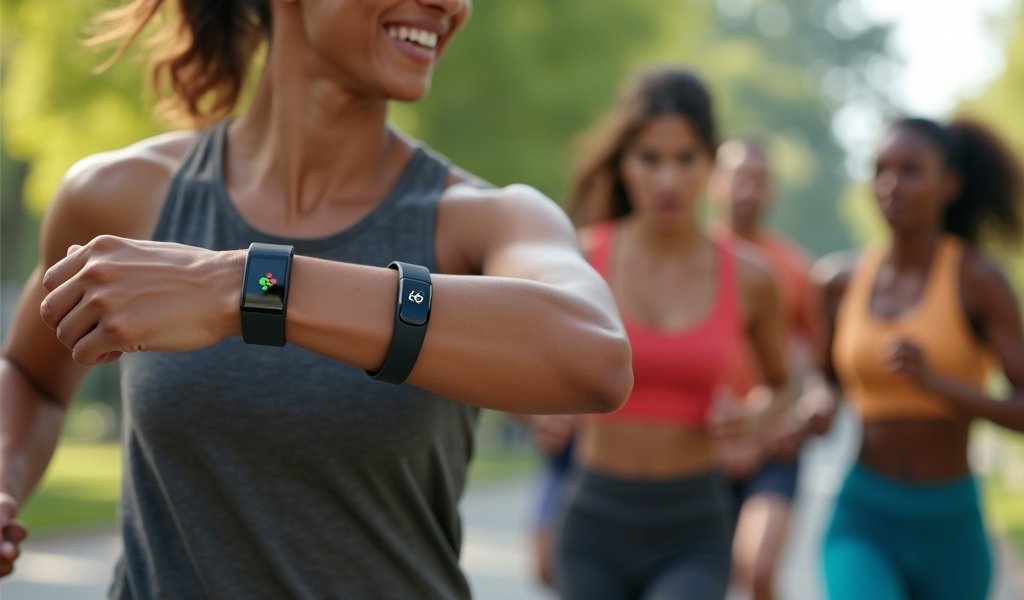
5. Samsung Galaxy Watch 4: Android’s Answer
For Android users seeking a comprehensive health and fitness smartwatch, the Samsung Galaxy Watch 4 offers the most complete experience. Running on Wear OS powered by Samsung, it combines fitness tracking capabilities with full smartwatch functionality.
Body composition analysis sets this device apart from competitors. Using bioelectrical impedance, the Watch 4 measures metrics typically requiring specialized equipment, including body fat percentage, skeletal muscle mass, and basal metabolic rate. While not as precise as medical-grade equipment, these measurements provide valuable trending data when taken consistently.
Sleep tracking capabilities have significantly improved over previous generations, now including snore detection and blood oxygen monitoring throughout the night. This comprehensive approach to sleep analysis helps users identify specific factors affecting their rest quality.
The watch integrates seamlessly with Samsung Health and supports third-party fitness apps, providing flexibility in how users track and analyze their health data. Built-in GPS, heart rate monitoring, and automatic workout detection cover all the standard fitness tracking bases.
Battery life remains the primary limitation, with most users needing to charge daily or every other day depending on feature usage. The most advanced health features also work best with Samsung phones, creating some limitations for those using other Android devices. Nevertheless, for Android users wanting comprehensive health tracking with smartwatch functionality, the Galaxy Watch 4 delivers the most complete package.
6. Xiaomi Mi Band 6: Budget-Friendly Option
Not every fitness journey requires an expensive tracker. The Xiaomi Mi Band 6 proves that effective health monitoring doesn’t need to break the bank, offering core functionality at roughly one-fifth the price of premium models.
Essential tracking features include 24/7 heart rate monitoring, sleep analysis, stress tracking, and blood oxygen saturation measurement. The 1.56-inch AMOLED display provides clear visibility of metrics, while 30 fitness modes cover most common exercises. Automatic activity detection recognizes walking, running, cycling, and rowing without manual input.
Battery life impresses at up to 14 days with normal usage—significantly outperforming more expensive competitors. The slim profile makes it comfortable for continuous wear, even during sleep tracking, and the 5 ATM water resistance supports swimming workouts.
The companion Mi Fit app provides clean visualization of metrics with basic insights, though it lacks the advanced analysis found in premium ecosystems. GPS functionality requires connection to a smartphone, and the heart rate sensor, while adequate for general trends, lacks the precision of higher-end devices during high-intensity activities.
For clients on limited budgets or those uncertain about their long-term commitment to fitness tracking, the Mi Band 6 offers exceptional value. Many of my budget-conscious clients have found it provides sufficient motivation and insights to significantly improve their health habits without financial strain or lifestyle sacrifices.
7. Oura Ring Generation 3: Sleep Tracking Powerhouse
The Oura Ring takes a dramatically different approach to fitness tracking, prioritizing form factor and sleep analysis above all else. This ring-sized wearable packs impressive technology into a discreet package that many of my clients prefer to wrist-based options for both comfort and aesthetics.
Sleep optimization stands as Oura’s primary strength. The device tracks sleep stages with remarkable accuracy, along with heart rate variability, respiratory rate, and body temperature. These metrics combine to create detailed sleep quality scores and personalized bedtime guidance. For clients prioritizing recovery and stress management, this sleep-first approach often proves more valuable than activity-focused alternatives.
The form factor provides distinct advantages. Many users find the ring more comfortable for 24/7 wear than wrist devices, particularly during sleep. The absence of screens or notifications creates a distraction-free experience focused on health rather than connectivity. Battery life extends to 7 days, with charging completed in under an hour.
Activity tracking capabilities have improved in the third generation, now including heart rate monitoring during workouts and automatic activity detection. However, the ring still lacks GPS and provides less detailed workout metrics than wrist-based alternatives. The subscription model also requires ongoing payments to access full functionality.
For professionals with dress code requirements, individuals with wrist discomfort, or those primarily focused on sleep optimization, the Oura Ring provides unique advantages that overcome its limitations in traditional fitness tracking. Several executives I coach specifically chose Oura for its discreet profile during business meetings while still maintaining comprehensive health insights.
How to Choose the Right Fitness Tracker
With seven strong options presented, how do you determine which device best aligns with your health goals? After helping hundreds of clients make this decision, I’ve developed a straightforward framework:
- Identify your primary health goal (weight management, sleep improvement, athletic performance, etc.)
- Consider your technology preferences (screen vs. screenless, smartphone compatibility, etc.)
- Evaluate battery life requirements based on your lifestyle
- Determine budget constraints, including subscription costs
- Assess comfort and aesthetic preferences for all-day wearing
For most beginners or those with general fitness goals, the Fitbit Charge 5 or Xiaomi Mi Band 6 (budget option) provide the best balance of features and accessibility. Athletes should lean toward the Garmin Forerunner 245 or WHOOP Strap 4.0 for their performance insights. Ecosystem-specific users will benefit most from the Apple Watch (iOS) or Samsung Galaxy Watch 4 (Android). Sleep prioritizers should consider the Oura Ring.
Remember that the most advanced tracker provides no benefit if it remains unworn. Prioritize devices you’ll actually use consistently rather than those with impressive but ultimately unused features. Most of my successful clients report that the right tracker feels like a helpful companion rather than a technological burden.
Conclusion
Fitness trackers have evolved from novelty gadgets to essential tools in the pursuit of better health. The seven devices reviewed here represent the best options across different price points, form factors, and specializations. Each has proven effective in helping my clients achieve meaningful health improvements when matched appropriately to their goals and preferences.
While technology continues to advance rapidly, the fundamental principles remain consistent: the best fitness tracker provides actionable insights that motivate positive behavior changes. These devices succeed not by counting metrics but by connecting those numbers to meaningful health outcomes.
Whether you’re taking your first steps toward a more active lifestyle or fine-tuning athletic performance, the right fitness tracker can provide both the data and motivation to achieve your goals. Choose the device that aligns with your specific health priorities, technical preferences, and lifestyle needs—then let the insights guide your journey toward improved wellbeing.
Frequently Asked Questions
How accurate are fitness trackers for calorie counting?
Most trackers estimate calorie burn with 15-30% variance from laboratory measurements. They’re more useful for tracking relative changes in energy expenditure than providing absolute calorie counts.
Can fitness trackers detect serious health problems?
Some advanced models can detect irregular heartbeats, low blood oxygen, or unusual heart rate patterns that warrant medical attention. However, they should supplement, never replace, proper medical care.
How often should I replace my fitness tracker?
Most quality fitness trackers remain functional for 2-3 years before battery degradation becomes significant. Consider upgrading when your health goals evolve beyond your current device’s capabilities rather than chasing new features.
Are waterproof ratings reliable on fitness trackers?
Devices with 5ATM or IP68 ratings generally handle swimming and showering without issues. However, saltwater and hot water can damage even water-resistant devices over time.
Can fitness trackers actually help with weight loss?
Research indicates people using fitness trackers consistently lose more weight than non-users. The accountability, data feedback, and goal-setting features create behavioral changes that support long-term weight management.