

Overview
This article provides a detailed guide to selecting and using exercise bikes for seniors, highlighting five top models for 2023 while emphasizing the health benefits of cycling for older adults. It covers key considerations including bike types (recumbent vs. upright), essential features, safety tips, and strategies for creating an effective exercise routine tailored to seniors’ needs.
Table of Contents
- Why Exercise Bikes are Perfect for Seniors
- The Remarkable Benefits of Cycling for Older Adults
- Key Features to Consider When Choosing an Exercise Bike
- Top 5 Exercise Bikes for Seniors in 2023
- Recumbent vs. Upright: Which is Right for You?
- Safety Tips for Seniors Using Exercise Bikes
- Creating an Effective Exercise Bike Routine
- Conclusion
- Frequently Asked Questions
Finding the perfect exercise bike for seniors can be like discovering a trusted companion on your fitness journey. As we age, staying active becomes not just beneficial but essential for maintaining health and independence. You know how they say, “motion is lotion” for our joints? Well, that’s particularly true for older adults looking to stay fit without putting undue stress on their bodies.
Exercise bikes offer that perfect balance – like a gentle breeze that strengthens without overwhelming. They provide low-impact cardio workouts that are kind to aging joints while still delivering impressive cardiovascular and muscular benefits. But with so many options on the market, finding the right exercise bike for seniors can feel like searching for a needle in a haystack.
In this comprehensive guide, we’ll explore the top 5 exercise bikes for seniors, examine essential features to look for, and provide expert advice to help you make an informed decision. After all, the right equipment can transform exercise from a chore into a pleasure – something to look forward to rather than avoid.
Why Exercise Bikes are Perfect for Seniors
Exercise bikes stand out as ideal fitness equipment for older adults for several compelling reasons. Think of them as the goldilocks of exercise equipment – not too strenuous, not too easy, but just right for aging bodies.
First and foremost, they offer low-impact workouts. Unlike running or even walking, cycling eliminates jarring impacts that can aggravate arthritic joints or previous injuries. It’s like swimming through air – you get the resistance without the pounding.
Safety is another major advantage. With stationary bikes, there’s no risk of falls as there might be with outdoor cycling or even treadmills. You’re seated throughout the workout, providing stability that’s particularly important for those with balance concerns or mobility issues.
Accessibility makes exercise bikes particularly attractive for seniors. They can be used year-round regardless of weather conditions, eliminating excuses to skip workouts. And let’s be honest – having exercise equipment at home removes barriers like transportation to a gym or concerns about working out in public.
Many modern exercise bikes also feature user-friendly designs with easy-to-read displays, simple controls, and ergonomic adjustments that accommodate physical limitations that might come with age. Actually, the customization available on today’s bikes is remarkable – from seat position to resistance levels, everything can be tailored to individual needs.
According to research published in the Journal of Clinical Medicine, cycling is particularly beneficial for seniors because it improves cardiovascular fitness while being gentle on the joints – a perfect combination for older adults.
The Remarkable Benefits of Cycling for Older Adults
The benefits of regular cycling for seniors extend far beyond just “staying active.” This form of exercise acts like a fountain of youth for aging bodies and minds. Now, let’s explore what makes cycling such a powerful tool for healthy aging.
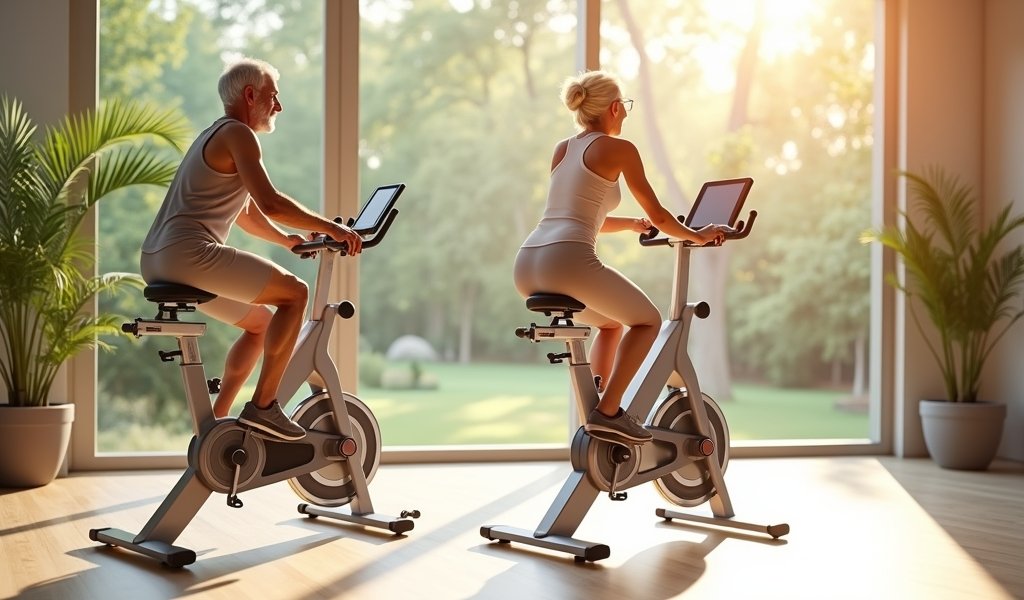
Cardiovascular health takes center stage when discussing cycling benefits. Regular sessions on an exercise bike help strengthen your heart, improve circulation, and potentially lower blood pressure. It’s like giving your cardiovascular system a gentle tune-up with each pedal stroke.
Joint health is another significant advantage. The cycling motion lubricates joints without stressing them, making it ideal for those with arthritis or joint pain. As the Arthritis Foundation notes, cycling is one of the most joint-friendly exercises available.
Muscle strength and tone improve with consistent cycling, particularly in the lower body. The quadriceps, hamstrings, calves, and even core muscles engage during a cycling workout, helping to combat age-related muscle loss (sarcopenia). It’s like sculpting your muscles while sitting down – a rather efficient approach to fitness, wouldn’t you agree?
Balance and coordination receive a boost through the rhythmic, controlled movements of cycling. This translates to greater stability in everyday activities and potentially fewer falls – a serious concern for many seniors.
Mental health benefits shouldn’t be overlooked either. The endorphins released during exercise act like natural antidepressants, elevating mood and reducing symptoms of anxiety and depression. Plus, the cognitive engagement required to follow workout programs or virtual routes can help keep the mind sharp.
Weight management becomes more achievable with regular cycling sessions. As metabolism naturally slows with age, having an enjoyable, accessible form of calorie-burning activity becomes invaluable. A moderate 30-minute session can burn between 200-300 calories, depending on intensity and individual factors.
Independence and quality of life improve as physical strength, stamina, and confidence increase. Being physically capable means maintaining the ability to perform daily activities without assistance – a key factor in successful aging.
Key Features to Consider When Choosing an Exercise Bike
Selecting the right exercise bike for seniors is similar to choosing a good pair of shoes – comfort and proper fit are paramount. What works wonderfully for one person might be completely unsuitable for another. Well, let’s break down the essential features to evaluate before making your purchase.
Ergonomics should be your primary concern. Look for bikes with step-through designs that don’t require high leg lifts to mount or dismount. The seat should be wide, well-padded, and easily adjustable to accommodate individual body proportions. Handlebars should be positioned to promote good posture without causing strain to the back, neck, or wrists.
Stability is non-negotiable for seniors. A wider base and heavier frame prevent wobbling or tipping, which could lead to accidents. The bike should feel solid and secure, even during more vigorous pedaling sessions.
Resistance mechanisms vary among exercise bikes. Magnetic resistance offers smooth, quiet operation with precise adjustments and minimal maintenance – ideal characteristics for seniors. Avoid bikes with friction-based resistance that might require more frequent maintenance and provide less consistent workouts.
Display and controls should feature large, easy-to-read numbers and straightforward operation. Complicated programming can discourage use, so intuitive interfaces are best. Look for essential metrics like time, distance, speed, calories, and heart rate monitoring.
Comfort features can make the difference between a bike that gets used regularly and one that becomes an expensive clothes rack. Consider:
- Adjustable seat height and distance from handlebars
- Padded, ergonomic seating
- Backrest support (especially for recumbent models)
- Non-slip pedals with adjustable straps
- Smooth, quiet operation
Size and storage considerations matter, particularly for seniors living in smaller spaces. Some models offer folding capabilities for easier storage, while others have transport wheels for repositioning without heavy lifting.
Safety features should include enclosed chains or belts, emergency stop capabilities, and sturdy construction. These elements are like insurance policies – you hope you won’t need them, but they’re crucial to have.
Price range varies considerably, but remember that the most expensive option isn’t always the best for your specific needs. Focus on finding the bike with the features that matter most to you within your budget. Quality bikes for seniors typically range from $200 to $1,000, with recumbent models generally commanding higher prices due to their additional support features.
Top 5 Exercise Bikes for Seniors in 2023
After extensive research and evaluation against the criteria most important for older adults, I’ve identified the top 5 exercise bikes for seniors that offer exceptional value, comfort, and functionality. These machines stand out like beacons in a sea of options, each with unique strengths worth considering.
1. Schwinn 270 Recumbent Bike
The Schwinn 270 is like the Cadillac of recumbent bikes – luxurious comfort combined with impressive performance features. It offers a step-through design that makes mounting and dismounting a breeze, crucial for seniors with mobility limitations.
What makes this model shine is its ventilated, contoured seat with lumbar support and side bolsters, creating a truly comfortable riding experience even during longer sessions. The seat rail system allows smooth fore and aft adjustment to accommodate different body types.
With 29 preset workout programs and 25 resistance levels, the Schwinn 270 provides tremendous versatility for progressive training. The dual LCD displays are clear and easy to read, while Bluetooth connectivity allows for fitness tracking through popular apps.
Users particularly praise the quiet magnetic resistance system and the stability of the frame. At around $649, it represents a significant investment but delivers professional-quality features that justify the price for committed users.
2. Exerpeutic 900XL Recumbent Bike
For seniors seeking excellent value, the Exerpeutic 900XL is like finding a diamond in the rough. At approximately $199, it offers core features needed for effective, comfortable workouts without breaking the bank.
The wide, cushioned seat with backrest provides essential support, while the step-through design eliminates the need to lift legs high when mounting. The 8-level magnetic tension control system allows for workout customization, though it’s less extensive than higher-priced models.
What users love about this bike is its impressive stability despite its budget-friendly price point. The extended leg stabilizers prevent tipping or wobbling, creating a sense of security during use. The simple LCD display shows basic metrics including distance, calories burned, time, speed, and heart rate.
While it lacks the bells and whistles of premium options, the 900XL delivers where it counts most for seniors: safety, comfort, and effective exercise capability.
3. NordicTrack Commercial S22i Studio Cycle
For tech-savvy seniors who want an immersive exercise experience, the NordicTrack S22i is like having a personal trainer and global cycling tours in your home. This premium upright bike (approximately $1,499) features a massive 22-inch interactive HD touchscreen that streams on-demand workouts through the iFit membership program.
What sets this bike apart is its automatic resistance and incline control, where trainers can adjust your bike settings remotely during guided workouts. The bike actually tilts to simulate hill climbing, adding variety and challenge to workouts.
The ergonomic padded seat is fully adjustable, though some seniors might find the upright position less comfortable than recumbent options for extended sessions. Silent magnetic resistance with 24 digital levels provides plenty of workout variability.
While this is the most expensive option on our list, it offers unparalleled interactive features that may increase motivation and consistency – factors that can be worth the investment for those who value guided instruction and variety.
4. Marcy Recumbent Exercise Bike ME-709
The Marcy ME-709 is like the reliable friend who doesn’t disappoint – straightforward, dependable, and remarkably affordable at around $159. This no-frills recumbent bike focuses on the essentials: comfort, stability, and basic functionality.
The step-through design and counterbalanced pedals with foot straps make this bike accessible and secure for seniors with limited mobility or balance concerns. Eight resistance levels provide workout flexibility, though the manual adjustment knob isn’t as convenient as digital controls.
Users consistently praise the comfortable padded seat and backrest, along with the bike’s surprisingly sturdy construction given its budget price point. The simple LCD computer displays time, speed, distance, and calories burned in large, readable numbers.
What this bike lacks in advanced features, it makes up for in reliability and value. For seniors seeking basic cardiovascular exercise without complicated technology, the Marcy ME-709 represents an excellent entry-level option.
5. Nautilus R616 Recumbent Bike
The Nautilus R616 strikes an impressive balance between premium features and reasonable pricing (approximately $499). It’s like the “sweet spot” option that offers most of what higher-end models provide without the premium price tag.
This bike features a comfortable, ventilated seat back, a weighted flywheel for smooth operation, and 25 levels of resistance for workout variety. The dual LCD displays provide comprehensive workout data, while 29 preset programs offer guided sessions targeting different fitness goals.
Bluetooth connectivity allows users to sync workout data with popular fitness apps, adding a motivational tracking element. The USB charging port is a thoughtful addition for keeping devices powered during longer rides.
Users particularly appreciate the quality construction, smooth pedaling action, and the cushioned seat that remains comfortable during extended sessions. For seniors seeking a feature-rich experience without the highest-end price, the R616 offers exceptional value.
Recumbent vs. Upright: Which is Right for You?
Choosing between recumbent and upright exercise bikes is a bit like deciding between a comfortable sedan and a sporty coupe – both will get you to your destination, but the journey feels quite different. Let’s examine the key differences to help determine which style might better suit your needs as a senior exerciser.
Recumbent bikes feature a chair-like seat with back support and pedals positioned in front of the rider rather than below. This design distributes weight more evenly across a larger surface area and provides crucial lumbar support. It’s like sitting in a comfortable chair while exercising – a significant advantage for those with back pain, balance issues, or joint discomfort.
The recumbent position also reduces strain on the hands, wrists, and arms since they’re not supporting body weight as they would on an upright model. This makes recumbent bikes particularly suitable for seniors with arthritis in the upper extremities or those recovering from certain injuries.
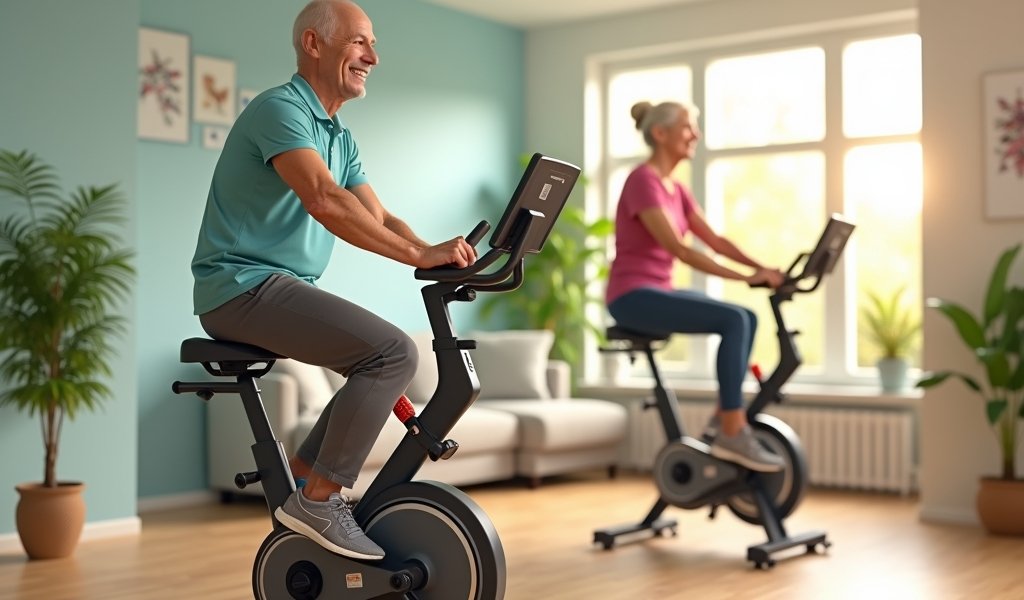
Upright bikes more closely resemble traditional bicycles, with pedals positioned under the body and a smaller seat. They typically engage more muscle groups, including core muscles required for stabilization, potentially providing a more comprehensive workout. For seniors without significant mobility limitations who want to simulate outdoor cycling, upright models might feel more natural and familiar.
When it comes to getting on and off the equipment, recumbent bikes generally offer easier access with their step-through design and lower seating position. This can be a crucial safety factor for those with limited mobility or balance concerns.
From a space-efficiency perspective, upright bikes typically have a smaller footprint than recumbent models, making them more suitable for limited spaces. Some upright bikes also offer folding capabilities for storage, a feature rarely found in recumbent designs.
So which should you choose? If comfort, back support, and joint protection are your primary concerns, a recumbent bike likely makes more sense. However, if you have good balance, prefer a more traditional cycling feel, and perhaps have space limitations, an upright model could be more appropriate.
Many physical therapists recommend recumbent bikes for seniors beginning an exercise program or those with specific health concerns like osteoarthritis, balance issues, or back pain. As Harvard Health Publishing suggests, the supportive design minimizes strain while still delivering excellent cardiovascular benefits.
Safety Tips for Seniors Using Exercise Bikes
Safety should always be your co-pilot on any fitness journey, especially when incorporating exercise equipment into your routine. Think of these safety guidelines as the guardrails that keep you on track toward better health without detours through injury or discomfort.
Before beginning any new exercise regimen, consult with your healthcare provider. This is particularly important if you have pre-existing conditions like heart disease, hypertension, diabetes, or orthopedic concerns. Your doctor can provide personalized advice about appropriate intensity levels and potential modifications based on your specific health profile.
Proper bike setup is fundamental to safety and effectiveness. Ensure that:
- The seat height allows for a slight bend in the knee (about 15 degrees) when the pedal is at its lowest point
- Handlebar position permits a comfortable reach without straining your back or shoulders
- Your feet rest firmly on the pedals with the balls of your feet centered
- Seat depth (on recumbent models) positions you so you can comfortably reach the pedals throughout the full rotation
Start slowly and progress gradually – this isn’t a race but a sustainable journey. Begin with 5-10 minutes of low-resistance cycling and gradually increase duration and intensity as your fitness improves. Remember, consistency trumps intensity, especially when starting out.
Warm-up and cool-down periods are non-negotiable. Spend 3-5 minutes pedaling at a very easy pace before your main workout to prepare your muscles and cardiovascular system. Similarly, allow 3-5 minutes of gentle cycling at the end to gradually return your heart rate to normal.
Stay hydrated before, during, and after your workout. Keep a water bottle within easy reach and take regular sips, even if you don’t feel thirsty. Proper hydration helps prevent dizziness and supports overall exercise performance.
Listen to your body with respect and attention. While some muscle fatigue is normal, sharp pain, dizziness, unusual shortness of breath, chest pain, or nausea are warning signals to stop immediately and consult a healthcare provider. There’s wisdom in the saying, “No pain, no gain,” but there’s even more wisdom in distinguishing between productive discomfort and potential injury.
Wear appropriate attire, including supportive athletic shoes even though you’re seated. Avoid loose pants that could catch in the pedal mechanism, and consider padded cycling shorts for additional comfort during longer sessions.
Position your exercise bike in a well-ventilated area with adequate clearance on all sides. Ensure the bike is on a level surface and check stability before each use. Having a phone within reach while exercising is a prudent safety measure, especially for those who live alone.
Creating an Effective Exercise Bike Routine
Establishing a consistent exercise routine is like planting a garden – it requires initial planning, regular attention, and patience before you see the full benefits. With that in mind, let’s create a framework for an effective senior-friendly cycling program that balances safety and progress.
For beginners, aim to cycle 2-3 times per week on non-consecutive days to allow for recovery. Start with 10-15 minute sessions at low resistance, focusing on proper form and comfortable pedaling rhythm. It might not seem like much at first, but you know what they say – even a journey of a thousand miles begins with a single step (or in this case, pedal stroke).
As your endurance improves, gradually increase session duration by 3-5 minutes every 1-2 weeks until you reach 30-45 minutes per session. The American Heart Association recommends at least 150 minutes of moderate aerobic activity weekly, which you could achieve with five 30-minute cycling sessions.
Incorporate variety to prevent boredom and continue challenging your body. Try these different workout styles:
- Steady-state riding: Maintain a consistent, comfortable pace throughout
- Interval training: Alternate between periods of higher intensity (1-2 minutes) and recovery (2-3 minutes)
- Hill simulation: Increase resistance for 3-5 minutes to simulate uphill riding, then reduce for recovery
- Entertainment-based rides: Cycle while watching a favorite TV program, using the show’s duration to determine your workout length
Tracking progress serves as both motivation and assessment. Consider keeping a simple log of your workouts, noting duration, resistance levels, and how you felt. Many exercise bikes provide data like distance, calories, and heart rate that can help gauge improvement over time.
Set realistic, specific goals that focus on consistency rather than performance. For example, “I’ll cycle three times this week for 20 minutes each session” is more actionable than “I’ll get in better shape.” Celebrate achieving these modest milestones – they’re the stepping stones to significant long-term health improvements.
Making your routine sustainable is perhaps the most important factor. Schedule workouts at times when you typically have good energy and few conflicts. Morning sessions often work well for seniors, as they can energize you for the day and are less likely to be derailed by unexpected events.
Consider joining online communities or finding a workout buddy (even virtually) to share your journey. Social accountability and encouragement can significantly boost adherence to exercise programs. Actually, research shows that people with exercise partners or communities are far more likely to stick with their routines long-term.
Remember that consistency outweighs perfection. Missing a day occasionally isn’t failure – it’s just part of life’s natural rhythm. The key is returning to your routine rather than allowing temporary interruptions to become permanent ones.
Conclusion
Finding the right exercise bike for seniors is more than just a purchase decision – it’s an investment in continued mobility, independence, and quality of life. Like a trusted companion on the journey of healthy aging, the perfect bike adapts to your needs while gently challenging you to maintain and improve your physical capabilities.
We’ve explored the substantial benefits of cycling for older adults, from joint-friendly cardiovascular conditioning to improved strength, balance, and mental wellbeing. We’ve examined key features to consider when selecting a bike, compared the top models on the market, and provided guidance for creating safe, effective workout routines.
Whether you choose the luxurious comfort of a recumbent model like the Schwinn 270, the budget-friendly reliability of the Marcy ME-709, or the tech-forward experience of the NordicTrack S22i, the most important factor is finding equipment that you’ll use consistently and comfortably.
Remember that the best exercise bike is the one that becomes a natural part of your routine rather than an occasional afterthought. It should feel less like a chore and more like an opportunity – a chance to move, to strengthen, and to care for your body as it continues to carry you through life’s adventures.
As you begin or continue your cycling journey, be patient with yourself, celebrate small victories, and focus on how the activity makes you feel rather than just the numbers on the display. After all, the true measure of success is not how fast you pedal but how consistently you show up for yourself and your health.
Frequently Asked Questions
How often should seniors use an exercise bike?
Most health professionals recommend seniors use an exercise bike 3-5 times per week for 20-30 minutes per session. Start with shorter, less frequent sessions and gradually build up as your fitness improves.
Are exercise bikes safe for seniors with arthritis?
Yes, exercise bikes are generally considered one of the safest options for seniors with arthritis. Recumbent bikes in particular offer excellent joint protection while still providing effective cardiovascular exercise.
What’s the best resistance level for seniors on an exercise bike?
Start with low resistance that allows comfortable pedaling for 10-15 minutes without excessive fatigue or pain. You should feel like you’re working but can still maintain a conversation while pedaling.
Can using an exercise bike help with balance problems?
Regular use of an exercise bike can strengthen leg muscles and improve overall fitness, which may contribute to better balance. Recumbent bikes are particularly beneficial as they allow safe exercise without balance concerns.
Is it normal to experience some discomfort when first using an exercise bike?
Mild muscle soreness is normal when beginning any new exercise program and should subside within 24-48 hours. However, joint pain, sharp pains, or discomfort that worsens during exercise should be evaluated by a healthcare provider.