
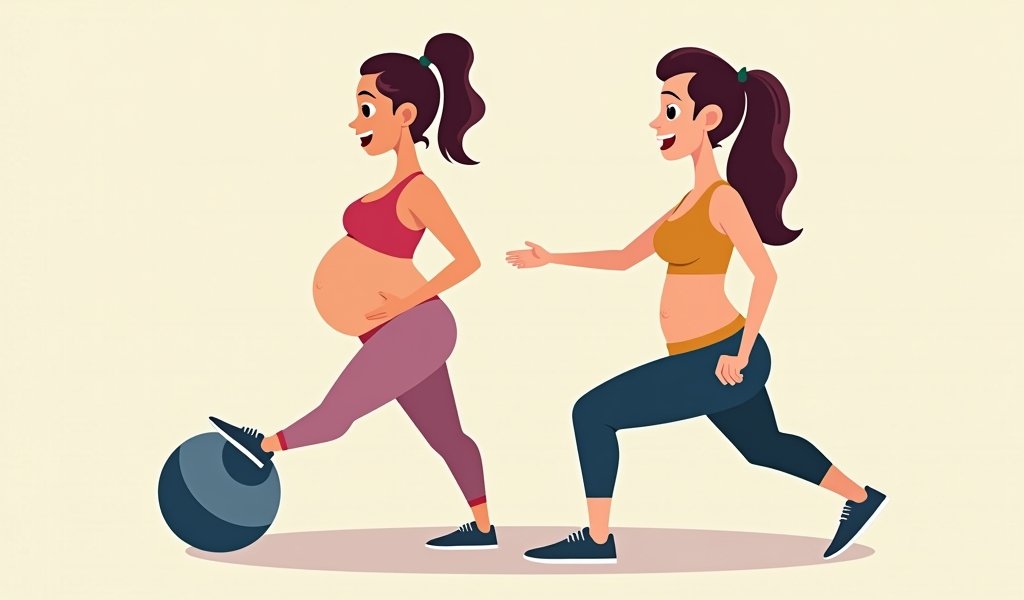
Overview
This guide explains how exercise balls benefit pregnant women by relieving back pain, improving posture, and preparing for labor, with specific recommendations for choosing the right ball size (based on height), safety features, and appropriate exercises for each trimester. The article also covers how to use balls during labor for pain relief, maintenance tips, and emphasizes consulting healthcare providers before beginning any exercise program.
# Finding Your Perfect Exercise Ball for Pregnancy: A Complete Guide
Table of Contents
- Why Exercise Balls Benefit Pregnancy
- Choosing the Right Exercise Ball
- Top Exercise Balls for Pregnancy
- Safety Guidelines for Each Trimester
- Effective Pregnancy Exercises
- Using an Exercise Ball During Labor
- Maintaining Your Exercise Ball
- Conclusion
- Frequently Asked Questions
Pregnancy brings beautiful changes to your body, but it can also introduce new discomforts and challenges. As an obstetrician with over 15 years of experience, I’ve seen how a simple tool like an exercise ball can transform the pregnancy experience for many women. This versatile fitness accessory—sometimes called a birthing ball, stability ball, or Swiss ball—offers support, relief, and preparation for childbirth when used correctly.
Throughout my practice, I’ve recommended exercise balls for pregnancy to countless patients who report reduced back pain, improved posture, and better preparation for labor. Let’s explore how this simple sphere can become your most valued pregnancy companion.
Why Exercise Balls Benefit Pregnancy
The gentle support and dynamic nature of an exercise ball provides unique benefits that static furniture simply can’t match. Here’s why they’ve become essential for many expectant mothers:
Exercise balls promote proper posture by engaging your core muscles as you balance. This gentle activation helps maintain strength without straining your growing belly and can significantly reduce the lower back pain that affects up to 70% of pregnant women.
Sitting on a ball relieves pressure points that develop from traditional chairs. The ball distributes weight more evenly and allows subtle movement that improves circulation—especially helpful for reducing the swelling in your feet and ankles during the later stages of pregnancy.
The gentle bouncing motion on an exercise ball can strengthen your pelvic floor muscles, which support your uterus, bladder, and bowels. According to research published in the Journal of Physical Therapy Science, this preparation can lead to more efficient labor and potentially reduce recovery time after birth.
Perhaps most importantly, regular use familiarizes you with positions and movements that can be invaluable during labor. The rocking, swaying, and circling motions you practice on the ball can help position your baby optimally and provide comfort during contractions.
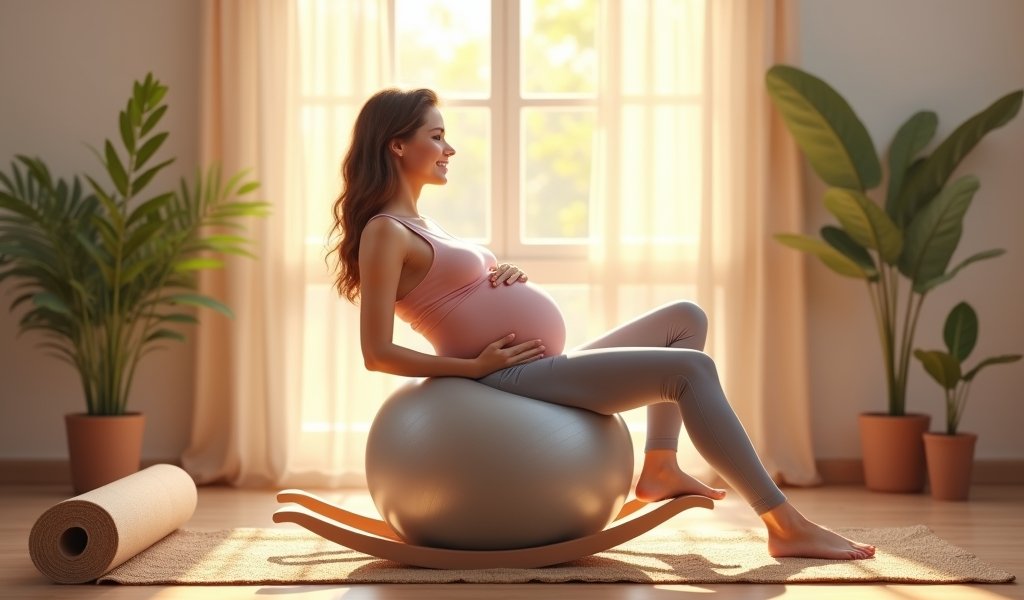
Choosing the Right Exercise Ball
Finding the perfect exercise ball for pregnancy involves several key considerations:
Size Matters
The right ball size ensures proper alignment when seated. Your knees should form a 90-degree angle with your feet flat on the floor. Here’s a simple height guide:
- Under 5’3″: 55cm ball
- 5’4″ to 5’10”: 65cm ball
- Over 5’10”: 75cm ball
Remember that these are starting points—your unique body proportions might require adjustments.
Material Quality
Look for balls made from professional-grade, BPA-free PVC or TPE (thermoplastic elastomer). These materials provide the right balance of durability and comfort. Avoid balls with a strong chemical smell, which may indicate poor-quality materials.
Safety Features
An anti-burst design is non-negotiable for pregnancy use. These balls deflate slowly rather than popping if punctured—an essential safety feature as your center of gravity changes. Most quality balls can support between 300-1000 pounds, providing ample security throughout pregnancy.
Surface Texture
A slightly textured surface provides crucial grip that prevents unwanted sliding, especially important as your pregnancy progresses. Some balls feature massage points that offer additional sensory benefits during use.
Inflation Flexibility
The perfect ball should compress about 6 inches when you sit on it. Too firm, and you’ll miss the cushioning benefits; too soft, and you’ll lack proper support. Many quality options include a hand or foot pump for easy inflation adjustments.
Top Exercise Balls for Pregnancy
After evaluating dozens of options with my pregnant patients, these exercise balls consistently receive the highest praise:
Best Overall: URBNFit Exercise Ball
The URBNFit combines professional-grade materials with a textured, non-slip surface that pregnant women consistently rate highly for stability. Its anti-burst technology supports up to 600 pounds, and it comes with a pump and pregnancy-specific exercise guide. Available in multiple sizes and colors, it offers both functionality and aesthetic appeal for any home.
Budget-Friendly Choice: Trideer Exercise Ball
Don’t let the affordable price fool you—the Trideer delivers exceptional value without compromising essential features. Its thick, durable PVC material and anti-burst construction provide reliability throughout all three trimesters. The matte surface offers excellent grip, a crucial feature as your center of gravity shifts.
Premium Option: Physioball Stabilizer Ring Set
For those willing to invest a bit more, the Physioball with its stabilizer ring offers unmatched stability and versatility. The ring prevents the ball from rolling away—particularly helpful as mobility decreases in later pregnancy. Its professional-grade materials and extra-thick construction justify the higher price point for many expectant mothers.
Most Durable: DYNAPRO Exercise Ball
Built to last through pregnancy and beyond, the DYNAPRO features ultra-thick, professional-grade material with an impressive 2200-pound anti-burst rating. This virtually indestructible option provides peace of mind for pregnant women concerned about safety and longevity.
Safety Guidelines for Each Trimester
While exercise balls offer tremendous benefits during pregnancy, proper usage differs by trimester:
First Trimester (Weeks 1-12)
Though your pregnancy may not be visible yet, your body is undergoing significant changes. Focus on getting comfortable with your exercise ball through gentle movements:
- Simple seated bouncing to maintain core awareness
- Gentle pelvic tilts to promote lower back flexibility
- Brief sitting periods (15-20 minutes) to acclimatize your body
Listen carefully to your body and rest when needed, especially if experiencing morning sickness or fatigue.
Second Trimester (Weeks 13-26)
As energy returns and your baby bump becomes more noticeable, you can incorporate more dynamic movements:
- Seated figure-eights to address changing hip pressure
- Gentle side-to-side rocks for lower back relief
- Wall squats using the ball for support and leg strengthening
This is an excellent time to begin replacing your desk chair with your exercise ball for short periods, gradually increasing as comfort allows.
Third Trimester (Weeks 27-40+)
In these final weeks, your exercise ball becomes primarily a comfort tool and labor preparation aid:
- Forward-leaning positions over the ball to relieve back pressure
- Gentle bouncing to ease increasing pelvic pressure
- Hip circles to encourage optimal fetal positioning for delivery
Many women find sitting on the ball more comfortable than conventional furniture during these final weeks.
Universal Safety Guidelines
Regardless of trimester, always follow these safety rules:
- Use your ball on a flat, non-slip surface away from sharp objects
- Wear non-slip socks or go barefoot for better grip
- Begin all movements slowly and with control
- Get clearance from your healthcare provider before starting
- Keep something stable nearby to hold onto if needed
- Avoid exercises that require lying flat on your back after the first trimester
Effective Pregnancy Exercises
These gentle exercise ball workouts are specifically designed for pregnant women at various stages:
Pelvic Tilts
This fundamental movement relieves back pain and maintains pelvic mobility:
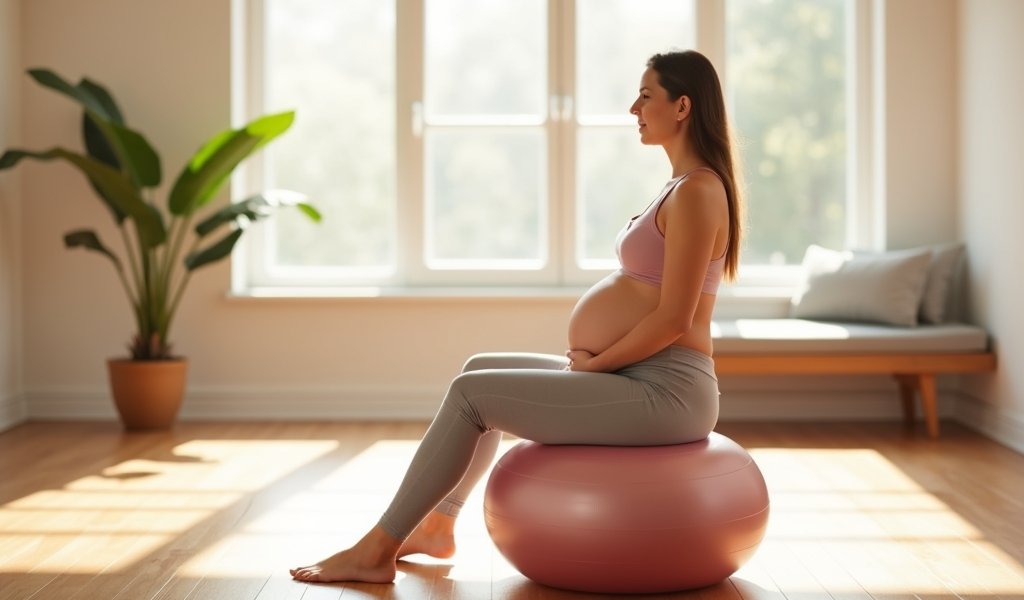
- Sit centered on your ball with feet flat on the floor, shoulder-width apart
- Place hands on thighs or hips for balance
- Inhale, then exhale as you tilt your pelvis forward (arching your back slightly)
- Inhale again, then exhale as you tilt your pelvis backward (flattening your lower back)
- Repeat 10-15 times, focusing on smooth, controlled movements
Gentle Bouncing
Never underestimate the simple benefits of gentle bouncing:
- Sit centered on the ball with good posture, feet flat and shoulder-width apart
- Gently bounce up and down, maintaining control
- Continue for 2-3 minutes, taking breaks as needed
This gentle movement improves circulation, potentially reduces swelling, and can provide significant pain relief, especially in the third trimester.
Wall Ball Squats
These supported squats strengthen legs while preparing for labor:
- Place your ball between your lower back and a wall
- Position feet slightly forward, shoulder-width apart
- Slowly bend knees to lower into a partial squat
- Hold briefly, then return to standing
- Repeat 8-12 times
The wall and ball provide stability while you strengthen the muscles you’ll need during labor.
Seated Spinal Stretch
This gentle stretch helps maintain upper back mobility:
- Sit tall on the ball with feet flat on floor
- Inhale and raise arms overhead
- Exhale and gently round your upper back, bringing arms forward
- Return to starting position
- Repeat 5-8 times
This movement counteracts the forward-leaning posture that often develops during pregnancy.
Using an Exercise Ball During Labor
The same ball that supported you through pregnancy can become an invaluable labor assistant:
Pain-Relieving Positions
Many women find these positions especially helpful during contractions:
- Forward Lean: Kneel on the floor with your upper body draped over the ball, allowing it to support your weight while relieving back pressure
- Seated Sway: Sit on the ball and gently rock your hips from side to side or in circles to manage pain naturally
- Standing Support: Place the ball on a wall and lean into it during contractions, allowing for upright positioning while conserving energy
The ability to shift between these positions provides autonomy during labor, something many birthing mothers value highly.
Partner Support Techniques
An exercise ball facilitates supportive partner involvement during labor:
- Counter-Pressure: While you lean over the ball, your partner can apply pressure to your lower back during contractions
- Stability Support: Your partner can help stabilize the ball during position changes, providing security when you feel vulnerable
Hospital Considerations
Before planning to use your ball during labor, check your birthing facility’s policies. Some hospitals provide balls, while others welcome you bringing your sanitized ball from home. Include this discussion in your birth plan conversations with your provider.
According to The American College of Obstetricians and Gynecologists, movement during labor, when safely implemented, can enhance comfort and potentially improve labor progress for many women.
Maintaining Your Exercise Ball
Proper maintenance ensures your ball remains safe throughout your pregnancy journey:
Cleaning Routines
Regularly clean your ball with mild soap and water, especially after sweaty workout sessions. Avoid harsh chemicals that could degrade the material or leave residues that contact your skin. For deeper cleaning, many midwives recommend a solution of water with a few drops of tea tree oil to sanitize without harsh chemicals.
Proper Storage
When not in use, store your ball in a cool, dry place away from direct sunlight, which can degrade the material over time. Many women find that an exercise ball chair or stability ring helps keep the ball from rolling around the house—particularly helpful as your pregnancy advances and retrieving a runaway ball becomes challenging.
Inflation Maintenance
Check your ball’s firmness weekly, as all balls naturally lose some air over time. The correct inflation level provides optimal support and safety. Most balls should compress about 6 inches when sat upon.
Replacement Indicators
Even high-quality exercise balls have a lifespan. Replace your ball if you notice:
- Visible cracks or changes in texture
- Difficulty maintaining proper inflation
- Unusual odors or stickiness
Most manufacturers recommend replacement after approximately 12 months of regular use.
Conclusion
An exercise ball offers a simple yet effective way to enhance comfort, maintain fitness, and prepare for childbirth throughout your pregnancy. By choosing the right ball, following safety guidelines for each trimester, and incorporating appropriate exercises, you can transform many pregnancy discomforts into opportunities for active preparation.
Remember that like pregnancy itself, using an exercise ball is a personal journey. What works wonderfully for one woman may need adjustment for another. Listen to your body, consult with your healthcare provider, and modify as needed to create your optimal experience.
Whether you’re using your ball for momentary back relief, daily core stability, or preparation for labor, this versatile tool deserves consideration as an essential part of your pregnancy wellness toolkit.
Frequently Asked Questions
When should I start using an exercise ball during pregnancy?
You can begin using an exercise ball from the first trimester. Many women find it most beneficial from the second trimester onward when pregnancy discomforts become more noticeable.
How big should my exercise ball be for pregnancy?
Choose a ball size based on your height: 55cm for under 5’3″, 65cm for 5’4″-5’10”, and 75cm for over 5’10”. When seated, your knees should form a 90-degree angle with feet flat on the floor.
Is bouncing on an exercise ball safe during pregnancy?
Gentle bouncing is generally safe for most pregnancies and can help relieve discomfort. Always get clearance from your healthcare provider first, especially if you have any pregnancy complications.
How long should I sit on an exercise ball each day?
Start with 15-20 minutes and gradually increase as comfortable. Many women eventually replace their regular chairs with exercise balls for several hours daily, taking breaks as needed.
Can using an exercise ball help turn a breech baby?
While no method guarantees turning a breech baby, the forward-leaning positions on an exercise ball may help create optimal space for your baby to turn. Always consult with your healthcare provider before attempting any breech-turning techniques.