
Overview
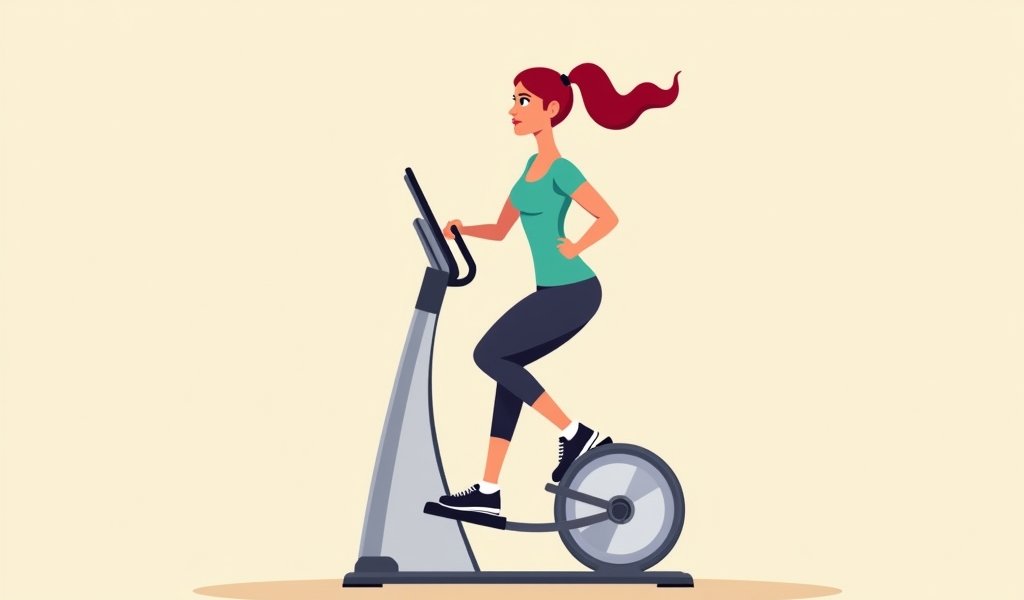
Who knew the elliptical—that awkward robot-walking machine gathering dust in most gyms—could actually be your secret weapon for fat loss? This article presents five effective elliptical HIIT techniques (Sprint Intervals, Resistance Climbs, Alternating Push-Pull, Backward Intervals, and Tempo Variation), along with sample workouts for all fitness levels, proper form guidance, and nutritional support recommendations to maximize fat-burning results.
Table of Contents
- Introduction to Elliptical HIIT Workouts
- Benefits of Elliptical HIIT Training
- Getting Started: Proper Form and Setup
- 5 Proven Fat-Burning Elliptical HIIT Moves
- Sample Elliptical HIIT Workout Routines
- Progressive Overload and Tracking Progress
- Nutrition Support for Optimal Results
- Conclusion
- Frequently Asked Questions
Introduction to Elliptical HIIT Workouts
The elliptical machine often gets overlooked in the world of high-intensity interval training (HIIT), but it shouldn’t. As a fitness professional with over a decade of experience, I’ve seen remarkable transformations when clients incorporate elliptical HIIT workouts into their routines. This low-impact, high-reward approach combines the joint-friendly nature of elliptical training with the metabolic benefits of interval training.
An elliptical HIIT workout alternates between short bursts of maximum effort and brief recovery periods, creating an efficient fat-burning session that can be completed in as little as 20 minutes. The beauty of this approach is its accessibility—whether you’re a fitness novice or a seasoned athlete, these workouts can be tailored to your specific needs and goals.
In this comprehensive guide, I’ll walk you through five proven fat-burning elliptical HIIT moves that have helped countless clients break through plateaus and achieve sustainable results. Plus, I’ll provide actionable advice on proper form, workout structure, and progression strategies to maximize your efforts.
Benefits of Elliptical HIIT Training
The combination of elliptical training and HIIT methodology creates a powerful fitness tool with numerous benefits. First and foremost, elliptical HIIT workouts are incredibly time-efficient. Research published in the Journal of Physiology has demonstrated that HIIT can deliver similar or greater benefits in a fraction of the time compared to steady-state cardio.
Joint health is another major advantage. Unlike high-impact exercises such as running or plyometrics, elliptical training provides a smooth, fluid motion that minimizes stress on your knees, hips, and ankles. This makes it an excellent option for those with joint concerns, individuals recovering from injuries, or anyone looking to reduce impact while maintaining workout intensity.
From a metabolic standpoint, elliptical HIIT workouts shine. The intense intervals spike your heart rate and oxygen consumption, creating what exercise physiologists call “excess post-exercise oxygen consumption” (EPOC). In practical terms, this means your body continues burning calories at an elevated rate for hours after your workout ends—a phenomenon often called the “afterburn effect.”
Additionally, these workouts engage multiple muscle groups simultaneously. When used properly, the elliptical activates your quadriceps, hamstrings, glutes, calves, chest, back, and arms, making it a true full-body exercise. This comprehensive muscle engagement not only increases calorie burn during your workout but also helps develop balanced, functional strength throughout your body.
Perhaps most importantly, elliptical HIIT workouts are adaptable to nearly any fitness level. By adjusting resistance, incline, speed, and interval duration, you can create a challenging workout that meets you exactly where you are in your fitness journey. This adaptability makes it an excellent choice for fitness programs for older adults and beginners and advanced athletes alike.

Getting Started: Proper Form and Setup
Before diving into the specific HIIT moves, it’s crucial to establish proper form and machine setup. This foundation will maximize your results while minimizing injury risk. Let’s break down the essentials:
Proper Elliptical Posture
Start by standing tall with your shoulders relaxed and pulled back, core engaged, and spine neutral. Many beginners make the mistake of hunching forward or leaning heavily on the handrails, which reduces workout effectiveness and can lead to back or shoulder discomfort.
Your feet should be flat on the pedals, weight distributed evenly. Avoid rising onto your toes or letting your heels lift off the pedals, as this can strain your calves and Achilles tendons. Focus on pushing through your entire foot for a smooth, controlled motion.
When using the moving handles, maintain a light but firm grip. The movement should come primarily from your legs, with your arms naturally following along to engage your upper body. Don’t rely on arm strength to power the machine—this common mistake reduces lower body engagement and overall calorie burn.
Machine Setup Basics
Most modern ellipticals allow for various adjustments. Start with a resistance level that feels challenging but manageable during your high-intensity intervals. For beginners, this might be levels 3-5, while more advanced users might work in the 8-12 range.
If your elliptical has an incline feature, experiment with different settings. Higher inclines will increase glute and hamstring activation, while lower inclines tend to focus more on quadriceps. For a balanced workout, consider varying the incline throughout your session.
Many ellipticals offer preset HIIT programs, but I recommend creating your own custom intervals to truly match your fitness level. This personalized approach ensures you’re working at the appropriate intensity for your current capabilities.
Warm-Up Essentials
Never skip your warm-up! A proper 5-minute warm-up increases blood flow to working muscles, raises your core temperature, and prepares your cardiovascular system for the intense work ahead. Start with 3-5 minutes of easy elliptical movement at low resistance, gradually increasing pace and resistance until you feel ready for your first high-intensity interval.
Consider adding dynamic stretches before hopping on the machine if you have particularly tight muscles or are working out early in the morning. A few walking lunges, leg swings, and arm circles can make a significant difference in your workout quality and comfort.
5 Proven Fat-Burning Elliptical HIIT Moves
Now for the heart of our program—five research-backed elliptical HIIT moves that deliver maximum results. Each of these movements targets multiple muscle groups while elevating your heart rate to optimize fat burning and cardiovascular benefits.
1. Sprint Intervals
The classic sprint interval remains one of the most effective fat-burning techniques on the elliptical. Here’s how to execute it properly:
- Set your resistance to a moderate level (5-7 for beginners, 8-10 for advanced)
- Maintain normal incline (or slight incline of 2-3%)
- Sprint at maximum sustainable effort for 30 seconds
- Recover at an easy pace for 90 seconds (1:3 work-to-rest ratio)
- Repeat 6-8 times
The key to effective sprinting is maintaining proper form even as fatigue sets in. Keep your core engaged and your upper body relatively still—avoid excessive rocking or leaning. Focus on increasing your leg turnover rate rather than pushing harder with your arms.
2. Resistance Climbs
This move simulates hill climbing, creating intense lower body activation:
- Begin at moderate resistance (4-5)
- Set incline to 7-10% (or maximum if your machine has limited incline)
- Every 15 seconds, increase resistance by 1-2 levels
- Continue for 60 seconds until you reach your maximum sustainable resistance
- Recover at low resistance and flat incline for 2 minutes
- Repeat 4-5 times
During resistance climbs, you’ll naturally want to lean slightly forward, which is appropriate for this movement. However, maintain core engagement and avoid hunching your shoulders. This move is particularly effective for developing the posterior chain (glutes and hamstrings) while delivering serious cardiovascular challenge.
3. Alternating Push-Pull
This technique emphasizes upper body engagement during your HIIT session:
- Set moderate resistance (6-8)
- For 30 seconds, focus on pushing the handles away from you, engaging chest and triceps
- For the next 30 seconds, focus on pulling the handles toward you, engaging back and biceps
- Maintain consistent leg drive throughout both phases
- Recover with 60 seconds of regular elliptical motion
- Repeat 5-6 times
The alternating push-pull technique effectively transforms your elliptical workout into a total-body session. By consciously focusing on either pushing or pulling the handles, you create targeted upper body engagement that complements the consistent lower body work. Many clients find this variation helps break through plateaus by recruiting additional muscle fibers.
4. Backward Intervals
Reversing your direction challenges your neuromuscular system and targets muscles from a different angle:
- Set moderate resistance (5-7)
- Pedal backward at high intensity for 45 seconds
- Return to forward motion for 90 seconds of recovery
- Repeat 4-5 times
When pedaling backward, you’ll feel increased activation in your quadriceps and calves. Be especially mindful of your form during this movement—many people tend to rise onto their toes when pedaling backward. Keep your feet flat on the pedals and maintain an upright posture throughout.
If you’re new to backward elliptical motion, start with a lower resistance than you’d typically use for forward movement. This allows you to adapt to the different movement pattern before adding significant resistance challenge.
5. Tempo Variation
This advanced technique plays with your cadence to create a challenging metabolic stimulus:
- Set challenging resistance (7-9)
- Perform 20 seconds of slow, powerful strides (focus on maximum force production)
- Immediately transition to 20 seconds of rapid, lighter strides (focus on speed)
- Finally, perform 20 seconds at moderate pace with maximum resistance
- Recover for 90 seconds at easy pace and low resistance
- Repeat 4-5 times
The tempo variation technique creates what exercise scientists call “metabolic confusion”—by rapidly changing the demands on your body, you prevent adaptation and continue making progress. This approach is particularly effective for those who have been using the elliptical regularly and need a new stimulus to continue seeing results.
Sample Elliptical HIIT Workout Routines
Now that you understand the individual moves, let’s put them together into effective workout routines. I’ve created three programs—beginner, intermediate, and advanced—to accommodate different fitness levels.
Beginner 20-Minute Elliptical HIIT Workout
- 5 minutes: Warm-up with gradually increasing pace and resistance
- 2 rounds of Sprint Intervals (30 sec work, 90 sec recovery)
- 2 rounds of Resistance Climbs (60 sec work, 120 sec recovery)
- 2 rounds of Alternating Push-Pull (60 sec work, 90 sec recovery)
- 3 minutes: Cool-down with decreasing pace and resistance
For beginners, the focus should be on learning proper form and building cardiovascular capacity. Don’t worry about maximal resistance or speed—instead, aim for consistent effort and proper technique. This foundation will serve you well as you progress to more challenging workouts.
Intermediate 30-Minute Elliptical HIIT Workout
- 5 minutes: Dynamic warm-up + elliptical build-up
- 3 rounds of Sprint Intervals (30 sec work, 60 sec recovery)
- 3 rounds of Resistance Climbs (60 sec work, 90 sec recovery)
- 2 rounds of Backward Intervals (45 sec work, 90 sec recovery)
- 2 rounds of Alternating Push-Pull (60 sec work, 60 sec recovery)
- 5 minutes: Cool-down and stretching
At the intermediate level, we reduce recovery times and increase work intervals. You should be pushing to about 80-85% of your maximum effort during high-intensity phases. Focus on maintaining quality movement patterns even as fatigue builds.
Advanced 40-Minute Elliptical HIIT Workout
- 5 minutes: Comprehensive warm-up
- Circuit 1 (repeat 3 times):
- Sprint Intervals (30 sec work, 45 sec recovery)
- Resistance Climbs (60 sec work, 60 sec recovery)
- 60 seconds complete rest
- Circuit 2 (repeat 3 times):
- Backward Intervals (45 sec work, 60 sec recovery)
- Tempo Variation (60 sec work, 60 sec recovery)
- Circuit 3 (repeat 2 times):
- Alternating Push-Pull (60 sec work, 45 sec recovery)
- Sprint Intervals (30 sec max effort, 45 sec recovery)
- 5 minutes: Structured cool-down
The advanced workout incorporates all five movements in a strategic sequence designed to maximize fat burning while preventing adaptation. The circuit structure maintains elevated heart rate while allowing specific muscle groups brief recovery during movement transitions. This approach is ideal for experienced exercisers looking to break through plateaus or prepare for athletic competition.

Progressive Overload and Tracking Progress
Like any effective exercise program, elliptical HIIT workouts should implement progressive overload—gradually increasing the demands on your body to continue seeing results. Without this progression, your body quickly adapts, and progress stalls.
There are several variables you can manipulate to create progressive overload in your elliptical HIIT workouts:
- Increase interval duration (e.g., from 30 to 45 seconds)
- Decrease recovery time (e.g., from 90 to 60 seconds)
- Increase resistance during work intervals
- Increase incline percentage
- Add more rounds or circuits
- Increase overall workout duration
I recommend changing just one variable at a time, using a strategic approach rather than randomly increasing difficulty. For example, you might follow a four-week progression where you keep all variables constant except recovery time, which you reduce by 15 seconds each week.
Tracking your progress is essential for staying motivated and ensuring your approach is working. Modern ellipticals typically display metrics like distance, calories, watts, or METs (metabolic equivalents). Choose 2-3 metrics that are meaningful to you and record them after each workout.
Beyond machine metrics, consider tracking subjective measures like perceived exertion (how hard the workout felt on a scale of 1-10) and recovery quality (how quickly your heart rate returns to normal). You might also track body measurements, energy levels, or performance in other activities as indirect indicators of your elliptical HIIT program’s effectiveness.
Remember that consistency trumps perfection. Research consistently shows that adherence is the single most important factor in fitness success. A slightly less intense workout that you perform regularly will yield better results than an “optimal” workout you only do occasionally.
Nutrition Support for Optimal Results
While the elliptical HIIT workout forms the core of your fat-burning strategy, nutrition plays an equally important role in achieving your goals. I’m not advocating for any specific diet—nutritional needs are highly individualized—but there are some general principles that support high-intensity interval training.
First, ensure adequate hydration. HIIT workouts significantly increase fluid loss through sweat, and even mild dehydration can impair performance and recovery. Aim to drink 16-20 ounces of water 2-3 hours before your workout, another 8 ounces right before you begin, and sip water as needed during recovery intervals.
Timing your nutrition around workouts can enhance performance and recovery. According to sports nutrition research, consuming a small meal containing both carbohydrates and protein 1-2 hours before your elliptical HIIT session can improve performance. This meal should be easily digestible and familiar—avoid experimenting with new foods before high-intensity workouts.
Post-workout nutrition deserves special attention. The 30-60 minute window after your workout is ideal for refueling, as your muscles are especially receptive to nutrients during this time. A combination of protein (to support muscle repair) and carbohydrates (to replenish glycogen) works best. Practical examples include a protein smoothie with fruit, Greek yogurt with berries, or a balanced meal if your workout coincides with a regular mealtime.
From a macro perspective, many find that moderately higher protein intake supports recovery from HIIT workouts. While individual needs vary, aiming for 1.4-2.0 grams of protein per kilogram of body weight daily is a reasonable target for those engaged in regular high-intensity training.
Lastly, consider timing your elliptical HIIT workouts with your lower body strength training program. For optimal recovery, avoid scheduling intense leg-focused resistance training immediately before or after your elliptical HIIT sessions. Instead, either separate these workouts by at least 6-8 hours or alternate them on different days.
Conclusion
The elliptical HIIT workout represents a perfect blend of efficiency, effectiveness, and accessibility. By incorporating these five proven fat-burning moves—Sprint Intervals, Resistance Climbs, Alternating Push-Pull, Backward Intervals, and Tempo Variation—you can transform a standard elliptical session into a metabolic powerhouse.
What makes these workouts particularly valuable is their adaptability. Whether you’re just beginning your fitness journey, returning after a break, or looking to supplement more advanced training, the elliptical HIIT approach can be tailored to meet you where you are. This adaptability extends to various health conditions as well—the low-impact nature of elliptical training makes it suitable for those with joint concerns who still want the benefits of high-intensity exercise.
As you implement these workouts, remember that consistency and progression are key. Start with the beginner routine if needed, master proper form, and gradually increase intensity as your fitness improves. Track your progress, celebrate your wins (however small), and be patient with the process.
Consider supplementing your elliptical HIIT sessions with other forms of movement that bring you joy. Perhaps you enjoy yoga for flexibility, step aerobics for coordination, or recreational sports for social connection. The most sustainable fitness approach is one that includes variety and activities you genuinely enjoy.
I encourage you to start with just two elliptical HIIT sessions per week, allowing adequate recovery between workouts. As your fitness improves, you might increase to three sessions weekly, but quality always trumps quantity. Remember that your body makes progress during recovery, not during the workout itself.
Take the first step today. Your future self will thank you for the investment in your health and well-being.
Frequently Asked Questions
How long should an elliptical HIIT workout last?
An effective elliptical HIIT workout can last between 20-40 minutes, including warm-up and cool-down. The actual high-intensity intervals typically comprise only 10-20 minutes of this total time.
Is elliptical HIIT suitable for beginners?
Yes, elliptical HIIT can be adapted for beginners by using longer recovery periods and shorter work intervals. Start with a 1:3 or 1:4 work-to-rest ratio and gradually progress as fitness improves.
How many calories does an elliptical HIIT workout burn?
Calorie burn varies greatly based on weight, intensity, and fitness level, but most people burn 300-500 calories during a 30-minute elliptical HIIT session. The afterburn effect can add an additional 10-15% to this total over the next 24 hours.
Can I do elliptical HIIT workouts every day?
Daily elliptical HIIT workouts aren’t recommended due to the high intensity and need for recovery. Aim for 2-3 non-consecutive days per week, allowing at least 48 hours between sessions.
Will elliptical HIIT make my legs bulky?
No, elliptical HIIT workouts promote lean muscle development rather than bulk. The combination of cardiovascular stimulus and resistance creates toned, defined muscles without significant size increase.
Pingback: Ultimate Guide: How to Prevent ACL Tears – 7 Proven Tips - achievehealthgoals.com