

Overview
This article explores how couscous serves as an excellent nutritional foundation for fitness enthusiasts, highlighting its balanced profile of carbohydrates, protein, and micronutrients that provide sustained energy for workouts and support muscle recovery. It offers practical guidance on incorporating couscous into pre-workout and post-workout meals, with simple recipes and portion control advice tailored to different fitness goals.
Table of Contents
- Understanding Couscous: The Tiny Powerhouse Grain
- The Nutritional Profile of Couscous: What Makes It Special
- Energy Benefits: How Couscous Fuels Your Fitness Journey
- Pre-Workout Couscous: Timing Your Nutrition for Maximum Results
- Post-Workout Recovery: Couscous as Your Muscle-Building Ally
- Simple and Nutritious Couscous Recipes for Fitness Enthusiasts
- Portion Control: Finding Your Couscous Sweet Spot
- Conclusion: Embracing Couscous in Your Fitness Journey
- Frequently Asked Questions
Understanding Couscous: The Tiny Powerhouse Grain
When it comes to couscous nutrition, most people don’t realize they’re looking at one of nutrition’s best-kept secrets. This tiny, granular pasta – not a grain as commonly mistaken – has been nourishing North African and Mediterranean cultures for centuries, much like a hidden treasure waiting to be discovered by the fitness world.
Couscous is essentially semolina flour formed into tiny spheres, resembling minuscule pearls of nutritional wisdom. Traditional Moroccan couscous is hand-rolled, though most of what we find in supermarkets today is machine-made and pre-steamed for convenience. Think of it as nature’s fast food – except it’s actually good for you!
The beauty of couscous lies in its chameleon-like ability to complement virtually any dish while providing a solid nutritional foundation. Like a reliable friend who’s always there when you need energy, couscous stands ready to support your fitness goals without complicated preparation or fuss. It’s no wonder it’s becoming increasingly popular in Mediterranean recipes that focus on balanced nutrition.
What sets couscous apart in the carbohydrate kingdom is its versatility and digestibility. Unlike some heavier starches that can leave you feeling like you’ve swallowed a brick, couscous sits lightly in your stomach while providing sustained energy – imagine the difference between carrying a backpack of feathers versus one filled with stones on your fitness journey.
The Nutritional Profile of Couscous: What Makes It Special
Diving into couscous nutrition reveals a profile that perfectly balances simplicity and nutritional punch. Per cup of cooked couscous (about 157g), you’re looking at approximately:
- 176 calories
- 36g of carbohydrates
- 6g of protein
- Less than 1g of fat
- 2g of fiber
- Significant amounts of selenium, manganese, and B vitamins
This nutritional composition makes couscous a carbohydrate source that doesn’t just bring energy to the table – it brings a complete package of micronutrients that support overall health. It’s like getting a sports car that’s also surprisingly good on gas mileage!
The protein content, while modest, is higher than many other carbohydrate sources, making couscous particularly valuable for those balancing fitness goals with plant-based eating. Research on plant proteins suggests that these varied sources can effectively support muscle maintenance when consumed throughout the day.
Selenium, abundantly found in couscous, acts as your body’s internal antioxidant security system, neutralizing free radicals before they can damage cells. This is particularly important for those engaging in regular exercise, as physical exertion naturally increases oxidative stress. Think of selenium as your body’s clean-up crew, working diligently behind the scenes after your workout.
Whole wheat couscous elevates the nutritional game further, offering nearly double the fiber of regular couscous. This boost in fiber works like a traffic regulator for your digestive system, slowing down carbohydrate absorption and providing more sustained energy – critical for those long training sessions when you need your fuel tank to empty gradually rather than all at once.
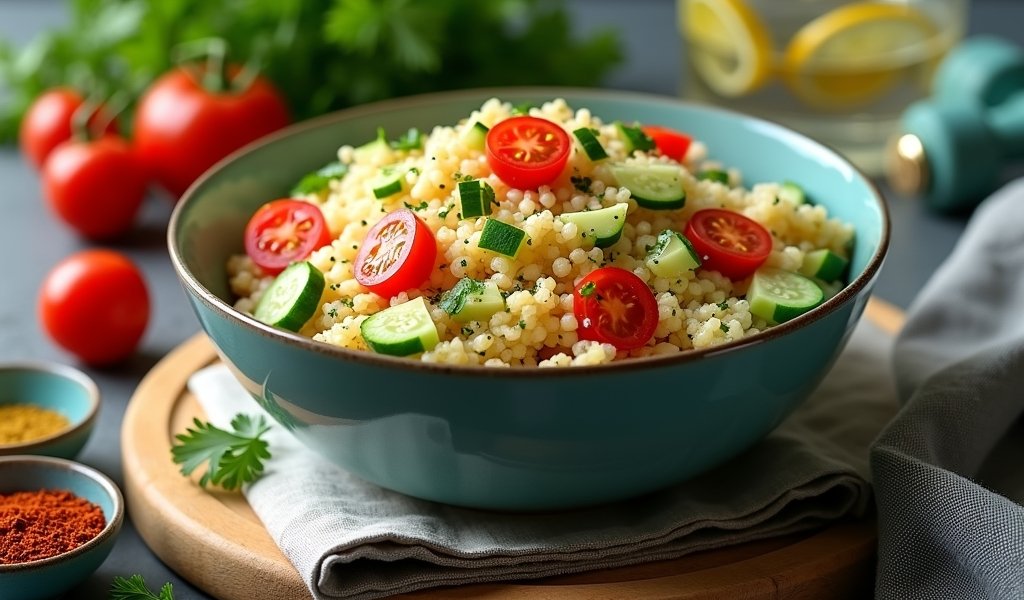
Energy Benefits: How Couscous Fuels Your Fitness Journey
Couscous stands as a champion in the realm of fitness nutrition, functioning like a perfectly calibrated time-release energy capsule. Its complex carbohydrate structure means your body breaks it down steadily, releasing glucose into your bloodstream at a manageable pace – picture a slow-burning candle rather than a firecracker of energy that quickly fizzles out.
This steady energy release is the secret weapon for endurance athletes and fitness enthusiasts alike. When you incorporate couscous into your diet, you’re essentially providing your muscles with a reliable energy subscription service, delivering fuel when and where it’s needed most. This stands in stark contrast to simple sugars that spike your energy levels before leaving you stranded in the valley of an energy crash.
The glycemic index (GI) of couscous hovers around 65, placing it in the medium range – high enough to provide readily available energy but not so high that it causes dramatic insulin spikes. It’s like finding the perfect cruising speed on a long journey: fast enough to make progress but efficient enough to go the distance.
For those incorporating morning workouts into their routine, couscous can be a welcome addition to a Mediterranean diet breakfast, setting the stage for sustained energy throughout your exercise session and beyond. The carbohydrate-protein balance makes it particularly effective at waking up your metabolism and muscle function – like turning on all systems for the day ahead.
What’s particularly fascinating is how couscous nutrients interact with your body’s energy systems. The B vitamins present, particularly thiamine and niacin, are crucial cofactors in energy metabolism, helping to convert those carbohydrates into usable ATP – your body’s energy currency. Without these vitamins, it’s like having a car with a full tank but missing the spark plugs to ignite the engine.
Pre-Workout Couscous: Timing Your Nutrition for Maximum Results
Timing is everything in both comedy and pre-workout nutrition, and couscous deserves a starring role in your pre-exercise meal planning. The ideal window for consuming couscous before exercise falls between 1-3 hours prior to activity, allowing your digestive system to process those valuable carbohydrates while minimizing any discomfort during your workout.
Think of pre-workout couscous as laying down the tracks before the energy train needs to run – a bit of forward planning ensures your journey will be smooth and efficient. A small portion (about 1/2-3/4 cup cooked) combined with a lean protein source creates what nutrition scientists call a “complete pre-workout meal” – one that addresses both immediate and sustained energy needs.
For morning exercisers facing the “empty stomach dilemma,” couscous presents a particularly elegant solution. Its rapid cooking time (often just 5 minutes) means you can prepare it even when time is tight, and its gentle impact on digestion makes it unlikely to cause discomfort even during high-intensity exercise. It’s the nutritional equivalent of finding a workout outfit that’s both functional and comfortable – no small feat!
Consider this simple pre-workout formula: couscous + protein + minimal fat = sustained energy. A practical application might be couscous with a small amount of grilled chicken and a few olive oil-roasted vegetables. The combination works like a team of specialists: carbs for immediate energy, protein to prevent muscle breakdown, and just enough fat to slow absorption slightly for longer-lasting fuel.
The versatility of couscous makes it especially valuable for fitness bread alternatives when you’re looking for something more substantial before longer training sessions. Unlike heavier bread products that might sit uncomfortably during exercise, couscous provides similar energy content with less digestive burden – like switching from heavy winter boots to lightweight running shoes.
Post-Workout Recovery: Couscous as Your Muscle-Building Ally
When the last rep is done and your muscles are crying out for replenishment, couscous steps up as the unsung hero of post-workout recovery. The post-exercise window – often referred to as the “golden hour” – represents a prime opportunity for nutritional intervention, and couscous fits perfectly into this critical timeframe.
After exercise, your muscles are like sponges, eagerly absorbing nutrients to begin the repair process. Couscous, with its readily available carbohydrates, helps replenish glycogen stores that have been depleted during your workout. Think of it as refilling the reservoirs that power your muscles, preparing them for your next training session.
The magic of couscous in recovery lies in its carbohydrate-to-protein ratio. While it’s not protein-rich enough on its own for complete recovery, pairing couscous with a quality protein source creates a recovery powerhouse. Research on post-exercise nutrition consistently shows that this combination accelerates recovery and supports muscle protein synthesis more effectively than either nutrient alone.
A practical post-workout couscous meal might look like this:
- 3/4 cup cooked whole wheat couscous
- 4 oz grilled salmon or plant-based protein
- A handful of roasted vegetables
- A light drizzle of olive oil and lemon juice
This combination serves as a complete recovery formula, addressing multiple aspects of post-exercise nutrition. The couscous rapidly restores glycogen, the protein provides amino acids for muscle repair, and the vegetables deliver antioxidants to combat exercise-induced inflammation – it’s like sending in a specialized repair crew with all the necessary tools.
What makes couscous particularly valuable post-workout is its minimal preparation time. When you’re exhausted from training, the last thing you want is a complicated cooking process. Couscous requires only hot water and a few minutes of rest – much like you after an intense workout! This accessibility means you’re more likely to consume it within that optimal recovery window, maximizing its benefits.
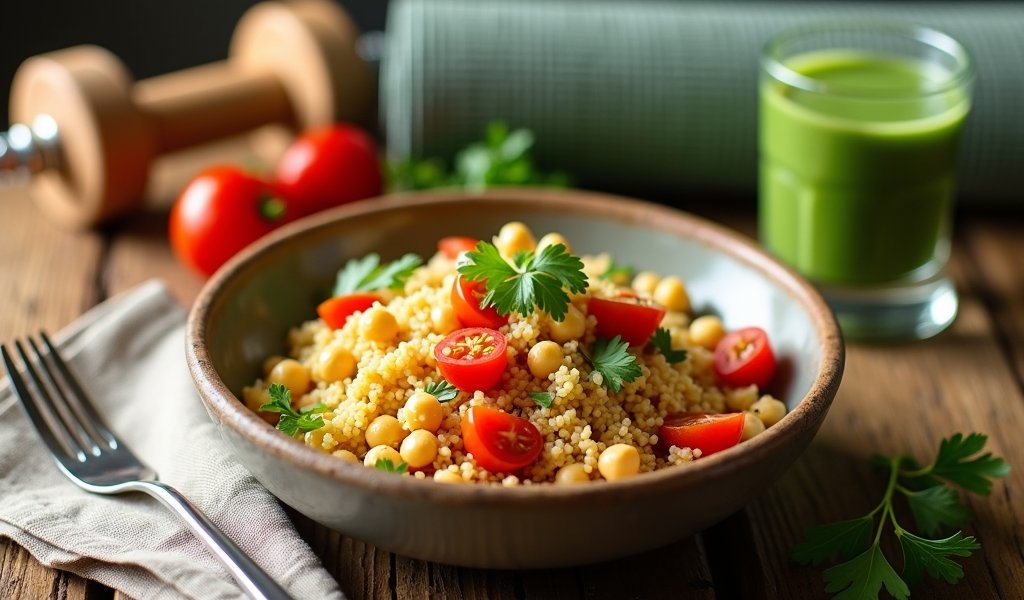
Simple and Nutritious Couscous Recipes for Fitness Enthusiasts
Transforming couscous from a plain side dish into a fitness nutrition powerhouse requires some culinary creativity. Here are three fitness-focused couscous recipes that balance nutrition, flavor, and practicality – because eating for fitness shouldn’t feel like punishment!
Muscle Recovery Mediterranean Couscous Bowl
- 1 cup whole wheat couscous, prepared according to package directions
- 4 oz grilled chicken breast or tempeh, diced
- 1/2 cucumber, diced
- 1/2 cup cherry tomatoes, halved
- 1/4 cup red onion, finely diced
- 2 tbsp fresh mint, chopped
- 2 tbsp fresh parsley, chopped
- 2 tbsp olive oil
- Juice of one lemon
- 1/4 cup crumbled feta cheese (optional)
Combine all ingredients in a large bowl, tossing gently to mix. This Mediterranean-inspired dish delivers a perfect balance of carbohydrates for glycogen replenishment, protein for muscle repair, and anti-inflammatory ingredients to support recovery. It’s like sending your muscles on a restorative vacation to the Mediterranean after a tough workout!
Pre-Workout Energy Couscous Breakfast
- 1/2 cup plain couscous, prepared with 1 cup hot water
- 1 tbsp honey or maple syrup
- 1/4 cup Greek yogurt
- 1/2 banana, sliced
- 1 tbsp almond butter
- 1/4 tsp cinnamon
- 1 tbsp chia seeds
Prepare the couscous according to package directions, then stir in the honey while still warm. Allow to cool slightly before topping with remaining ingredients. This breakfast option provides quick-access carbohydrates alongside slower-digesting proteins and fats – imagine it as a time-released energy capsule that powers you through morning training sessions.
Endurance Athlete’s Couscous Salad
- 1 cup pearl couscous, cooked according to package directions and cooled
- 1/2 cup roasted sweet potatoes, cubed
- 1/4 cup dried cranberries
- 1/4 cup pumpkin seeds
- 2 cups baby spinach
- 1 tbsp olive oil
- 1 tbsp balsamic vinegar
- 1 tsp Dijon mustard
- Salt and pepper to taste
Combine all ingredients in a large bowl and toss well. This endurance-focused salad provides both simple and complex carbohydrates for immediate and sustained energy, alongside antioxidants that help combat the increased oxidative stress of prolonged exercise. It’s like having both a sprint and marathon runner on your nutritional team!
The beauty of these recipes lies in their adaptability – they can be prepared in advance, modified based on what’s in your kitchen, and scaled up or down depending on your specific energy needs. Consider them templates rather than rigid formulas, much like how the best training programs have both structure and flexibility.
Portion Control: Finding Your Couscous Sweet Spot
Even with the most nutritious foods, the age-old wisdom holds true: the dose makes the medicine. When it comes to couscous nutrition for fitness, finding your personal “sweet spot” for portion size represents the difference between supporting your goals and potentially hindering them.
Most nutrition guidelines suggest starting with 1/2 to 3/4 cup of cooked couscous as a standard serving. However, like a custom-tailored suit fits better than off-the-rack options, your ideal portion should be personalized based on several factors including:
- Your body size and composition
- Activity level and type of exercise
- Training goals (muscle gain, fat loss, performance)
- Timing related to workouts
For endurance athletes in heavy training phases, couscous portions might increase to 1-1.5 cups per meal, particularly before and after long sessions. Think of it as adjusting your fuel tank capacity based on the expected journey – a cross-country drive requires more gas than a quick trip to the store.
Those focusing on body composition goals might take a more measured approach. A helpful visual guide: your couscous portion should occupy about 1/4 of your plate, with protein taking another quarter and vegetables filling the remaining half. This creates a balanced meal that delivers sustained energy without excessive calories – like finding the perfect balance point on a seesaw.
The expansive property of couscous creates an interesting nutritional advantage: it absorbs water during cooking, increasing in volume substantially. This means a relatively small amount of dry couscous (about 1/4 cup) yields a satisfying cooked portion, creating natural portion control. It’s nature’s way of helping you feel satisfied while managing intake – similar to how air-popped popcorn provides volume with controlled calories.
Remember that context matters enormously when determining appropriate portions. A recovery meal after a two-hour high-intensity session justifies a larger couscous serving than a light snack on a rest day. Learning to adjust your portions based on your body’s actual needs – rather than following rigid rules – represents nutritional wisdom that supports long-term fitness success.
Conclusion: Embracing Couscous in Your Fitness Journey
As we’ve journeyed through the world of couscous nutrition, one thing becomes abundantly clear: this humble North African staple deserves a prominent place in the fitness enthusiast’s pantry. Like a versatile supporting actor that enhances every scene, couscous elevates your nutritional approach without demanding the spotlight.
The seven nutrition tips we’ve explored – understanding its nature, appreciating its nutritional profile, harnessing its energy benefits, timing it strategically for pre-workout fuel, utilizing it for recovery, creating simple fitness-focused recipes, and mastering portion control – provide a comprehensive framework for making couscous work for your specific fitness goals.
What makes couscous particularly valuable in today’s fitness landscape is its perfect balance of convenience and nutrition. In a world where we’re constantly navigating trade-offs between what’s quick and what’s healthy, couscous stands in the sweet spot where these priorities overlap – like finding that perfect training program that’s both effective and sustainable.
As you incorporate these couscous nutrition strategies into your fitness regimen, remember that consistency trumps perfection. The occasional perfectly optimized meal matters far less than establishing sustainable patterns that support your energy needs day after day. Couscous, with its adaptability and ease of preparation, naturally lends itself to this approach.
The next time you’re standing in your kitchen, perhaps fatigued from a workout and contemplating your recovery meal, or planning what will fuel tomorrow’s training session, consider reaching for that package of couscous. Your muscles – and your taste buds – will thank you for making this small yet significant nutritional choice that supports your journey toward your fitness summit.
Frequently Asked Questions
Is couscous better than rice for fitness goals?
Couscous and rice have similar carbohydrate contents, but couscous typically offers slightly more protein and cooks much faster. The “better” choice depends on your specific timing needs and digestive preferences rather than one being nutritionally superior.
Can couscous help with weight loss?
Couscous can support weight loss when portions are controlled and it replaces higher-calorie alternatives. Its protein and fiber content help promote satiety, potentially reducing overall caloric intake.
Is couscous gluten-free?
No, couscous is made from semolina wheat and contains gluten. Those with celiac disease or gluten sensitivity should choose alternatives like quinoa or buckwheat.
How does whole wheat couscous compare to regular couscous?
Whole wheat couscous contains approximately twice the fiber of regular couscous and more micronutrients due to the inclusion of the wheat bran and germ. This higher fiber content provides better blood sugar regulation and longer-lasting energy.
Can I eat couscous on a low-carb diet?
Couscous is primarily carbohydrate-based, making it less suitable for very low-carb diets. However, it can be incorporated in moderate amounts in less restrictive low-carb approaches, especially around workout times when carbohydrates are most beneficial.