

Overview
This article presents ten carnivore diet snack options including beef jerky, pork rinds, bone marrow, hard-boiled eggs, canned sardines, bacon chips, beef sticks, smoked salmon, liver crisps, and pemmican—all offering protein-rich, zero-carb alternatives to conventional snacks. The ideal carnivore snacks contain high-quality animal protein, sufficient fat for energy, no plant ingredients, convenience for on-the-go consumption, and nutrient density for true satiety without compromising the diet’s principles.
Table of Contents
- The Carnivore Conundrum: Finding Snacks That Satisfy
- What Makes a Good Carnivore Diet Snack?
- 1. Beef Jerky: The Portable Protein Powerhouse
- 2. Pork Rinds: The Crispy Carnivore’s Delight
- 3. Bone Marrow: Nature’s Energy Butter
- 4. Hard-Boiled Eggs: The Perfect Pocket Protein
- 5. Canned Sardines: Swimming with Benefits
- 6. Bacon Chips: The Ultimate Meat Crisp
- 7. Beef Sticks: Convenience in a Wrapper
- 8. Smoked Salmon: The Luxury Snack
- 9. Liver Crisps: Nutrient Bombs
- 10. Pemmican: The Ultimate Survival Snack
- Conclusion: Snacking Success on the Carnivore Path
- Frequently Asked Questions
The Carnivore Conundrum: Finding Snacks That Satisfy
Let’s face it—the munchies don’t care about your dietary preferences. They strike with ruthless timing, often when you’re miles from your perfectly grilled ribeye or sizzling burger patties. For those embracing the carnivore diet, this hunger ambush can feel like navigating a culinary desert with nothing but plant-based mirages on the horizon.
As a nutritionist who’s guided countless clients through the meat-centric wilderness of the carnivore lifestyle, I’ve witnessed firsthand the struggle for suitable carnivore diet snacks. The convenience store aisles—packed with chips, granola bars, and fruit snacks—become forbidden territories lined with carbohydrate temptations.
But here’s the meaty truth: snacking on a carnivore diet doesn’t have to feel like you’re surviving a famine between meals. In fact, the right animal-based nibbles can transform your energy levels from a flickering candle to a roaring bonfire, while building muscle that would make your ancestral hunters proud.
This guide isn’t just a list—it’s your treasure map to discovering ten protein-packed, fat-rich carnivore snacks that slip perfectly into your lifestyle. Whether you’re wrestling with mid-afternoon energy slumps or looking to fuel your next workout, these carnivore-friendly options will keep you satisfied and steady on your evolutionary eating path.
What Makes a Good Carnivore Diet Snack?
Before we dive into our meaty menu, let’s establish the gold standard for carnivore diet snacks. Unlike the conventional snack world, where sugary rushes and carb crashes reign supreme, the ideal carnivore snack operates by different rules—much like comparing a sports car to a rocket ship.
The perfect carnivore snack is like a loyal hunting dog: reliable, effective, and always ready when you need it. It should tick these essential boxes:
- High-quality animal protein for muscle maintenance and growth
- Sufficient fat content for sustained energy (unlike carbs, which burn like newspaper rather than logs)
- Zero plant ingredients or additives (no grains, seeds, nuts, or sugars)
- Convenient to carry and consume (because hunting down a fresh kill mid-workday isn’t practical)
- Nutritionally dense to satisfy true hunger (not just mouth boredom)
The beauty of carnivore eating is its simplicity—like a perfectly executed deadlift compared to a complicated Olympic routine. But this simplicity doesn’t mean bland or boring. Think of these snacks as the supporting cast that helps your main meals shine as the stars of your nutritional show.
According to research on ketogenic diets, which share similarities with carnivore approaches, protein-fat combinations provide exceptional satiety and stable energy levels compared to carbohydrate-based snacks. Your body becomes a fat-burning furnace rather than a sugar-dependent machine.
1. Beef Jerky: The Portable Protein Powerhouse
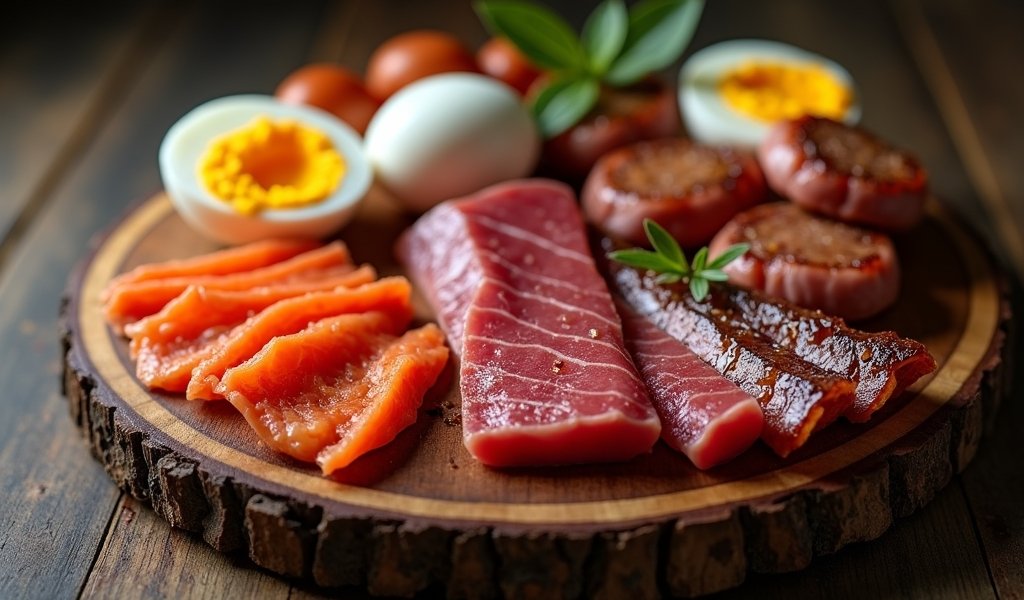
Beef jerky is the superhero of carnivore snacks—caped in protein and ready to swoop in to save you from hunger emergencies. Think of it as nature’s protein bar, except it won’t leave you with a sugar hangover or mysterious ingredients you can’t pronounce.
Not all jerky deserves a place in your carnivore arsenal, however. Commercial varieties often smuggle in sugar, soy, and other plant-based terrorists. They’re like wolves in sheep’s clothing—appearing meat-based while secretly harboring anti-carnivore ingredients.
For true carnivore compliance, look for these qualities in your jerky:
- Ingredients limited to meat, salt, and perhaps minimal spices
- No sugar, honey, maple, or other sweeteners
- Absence of soy sauce, wheat, or other plant derivatives
- Ideally grass-fed or naturally raised meat sources
The protein concentration in properly made jerky is remarkable—about 15 grams per ounce, which is like getting the protein equivalent of two eggs in a few satisfying chews. The dried nature also concentrates flavor, making it a taste bud adventure as much as a nutritional strategy.
For the carnivore purists among us, making your own jerky is like crafting a fine piece of art—except this masterpiece powers your muscles. Simply slice lean beef (top round works like a dream), add salt, and dehydrate until it reaches that perfect chewy-but-not-break-your-teeth consistency. Your future hungry self will thank you with the enthusiasm of a dog greeting its owner.
2. Pork Rinds: The Crispy Carnivore’s Delight
Remember that satisfying crunch you thought you’d surrendered to the potato chip gods when embarking on your carnivore journey? Pork rinds are here to prove that crispy satisfaction and animal-based eating aren’t mutually exclusive—they’re more like long-lost friends finally reuniting.
These airy, crunchy wonders—made from pork skin that’s been boiled, dried, and then deep-fried to cloudlike perfection—deliver the textural experience many carnivores miss most. It’s like nature’s bubble wrap for your mouth, except each pop delivers protein instead of just satisfaction.
The nutritional profile of pork rinds reads like a carnivore’s dream journal:
- Zero carbohydrates (unlike their potato-based imposters)
- Approximately 17 grams of protein per ounce
- Rich in glycine, an amino acid that balances out the methionine from muscle meats
- Collagen content that supports skin, joint, and gut health
When shopping for these crispy delights, channel your inner detective. Many commercial versions hide vegetable oils or suspicious “natural flavors” in their ingredient lists. Opt for simple ingredients like pork skin and salt—simplicity is the hallmark of both quality and carnivore compatibility.
For the culinary adventurers, homemade pork rinds are the Mount Everest of carnivore snack-making—challenging but infinitely rewarding. The metamorphosis from floppy skin to crispy cloud requires patience, but the resultant texture is like discovering a new continent of snacking pleasure.
3. Bone Marrow: Nature’s Energy Butter
If butter and meat had a luxurious, nutrient-dense baby, it would be bone marrow. This velvety treasure hidden within the hollows of animal bones isn’t just a snack—it’s more like nature’s multivitamin wrapped in a blanket of satiating fat.
When our ancestors cracked open bones to extract the marrow, they weren’t just being resourceful—they were intuitively seeking out one of the most calorie-dense, nutrient-rich parts of the animal. It was survival cleverly disguised as culinary delight.
Modern nutritional science confirms what traditional cultures knew instinctively: bone marrow is a concentrated source of:
- Fat-soluble vitamins (A, D, E, K) that support everything from vision to bone health
- Collagen and glycine that nourish connective tissue
- Alkylglycerols that support immune function
- Fatty acids that fuel brain function with remarkable efficiency
For on-the-go carnivores, pre-roasted marrow bones stored in glass containers make for quick, scoopable energy. Think of it as nature’s energy gel, minus the artificial colors and sugar rush. A few spoonfuls can tame hunger for hours, unlike the fleeting satisfaction of conventional snacks that leave you hungrier than before.
Dr. Paul Saladino, a prominent advocate of nose-to-tail eating, emphasizes the importance of marrow as one of the most valued foods in ancestral diets. It’s like discovering that the nutritional jackpot was hidden inside the bones all along, while we’ve been distracted by the muscle meat.
4. Hard-Boiled Eggs: The Perfect Pocket Protein
Nature’s original meal prep container isn’t plastic—it’s eggshell. Hard-boiled eggs are the Swiss Army knife of carnivore snacking: compact, versatile, and packing an impressive nutritional punch in a humble package.
Unlike some carnivore snacks that require special ordering or weekend prep marathons, eggs are democratic in their accessibility. They’re as comfortable in a five-star restaurant as they are in a college student’s mini-fridge—the nutritional equivalent of a well-tailored suit that fits every occasion.
The humble egg delivers a nearly perfect nutritional profile:
- About 6 grams of complete protein with all essential amino acids
- Fat-soluble vitamins concentrated in the golden yolk
- Choline for brain health (about 147mg per egg)
- Lutein and zeaxanthin that support eye health
For maximum carnivore satisfaction, don’t orphan the yolks. The practice of eating only egg whites is like buying a Ferrari and never pushing past 30 mph—you’re missing where all the magic happens. The yolk contains most of the egg’s nutrients and fat that will keep hunger at arm’s length.
Preparation simplicity is where hard-boiled eggs truly shine. Boil a dozen on Sunday, and you’ve got portable protein ready whenever hunger strikes throughout the week. They’re like time capsules of nutrition that your future hungry self will be grateful to discover.
5. Canned Sardines: Swimming with Benefits
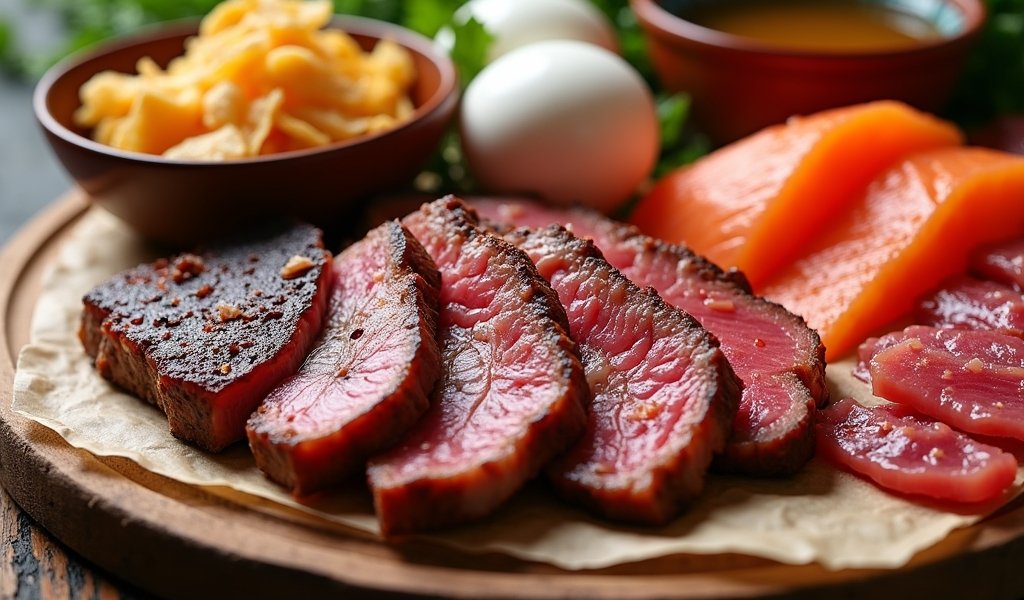
If superfoods wore capes, sardines would be flying around saving nutritional emergencies everywhere. These tiny fish, packed tightly in their metal armor, represent perhaps the most convenient omega-3 delivery system on the planet—like little oceanic mailmen bringing essential fatty acids directly to your door.
Don’t let their size fool you. Sardines are nutritional heavyweights that put many larger foods to shame. They’re what would happen if you could compress all the benefits of the ocean into a pocket-sized snack.
The nutritional resume of sardines reads like a who’s who of valuable nutrients:
- Omega-3 fatty acids that combat inflammation
- Complete protein with all essential amino acids
- Calcium from their edible bones (providing more than dairy without the lactose issues)
- Vitamin D, the sunshine nutrient that’s scarce in most foods
- Vitamin B12 for energy and neurological function
For the carnivore dieter, sardines packed in water or olive oil (if you permit it) are ideal. Avoid varieties swimming in vegetable oils, which are like putting regular gas in a premium vehicle—technically it works, but at what cost?
The convenience factor of sardines deserves special mention. No refrigeration, no preparation, no cutlery required if you’re truly committed. Pop the top, and you’re seconds away from a nutrient-dense meal that early humans would have considered a feast fit for celebration.
According to research on omega-3 consumption, the fatty acids abundant in sardines support cognitive function and cardiovascular health—making them not just a snack for today’s hunger but an investment in tomorrow’s wellbeing.
6. Bacon Chips: The Ultimate Meat Crisp
If someone told you that you could transform bacon—already the unofficial mascot of carnivore eating—into a portable, crunchy snack that doesn’t require refrigeration, you might think they were spinning pork-flavored fairy tales. Yet bacon chips are very real, and they’re spectacularly satisfying.
Think of bacon chips as the carnivore’s answer to potato chips: crisp, savory, portable, but without the plant matter and inflammatory oils. They’re what happens when bacon achieves its final, perfect form—like a Pokemon evolution, but delicious.
Creating these crispy morsels involves baking bacon strips until they transform from their naturally floppy state into rigid chips that snap rather than bend. The process concentrates flavor while creating a shelf-stable snack that can travel with you.
The benefits extend beyond mere convenience:
- Stable at room temperature for several days (if they last that long)
- Intensified flavor that satisfies with smaller portions
- The perfect fat-to-protein ratio for sustained energy
- Zero carbohydrates to disrupt your metabolic state
For optimal carnivore compatibility, choose bacon without added sugars or nitrates. Quality matters here—like choosing first-class seats versus economy, the experience is simply superior when the ingredients are clean and the meat is from well-raised animals.
These crispy treasures pair exceptionally well with the next item on our list, creating a snack combination that’s greater than the sum of its parts. It’s the culinary equivalent of finding out your favorite band is collaborating with another artist you love.
7. Beef Sticks: Convenience in a Wrapper
Think of beef sticks as the carnivore’s equivalent of granola bars—except instead of grains and honey, you get protein and fat in a convenient, pocket-sized package. They’re like meat’s answer to the question, “What if jerky was more portable and less jaw-exhausting?”
The modern beef stick has come a long way from its heavily processed gas station ancestors. Today’s artisanal versions cater to the ingredient-conscious carnivore with cleaner profiles and ethical sourcing. It’s like comparing a hand-crafted leather shoe to a mass-produced plastic flip-flop—both cover your foot, but the quality experience is worlds apart.
When hunting for worthy beef sticks, look for these quality markers:
- Short ingredient lists dominated by meat and spices
- Absence of corn syrup, MSG, and vegetable protein fillers
- Preferably grass-fed or pasture-raised sources
- Fermentation methods instead of accelerants and chemical preservatives
The nutritional density of a quality beef stick makes it ideal for emergency hunger situations. Unlike conventional snacks that provide calories without satiety, these protein-packed cylinders actually address hunger at its physiological source—like fixing a leak instead of just mopping up water.
Many carnivore diet recipes now include homemade versions of these portable protein sticks, allowing for complete control over ingredients and flavor profiles. It’s the DIY approach to ensuring your snacks are as clean as your main meals—consistency that your body will thank you for.
8. Smoked Salmon: The Luxury Snack
Smoked salmon is the James Bond of carnivore snacks—sophisticated, smooth, and surprisingly powerful despite its delicate appearance. It brings an air of luxury to any snacking occasion, transforming a simple hunger fix into a culinary experience.
Unlike some carnivore options that announce themselves with bold flavors, smoked salmon whispers rather than shouts—but what it says is worth leaning in for. The subtle smokiness layered over rich salmon flesh creates a complexity that satisfies both hunger and hedonistic taste desires.
Nutritionally, smoked salmon offers an impressive array of benefits:
- Omega-3 fatty acids that support brain function and reduce inflammation
- High-quality protein that’s gentle on digestion
- Astaxanthin, a powerful antioxidant that gives salmon its pink color
- Vitamin D and selenium, both crucial for immune function
For the label-reading carnivore, seek out versions with minimal ingredients—ideally just salmon, salt, and smoke. Some commercial varieties smuggle in sugar during the curing process, which is about as welcome in a carnivore diet as a vegetarian at a barbecue competition.
The convenience factor shouldn’t be overlooked. Vacuum-sealed smoked salmon can travel in your bag for hours without refrigeration, making it ideal for workdays, travel, or as your secret weapon against the vending machine’s siren song. It’s like carrying a piece of culinary sophistication in your pocket, ready to elevate any snacking moment.
9. Liver Crisps: Nutrient Bombs
If regular meat is nutritional gold, then liver is the mother lode—a concentrated source of vitamins and minerals that makes most multivitamins look like amateur hour. Liver crisps transform this nutritional powerhouse into a snackable form that addresses the organ meat’s biggest challenge: palatability.
For many carnivore dieters, liver is the nutritional equivalent of daily exercise—they know they should incorporate it, but finding a way to make it appealing can be challenging. Liver crisps solve this conundrum by changing the texture and concentrating the flavor, much like turning a challenging textbook into an engaging documentary.
The preparation involves thin-slicing beef liver, seasoning it simply with salt, and dehydrating until crisp. The result is a chip-like snack that delivers liver’s benefits in a form you might actually crave rather than tolerate.
The nutritional profile reads like a supplement label:
- Vitamin A in its true preformed state (retinol)
- The entire B vitamin family in significant amounts
- Copper and iron for blood health
- Choline for brain and nervous system function
- CoQ10 for cellular energy production
Dr. Terry Wahls, known for her work on nutritional approaches to autoimmune conditions, advocates for regular consumption of organ meats like liver for their unparalleled nutrient density. Liver crisps make following this advice considerably more accessible.
For those new to liver’s distinctive flavor profile, starting with a mixture of ground beef and liver for your crisps can create a gateway experience. It’s like adding milk to coffee before eventually appreciating it black—a stepping stone toward embracing one of nature’s most nutritious foods.
10. Pemmican: The Ultimate Survival Snack
If the carnivore diet had an official energy bar, pemmican would be it. This traditional Native American survival food combines dried meat and rendered fat into what might be the most shelf-stable, calorie-dense, nutritionally complete food ever created by human hands.
Pemmican is to modern energy bars what a Swiss timepiece is to a digital watch—more intricate in creation but infinitely more reliable and elegant in function. Native tribes relied on this food to sustain them through harsh winters and long journeys, situations where nutritional failures weren’t just inconvenient but potentially fatal.
The beauty of pemmican lies in its simplicity and completeness:
- Perfect macronutrient ratio for sustained energy
- Exceptional shelf stability (properly made pemmican can last years without refrigeration)
- Complete amino acid profile from the dried meat
- Essential fatty acids and fat-soluble vitamins from the rendered fat
Creating pemmican involves drying lean meat until completely moisture-free, pounding it into powder, and mixing it with an equal amount of rendered fat (traditionally tallow). The result is a dense, high-calorie food that resists spoilage and provides steady energy—the original emergency food before emergency foods were a marketing category.
Modern carnivores find that pemmican solves the portable meal challenge like nothing else. It requires no refrigeration, preparation, or special storage. It’s the nutritional equivalent of having an insurance policy in your pocket—there when you need it, providing complete coverage.
Conclusion: Snacking Success on the Carnivore Path
Navigating the carnivore lifestyle doesn’t mean surrendering the convenience and pleasure of snacking—it just means redefining what snacking looks like. Like a cartographer drawing new routes on an old map, we’ve explored ten territories where protein and fat reign supreme, and plants are pleasantly absent.
These carnivore diet snacks aren’t just stopgap measures between meals; they’re nutritional powerhouses in their own right. From the portable protein of beef jerky to the nutrient density of liver crisps, each option supports your metabolic goals while satisfying immediate hunger needs.
The beauty of this approach is its simplicity and sustainability. Unlike conventional dieting that often feels like a temporary punishment, carnivore snacking feels like abundance—a cornucopia of satisfying options that happen to align with your nutritional philosophy.
Remember that the best carnivore snack is ultimately the one that works for your lifestyle, preferences, and specific health goals. Whether you’re drawn to the luxury of smoked salmon or the primal satisfaction of bone marrow, the key is consistency and quality.
As you incorporate these options into your routine, pay attention to how your body responds. Energy levels, hunger patterns, and workout recovery are valuable feedback mechanisms that help you fine-tune your personal carnivore approach.
The journey to optimal health is rarely a straight line. It’s more like a mountain path with switchbacks and occasional viewpoints that let you appreciate how far you’ve come. These ten snacking strategies are tools for that journey—reliable companions that keep you nourished, satisfied, and firmly on your chosen path.
Frequently Asked Questions
Can I eat cheese as a snack on the carnivore diet?
Cheese is considered an “animal product” and many carnivore dieters include it, especially hard aged varieties with minimal lactose. However, those with dairy sensitivities or following a strict carnivore approach may choose to avoid it.
How often should I snack on a carnivore diet?
Many find that the satiety from carnivore meals naturally reduces snacking frequency compared to standard diets. Listen to your body’s true hunger signals rather than eating by the clock.
Are canned meats acceptable carnivore snacks?
Canned salmon, tuna, chicken, and other meats can be excellent carnivore snacks if they don’t contain plant oils or additives. Check ingredient lists carefully as many commercial options include vegetable broth or soybean oil.
Do I need to worry about sodium intake with these snacks?
On a carnivore diet, sodium requirements are often higher due to lower insulin levels causing increased sodium excretion. Most people benefit from liberal salt use rather than restriction, unless specifically advised otherwise by a healthcare provider.
Can these snacks support my workout recovery?
Absolutely! The protein in these carnivore snacks provides amino acids necessary for muscle repair, while the fat content offers energy for recovery. Timing protein intake around workouts can be particularly beneficial for muscle synthesis.