

Overview
While diabetes debates often turn into a medical version of “who wore it worse?”, this article explains that neither Type 1 nor Type 2 diabetes is definitively “worse” since both present unique challenges—Type 1 requiring lifelong insulin and constant vigilance from onset, while Type 2 progresses gradually with connections to lifestyle factors. Both types can lead to similar complications affecting vision, kidneys, nerves, and cardiovascular health, but outcomes depend more on management quality, healthcare access, and individual circumstances than on diabetes type.
Table of Contents
- Understanding Diabetes: Type 1 vs Type 2
- Comparing Severity: Which Type of Diabetes Is Worse?
- Complications of Diabetes: Long-Term Health Impacts
- Impact on Life Expectancy
- Treatment Approaches for Different Diabetes Types
- Management Strategies and Lifestyle Adjustments
- Prevention and Risk Reduction
- Conclusion
- Frequently Asked Questions
Understanding Diabetes: Type 1 vs Type 2
When patients ask me “which type of diabetes is worse,” I find it’s essential to first understand what we’re comparing. As an endocrinologist who has treated thousands of diabetes cases over my 15-year career, I can tell you that each type presents unique challenges and considerations.
Diabetes, at its core, is a condition where your body struggles to regulate blood glucose levels properly. But the underlying mechanisms differ significantly between types.
Type 1 diabetes is an autoimmune condition where the body’s immune system mistakenly attacks and destroys insulin-producing beta cells in the pancreas. This typically develops in childhood or adolescence, though it can appear at any age. Without the ability to produce insulin, people with Type 1 diabetes require lifelong insulin therapy to survive.
Type 2 diabetes, conversely, begins with insulin resistance—your body produces insulin but cannot use it effectively. Over time, this can progress to insufficient insulin production as the pancreas becomes exhausted. Type 2 is strongly associated with lifestyle factors like obesity, physical inactivity, and dietary habits, though genetic factors play a significant role too.
There’s also gestational diabetes, which develops during pregnancy and typically resolves after childbirth, though it increases future Type 2 diabetes risk. Less common varieties include LADA (Latent Autoimmune Diabetes in Adults) and MODY (Maturity Onset Diabetes of the Young), which have characteristics of both major types.
Understanding these fundamental differences helps us approach the complex question of which type might be “worse”—though I prefer to think of them as differently challenging rather than ranking them on a severity scale.
Comparing Severity: Which Type of Diabetes Is Worse?
When contemplating which type of diabetes is worse, we need to consider multiple factors rather than making a simple comparison. The truth is that both Type 1 and Type 2 diabetes can be serious conditions with potential for significant health complications if not properly managed.
Type 1 diabetes often presents with more immediate danger at onset. The complete lack of insulin production means that without treatment, it quickly leads to diabetic ketoacidosis (DKA)—a potentially life-threatening condition. The necessity for external insulin and precise management from diagnosis onward creates a substantial daily management burden that never takes a day off.
According to research published in the New England Journal of Medicine, Type 1 diabetes management requires vigilant blood glucose monitoring and insulin adjustments multiple times daily, creating significant “diabetes distress” for many patients.
Type 2 diabetes, while often perceived as “milder,” can be deceptively dangerous precisely because of its gradual onset. Many people have Type 2 diabetes for years before diagnosis, allowing silent damage to accumulate. Additionally, the progressive nature of Type 2 means that management typically becomes more complex over time, often eventually requiring insulin therapy despite initial success with lifestyle modifications and oral medications.
The answer to which type of diabetes is worse ultimately depends on individual circumstances, including:
- Age at diagnosis
- Presence of other health conditions
- Access to healthcare resources
- Genetic factors influencing progression
- Individual response to treatment approaches
I’ve seen patients with well-managed Type 1 diabetes thrive with minimal complications for decades, while some with Type 2 experience rapid deterioration despite intervention. The reverse is also true. Each person’s diabetes journey is unique.
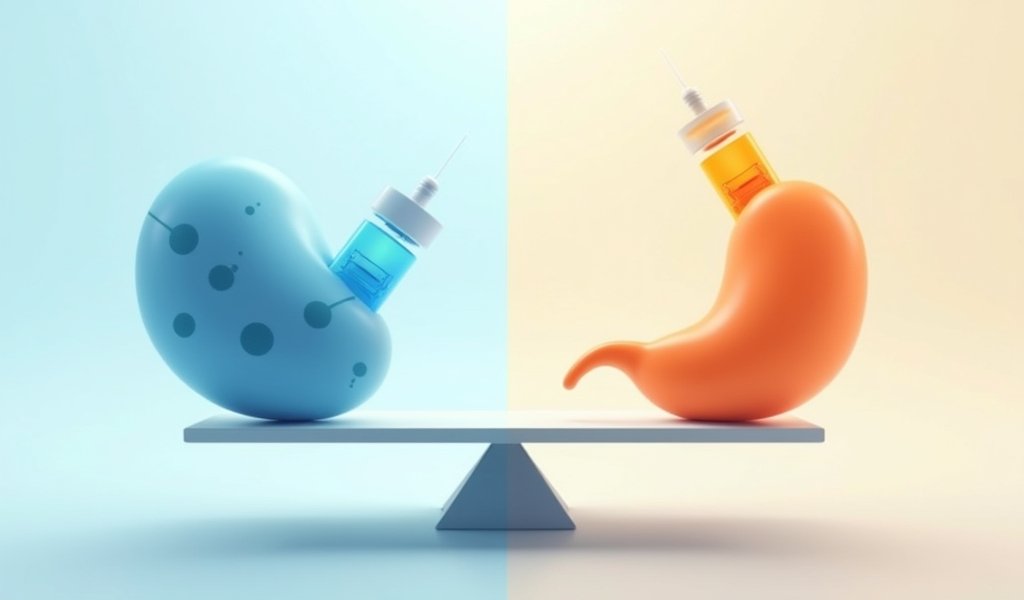
Complications of Diabetes: Long-Term Health Impacts
The long-term complications of diabetes can be severe regardless of type, though the risk factors and progression may differ. Both Type 1 and Type 2 diabetes can lead to similar complications when blood glucose remains poorly controlled over time.
Microvascular complications affect small blood vessels and include:
- Diabetic retinopathy – potentially leading to vision impairment or blindness
- Diabetic nephropathy – kidney damage that may progress to kidney failure
- Diabetic neuropathy – nerve damage causing pain, numbness, or impaired function
Macrovascular complications involve larger blood vessels and include:
- Cardiovascular disease – heart attacks, strokes, and peripheral artery disease
- Hypertension – high blood pressure that further damages blood vessels
When comparing which type of diabetes is worse regarding complications, some interesting patterns emerge. Research from the American Diabetes Association suggests that people with Type 1 diabetes may develop complications earlier in life simply because they’ve lived with the condition longer, often from childhood.
However, Type 2 diabetes frequently occurs alongside other metabolic conditions like obesity, hypertension, and dyslipidemia—collectively known as metabolic syndrome. This “perfect storm” of conditions can accelerate cardiovascular damage.
The good news? Studies consistently show that tight glycemic control significantly reduces complication risks for both types. A landmark study, the Diabetes Control and Complications Trial (DCCT), demonstrated that intensive blood glucose management reduced microvascular complications by approximately 50% in Type 1 diabetes.
Similarly, the UK Prospective Diabetes Study (UKPDS) showed that for every percentage point decrease in HbA1c (a measure of average blood glucose), there was a 35% reduction in complication risk for Type 2 diabetes.
The takeaway? The “worse” outcomes aren’t predetermined by diabetes type but rather by blood glucose management, overall health behaviors, and access to comprehensive care.
Impact on Life Expectancy
The question of which type of diabetes is worse becomes particularly poignant when considering life expectancy. Historically, both types have been associated with reduced lifespan, but modern management approaches have dramatically improved outcomes.
For Type 1 diabetes, the outlook has transformed remarkably. A study in the Lancet found that while Type 1 diabetes once reduced life expectancy by 20+ years, today’s gap has narrowed to approximately 8-13 years for those with well-managed diabetes. Technological advances like continuous glucose monitors and insulin pumps have revolutionized management capabilities.
Type 2 diabetes typically reduces life expectancy by 5-10 years, with earlier onset associated with greater reduction. This reflects the cumulative damage from prolonged exposure to elevated blood glucose and associated metabolic disruptions.
Interestingly, research suggests that the mortality gap may be closing faster for Type 1 than Type 2 diabetes. This could partly reflect the challenges in addressing the complex lifestyle factors underlying many Type 2 cases and the tendency for delayed diagnosis.
It’s worth noting that these statistics represent averages. I’ve treated numerous patients who defy these projections through exceptional self-care, medical adherence, and regular preventive screenings. The individual variation is substantial.
Additionally, cause of death differs somewhat between diabetes types. People with Type 1 diabetes have historically faced higher risk of acute complications like diabetic ketoacidosis, while cardiovascular disease represents the primary mortality driver in Type 2 diabetes.
When patients ask me which type of diabetes is worse regarding life expectancy, I emphasize that modern management approaches offer unprecedented opportunities for longevity with either type. The more relevant question becomes how effectively the condition is managed rather than which type one has.
Treatment Approaches for Different Diabetes Types
Treatment approaches vary significantly between diabetes types, reflecting their different underlying mechanisms. Understanding these differences helps clarify why the question “which type of diabetes is worse” doesn’t have a straightforward answer.
For Type 1 diabetes, insulin therapy is non-negotiable and life-sustaining. There’s no “diet and exercise” phase or oral medication option as the primary treatment. Modern approaches typically include:
- Multiple daily injections (MDI) using both basal and bolus insulin
- Insulin pump therapy for more precise delivery
- Continuous glucose monitoring (CGM) for real-time glucose feedback
- Carbohydrate counting to match insulin doses to food intake
The treatment landscape for Type 2 diabetes is more varied and typically follows a stepwise progression:
- Lifestyle modifications (dietary changes, increased physical activity, weight management)
- Oral medications (metformin typically first, followed by various other classes)
- Injectable non-insulin medications (like GLP-1 receptor agonists)
- Insulin therapy (often starting with basal insulin and potentially progressing to multiple daily injections)
Recent advances have expanded Type 2 diabetes treatment options dramatically. Medications like SGLT-2 inhibitors and GLP-1 receptor agonists not only improve glucose control but offer cardiovascular and kidney protection beyond their glucose-lowering effects.
The daily management burden differs as well. Type 1 diabetes requires constant vigilance—multiple blood glucose checks, insulin dose calculations for every meal, and adjustments for exercise, illness, and other variables. This management intensity never decreases.
Type 2 diabetes management intensity typically increases gradually over time as the condition progresses, sometimes eventually requiring insulin therapy similar to Type 1. However, particularly in early stages, some patients achieve excellent control through lifestyle modifications with minimal medication support.
From a treatment perspective, the “worse” type might be considered the one requiring more intensive intervention or carrying a higher treatment burden for the individual patient. This varies tremendously based on individual factors including diabetes duration, overall health status, and response to specific interventions.

Management Strategies and Lifestyle Adjustments
When considering which type of diabetes is worse, the required lifestyle adjustments and daily management practices provide important context. Both types benefit from certain core strategies, though the emphasis and specifics differ.
For all people with diabetes, a balanced nutrition plan is foundational. However, the approach varies:
- Type 1: Carbohydrate counting and insulin matching are essential skills, with timing of meals and insulin coordination being critical. Food choices still matter, but insulin doses can be adjusted for different food selections.
- Type 2: Dietary focus typically emphasizes calorie control, carbohydrate quality and quantity, and weight management. Meal timing and consistency help maintain stable blood glucose levels.
Physical activity benefits both types tremendously but requires different considerations:
- Type 1: Exercise necessitates careful planning around insulin dosing and carbohydrate intake to prevent hypoglycemia. I advise my patients to check glucose before, sometimes during, and after exercise.
- Type 2: Regular physical activity improves insulin sensitivity and supports weight management goals. The hypoglycemia risk is typically lower except for those using insulin or certain medications.
Blood glucose monitoring patterns also differ:
- Type 1: Multiple daily checks are standard, with many patients now using continuous glucose monitors that provide readings every few minutes.
- Type 2: Monitoring frequency varies based on medication regimen and stability, ranging from several times daily (for insulin users) to a few times weekly for those well-controlled on lifestyle or certain oral medications.
Research published in Diabetes Research and Clinical Practice suggests that the psychological burden of diabetes management—sometimes called “diabetes distress”—can be significant with either type but often manifests differently.
For Type 1, the constant vigilance and life-or-death nature of insulin management can create anxiety and burnout. With Type 2, feelings of guilt, shame, or stigma related to perceived lifestyle contributions to the condition are more common.
The most successful management approaches I’ve seen in my practice integrate medical treatment with psychological support and practical lifestyle strategies tailored to the individual’s specific needs, preferences, and circumstances—regardless of diabetes type.
Prevention and Risk Reduction
When discussing which type of diabetes is worse, prevention possibilities represent a significant distinguishing factor. Type 1 and Type 2 diabetes differ dramatically in their preventability.
Type 1 diabetes cannot currently be prevented. Its autoimmune nature develops through a complex interaction of genetic predisposition and environmental triggers that researchers are still working to fully understand. Some promising research is investigating interventions in high-risk individuals (like those with family history and specific antibodies), but no proven prevention strategy exists yet.
Type 2 diabetes, conversely, offers substantial prevention opportunities. The Diabetes Prevention Program, a landmark clinical trial, demonstrated that lifestyle modifications could reduce Type 2 diabetes risk by 58% in high-risk individuals—more effective than medication. These modifications included:
- Weight reduction of 5-7% of body weight
- At least 150 minutes of moderate physical activity weekly
- Dietary changes emphasizing reduced calories and fat
For those with prediabetes (higher-than-normal blood glucose that hasn’t yet reached diabetic levels), these interventions can effectively delay or prevent progression to Type 2 diabetes. No similar opportunity exists for those at risk of Type 1.
From this perspective, some might consider Type 1 diabetes “worse” because it strikes without preventable cause, often in childhood, with lifelong insulin dependency. The inability to prevent it despite healthy lifestyle choices can feel particularly unfair to those affected.
However, the preventability of many Type 2 cases comes with its own psychological burden. As research in the Journal of Diabetes Research notes, this can contribute to stigma, self-blame, and healthcare provider bias, despite the fact that genetic predisposition plays a substantial role in Type 2 diabetes as well.
It’s important to note that some populations face disproportionate Type 2 diabetes risk due to social determinants of health—factors like food insecurity, limited healthcare access, and environments that don’t support physical activity. For these individuals, prevention through “lifestyle choices” may be significantly constrained by circumstances beyond their control.
For those with established diabetes of either type, secondary prevention—preventing or delaying complications—becomes the focus. Here, the approaches share many similarities, with blood glucose control, blood pressure management, and regular screening for early signs of complications being universally important.
Conclusion
After exploring the complex question of which type of diabetes is worse, we can see that the answer isn’t straightforward. Both Type 1 and Type 2 diabetes present significant challenges, though these challenges manifest differently across diagnosis, daily management, treatment options, and long-term outcomes.
Type 1 diabetes requires immediate and lifelong insulin therapy with constant vigilance around glucose management. Its unpredictable onset, often in youth, means a lifetime of adaptation. The inability to prevent it adds another dimension of difficulty.
Type 2 diabetes, while often manageable through lifestyle modifications initially, is progressive in nature. Its association with other metabolic conditions can accelerate complication development, and the delayed diagnosis many experience allows silent damage to accumulate before treatment begins.
What’s clear from decades of research and clinical experience is that outcomes depend far more on factors like:
- Access to comprehensive healthcare
- Quality of diabetes education
- Individual commitment to management
- Social and family support systems
- Psychological adaptation to living with a chronic condition
Rather than focusing on which type of diabetes is worse, I encourage my patients to focus on optimizing their specific situation. Both types respond positively to proactive management, and both can lead to fulfilling lives when properly addressed.
The most empowering approach is to work closely with healthcare providers to develop personalized management strategies that fit your life circumstances, preferences, and needs—regardless of which type of diabetes you have. With modern approaches to care, people with both types of diabetes can live long, healthy lives with reduced risk of serious complications.
Frequently Asked Questions
Is Type 1 or Type 2 diabetes more dangerous?
Both can be dangerous if poorly managed. Type 1 presents more immediate danger at onset with risk of ketoacidosis, while Type 2 often causes damage silently before diagnosis.
Which type of diabetes has a better life expectancy?
With optimal management, both types have improved life expectancy compared to historical outcomes. The reduction in lifespan tends to be somewhat greater for Type 1, but individual management quality matters more than type.
Can Type 2 diabetes turn into Type 1?
No, they have different mechanisms and one cannot transform into the other. However, some people with Type 2 eventually require insulin therapy similar to Type 1 treatment.
Which type of diabetes is more common in children?
Type 1 diabetes has traditionally been more common in children. However, Type 2 diabetes is increasing in youth populations due to rising childhood obesity rates.
Is Type 1 or Type 2 diabetes more genetic?
Both have genetic components. Type 1 has strong genetic risk factors relating to autoimmunity, while Type 2 has complex genetic predispositions that interact with environmental factors.