
Overview
Turns out your ACL doesn’t have a great sense of humor – one wrong move and it pops faster than a champagne cork at a New Year’s party. This article outlines five key prevention strategies including strength training (especially hamstrings), proper movement techniques, balance training, flexibility work, and adequate recovery protocols, which together can reduce ACL injury risk by up to 70% according to research.
Table of Contents
- Understanding ACL Tears: What You Need to Know
- Common Risk Factors for ACL Injuries
- Tip 1: Strengthen Your Way to ACL Protection
- Tip 2: Master Proper Movement Techniques
- Tip 3: Improve Balance and Proprioception
- Tip 4: Enhance Flexibility and Mobility
- Tip 5: Don’t Underestimate Recovery and Preparation
- Effective ACL Injury Prevention Programs
- Conclusion: Protecting Your ACL for the Long Run
- Frequently Asked Questions
Understanding ACL Tears: What You Need to Know
If you’re active in sports or fitness, knowing how to avoid ACL tears should be high on your priority list. As a sports medicine specialist with over a decade of experience, I’ve seen firsthand how these injuries can derail athletic careers and everyday activities alike. The anterior cruciate ligament (ACL) is one of four major ligaments in your knee, and it plays a crucial role in stabilizing this complex joint during movement.
When the ACL tears, it’s rarely a subtle event. Most patients describe hearing a distinct “pop” followed by immediate pain and swelling. Within hours, the knee typically becomes stiff and walking becomes difficult. Recovery often requires surgery and months of rehabilitation – a journey no one eagerly signs up for.
The good news? Many ACL injuries are preventable with the right approach to training and movement. Research from the Journal of Orthopaedic & Sports Physical Therapy suggests that appropriate prevention programs can reduce ACL injury risk by up to 50%. That’s why I’ve compiled these five evidence-based strategies to help keep your knees healthy and your ACL intact.
Common Risk Factors for ACL Injuries
Before diving into prevention strategies, let’s understand who’s most at risk. Female athletes experience ACL tears at 2-8 times the rate of their male counterparts, particularly in sports involving jumping, cutting, and pivoting movements. This gender disparity stems from anatomical differences, hormonal influences, and neuromuscular control patterns.
Sports with the highest ACL injury rates include basketball, soccer, football, and skiing – activities that demand rapid direction changes and deceleration. However, ACL tears can happen to weekend warriors and fitness enthusiasts too, not just competitive athletes.
Several biomechanical patterns increase your risk, including knee valgus (inward knee collapse), landing with straight legs, and poor core stability. The good news is that these movement patterns can be identified and corrected with proper training.
Previous knee injuries also significantly increase your risk of ACL tears. If you’ve had a previous ACL injury or other knee problems, taking preventive measures becomes even more crucial for long-term joint health.

Tip 1: Strengthen Your Way to ACL Protection
Building strength in the muscles surrounding the knee creates a natural brace system that helps protect your ACL. Focus particularly on your quadriceps, hamstrings, and glutes – the power generators that control knee alignment during movement.
The hamstring-to-quadriceps strength ratio is especially important. Many athletes, particularly women, have overdeveloped quads relative to their hamstrings, creating a muscle imbalance that increases ACL strain during activities. Aim for a ratio where hamstrings are at least 60% as strong as quadriceps.
Incorporate these key exercises into your routine:
- Romanian deadlifts for posterior chain development
- Bulgarian split squats to address side-to-side imbalances
- Glute bridges to activate often-neglected gluteal muscles
- Nordic hamstring curls for eccentric hamstring strength
- Core stability exercises like planks and Pallof presses
Don’t neglect single-leg training – many ACL injuries occur during single-leg loading scenarios. Kettlebell training can be particularly effective here, as it challenges stability while building strength. Research from the American Journal of Sports Medicine demonstrates that athletes who engage in regular strength training reduce their ACL injury risk by up to 60%.
Aim to strength train 2-3 times weekly, ensuring proper form and gradually increasing intensity as your technique improves. Remember, quality trumps quantity – perfect your movement patterns before adding significant load.
Tip 2: Master Proper Movement Techniques
How you move matters as much as how strong you are. Learning and practicing proper movement patterns during jumping, landing, cutting, and pivoting activities dramatically reduces ACL injury risk.
When landing from jumps, focus on these key elements:
- Land softly with “quiet feet” by absorbing force through bent knees and hips
- Keep knees tracking over toes, avoiding inward collapse
- Maintain a slight forward torso lean rather than upright or overly bent positions
- Distribute weight evenly between both legs when landing from bilateral jumps
For cutting and pivoting movements, pre-plan your movement path when possible. Decelerate before changing direction, using multiple small steps rather than a single abrupt move. Maintain a low center of gravity with bent knees and hips, and pivot on the ball of your foot rather than with a planted heel.
Video analysis can be invaluable for identifying problematic movement patterns. Many physical therapists and sports performance specialists offer movement screenings specifically designed to assess ACL injury risk factors.
Practice these techniques regularly during lower-intensity training before applying them in game situations or higher-intensity workouts. According to research in the Clinical Journal of Sport Medicine, neuromuscular training programs focusing on movement quality can reduce ACL injury rates by up to 70%.
Tip 3: Improve Balance and Proprioception
Balance training enhances proprioception – your body’s ability to sense joint position in space. Well-developed proprioception allows for faster, more accurate muscle responses when your knee encounters potentially dangerous positions.
Start with simple static balance exercises like single-leg stands, progressing to more dynamic movements as your stability improves. Challenge yourself by closing your eyes, standing on unstable surfaces like BOSU balls, or adding upper body movements while balancing.
Incorporate these balance exercises into your routine:
- Single-leg balance with knee drive (30-60 seconds per side)
- Single-leg RDLs with controlled movement
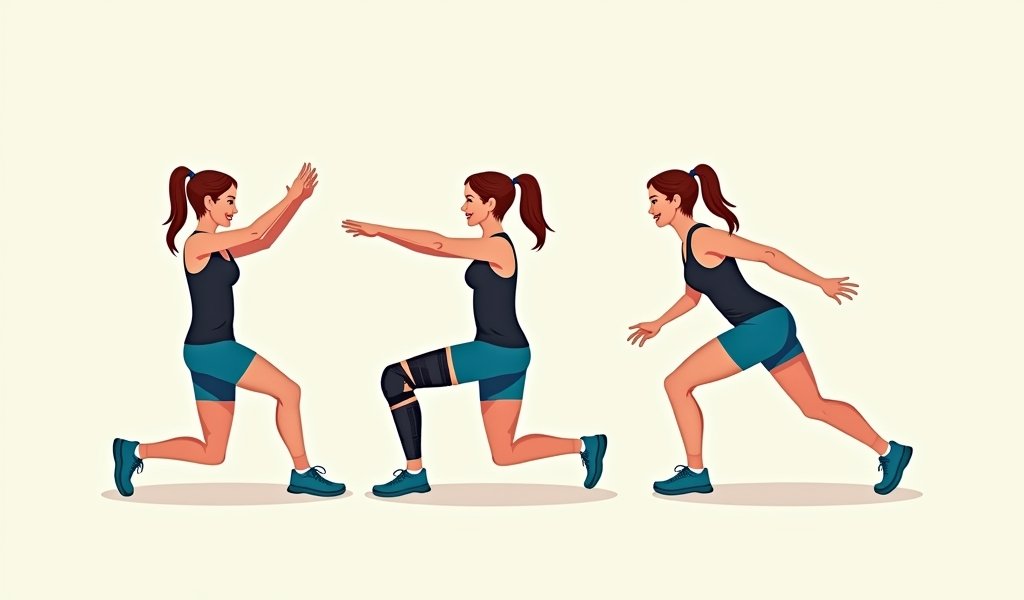
- Multi-directional lunges with balance holds
- Y-balance reaches in multiple directions
- Single-leg hop and stick with controlled landing
Aim for at least 10 minutes of balance work 3-4 times weekly. This can be incorporated into your warm-up routine or as active recovery between strength exercises. HIIT kettlebell training naturally incorporates many balance challenges while simultaneously building strength.
The effectiveness of proprioceptive training for ACL injury prevention is well-established. A systematic review in the British Journal of Sports Medicine found that athletes who regularly performed balance and proprioception exercises reduced their ACL injury risk by approximately 39%.

Tip 4: Enhance Flexibility and Mobility
While strength and movement quality get more attention in ACL prevention discussions, flexibility and mobility play crucial supporting roles. Tight muscles can alter your movement patterns and place additional stress on the knee joint.
Focus on these key areas for lower-body mobility:
- Hip flexors and quadriceps – tight hip flexors can limit hip extension and increase knee stress
- Hamstrings – tight hamstrings may limit knee extension range during running
- Calves – limited ankle dorsiflexion can force compensation through the knee
- Hip rotators – restricted hip rotation can lead to excessive rotational forces at the knee
- IT band and lateral hip – tightness here can pull the knee into suboptimal alignment
Dynamic stretching before activity and static stretching after workouts provides complementary benefits. Consider adding foam rolling to your routine to address myofascial restrictions that standard stretching might miss.
For ankle mobility specifically, try this test: In a kneeling position with your toes 5 inches from a wall, attempt to touch your knee to the wall without lifting your heel. If you can’t reach, your ankle mobility needs work – inadequate dorsiflexion is a known risk factor for ACL injuries.
Incorporate a 10-15 minute mobility routine into your daily schedule – consistency matters more than duration. An elliptical HIIT workout can help maintain joint mobility while providing cardiovascular benefits without the impact stresses of running.
Tip 5: Don’t Underestimate Recovery and Preparation
Fatigue is the enemy of good movement patterns. Research shows that ACL injuries often occur later in games or training sessions when neuromuscular fatigue sets in. Proper recovery between sessions isn’t just about feeling better – it’s about injury prevention.
Prioritize these recovery elements:
- Quality sleep (7-9 hours for most adults)
- Proper nutrition with adequate protein for tissue repair
- Hydration before, during, and after activity
- Appropriate training progression without sudden spikes in volume or intensity
- Planned deload weeks every 4-6 weeks of intense training
Warm-ups aren’t just a box to check – they’re a critical injury prevention strategy. A proper neuromuscular warm-up activates the muscles that protect your knees and primes your movement patterns. The FIFA 11+ warm-up program, for example, has been shown to reduce overall lower extremity injuries by up to 39% in soccer players.
Listen to your body’s warning signs. Knee pain, swelling, or a feeling of instability should never be ignored or pushed through. These symptoms often precede more serious injuries and provide an opportunity for intervention before a catastrophic tear occurs.
According to sports medicine researchers at the Mayo Clinic, adequate recovery between training sessions helps maintain neuromuscular control and proper biomechanics, significantly reducing ACL injury risk.
Effective ACL Injury Prevention Programs
While the tips above provide a framework for ACL injury prevention, implementing a structured program yields the best results. Several evidence-based prevention protocols have demonstrated significant reductions in ACL injury rates:
- The PEP (Prevent Injury and Enhance Performance) Program: A 15-20 minute warm-up routine developed by the Santa Monica Sports Medicine Foundation
- FIFA 11+: Created for soccer players but beneficial for many athletes
- SPORTSMETRICS: A more comprehensive program including plyometric training and technique feedback
- ACL Play It Safe: Designed specifically for youth athletes
These programs typically include components addressing all the areas we’ve discussed: strength, movement quality, balance, flexibility, and proper preparation. They’re designed to be implemented as part of regular training routines rather than as separate workouts.
For best results, these programs should be performed at least 2-3 times weekly and continued throughout the competitive season. Research indicates that adherence drops significantly when programs are discontinued, with protective benefits diminishing within weeks of stopping.
Consider working with a sports physical therapist or certified strength and conditioning specialist to ensure proper exercise execution. Many offer screenings that can identify your specific risk factors and customize prevention strategies accordingly.
Conclusion: Protecting Your ACL for the Long Run
Learning how to avoid ACL tears isn’t just about preventing a single injury – it’s about protecting your knee health for a lifetime of activity. The strategies outlined in this guide represent the current best practices based on sports medicine research and clinical experience.
Remember that consistency is key. Incorporating these preventive measures into your regular routine provides cumulative protection that occasional efforts cannot match. Start with manageable changes rather than attempting to overhaul everything at once.
While no prevention strategy can guarantee you’ll never experience an ACL tear, these evidence-based approaches significantly reduce your risk. Even better, the same techniques that protect your ACL also enhance athletic performance through improved strength, coordination, and movement efficiency.
Your knees carry you through life’s adventures – investing in their protection today pays dividends in maintaining an active lifestyle for years to come. Whether you’re a competitive athlete, weekend warrior, or simply someone who wants to stay active and mobile, these ACL protection strategies deserve a place in your fitness routine.
Frequently Asked Questions
Can ACL tears heal without surgery?
Partial ACL tears may heal with conservative treatment in some cases. Complete tears typically require surgical reconstruction for individuals wishing to return to sports or physically demanding activities.
Are females really more likely to tear their ACL?
Yes, females experience 2-8 times higher rates of ACL injuries than males in similar sports. This is due to anatomical differences, hormonal factors, and neuromuscular control patterns.
How long does ACL recovery take after surgery?
Full recovery typically takes 6-12 months following ACL reconstruction surgery. Return to sports usually occurs at the later end of this timeframe, following completion of a progressive rehabilitation program.
Can I prevent ACL tears with a knee brace?
Prophylactic knee braces have not consistently demonstrated effectiveness in preventing initial ACL injuries. They may provide some psychological benefit but should not replace neuromuscular training programs.
At what age should children start ACL prevention training?
Modified prevention programs can begin around age 10-12 when children develop more coordinated movement patterns. The programming should be age-appropriate and focus on fundamentals of proper movement rather than intense plyometrics.