

Overview
Remember when home gyms were just glorified clothing racks? This article outlines seven essential tools for creating an effective home wellness space: adjustable dumbbells, yoga mats, resistance bands, smart fitness mirrors, foam rollers, suspension trainers, and smart scales—all selected to maximize results while minimizing space requirements.
Table of Contents
- Introduction
- Essential Tool #1: Adjustable Dumbbells
- Essential Tool #2: Yoga/Exercise Mat
- Essential Tool #3: Resistance Bands
- Essential Tool #4: Smart Fitness Mirror
- Essential Tool #5: Foam Roller
- Essential Tool #6: Suspension Trainer
- Essential Tool #7: Smart Scale
- Creating a Cohesive Wellness Space
- Conclusion
- Frequently Asked Questions
Introduction
Remember when home gyms were just dusty treadmills doubling as clothing racks? Those days are gone! Personal wellness rooms have exploded in popularity, turning spare spaces into sanctuaries of sweat and self-improvement. In 2023, the home fitness industry continues to boom as more people prioritize health without commuting to crowded gyms.
At Achieve Health Goals, we’ve seen firsthand how a well-equipped wellness space can be the difference between fitness consistency and abandoned resolutions. But here’s the truth: not all fitness tools deserve your hard-earned money or precious square footage.
That’s why I’ve curated this list of 7 essential wellness room tools that deliver maximum results while respecting your space constraints. As a certified personal trainer with over a decade of experience designing effective home workouts, I’ve tested hundreds of products to find what truly works. Let’s transform your space—and your body—without turning your home into a sporting goods explosion.
Essential Tool #1: Adjustable Dumbbells
If fitness equipment were a dating app, adjustable dumbbells would definitely get a right swipe. These space-saving marvels are the Swiss Army knives of strength training, offering multiple weight options in a footprint smaller than a microwave.
Why They’re Essential
Strength training isn’t just about building muscles—it’s fundamental for metabolism, bone density, and functional movement. According to Harvard Medical School, regular resistance training helps prevent age-related muscle loss while improving everything from blood sugar control to mental health.
Adjustable dumbbells provide progressive resistance, allowing you to gradually increase weight as you get stronger (which you will, trust us). They’re versatile enough for everything from bicep curls to goblet squats, making them the cornerstone of any home workout program.
Space-Saving Benefits
A traditional dumbbell set offering the same weight range would require an entire rack and roughly 50+ square feet of floor space. Adjustable dumbbells? About two square feet. That’s the difference between a wellness room and, well, still having a home.
What to Look For
When shopping for adjustable dumbbells, consider:
- Quick-change mechanisms (nothing kills workout momentum like spending 3 minutes changing weights)
- Durable construction (dumbbells that break mid-rep are both dangerous and disappointing)
- Weight range (ideally 5-50+ pounds per dumbbell)
- Handle comfort (your hands will thank you)
Top Recommendations
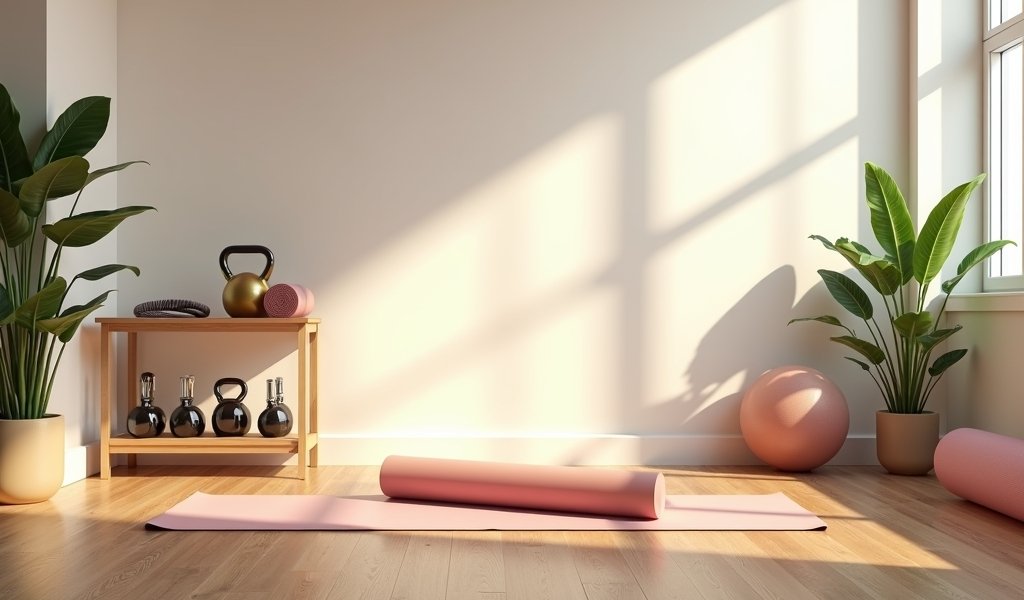
Bowflex SelectTech 552s remain the gold standard ($329-399), offering 5-52.5 pounds per dumbbell. For premium options, consider NUOBELL ($595) with their sleek design and quick adjustment. Budget-conscious? Core Fitness adjustable dumbbells offer solid performance at around $249.
Essential Tool #2: Yoga/Exercise Mat
A quality mat is like good shoes—you don’t realize how essential they are until you try to function without them. Whether you’re downward-dogging or mountain-climbing, a proper mat provides the foundation for nearly any home workout.
Versatility Champion
From yoga flows to HIIT sessions, planks to Pilates, your mat defines your workout space and protects both you and your flooring. It’s likely to be your most frequently used piece of equipment, creating an instant wellness zone anywhere in your home.
Key Qualities to Consider
- Thickness: Too thin, and your knees cry during planks. Too thick, and balance poses become wobbly adventures. For most people, 6mm is the Goldilocks zone.
- Material: PVC offers durability but less eco-cred; TPE, natural rubber, and cork provide greener alternatives with varying grip levels.
- Surface texture: Your mat’s grip determines whether your warrior pose is steady or resembles an impromptu slip-n-slide.
Maintenance Tips
That post-workout mat smell is nature’s way of telling you to clean it. Wipe down with a gentle solution of water and mild soap after sweaty sessions, and deep clean monthly by soaking briefly in a bathtub with diluted vinegar. Always air dry completely before rolling to prevent the dreaded mildew farm.
Best Options
For yoga devotees: Manduka ProLite ($99) offers legendary durability with a lifetime warranty. For high-impact workouts: Gorilla Mats ($89-189) provide extra cushion and size. Budget-friendly option: Gaiam Performance mats ($35) deliver solid performance without breaking the bank.
Essential Tool #3: Resistance Bands
These unassuming rubber strips might look like oversized office supplies, but don’t be fooled—resistance bands pack a serious fitness punch in a package smaller than your average sandwich. They’re the ultimate wellness room space-saver.
Multi-Benefit Wonders
Resistance bands strengthen muscles through their entire range of motion, improve flexibility, and serve as excellent rehabilitation tools. They provide variable resistance (harder at the end range) which recruits more muscle fibers and reduces joint stress compared to free weights—making them perfect for beginners and seniors.
Research from the Journal of Strength and Conditioning Research shows that elastic resistance training can be as effective as traditional weight training for building strength while being gentler on joints.
Band Types Decoded
- Loop bands: Great for lower body exercises and lateral movements
- Tube bands with handles: Mimic traditional strength equipment movements
- Therapy bands (flat strips): Ideal for rehabilitation and mobility work
- Figure 8 bands: Designed for upper body and targeted toning
Creative Band Workouts
Anchor them to doors for makeshift cable exercises, loop around legs for fire-hydrant glute burners, or use for assisted pull-ups. They’re particularly excellent for warming up shoulders before weightlifting or adding resistance to otherwise bodyweight movements like squats.
A complete band set can replace hundreds of pounds of traditional weights and multiple bulky machines while fitting in a shoebox. For travel workouts or quick sessions after grabbing nutrition drinks, nothing beats their convenience.
Storage Solutions
A simple hook or small basket keeps bands organized and extends their lifespan. Pro tip: hang them rather than stuffing them in drawers to prevent cracking and tangling—the relationship status of abandoned resistance bands is always “it’s complicated.”
Essential Tool #4: Smart Fitness Mirror
Welcome to the future, where even your reflection helps you get fit. Smart fitness mirrors combine sleek home decor with interactive workout technology, essentially bringing personal trainers into your wellness room without having to offer them coffee afterward.
Interactive Workout Revolution
These high-tech surfaces display workout classes with instructor feedback while simultaneously showing your reflection, allowing you to check form without awkward neck craning. Many offer AI form correction, performance metrics, and the motivation that comes from seeing yourself actually doing the work.
Leading Contenders
- Mirror by lululemon ($1,495 + $39/month subscription): The OG with clean design and broad class selection
- Tempo ($2,495 + $39/month): Includes equipment and offers 3D sensing for form feedback
- Tonal ($2,995 + $49/month): Features built-in electromagnetic arms for resistance training
- NordicTrack Vault ($1,999 + $39/month iFit subscription): Includes storage for equipment
Space Considerations
Most require about 6-7 feet of space in front for exercises and clearance on each side for lateral movements. Wall mounting is typical, though some models offer stands. Remember to factor in ceiling height if you’ll be doing jumping movements.
Cost Analysis
While the upfront investment might cause mild heart palpitations, compare the $39-49 monthly subscription to traditional gym memberships plus personal training. For a family of two or more, smart mirrors often prove economical over a 2-3 year period, not to mention the time saved on commuting.
Many fitness professionals, including those at ACE Fitness, note that the accountability and structured programming these devices provide can significantly improve adherence compared to unguided home workouts.
Essential Tool #5: Foam Roller
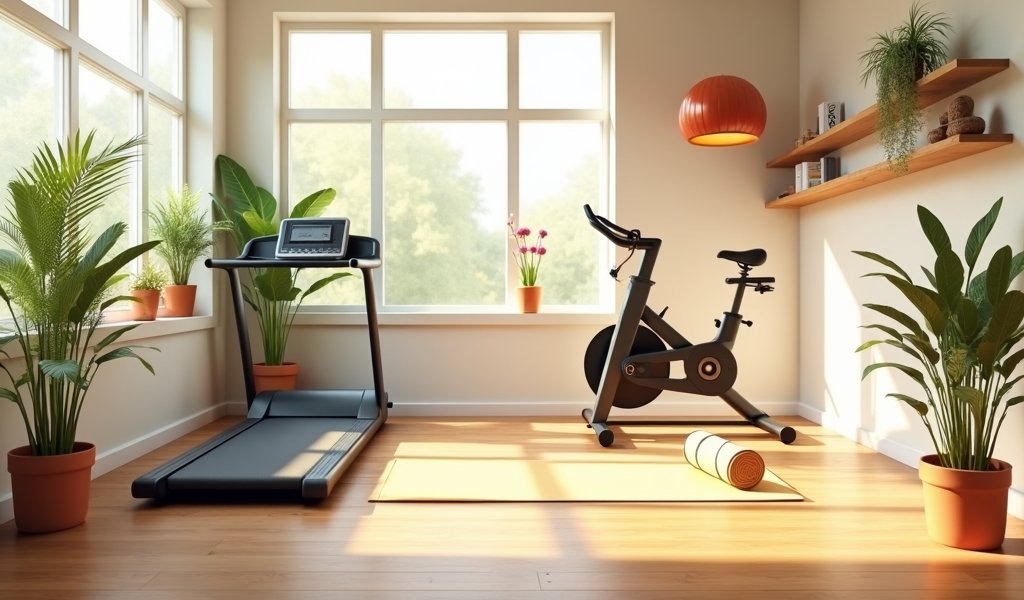
Like that friend who tells you uncomfortable truths, foam rollers hurt in the moment but leave you better off afterward. These cylindrical tools of torturous recovery have become essential elements in any comprehensive wellness space.
Recovery Powerhouse
Foam rolling performs self-myofascial release (fancy term for massage), breaking up adhesions in muscle tissue, improving circulation, and enhancing flexibility. Regular use can reduce recovery time, prevent injury, and improve movement quality—all crucial for consistent fitness progress.
Studies published in the International Journal of Sports Physical Therapy confirm that foam rolling can significantly reduce DOMS (delayed onset muscle soreness) and improve range of motion—meaning you’ll be less likely to skip tomorrow’s workout.
Roller Types
- Smooth rollers: Beginner-friendly with moderate pressure
- Textured/bumpy rollers: Target trigger points more aggressively
- Vibrating rollers: Add vibration therapy to enhance tissue release
- Hollow core vs. solid: Hollow offers less density for sensitive users
Basic Techniques
The golden rule of foam rolling: find tender spots and breathe through them for 30-60 seconds. Key areas to address include IT bands, quadriceps, hamstrings, upper back, and calves. If it hurts so good, you’re doing it right. If you’re screaming loud enough to alarm neighbors, dial it back.
Complementary Recovery Tools
Consider adding a lacrosse ball for targeting smaller areas like feet and shoulders, a massage stick for on-the-go relief, or therapy guns for targeted percussion therapy. When deciding what to eat after workouts, pair your recovery routine with protein-rich foods to maximize muscle repair.
Essential Tool #6: Suspension Trainer
Invented by a Navy SEAL who needed to stay combat-ready in confined spaces, suspension trainers use your body weight and two adjustable straps to deliver hundreds of exercises that will have you questioning your life choices in the best possible way.
Full-Body Potential
What makes suspension trainers magical is their ability to scale any exercise for any fitness level by simply adjusting your body position. They strengthen not just primary muscles but the crucial stabilizers that prevent injuries and improve functional movement.
Installation Options
- Door anchors: No drilling required, but you’ll need a sturdy door
- Ceiling mounts: Most secure option for dedicated spaces
- Beam wraps: Great for exposed beams or sturdy tree branches
- Free-standing frames: Available for those who can’t modify their space
Beginner-Friendly Moves
Start with supported squats, incline push-ups, and rows before graduating to more challenging movements like atomic push-ups or suspended lunges. The beauty lies in the progression—as you improve, simply adjust your body angle for greater challenge.
Research from the Journal of Sports Science & Medicine shows that suspension training activates core muscles significantly more than traditional exercises, making it particularly effective for developing total-body stability.
Travel-Ready Fitness
Most suspension systems weigh under 2 pounds and pack into a bag smaller than your average novel. Simply toss in your suitcase for hotel room workouts, attach to a park tree, or bring to the beach for vacation fitness with a view.
Essential Tool #7: Smart Scale
The humble bathroom scale has graduated with honors from simply reporting your relationship with gravity to providing comprehensive body composition insights. Smart scales connect wirelessly to apps that track your progress over time, turning data points into motivation.
Beyond Weight Metrics
Smart scales measure metrics that matter more than just pounds, including:
- Body fat percentage
- Muscle mass
- Bone density
- Water retention
- Metabolic age
These measurements provide a more holistic view of your health journey, often revealing progress when the weight number stubbornly refuses to budge.
Key Features Worth Having
Look for scales offering:
- Multi-person recognition (automatically detects different users)
- Trend tracking and graphing
- Integration with fitness apps like Apple Health, MyFitnessPal, or Fitbit
- Readable display size (especially important for early morning weigh-ins)
Interpreting the Data
Remember that body composition measurements from consumer scales provide estimates rather than lab-grade precision. Focus on trends rather than absolute numbers, and understand that hydration levels, meal timing, and even cell phone interference can affect readings.
Privacy Considerations
These devices collect sensitive health data, so review privacy policies carefully. Consider whether you’re comfortable with your weight trends living in the cloud, and check if the manufacturer sells anonymized data to third parties.
Creating a Cohesive Wellness Space
Now that you’ve assembled your fitness Avengers, it’s time to create a space where they can work harmoniously together.
Organization Solutions
- Wall-mounted racks: Keep resistance bands visible and tangle-free
- Vertical storage: Utilize wall space for suspension trainers and yoga mats
- Multi-purpose furniture: Ottoman storage for smaller items like rollers
- Pegboard systems: Customizable organization that grows with your equipment
Small Space Strategies
Don’t have a dedicated room? No problem. Define a workout zone with an area rug, use under-bed storage for equipment, or create a “fitness closet” with equipment hung on the back of the door. Many one-bedroom apartment dwellers have created impressive wellness corners in living spaces.
Atmosphere Enhancement
Consider adding:
- Mirrors to check form and make the space feel larger
- Bluetooth speakers for motivation
- Natural light where possible
- Indoor plants to improve air quality
- A dedicated tablet mount for following workout videos
Maintenance Schedule
Establish a weekly quick-clean routine for mats and high-touch surfaces, with monthly deep cleaning of all equipment. This not only extends the life of your investments but also makes you more likely to use a space that feels fresh and inviting.
Conclusion
Creating your ultimate wellness room isn’t about acquiring the most expensive equipment or transforming an entire wing of your home. It’s about thoughtfully selecting versatile tools that serve multiple purposes while supporting your specific health goals.
The seven essential tools we’ve covered—adjustable dumbbells, quality exercise mat, resistance bands, smart fitness mirror, foam roller, suspension trainer, and smart scale—provide a comprehensive foundation that balances strength, flexibility, cardiovascular fitness, and recovery.
Remember that quality always trumps quantity. A carefully curated collection of equipment you actually use will serve you better than a roomful of fitness gadgets gathering dust. Start with the basics and add pieces as your fitness journey evolves.
Your wellness room should be a space that calls to you, not intimidates you. With these essential tools, you’re not just creating a place to exercise—you’re crafting a sanctuary that supports your total wellbeing journey. Your body—and your living space—will thank you.
Frequently Asked Questions
How much space do I need for a wellness room?
You can create an effective wellness space in as little as 6×6 feet. The key is selecting multipurpose equipment that can be stored vertically or under furniture when not in use.
What’s the minimum budget for a basic wellness room?
A functional wellness space can be created for as little as $300-500. Start with resistance bands, a quality mat, and a foam roller, then add more substantial equipment as your budget allows.
Should I add cardio equipment to my wellness room?
Cardio equipment is optional if space is limited. Many effective cardio workouts require no equipment (HIIT, jumping jacks, burpees), or you can use a jump rope which takes minimal space.
How do I stay motivated to use my wellness room?
Schedule specific workout times in your calendar and treat them as non-negotiable appointments. Creating a visually appealing space with good lighting and motivational elements also increases usage.
Can I create a wellness room in a shared living space?
Absolutely! Use furniture with hidden storage, wall-mounted equipment that folds away, and dual-purpose items like an ottoman that stores workout gear. Room dividers or decorative screens can create a sense of dedicated space when needed.