
Overview
This article presents five key exercises for plantar fasciitis relief: calf stretches, foot rolling, towel curls, toe stretches, and balance exercises, emphasizing that consistent practice can significantly reduce heel pain and promote healing. The author stresses that rehabilitation requires patience and proper implementation through a regular routine, with most patients seeing improvements within 2-3 weeks and significant relief after 6-8 weeks of dedicated practice.
Table of Contents
- Understanding Plantar Fasciitis: When Every Step Hurts
- The Importance of Exercise for Plantar Fasciitis Recovery
- 1. Calf Stretches: Your First Line of Defense
- 2. Foot Rolling: Simple Relief at Your Fingertips
- 3. Towel Curls: Strengthening Your Foot’s Foundation
- 4. Toe Stretches and Toe Yoga: Flexibility Matters
- 5. Balance Exercises: Stability for Long-Term Relief
- Implementing Your Plantar Fasciitis Exercise Routine
- Conclusion: Walking Toward Relief
- Frequently Asked Questions
Understanding Plantar Fasciitis: When Every Step Hurts
That stabbing pain in your heel when you take your first steps in the morning feels like walking on broken glass, doesn’t it? If you’re nodding in agreement, you’re likely one of the millions battling plantar fasciitis, a common but debilitating foot condition that can turn simple activities into painful ordeals.
I remember a patient named Sarah who came to my clinic in tears. As an avid runner, her world collapsed when plantar fasciitis forced her to abandon her morning jogs. “It’s like my foot has betrayed me,” she said. Her story might sound familiar to you.
Plantar fasciitis occurs when the thick band of tissue (plantar fascia) that connects your heel to your toes becomes inflamed. This essential tissue, which supports your arch and absorbs shock like a natural spring, can develop tiny tears when overworked or strained. The result? Pain that’s worse in the morning, after sitting, or following activity.
But here’s the good news: you’re not doomed to live with this pain forever. While rest, ice, and proper footwear form the foundation of recovery, targeted exercise for plantar fasciitis represents the bridge to lasting relief and prevention.
The Importance of Exercise for Plantar Fasciitis Recovery
When facing plantar fasciitis, many people instinctively avoid movement altogether. After all, if something hurts, shouldn’t you rest it? While partial rest is important, complete immobility is like trying to fix a rusty hinge by never opening the door—it just doesn’t work.
Strategic exercise for plantar fasciitis serves three critical purposes: it stretches tight tissues, strengthens weak muscles, and promotes healing blood flow. Think of your foot as an intricate machine with interconnected parts—when one component isn’t functioning properly, the entire system suffers.
According to research published in the Journal of Orthopaedic & Sports Physical Therapy, patients who followed a consistent exercise program showed significantly greater improvement than those who relied solely on passive treatments. The difference wasn’t small either—we’re talking about reduction in pain scores by over 30% in many cases.
If you’ve tried incorporating regular exercise into your daily routine but haven’t focused specifically on your feet, now’s the time to add these targeted movements. The key is consistency, gentleness, and progression—treating your injured fascia not as an enemy to be conquered but as a friend that needs careful rehabilitation.
Let’s explore five proven exercises that, when performed regularly, can help turn the tide against plantar fasciitis and get you back on your feet—literally and figuratively.
1. Calf Stretches: Your First Line of Defense
If plantar fasciitis were a tree, tight calf muscles would be its roots. The connection between these two might not be immediately obvious, but it’s as real as the pain in your heel. Your calf muscles connect to your Achilles tendon, which attaches to your heel bone—the same bone connected to your plantar fascia. Tight calves pull on this entire chain, increasing strain on your already irritated fascia.
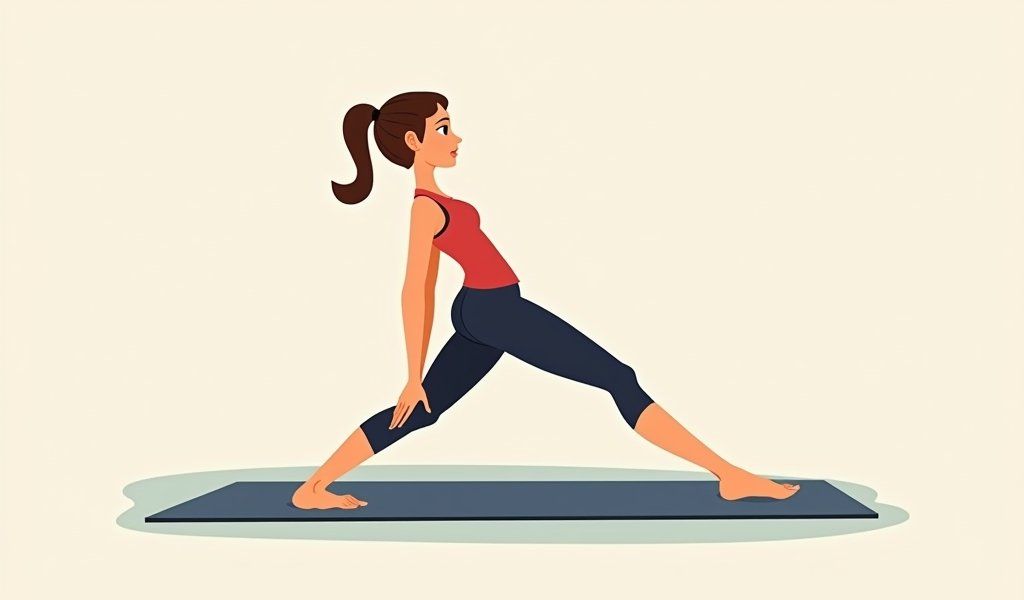
The wall stretch is your bread and butter for calf flexibility. Stand facing a wall, place your hands at eye level, and step one foot back. Keep your back leg straight with the heel down and lean forward until you feel a stretch in your calf. Hold for 30 seconds, repeat 3 times, then switch legs. This stretch targets your gastrocnemius muscle—the larger, superficial calf muscle.
For a deeper stretch targeting the soleus muscle (the deeper calf muscle), perform the same exercise but bend your back knee slightly while keeping your heel down. This one-two punch addresses both layers of calf muscles that could be contributing to your plantar fasciitis.
A patient of mine—a high school basketball coach—was skeptical that something as simple as stretching could help his chronic heel pain. “I’m looking for the complicated solution,” he admitted. But after two weeks of consistent calf stretching, he called me amazed. “It’s like someone turned down the volume on my pain,” he said. Sometimes, the simplest solutions yield the most powerful results.
Aim to perform these stretches 3-4 times daily, especially before getting out of bed in the morning (do them seated on your bed first) and after periods of inactivity. Consistency here is more important than intensity—gentle, frequent stretching trumps aggressive, occasional efforts.
2. Foot Rolling: Simple Relief at Your Fingertips
Sometimes the most effective remedies come in the simplest packages. Foot rolling is like a deep tissue massage you can give yourself anywhere, anytime. This exercise targets the plantar fascia directly, breaking up adhesions and increasing blood flow to the area—like smoothing out a wrinkled rug one section at a time.
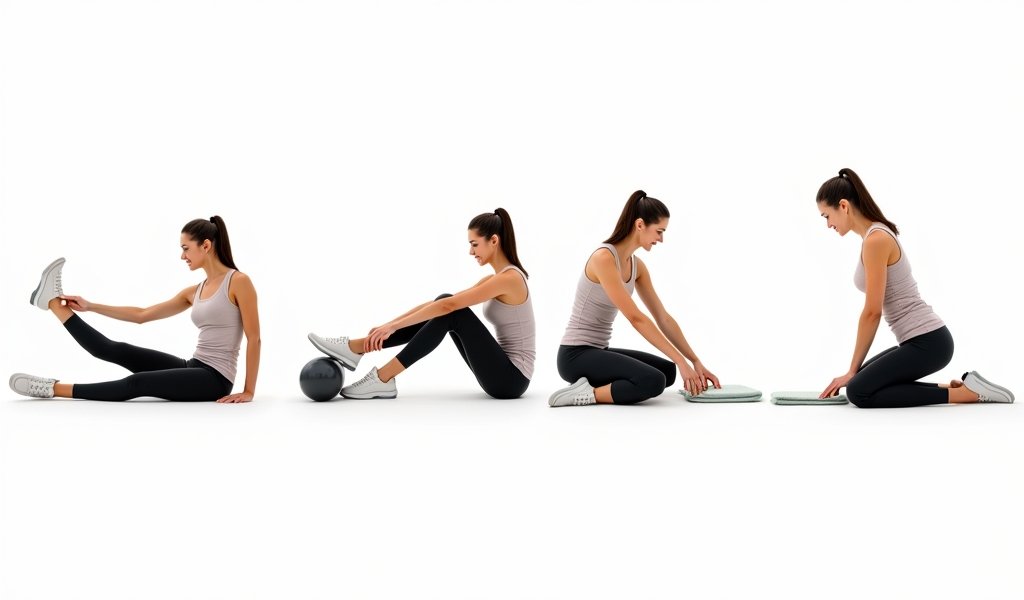
You’ll need a small, firm ball—a tennis ball works well to start, though you can graduate to harder objects like a golf ball or frozen water bottle as tolerance improves. Sitting on a chair, place the ball under your foot and roll it back and forth from your heel to the ball of your foot, spending extra time on areas that feel particularly tight or tender.
Start with gentle pressure for 1-2 minutes per foot, gradually increasing duration and pressure as comfort allows. Many patients report immediate relief, though the lasting benefits come with regular practice—aim for morning, midday, and evening sessions.
Janet, a 62-year-old grandmother I treated, kept a tennis ball by her favorite chair, her desk, and even in her purse. “It’s my secret weapon,” she told me. “I went from dreading walking through the grocery store to looking forward to my daily walks with my grandchildren.”
A word of caution: while you’ll want to work through mild discomfort, this should never be excruciating. The sensation should be similar to getting a deep massage—intense but ultimately relieving. If you find a particularly sensitive spot, try holding the ball still on that area for 10-15 seconds rather than rolling directly over it.
3. Towel Curls: Strengthening Your Foot’s Foundation
While stretching addresses tightness, we can’t forget about weakness. The small intrinsic muscles of your feet serve as the foundation of your arch—think of them as the support beams of a bridge. When these muscles weaken, your plantar fascia must take on extra stress, like a single rope trying to hold up an entire structure.
Towel curls target these often-neglected muscles. Sit in a chair with a small towel laid flat on the floor in front of you. Place your foot on the towel and use only your toes to scrunch the towel toward you, drawing it closer inch by inch. The motion is similar to how a caterpillar inches forward—small, deliberate movements that engage the tiny muscles supporting your arch.
Perform 3 sets of 10-15 curls with each foot, taking care to fully extend your toes between curls. For an added challenge, place a small weight (like a paperweight) on the far end of the towel.
A physical education teacher I worked with incorporated towel curls into his morning routine while brushing his teeth. “Two minutes of brushing equals two minutes of foot strengthening,” he explained. “By pairing these activities, I never forget.” This type of habit stacking can be remarkably effective in ensuring consistency.
The beauty of towel curls lies in their subtlety—this isn’t about building bulging foot muscles, but rather restoring proper function to a system that’s fallen out of balance. Think of it as tuning a piano rather than building a new one from scratch.
4. Toe Stretches and Toe Yoga: Flexibility Matters
Your toes might seem like innocent bystanders in the plantar fasciitis saga, but they’re actually key players in both the problem and the solution. Tight toe flexors can pull on the plantar fascia like a taut rope, while limited toe extension can alter your walking pattern, creating a cascade of compensations that stress your fascia.
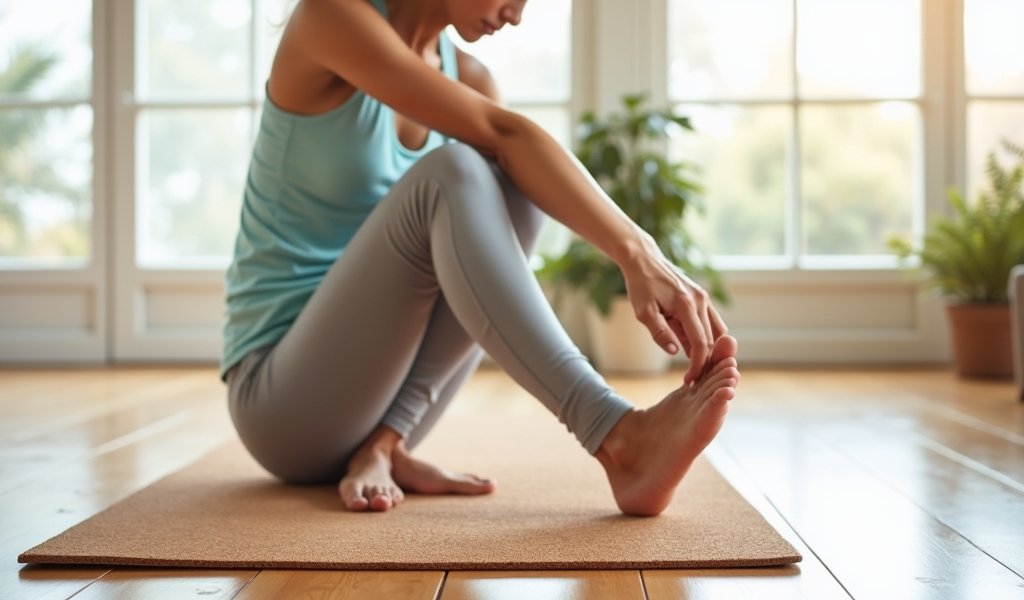
Toe stretches—sometimes playfully called “toe yoga”—address this often-overlooked component of foot health. One effective stretch involves sitting with your affected foot across your opposite knee. Gently pull your toes back toward your shin until you feel a stretch along the bottom of your foot and hold for 10 seconds. Repeat 10 times.
For a more active approach, practice toe spreads. Sitting with your foot flat on the floor, lift just your toes while keeping the ball of your foot down, then spread your toes as wide as possible before lowering them. It’s like asking your toes to play piano—each digit moving independently yet harmoniously.
I once had a patient—a former ballet dancer—who laughed when I suggested toe exercises. “I spent years trying to build strength in my toes, and now I need to make them more flexible,” she said. Her experience highlights an important truth: balance is everything. Too much tension or too much laxity both create problems.
Include these toe movements in your daily routine, perhaps while watching television or during your lunch break. They’re subtle enough to do anywhere without drawing attention, yet effective enough to create meaningful change when practiced consistently.
5. Balance Exercises: Stability for Long-Term Relief
Balance training may seem disconnected from plantar fasciitis at first glance, but it’s like learning to distribute weight evenly across a damaged floor—the better your weight distribution, the less stress on any one point. Poor balance forces certain parts of your foot to work overtime, potentially exacerbating plantar fascia strain.
Start with a simple single-leg stance: stand on your affected foot for 30 seconds, working up to one minute. Use a countertop or chair for support if needed, but try to rely on it less as your balance improves. The goal isn’t just to stand there—it’s to maintain proper foot alignment without letting your arch collapse or your ankle roll inward.
As your stability improves, progress to more dynamic movements like controlled leg swings while balancing, or try standing on an uneven surface like a folded towel. These variations challenge your foot’s proprioceptors—sensory receptors that help your brain understand where your body is in space.
Lisa, a 45-year-old accountant with chronic plantar fasciitis, incorporated balance training during her workday. “I stand on one foot while waiting for the copier or microwave,” she shared. “My colleagues think I’m peculiar, but my feet think I’m brilliant.” Her plantar pain decreased by roughly 60% after six weeks of consistent balance work.
If you’ve incorporated walking workouts into your fitness routine, adding these balance exercises can enhance your foot stability and potentially make your walks more comfortable as your condition improves.
Implementing Your Plantar Fasciitis Exercise Routine
Now that you’re armed with these five powerful exercises, the question becomes: how do you implement them effectively? Like three legs of a stool, successful implementation depends on frequency, intensity, and consistency.
For frequency, aim to perform these exercises 2-3 times daily, with special emphasis on morning and evening sessions. Morning exercises prepare your feet for the day ahead, while evening routines help address the cumulative stress of daily activities.
Regarding intensity, remember that rehabilitation is not a competition. Begin gently, especially with stretches, and progress gradually. Mild discomfort during exercises is acceptable—sharp pain is not. Listen to your body with the attention of a caring friend rather than pushing through severe pain like a drill sergeant.
Consistency trumps perfection every time. A modest routine performed faithfully yields far better results than an ambitious program abandoned after a week. Consider setting calendar reminders or linking these exercises to existing habits—perhaps stretching while brushing your teeth or practicing toe yoga during commercial breaks.
Keep a simple journal to track your progress. Note your morning pain levels on a scale of 0-10 and record which exercises you completed each day. This creates accountability and helps you identify patterns—perhaps you’ll notice that your pain decreases most significantly after consistent calf stretching or increases when you skip your foot rolling.
As studies have demonstrated, commitment to therapeutic exercise yields substantially better outcomes than passive approaches alone. Your active participation in recovery isn’t just helpful—it’s essential.
Conclusion: Walking Toward Relief
Living with plantar fasciitis can feel like carrying a pebble in your shoe that you can never remove. The pain limits not just your mobility but your enjoyment of life’s simple pleasures—a morning walk, playing with children, or standing comfortably while cooking a meal.
The five exercises we’ve explored—calf stretches, foot rolling, towel curls, toe stretches, and balance training—form a comprehensive approach to addressing this frustrating condition. Like pieces of a puzzle, each exercise addresses a different aspect of the complex biomechanical imbalances that contribute to plantar fasciitis.
Remember that healing is rarely linear. You may experience two steps forward and one step back as your fascia repairs itself. This isn’t failure—it’s the natural rhythm of recovery. The key is persistence, patience, and consistency with your exercise routine.
As a health professional who has guided countless patients through this journey, I can tell you that those who commit to these exercises almost universally experience improvement. Some find complete resolution, while others achieve significant pain reduction that allows them to return to activities they love.
Your feet have carried you through every step of your life’s journey. Now it’s time to give them the care and attention they deserve. Start today with just one exercise if that’s all you can manage. Tomorrow, add another. Your future self—walking comfortably and confidently—will thank you for every minute invested in these healing movements.
Frequently Asked Questions
How long does it take to see results from plantar fasciitis exercises?
Most people notice initial improvement within 2-3 weeks of consistent daily practice. Significant relief typically occurs after 6-8 weeks of dedicated exercise.
Should I exercise through pain when doing these movements?
Mild discomfort during exercises is normal, but sharp or increasing pain is a signal to stop. Reduce intensity or consult a healthcare provider if exercises consistently cause pain.
Can I still walk or run with plantar fasciitis?
Low-impact walking is usually acceptable if pain remains below 3/10 and doesn’t increase afterward. Running should typically be paused until significant healing has occurred and pain is minimal.
What time of day is best for plantar fasciitis exercises?
Morning exercises (before getting out of bed) are crucial to prepare tissues for the day ahead. Evening routines help address accumulated daily stress, making twice-daily sessions ideal.
Do I need special equipment for these exercises?
Most exercises require minimal equipment—just a tennis ball, towel, and stable chair. Specialized foot massage tools or balance equipment can enhance your routine but aren’t necessary for success.