

Overview
An exercise science degree offers five major benefits: diverse career paths across health and fitness sectors, hands-on practical experience through internships and laboratory work, a solid scientific foundation that builds credibility, personal health improvements from applying learned principles, and excellent job prospects in a growing industry with median salaries of $40,000-$100,000+ depending on specialization. This versatile major serves as both a direct path to careers like athletic training and corporate wellness and as preparation for advanced degrees in physical therapy and other health professions.
Table of Contents
- Why Consider an Exercise Science Major?
- Gain #1: Diverse Career Paths That Keep Options Wide Open
- Gain #2: Real-World Experience You Can’t Get From Books Alone
- Gain #3: Rock-Solid Scientific Foundation That Sets You Apart
- Gain #4: Personal Health Benefits That Transform Your Life
- Gain #5: Surging Industry Demand That Secures Your Future
- Conclusion: Your Blueprint for a Fulfilling Career
- Frequently Asked Questions
Why Consider an Exercise Science Major?
Choosing the right college major can feel like standing at a crossroads with dozens of paths stretching before you. If you’ve always been fascinated by how the human body works during physical activity or felt a calling to help others improve their health, an exercise science degree might be your perfect match. As a sports medicine physician who started with this exact major, I’ve seen firsthand how this foundation can launch students into rewarding careers.
When I first entered my undergraduate program, I wasn’t entirely sure where my passion for fitness would lead me. What I discovered was a field that combines biology, physiology, psychology, and practical skills in ways few other majors can match. The beauty of an exercise science major lies in its versatility – it’s both deeply scientific and intensely practical.
The fitness and wellness industry has exploded in recent years, with Americans spending over $100 billion annually on health and fitness services according to the IHRSA. This growth has created a surging demand for professionals who understand the science of movement, exercise prescription, and health promotion. Let’s explore the five most compelling benefits that make this major worth your consideration.
Gain #1: Diverse Career Paths That Keep Options Wide Open
Perhaps the most significant advantage of an exercise science major is the remarkable variety of career doors it can open. Unlike highly specialized degrees that funnel graduates into a single profession, exercise science prepares you for dozens of different paths.
My former classmate Miguel completed the same exercise science program I did, but our careers couldn’t look more different. While I pursued medicine, he became a strength coach for a professional baseball team. Another friend, Alyssa, used her degree to become a corporate wellness director for a tech company, where she now earns a six-figure salary designing health programs for thousands of employees.
The range of exercise science jobs is genuinely impressive:
- Physical therapist (with additional graduate education)
- Athletic trainer
- Exercise physiologist
- Cardiac rehabilitation specialist
- Strength and conditioning coach
- Fitness entrepreneur or gym owner
- Corporate wellness coordinator
- Research scientist
- Health and physical education teacher
The U.S. Bureau of Labor Statistics projects that jobs for exercise physiologists will grow 9% through 2031, faster than the average for all occupations. Meanwhile, physical therapist positions are expected to increase by an impressive 17% in the same timeframe, according to the Bureau of Labor Statistics.
This versatility provides a safety net rarely found in other fields. If one career path doesn’t feel right, you can pivot to another without starting your education from scratch. As Carlos, a recent graduate I mentored, told me: “I thought I wanted to be a personal trainer, but after my hospital internship, I fell in love with cardiac rehabilitation. My exercise science background made the transition seamless.”
Gain #2: Real-World Experience You Can’t Get From Books Alone
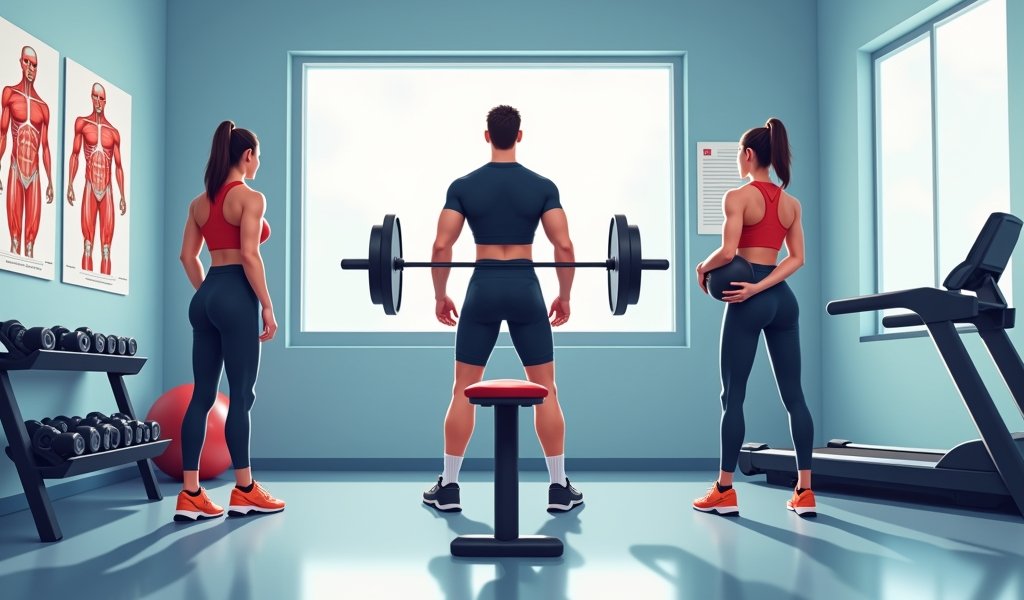
Exercise science isn’t just theoretical – it’s delightfully hands-on. While some college majors keep students buried in textbooks for four years, exercise science programs immerse you in practical learning from day one. You’ll measure oxygen consumption during exercise, analyze movement patterns, assess body composition, and design training programs for real people with real goals.
During my junior year, I conducted a small research project examining how different recovery techniques affected muscle soreness in recreational athletes. Not only did this experience teach me research methods, but it also gave me confidence in explaining complex physiological concepts to non-scientists – a skill I use daily as a physician.
Most quality programs require internships that place you in professional settings like:
- Physical therapy clinics
- University athletic departments
- Cardiac rehabilitation centers
- Corporate fitness facilities
- Research laboratories
These aren’t just resume boosters – they’re career launchpads. My student Priya secured her first professional position through her internship at a sports performance center. “By the time I graduated,” she explained, “I had already worked with actual clients for eight months. The center hired me immediately because they knew my capabilities weren’t just theoretical.”
This hands-on experience creates graduates who aren’t just knowledgeable but confident. You’ll develop interpersonal skills through client interactions, problem-solving abilities through case studies, and technical competence through laboratory work – a trifecta of qualities employers desperately seek.
Gain #3: Rock-Solid Scientific Foundation That Sets You Apart
In an age where everyone with a social media account can claim to be a “fitness expert,” formal education in exercise science provides something invaluable: legitimate scientific expertise. The curriculum dives deep into anatomy, physiology, biomechanics, exercise metabolism, and nutrition – creating a knowledge base that separates you from the crowd.
I still remember my biomechanics professor demonstrating how a slight adjustment in running form could dramatically reduce joint stress. That understanding has helped me correctly diagnose countless injuries and create effective rehabilitation plans that address root causes, not just symptoms.
This scientific foundation serves as your bullshark detector in a field unfortunately plagued by pseudoscience and quick-fix promises. When a new fitness trend emerges, you’ll have the analytical tools to evaluate claims critically rather than following marketing hype.
James, who runs a successful online coaching business after graduating with his exercise science degree, credits his education for his success: “In an industry filled with ‘bro science,’ my clients trust me because I can explain the physiological mechanisms behind my recommendations. That credibility has been my biggest competitive advantage.”
The science-based approach also creates natural pathways to advanced degrees. Exercise science graduates regularly gain admission to doctoral programs in physical therapy, occupational therapy, chiropractic medicine, and other health professions because of their strong scientific background. According to the American Physical Therapy Association, exercise science is among the most common undergraduate majors for those who successfully enter PT school.
This knowledge doesn’t just benefit future patients or clients – it transforms your personal understanding of health and movement. You’ll never look at exercise the same way again once you understand what’s happening at the cellular level during a workout.
Gain #4: Personal Health Benefits That Transform Your Life
There’s a unique advantage to studying exercise science that few other majors can claim: the curriculum directly improves your own health and wellbeing. As you learn about the benefits of physical activity, proper nutrition, and recovery strategies, you naturally incorporate these principles into your daily life.
When Diane enrolled in our program, she was a self-described “exercise novice” who had never set foot in a gym. By graduation, she had transformed not only her knowledge but her lifestyle. “Learning the science behind fitness made exercise feel less intimidating and more purposeful,” she told me. “Now I strength train three times weekly and understand exactly how it’s benefiting my body.”
This personal transformation often creates powerful ripple effects. As students develop healthier habits, they frequently inspire friends and family members to do the same. By the time you graduate, you may have already positively influenced dozens of people’s health journeys – before your professional career even begins.
There’s also a profound confidence that comes from embodying the principles you study. When I counsel patients about lifestyle changes, my recommendations carry more weight because I practice what I preach. This congruence between personal and professional life creates authenticity that clients and patients immediately sense.
The stress management techniques you’ll learn also prove invaluable during your academic journey. College can be demanding, but exercise science students often have an advantage in managing academic pressure through the very techniques they study – whether that’s using exercise to reduce stress hormones or applying recovery strategies to prevent burnout.
Gain #5: Surging Industry Demand That Secures Your Future

We’re living in a golden age for exercise science professionals. As healthcare costs continue to skyrocket, prevention has become an economic imperative. Organizations from hospitals to corporations to insurance companies are investing heavily in wellness initiatives – creating unprecedented demand for qualified experts.
When my former student Elena graduated in 2019, she received job offers from three different corporate wellness programs despite having minimal work experience. “Companies are desperate for people who understand both the science of exercise and how to implement effective programs,” she explained. “My starting salary was $15,000 higher than I expected because of the competitive market.”
Several major trends are driving this demand:
- An aging population requiring specialized exercise intervention
- Rising healthcare costs pushing emphasis toward prevention
- Increasing awareness of mental health benefits from physical activity
- Growing interest in personalized fitness approaches
- Expansion of wellness programs in workplaces and communities
The fitness industry has demonstrated remarkable resilience, even through economic downturns. During the post-COVID recovery, health and fitness spending rebounded faster than many other discretionary categories, reflecting the growing prioritization of wellness in American culture.
This demand translates directly to compensation. While entry-level positions typically start around $40,000-$50,000, specialized roles after a few years of experience or additional credentials often command $70,000-$100,000 annually. Physical therapists, who often begin as exercise science majors, report median salaries of $95,620 according to BLS data.
For entrepreneurially-minded graduates, the potential is even greater. My colleague Robert used his exercise science background to build a fitness technology company that now employs fifteen people and generates over $2 million in annual revenue. “Understanding the science gave me credibility with investors,” he notes. “But understanding people’s health needs and motivations was equally important to our success.”
Conclusion: Your Blueprint for a Fulfilling Career
An exercise science major offers a unique combination of benefits rarely found in other fields: diverse career options, hands-on experience, scientific rigor, personal health improvements, and strong job prospects. Like any worthwhile endeavor, it demands dedication and hard work – but the rewards extend far beyond the diploma.
If you’re considering this path, I encourage you to speak with professionals in the field, shadow them if possible, and visit programs that interest you. Look for departments with strong laboratory facilities, experienced faculty, and robust internship networks. The quality of your program significantly impacts the opportunities available after graduation.
Remember that while exercise science provides an excellent foundation, your unique combination of interests, strengths, and specializations will ultimately shape your career. Some graduates thrive in clinical settings, others in performance enhancement, and still others in public health or research. The beauty of this field is that it accommodates various personalities and passions while maintaining a central focus on improving human health through movement.
As I look back on my own journey that began with an exercise science major, I’m grateful for the diverse opportunities it created and the lives I’ve been able to impact. Whether you’re helping an elderly client regain independence, an athlete achieve peak performance, or a corporation improve employee wellbeing, few careers offer the satisfaction of seeing your knowledge directly improve others’ quality of life.
The world needs more qualified exercise science professionals. If you’re passionate about health, fascinated by human movement, and motivated to make a difference, this might be the perfect major to transform your interests into a meaningful career that stands the test of time.
Frequently Asked Questions
What jobs can I get with an exercise science degree?
Graduates can pursue careers as athletic trainers, exercise physiologists, strength coaches, wellness coordinators, and fitness managers. The degree also serves as excellent preparation for graduate programs in physical therapy, occupational therapy, and other health professions.
Is exercise science a difficult major?
Exercise science includes challenging science courses like anatomy, physiology, and biomechanics. However, most students who are interested in the subject matter and willing to develop strong study habits succeed in the program.
How much math is required for an exercise science degree?
Most programs require statistics and sometimes college algebra or pre-calculus. The math primarily applies to understanding research studies and analyzing fitness assessment data.
What’s the difference between exercise science and kinesiology?
These terms are often used interchangeably, though some institutions use “kinesiology” for broader programs and “exercise science” for more specialized tracks. Both study human movement, but specific curriculum differences vary by school.
Do I need to be athletic to major in exercise science?
No personal athletic ability is required to succeed in exercise science. What’s more important is interest in how the body works and motivation to help others improve their health and performance.