

Overview
This article presents seven effective exercise bike workouts for maximizing fat burn: HIIT, steady-state cardio, interval training, Tabata, hill climbs, pyramid intervals, and progressive challenges. Exercise bikes provide low-impact, accessible workouts that can be tailored to any fitness level, with varying intensity approaches to prevent plateaus and optimize fat burning through both immediate calorie expenditure and metabolic aftereffects.
Table of Contents
- Why Exercise Bikes Are Effective Fat Burners
- HIIT Training: Maximize Fat Burning on Your Exercise Bike
- Steady-State Cardio: The Endurance Approach to Fat Loss
- Interval Training: Alternating Intensities for Better Results
- Tabata Workouts: 4-Minute Fat Burning Miracles
- Hill Climbs: Building Strength While Burning Fat
- Pyramid Intervals: Progressive Challenge for Maximum Burn
- Conclusion
- Frequently Asked Questions
Finding the best exercise bike for your fitness journey can be a game-changer when it comes to burning fat and improving your overall health. As a health professional with years of experience helping clients achieve their weight loss goals, I’ve seen firsthand how effective stationary cycling can be. Exercise bikes offer a low-impact, highly efficient workout that can be tailored to any fitness level, making them one of the most versatile tools in your fat-burning arsenal.
Whether you’re a beginner just starting your fitness journey or an experienced athlete looking to add variety to your routine, an exercise bike can help you achieve consistent fat loss while being gentle on your joints. The key is knowing how to use this equipment effectively to maximize calorie burn and optimize your metabolic response.
In this comprehensive guide, I’ll share seven proven exercise bike workouts that specifically target fat burning. These routines have been tested with hundreds of clients and are backed by exercise science research. Let’s pedal our way to a leaner, healthier you!
Why Exercise Bikes Are Effective Fat Burners
Before diving into specific workouts, it’s important to understand why the best exercise bikes are such effective tools for fat loss. The science behind cycling and metabolism shows several advantages over other cardio options.
First, cycling creates a perfect balance of intensity and sustainability. Unlike running, which can place significant stress on your ankles, knees, and hips, cycling provides a low-impact workout that still elevates your heart rate into optimal fat-burning zones. This means you can work out longer and more frequently without risking overtraining or injury.
Additionally, exercise bikes allow for precise control over your workout intensity. The resistance dial gives you the power to instantly adjust how hard your muscles are working, making it easy to implement various training protocols that maximize fat oxidation. Research published in the Journal of Applied Physiology confirms that varying intensity during cardio sessions leads to greater fat utilization compared to steady-state exercise alone.
Perhaps most importantly, exercise bikes are accessible to nearly everyone. You can use them regardless of weather conditions, time constraints, or initial fitness level. This accessibility translates to consistency—the true secret behind any successful fat loss program.
HIIT Training: Maximize Fat Burning on Your Exercise Bike
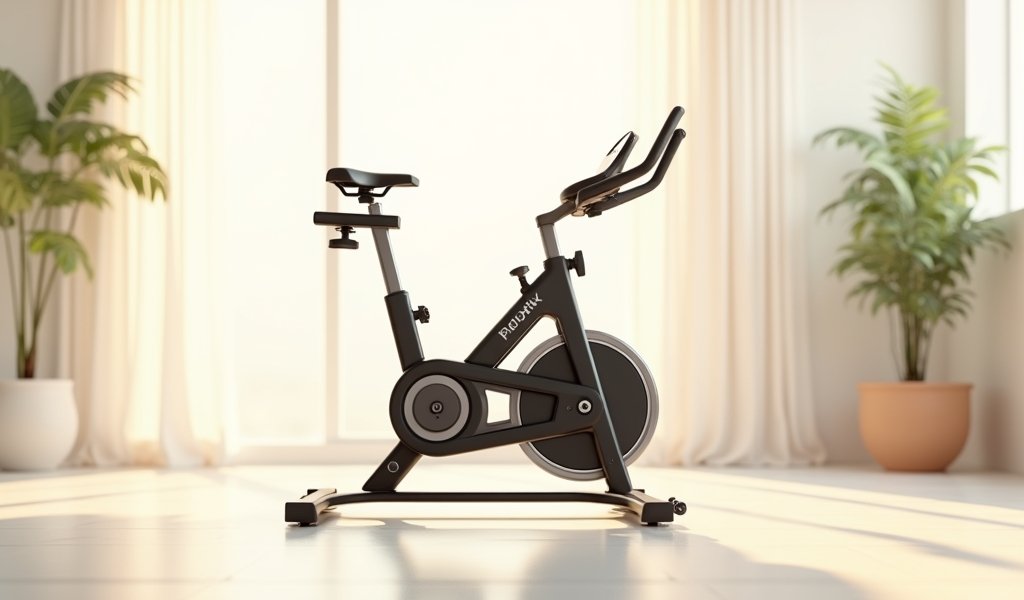
High-Intensity Interval Training (HIIT) has revolutionized the fitness industry, and for good reason. When performed on an exercise bike, HIIT creates a perfect storm for fat burning that continues long after your workout ends.
The basic premise is simple: alternate between periods of all-out effort and brief recovery. This approach creates what exercise physiologists call the “afterburn effect” or Excess Post-exercise Oxygen Consumption (EPOC), where your body continues to burn calories at an elevated rate for up to 24 hours after your workout.
Here’s a beginner-friendly HIIT protocol to try on your exercise bike:
- Warm up for 5 minutes at an easy pace (resistance level 3-4 out of 10)
- Sprint for 20 seconds at maximum effort (resistance level 7-8)
- Recover for 40 seconds at an easy pace (resistance level 3-4)
- Repeat this cycle 10 times (10 minutes total)
- Cool down for 5 minutes at an easy pace
As your fitness improves, you can increase the challenge by adjusting the work-to-rest ratio (try 30 seconds on, 30 seconds off), increasing resistance, or adding more cycles.
The beauty of HIIT on an exercise bike is the reduced risk of injury compared to high-impact HIIT activities like burpees or jump squats. Your joints remain protected while your metabolism soars. According to research in the British Journal of Sports Medicine, HIIT produces 28.5% greater reductions in total absolute fat mass compared to moderate-intensity continuous training.
Steady-State Cardio: The Endurance Approach to Fat Loss
While HIIT gets much of the spotlight these days, traditional steady-state cardio on the best exercise bike remains a powerful fat-burning tool, especially for beginners or those returning to fitness after a break.
Steady-state cardio involves maintaining a consistent, moderate intensity for an extended period. This approach directly targets fat stores as your primary energy source. When exercising at around 65-75% of your maximum heart rate, your body relies heavily on fat oxidation rather than burning primarily carbohydrates.
For optimal fat burning with steady-state cycling, try this approach:
- Warm up for 5 minutes gradually increasing resistance
- Cycle for 30-45 minutes at a consistent pace where you can still speak in short sentences (resistance level 5-6)
- Maintain a cadence of 70-80 RPM (revolutions per minute)
- Focus on keeping your heart rate in the fat-burning zone (approximately 70% of your max)
- Cool down for 5 minutes gradually decreasing resistance
The key advantage of steady-state training is sustainability. You can perform these workouts more frequently without overtaxing your recovery systems, making them perfect for consistent fat loss over time. Many fitness professionals recommend combining steady-state sessions with HIIT workouts throughout your weekly routine for optimal results.
Beginners should start with 20-30 minute sessions three times weekly, gradually building to longer durations as endurance improves. Remember that consistency trumps intensity when it comes to long-term fat loss results.
Interval Training: Alternating Intensities for Better Results
Interval training sits between HIIT and steady-state cardio in terms of intensity, offering a “middle ground” approach that combines fat-burning benefits from both worlds. This method involves alternating between moderate and high-intensity periods, but without the all-out exertion that defines true HIIT.
This approach is particularly effective because it allows you to accumulate more total time at challenging intensities without exhausting yourself too quickly. The moderate recovery periods keep your heart rate elevated while giving you just enough respite to prepare for the next push.
Here’s an effective interval training protocol for your exercise bike:
- Warm up for 5 minutes at an easy pace
- Cycle for 3 minutes at moderate intensity (resistance level 5-6, conversational pace)
- Push for 2 minutes at high intensity (resistance level 7-8, challenging but not maximum effort)
- Repeat this 5-minute cycle 5-6 times (25-30 minutes total)
- Cool down for 5 minutes gradually reducing intensity
What makes interval training especially useful for fat loss is how it can be customized to your current fitness level. Beginners might start with a 2:3 ratio of high to moderate intensity, while advanced cyclists might work with a 3:2 ratio, spending more time in the challenging zones.
The varied nature of interval training also keeps your workouts mentally engaging, which helps with adherence—a crucial factor in any successful fat loss program. Many people find they can stick with interval training longer than either pure HIIT (which can be intimidating) or steady-state (which some find monotonous).
Tabata Workouts: 4-Minute Fat Burning Miracles
Developed by Japanese scientist Dr. Izumi Tabata, this ultra-efficient protocol packs an incredible metabolic punch into just four minutes of exercise. Tabata training is a specialized form of HIIT that follows a specific time structure: 20 seconds of maximum effort followed by 10 seconds of rest, repeated eight times.
While brief, the intensity of Tabata workouts creates substantial metabolic disruption, leading to enhanced fat oxidation and improved cardiovascular fitness. In Dr. Tabata’s original research, this protocol improved both aerobic and anaerobic fitness more effectively than moderate-intensity training that lasted five times longer.
Here’s how to perform a proper Tabata workout on your exercise bike:
- Warm up thoroughly for 5-7 minutes (crucial before this intense protocol)
- Set a timer for the 20/10 intervals (many fitness apps offer Tabata timers)
- For each 20-second work interval, pedal as fast and hard as possible against moderate-high resistance
- During each 10-second rest interval, slow down but keep your legs moving
- Complete 8 rounds (4 minutes total)
- Cool down for 5 minutes with gentle pedaling
The key to effective Tabata training is true maximum effort during the work intervals. You should feel like you couldn’t possibly maintain the pace for even a few seconds longer when each 20-second bout ends.
While Tabata protocols are extraordinarily time-efficient, they’re not for beginners. I recommend having at least 4-6 weeks of regular cycling experience before attempting this intense protocol. Start with just one Tabata set and gradually work up to 2-3 sets with 1-2 minutes of recovery between each.
Hill Climbs: Building Strength While Burning Fat
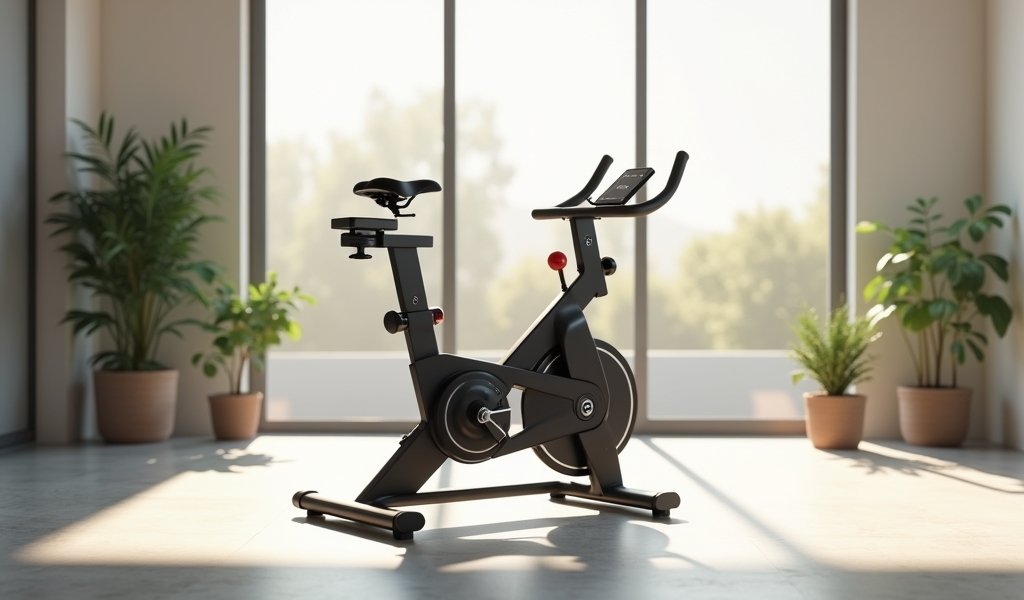
Hill climb workouts on the best exercise bike simulate the challenge of cycling uphill, creating a dual benefit: accelerated fat burning plus lower body strengthening. This combination is particularly effective because it increases caloric expenditure while building lean muscle, which elevates your resting metabolic rate over time.
The beauty of hill training on a stationary bike is that you can precisely control the “grade” of your hill by adjusting the resistance level. This allows for progressive overload—gradually increasing the challenge as your fitness improves.
Try this effective hill climb workout:
- Warm up for 5 minutes at low resistance
- Set moderate resistance (level 5-6) and cycle at a comfortable cadence for 2 minutes
- Increase resistance by 2 levels (to 7-8) for 3 minutes, maintaining the same cadence
- Increase resistance by 1 more level (to 8-9) for 2 minutes
- Increase to maximum challenging resistance for 1 minute
- Gradually decrease resistance, following the same pattern in reverse
- Repeat the entire sequence 2-3 times
- Cool down for 5 minutes at low resistance
During the high-resistance segments, focus on engaging your core and using your glutes and hamstrings to drive the pedals. Many cyclists make the mistake of hunching forward and straining their lower backs during climbs. Instead, maintain an upright posture with a slight forward lean from the hips.
This workout is particularly effective for targeting stubborn fat deposits on the lower body, as the added resistance creates greater muscle activation in the legs and glutes. As these muscle groups are some of the largest in your body, strengthening them has a significant impact on your overall metabolic health.
Pyramid Intervals: Progressive Challenge for Maximum Burn
Pyramid intervals create a structured progression of increasing and then decreasing intensity, challenging your body in a systematic way that maximizes fat utilization across different energy systems. This approach prevents adaptation by continuously varying the work duration while maintaining high-quality effort throughout.
The workout gets its name from the visual representation of the intervals—starting short, building to longer durations, then decreasing again, like ascending and descending a pyramid. This structure creates metabolic variety that’s particularly effective for fat burning.
Here’s a fat-burning pyramid workout for your exercise bike:
- Warm up for 5 minutes at low resistance
- 30 seconds high intensity (resistance level 7-8)
- 30 seconds recovery (resistance level 3-4)
- 60 seconds high intensity
- 60 seconds recovery
- 90 seconds high intensity
- 90 seconds recovery
- 120 seconds high intensity
- 120 seconds recovery
- 90 seconds high intensity
- 90 seconds recovery
- 60 seconds high intensity
- 60 seconds recovery
- 30 seconds high intensity
- Cool down for 5 minutes
The progressive nature of pyramid intervals allows you to mentally break the workout into manageable chunks, making it easier to maintain motivation. There’s always a finish line in sight, which helps you push through the challenging segments.
For even greater fat-burning benefits, try performing this workout in a fasted state (before breakfast) once you’ve built up sufficient cardiovascular fitness. Research from the Journal of Sports Sciences suggests that fasted cardio may increase fat oxidation compared to exercising after eating, though this approach isn’t necessary for excellent results.
Conclusion
Finding the best exercise bike and implementing these seven fat-burning workouts can transform your fitness journey and help you achieve sustainable weight management. The versatility of stationary cycling means you can continually challenge yourself and prevent plateaus by rotating between these different protocols throughout your weekly routine.
Remember that fat loss is ultimately about consistency rather than intensity. Even the most perfectly designed workout won’t be effective if you can’t sustain the practice. Start with the methods that feel most accessible to you, then gradually incorporate more challenging protocols as your fitness improves.
For optimal results, combine your exercise bike workouts with proper nutrition, adequate hydration, and sufficient recovery. These complementary factors will enhance the fat-burning potential of your cycling sessions and support your overall health goals.
Whether you’re a beginner just starting out or an experienced fitness enthusiast looking for new challenges, these seven proven exercise bike workouts provide a roadmap for effective, joint-friendly fat burning. The journey to better health is a marathon, not a sprint—and your exercise bike is the perfect vehicle to take you there.
Frequently Asked Questions
How long should I exercise on a stationary bike to lose weight?
Aim for 30-45 minutes per session, 3-5 times weekly for weight loss results. Consistency matters more than duration, so start with whatever time is manageable and gradually increase.
Is an exercise bike good for losing belly fat?
Yes, regular exercise bike workouts can help reduce belly fat as part of overall fat loss. Combine cycling with a healthy diet for the best results, as spot reduction isn’t possible.
What’s better for fat loss: exercise bike or treadmill?
Both are effective, but exercise bikes provide lower-impact workouts that may allow for longer or more frequent sessions. Choose the equipment you enjoy most as consistency is the key factor in fat loss success.
Should I use an exercise bike every day for weight loss?
It’s generally better to include 1-2 rest days weekly to allow for recovery. Alternating between different intensity levels (HIIT days vs. steady-state days) can optimize fat loss while preventing overtraining.
What resistance level burns the most fat on an exercise bike?
A moderate resistance (level 5-7 on most bikes) that allows you to maintain a steady pace for longer periods maximizes fat burning. Higher resistance builds more muscle, while varying resistance through intervals can boost overall calorie burn.