

Overview
The 80/20 diet is a sustainable nutrition approach that encourages eating nutritious whole foods 80% of the time while allowing for indulgent treats during the remaining 20%, creating both psychological freedom and physical benefits. Unlike restrictive diets that often lead to failure, this balanced method promotes a healthier relationship with food, steady progress toward health goals, and long-term success through flexibility rather than perfection.
Table of Contents
- What is the 80/20 Diet?
- The Science Behind 80/20
- How to Implement the 80/20 Diet
- 80/20 Diet Meal Planning
- Benefits of the 80/20 Approach
- Common Mistakes to Avoid
- 80/20 Diet Success Stories
- Conclusion
- Frequently Asked Questions
What is the 80/20 Diet?
The 80/20 diet is like a breath of fresh air in the suffocating world of restrictive eating plans. Imagine nutrition as a balanced scale rather than an all-or-nothing proposition. At its core, the 80/20 diet suggests eating nutritious, whole foods 80% of the time while allowing yourself to indulge in your favorite treats for the remaining 20%. Like a financial budget that includes both savings and spending money, this approach creates room for both health and happiness.
Unlike diets that slash entire food groups or require military-precision calorie counting, the 80/20 approach acknowledges a fundamental truth about human psychology: sustainability requires flexibility. Think of it as the difference between a strict teacher who never allows exceptions and a wise mentor who understands that occasional leniency leads to better long-term compliance.
The beauty of the 80/20 diet lies in its simplicity and sustainability. Rather than treating nutrition as a temporary challenge to endure, it reframes healthy eating as a lifestyle that accommodates real life. Just as a river finds balance between flowing forward and creating occasional eddies, your eating pattern can progress toward health goals while making room for life’s celebrations and simple pleasures.
The Science Behind 80/20
The 80/20 diet isn’t just another fad born of wellness influencers’ imaginations—it’s grounded in solid nutritional science and behavioral psychology. Research consistently shows that extreme dietary restrictions often backfire like a tightly wound spring suddenly released. When we completely forbid certain foods, our desire for them intensifies, often leading to what psychologists call the “what-the-hell effect”—where one small deviation cascades into a full dietary collapse.
Physiologically, the 80/20 approach aligns with our understanding of metabolic flexibility. Our bodies are remarkably adaptive systems—like versatile engines that can run on different fuels—not rigid machines that crash with the slightest deviation from perfect input. Studies have demonstrated that consistent, moderate approaches to nutrition tend to produce more sustainable results than extreme restrictions.
The mathematical reality further supports this approach. If you consume roughly 21 meals per week, the 80/20 principle allows for about 4 meals where you can relax your nutritional vigilance. This creates a psychological safety valve that prevents the pressure buildup that often leads to dietary abandonment. It’s similar to how a regular weekend provides sustainability to a productive work week—without it, burnout becomes inevitable.
How to Implement the 80/20 Diet
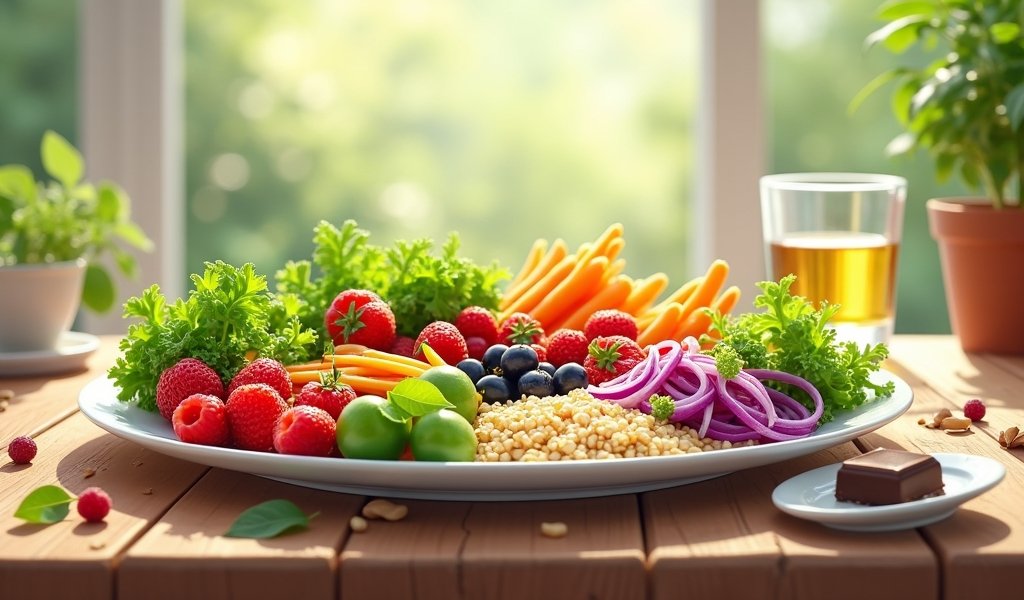
Implementing the 80/20 diet is less like following a rigid roadmap and more like learning to dance—it requires understanding the basic steps before adding your personal flair. Start by defining your “80%” foods: these are typically whole, nutrient-dense options that fuel your body like premium gasoline powers a high-performance vehicle. Your 80% foundation might include:
- Colorful vegetables and fruits (aim for a rainbow on your plate)
- Lean proteins like fish, poultry, legumes, or quality plant-based alternatives
- Whole grains such as quinoa, brown rice, or oats
- Healthy fats from avocados, nuts, seeds, and olive oil
- Plenty of water, herbal teas, and other hydrating beverages
Then, consciously plan your “20%” indulgences rather than leaving them to chance or emotional eating. Perhaps you’ll enjoy a beloved family Mediterranean recipe on Sunday nights or save your favorite dessert for date nights. This intentionality transforms “cheating” into planned flexibility—like a budget that includes entertainment spending rather than impulsive splurges that break the bank.
Remember that 80/20 isn’t about mathematical precision but mindful balance. Some weeks might flow differently than others, like rivers that sometimes run higher or lower depending on rainfall. During holidays or vacations, your ratio might shift temporarily, while stressful work periods might call for more structured nutrition. The key is returning to your baseline rather than abandoning it entirely when life’s natural variations occur.
80/20 Diet Meal Planning
Meal planning on the 80/20 diet is like conducting a symphony—each element plays its part in creating a harmonious whole. Begin by sketching a weekly framework rather than planning every bite. Perhaps your weekday breakfasts will consistently feature nutrient-dense options like Mediterranean diet breakfast choices, while weekend brunches might include those fluffy pancakes that bring you joy.
Your grocery list becomes a powerful tool in this approach. Stock your kitchen primarily (about 80%) with whole foods that create the foundation of your nutrition—think of these as the instruments that play the main melody in your dietary symphony. Then, thoughtfully select a few favorite treats that will occupy the remaining 20% of your shopping cart and diet.
Consider this sample day on the 80/20 plan:
- Breakfast: Greek yogurt with berries, a drizzle of honey, and walnuts
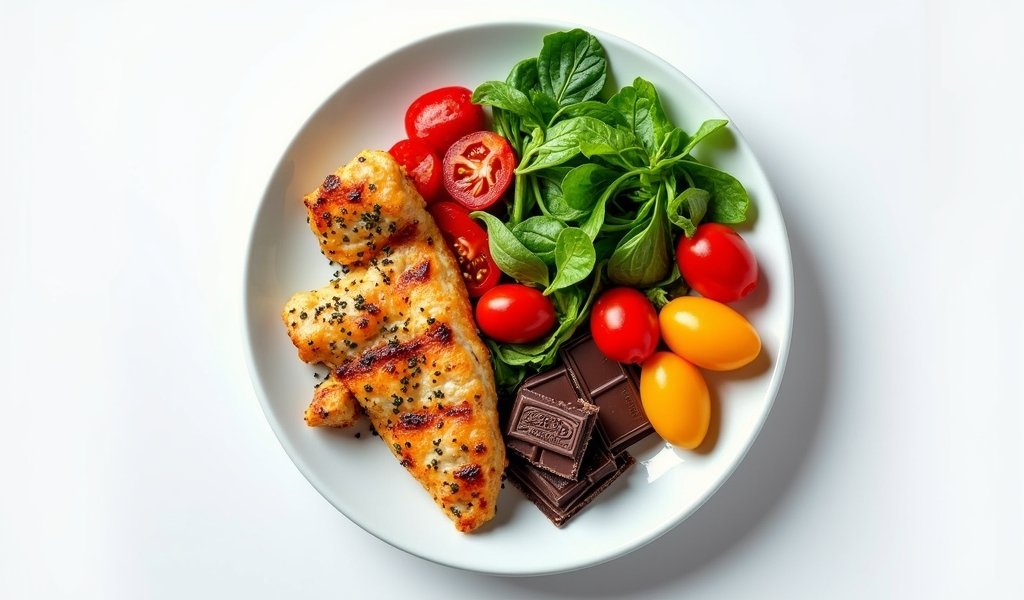
- Lunch: Colorful salad with grilled chicken, quinoa, avocado, and olive oil dressing
- Afternoon snack: Apple with almond butter
- Dinner: Baked salmon with roasted vegetables and sweet potato
- Evening: Small serving of dark chocolate or glass of wine (part of your 20%)
Batch cooking can be your secret weapon in maintaining the 80/20 balance. Like a squirrel storing nuts for winter, spending a few hours preparing healthy basics (grilled proteins, roasted vegetables, cooked grains) creates a buffer against impulsive choices when hunger and fatigue collide. When your refrigerator contains ready-to-eat nutritious options, the path of least resistance becomes the path of better nutrition.
Benefits of the 80/20 Approach
The 80/20 diet delivers benefits that ripple through your life like stones cast into a pond. The most immediate and obvious advantage is psychological freedom. Unlike diets that generate constant anxiety about “forbidden” foods, the 80/20 approach diffuses the emotional charge around eating. Food returns to its rightful place as both nourishment and enjoyment rather than a moral battlefield.
This psychological ease translates directly to sustainability. Research consistently shows that flexible dietary approaches lead to better long-term adherence than rigid protocols. Think of it like the difference between sprinting (unsustainable) and jogging (maintainable)—the 80/20 diet is the nutritional equivalent of finding your comfortable running pace.
Beyond mental benefits, this approach nurtures a healthier relationship with food. Many people report decreased binge eating and food obsession when following the 80/20 principle. When nothing is completely off-limits, the forbidden fruit loses its irresistible appeal. Gradually, many find their cravings naturally evolve toward more nutritious options, like a palette that develops appreciation for subtle flavors over time.
Physical benefits accumulate steadily rather than dramatically—more like the rising tide that eventually lifts all boats than a sudden wave. Weight management becomes more intuitive, energy levels stabilize without the peaks and crashes of restrictive diets, and digestive health often improves with the emphasis on whole foods. Perhaps most significantly, this approach can be maintained throughout life’s chapters and challenges, unlike extreme regimens that collapse under real-world pressure.
Common Mistakes to Avoid
Even the most balanced approaches can stumble over common pitfalls, much like an experienced hiker might occasionally lose footing on familiar trails. The first and perhaps most prevalent mistake is mathematical misinterpretation. The 80/20 principle isn’t an invitation to calculate exact percentages of calories or grams—it’s more like the broad strokes of an impressionist painting rather than the precision of photorealism.
Another frequent stumbling block is treating the “20%” as mandatory rather than permissive. Some people feel compelled to “use up” their indulgence allowance even when they don’t particularly desire it—like spending money just because it’s in your budget. Remember that the 20% is an upper limit, not a prescription. Some weeks you might naturally desire less, and that’s perfectly fine.
Watch out for the psychological trap of compensatory behavior. If you enjoy a decadent meal, there’s no need to “make up for it” with excessive restriction or punishing exercise the next day. This punishment mentality undermines the balanced philosophy at the core of 80/20. Instead, simply return to your nutritious baseline at the next meal, like a boat that gently rights itself after a wave.
Perhaps the most insidious mistake is using the 80/20 principle as cover for a gradually declining standard. Be honest about what constitutes “nutritious” in your 80% and what truly feels special enough to earn a place in your 20%. If you find yourself justifying daily fast food as part of your 20%, you might be missing the spirit of the approach. The 20% should feel like genuine pleasure, not convenient rationalization.
80/20 Diet Success Stories
Real-world success often speaks louder than theoretical principles, like hearing a song performed live rather than just reading the sheet music. Consider Sarah, a 42-year-old financial analyst who had cycled through restrictive diets for two decades. “The 80/20 approach was like finally exhaling after holding my breath for years,” she explains. Over eighteen months, she lost 37 pounds—not with the dramatic speed of crash diets, but with the steady persistence of water smoothing stone.
Michael, a 35-year-old teacher and father of three, found that the 80/20 approach fit seamlessly into family life. “I can enjoy pizza night with my kids without feeling like I’ve failed, then model healthy choices the rest of the week,” he shares. His cholesterol dropped 47 points within six months, and more importantly, his children are developing a balanced perspective on nutrition rather than witnessing the all-or-nothing approach that characterized his earlier attempts.
Even fitness professionals have embraced this method. Elena, a certified personal trainer, adopted the 80/20 principle after burning out on competition-level restrictive eating. “I maintain better muscle definition year-round now than when I was oscillating between extreme cutting and rebounding,” she notes. “My clients achieve better results too—because they actually stick with it long enough to see change.”
What these success stories share isn’t dramatic before-and-after transformations, but something more valuable: sustainable results and peaceful relationships with food. Like the difference between a flash flood and steady rainfall, the 80/20 approach might not produce overnight changes, but its consistent nourishment transforms landscapes over time.
Conclusion
The 80/20 diet stands apart in the crowded field of nutrition approaches like a mature oak among saplings—less flashy, perhaps, but offering deeper roots and more enduring shelter. Its beauty lies not in promising miraculous transformations but in acknowledging the complex reality of human life and psychology.
As we navigate an environment filled with conflicting nutrition advice and extreme approaches, the 80/20 principle offers a middle path that honors both biological needs and life’s pleasures. It recognizes that sustainability often requires flexibility, much like a tree that bends with strong winds rather than standing rigid and eventually breaking.
Remember that implementing this approach is a skill that develops over time, like learning any art form. You’ll have days of perfect balance and others where the ratio shifts temporarily. The key is returning to your foundation rather than viewing deviations as failures that justify abandonment.
In a world that often seeks complex solutions, the elegant simplicity of the 80/20 diet may be its greatest strength. It asks us to nourish our bodies thoughtfully most of the time while making space for the social and emotional dimensions of food. Perhaps that balance—rather than perfection—is the true definition of health.
Frequently Asked Questions
What can I eat during the 80% portion of the 80/20 diet?
Focus on whole, minimally processed foods like vegetables, fruits, lean proteins, whole grains, and healthy fats. Think of foods that grew in the ground, on a tree, or had a mother.
How do I track the 80/20 ratio in my diet?
Rather than tracking precisely, aim for about 4-5 meals per week (out of 21 total) where you enjoy treats. The approach is meant to be intuitive rather than mathematical.
Will the 80/20 diet help me lose weight?
Yes, many people experience weight loss when transitioning from a standard diet to the 80/20 approach. The focus on nutrient-dense foods naturally creates a calorie deficit for most individuals.
Can I follow the 80/20 diet if I have dietary restrictions?
Absolutely—the 80/20 principle can adapt to any dietary framework including vegetarian, vegan, gluten-free, or food allergy requirements. Your 80% will consist of compliant wholesome foods while your 20% offers flexibility within your restrictions.
Is the 80/20 diet suitable for athletes or highly active individuals?
Yes, many athletes thrive with this approach by adjusting portion sizes to meet their higher energy demands. The flexibility actually helps with performance nutrition timing around training sessions and competitions.