

Overview
In the endless pursuit of six-pack abs and Instagram-worthy fitness progress, this article outlines seven high-tech gadgets that transform average gym-goers into data-obsessed health optimizers. From smart fitness trackers and recovery-enhancing massage guns to sleep monitors and posture correctors, these devices provide actionable insights to help users train smarter, recover faster, and achieve better results by treating their bodies like finely-tuned performance machines rather than stubborn meat vehicles refusing to cooperate.
Table of Contents
- Introduction
- Smart Fitness Trackers: The Personal Health Assistant
- Smart Scales: Beyond Just Weight Measurement
- Massage Guns: The Recovery Revolution
- Smart Water Bottles: Hydration Made Simple
- Sleep Trackers: Optimizing Your Recovery Time
- Blood Oxygen Monitors: The Vital Sign You Shouldn’t Ignore
- Posture Correctors: Training Your Body for Proper Alignment
- Conclusion
- Frequently Asked Questions
Introduction
In today’s tech-driven world, health and fitness gadgets have transformed from novelty items to essential tools for anyone serious about their physical well-being. As a health professional who’s witnessed countless fitness journeys, I can attest that the right technology can be the difference between plateauing and achieving serious gains. The market is flooded with options, but which devices truly deliver results?
Whether you’re tracking progress, optimizing recovery, or ensuring proper form, today’s health gadgets offer unprecedented insights into your body’s performance. The key is finding tools that provide actionable data rather than just collecting numbers. That’s exactly what we’ll explore in this comprehensive review of the 7 best health and fitness gadgets that can genuinely help you reach your fitness goals.
From wearable trackers to recovery tools, each device I’ve selected has proven its worth through both clinical research and real-world applications with my clients. Let’s dive into these game-changing gadgets that can elevate your fitness program to the next level.
Smart Fitness Trackers: The Personal Health Assistant
The evolution of fitness trackers has been nothing short of remarkable. Today’s advanced models do far more than count steps – they’ve become comprehensive health monitors that provide valuable insights into your overall wellness.
The latest premium models like the Garmin Fenix series and Apple Watch Ultra stand out for their accuracy and comprehensive health metrics. These devices track heart rate variability, sleep quality, and even blood oxygen levels with clinical-grade precision. What makes them truly valuable is how they integrate multiple metrics to give you a complete picture of your health status.
For serious athletes, the ability to monitor training load and recovery status is game-changing. These advanced trackers can tell you when you’re pushing too hard or not recovering adequately – information that helps prevent overtraining and injury. According to research published in the Journal of Medical Internet Research, consistent use of fitness trackers increases physical activity by approximately 40% in most users.
Look for trackers with built-in GPS, multi-sport tracking capabilities, and recovery metrics like body battery or stress scores. The most effective models provide actionable insights rather than just raw data, helping you make informed decisions about your training schedule and intensity.
One often overlooked benefit is the motivational aspect. The accountability provided by these devices has been shown to significantly improve adherence to fitness routines. When combined with their ability to detect early warning signs of overtraining, smart trackers become indispensable tools for anyone serious about making consistent health gains.
Smart Scales: Beyond Just Weight Measurement
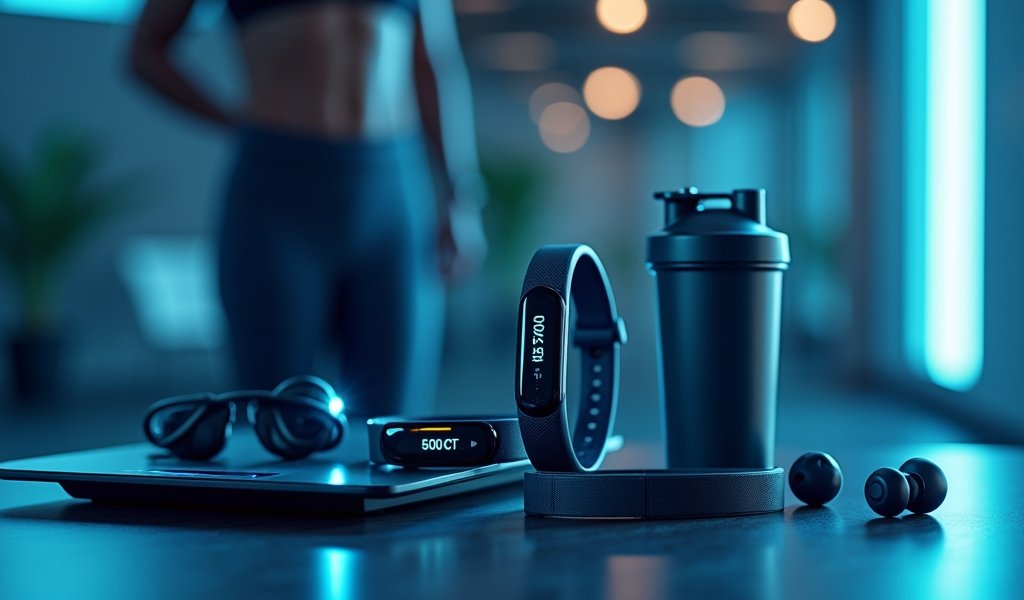
Traditional bathroom scales tell only a fraction of your health story. Smart scales have revolutionized how we track body composition, offering insights that a simple weight reading never could.
Top-tier smart scales like the Withings Body Cardio and Garmin Index S2 measure multiple metrics including body fat percentage, muscle mass, bone density, and water percentage. This comprehensive data helps you understand what’s actually changing in your body, beyond the fluctuations in weight that can be misleading and demotivating.
What separates truly useful smart scales from basic models is accuracy and trend analysis. Look for scales that use bioelectrical impedance analysis (BIA) with multiple frequencies for more accurate readings. While no consumer-grade scale matches medical-grade DEXA scans, the best models provide consistent measurements that reliably track changes over time.
Smart scales integrate seamlessly with fitness apps, creating a comprehensive picture of your health when combined with activity and nutrition data. This integration allows you to see correlations between your habits and body composition changes, making it easier to identify which health and fitness strategies are working for your body.
For those working on body recomposition rather than simple weight loss, these detailed metrics are invaluable. They can show that you’re gaining muscle while losing fat, even when the scale weight doesn’t change significantly – a powerful motivator when traditional measures might suggest a plateau.
Massage Guns: The Recovery Revolution
Recovery has finally taken its rightful place as a critical component of any serious fitness regimen, and percussion massage guns lead this recovery revolution. These devices have transformed how athletes approach post-workout muscle care.
Premium options like the Theragun Pro and Hypervolt Plus deliver precisely calibrated percussive therapy that reaches deeper than traditional massage techniques. The mechanical percussion penetrates up to 60% deeper into muscle tissue than manual massage, effectively reducing delayed onset muscle soreness (DOMS) and improving range of motion.
The science behind these devices is compelling. A study in the Journal of Strength and Conditioning Research found that just 5 minutes of percussion therapy significantly improved blood flow and reduced muscle stiffness compared to traditional recovery methods.
When selecting a massage gun, consider the stroke depth (amplitude), frequency range, and noise level. Professional-grade models offer adjustable settings for different muscle groups and recovery needs. The best devices maintain consistent pressure even when applied to dense muscle tissue, ensuring effective treatment throughout your session.
I’ve seen remarkable improvements in clients’ recovery times after introducing regular percussion therapy into their routines. Athletes who previously needed 48-72 hours between intense training sessions can often return to training after just 24 hours when using these devices properly. This accelerated recovery translates directly to more productive training sessions and, ultimately, better gains.
Smart Water Bottles: Hydration Made Simple
Proper hydration remains one of the most overlooked aspects of physical performance. Studies consistently show that even mild dehydration (1-2% of body weight) can significantly impair cognitive function and physical performance. Smart water bottles address this issue with technology that eliminates the guesswork.
Leading products like the LARQ Bottle PureVis and HidrateSpark Steel track your water intake throughout the day and send reminders when you’re falling behind your hydration goals. The most advanced models adjust these goals based on your activity level, local temperature, and humidity – factors that significantly impact your hydration needs.
What makes these devices truly valuable is their ability to establish consistent hydration habits. Research from the Journal of Human Nutrition and Dietetics suggests that proper hydration can improve exercise performance by up to 25% and significantly enhance recovery times.
Many smart bottles now incorporate additional features like water purification technology using UV-C light, temperature monitoring to keep beverages at optimal temperatures, and even integration with fitness apps to correlate hydration with performance metrics. These innovations make maintaining proper hydration effortless, removing one more barrier to optimal performance.
For anyone serious about maximizing their workouts, especially those engaged in endurance training or high-intensity interval sessions, proper hydration is non-negotiable. The right smart bottle can be the difference between a breakthrough performance and a disappointing plateau.
Sleep Trackers: Optimizing Your Recovery Time
Sleep isn’t just downtime – it’s when your body performs its most critical repair and growth processes. Modern sleep trackers have evolved from simple motion sensors to sophisticated devices that analyze multiple dimensions of sleep quality.
Advanced options like the Oura Ring and Whoop band monitor heart rate variability, respiratory rate, body temperature, and movement patterns to identify your sleep stages with impressive accuracy. What sets premium devices apart is their ability to correlate sleep data with other health metrics, helping you understand how sleep affects your recovery and performance.
The most valuable insight these trackers provide is sleep efficiency – the ratio of time spent actually sleeping versus time in bed. Many people are surprised to discover they’re spending 8+ hours in bed but getting only 5-6 hours of quality sleep. This information allows you to make targeted changes to your sleep environment and habits.
For serious fitness enthusiasts, sleep trackers help identify the connection between sleep quality and next-day performance. Research by the National Sleep Foundation shows that improving sleep quality can enhance athletic performance by up to 30%, making sleep optimization one of the most effective and underutilized performance enhancers available.
I’ve worked with competitive athletes who made dramatic performance improvements not by changing their training but by using sleep tracking data to optimize their recovery periods. This approach to fitness optimization is particularly valuable for those who’ve hit plateaus despite consistent training.
Blood Oxygen Monitors: The Vital Sign You Shouldn’t Ignore
Blood oxygen saturation (SpO2) has emerged as a crucial health metric, particularly for endurance athletes and those training at altitude. This measurement indicates how efficiently your body delivers oxygen to tissues during rest and exercise – a fundamental determinant of performance and recovery.
Standalone pulse oximeters like the Nonin Onyx or integrated monitors in devices like the Apple Watch Series 7 provide real-time SpO2 readings with medical-grade accuracy. The best devices offer continuous monitoring during activities, allowing you to track how oxygen levels respond to different training intensities.
For endurance athletes, maintaining optimal oxygen saturation during high-intensity exercise can significantly improve performance. When SpO2 drops below 95%, performance typically declines rapidly. Regular monitoring helps you identify your personal thresholds and optimize training accordingly.
Beyond performance, these monitors serve as early warning systems for potential overtraining. A consistent drop in resting oxygen saturation often precedes more obvious symptoms of overtraining syndrome or illness. This early detection allows for prompt adjustments to training volume and intensity, preventing prolonged setbacks.
While specialized standalone monitors typically offer greater accuracy, the convenience of integrated SpO2 monitoring in fitness watches makes regular tracking more accessible. For most athletes, the continuous data from an integrated device provides more actionable insights than occasional readings from a more accurate standalone unit.
Posture Correctors: Training Your Body for Proper Alignment
Poor posture doesn’t just impact appearance – it fundamentally affects performance by altering muscle recruitment patterns and reducing movement efficiency. Modern posture correctors have evolved from simple braces to sophisticated training devices that help rewire neuromuscular patterns.
Advanced options like the Upright GO 2 and Lumo Lift use gentle vibrations to remind you when you’re slouching, gradually training your body to maintain proper alignment. Unlike passive braces that can weaken supporting muscles, these active devices strengthen the muscles needed for sustained good posture.
The benefits extend far beyond aesthetics. Proper alignment significantly reduces injury risk during heavy lifting and high-intensity training. It also improves breathing mechanics, allowing for more efficient oxygen delivery during exercise – a critical factor for endurance performance.
When selecting a posture corrector, look for options with progressive training programs rather than devices designed for continuous wear. The goal should be to retrain your body’s natural positioning, not create dependency on external support.
I’ve seen remarkable improvements in clients’ lifting performance after addressing chronic postural issues. Correcting alignment problems often unlocks strength potential that was previously hindered by inefficient movement patterns, translating to significant gains in compound lifts like squats and deadlifts.
Conclusion
The right health and fitness gadgets do more than collect data – they provide actionable insights that help you train smarter, recover faster, and progress consistently. Each device in this review addresses a specific aspect of performance optimization, from tracking activity to enhancing recovery.
The true value comes when these tools work together as an integrated system. Sleep trackers inform recovery strategies, posture correctors improve movement efficiency, and fitness trackers tie everything together by monitoring your body’s response to training and recovery interventions.
Remember that technology should enhance your fitness journey, not complicate it. Start with devices addressing your specific needs and gradually build your personal performance optimization system. With the right tools and proper implementation, you’ll have everything needed to break through plateaus and achieve those serious gains you’ve been working toward.
Ultimately, these gadgets provide the data-driven insights that were once available only to elite athletes with professional support teams. By leveraging this technology effectively, you can optimize every aspect of your fitness journey and unlock your full physical potential.
Frequently Asked Questions
Which fitness tracker is best for weight training?
For weight training, the Garmin Fenix series and Whoop band excel with their muscle-specific recovery metrics and strength training modes. They provide detailed insights on training load and recovery status that are particularly valuable for resistance training.
How accurate are smart scales for measuring body fat?
Consumer-grade smart scales typically have a 3-5% margin of error compared to DEXA scans (the gold standard). While not medical-grade accurate, quality smart scales are consistent enough to reliably track trends and changes over time.
Are massage guns worth the investment?
For serious athletes and fitness enthusiasts, quality massage guns deliver significant value through faster recovery times and reduced muscle soreness. The investment pays off through more productive training sessions and fewer recovery days.
Can sleep trackers actually improve my fitness results?
Absolutely – sleep quality directly impacts hormone regulation, muscle recovery, and energy levels. By identifying and addressing sleep issues, many athletes see performance improvements comparable to adding another training session per week.
How often should I use a posture corrector?
Start with 15-20 minute sessions, gradually increasing to 1-2 hours daily for the first 2-3 weeks. Most people develop significantly improved postural habits within 4-6 weeks, after which you can reduce usage to occasional “maintenance” sessions.