
Overview
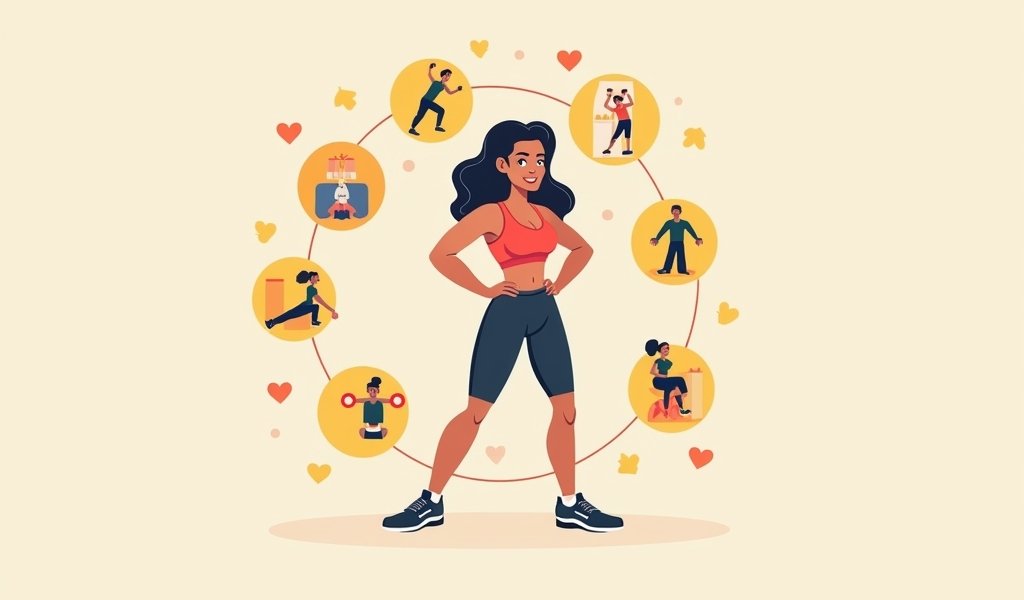
Forget wandering aimlessly through the fitness wilderness like a lost hiker with nothing but protein bars and optimism—this article presents seven interconnected fitness plans covering strength training, HIIT, nutrition, mindful movement, cardio, flexibility, and recovery. The key message is that sustainable fitness success comes not from following a single approach, but from strategically combining all these elements while prioritizing consistency over perfection.
Table of Contents
- Why Fitness Plans Matter: Setting the Foundation for Success
- Plan 1: The Strength Training Revolution – Build Muscle, Burn Fat
- Plan 2: HIIT Workouts – Maximum Results in Minimum Time
- Plan 3: Balanced Nutrition Plan – Fuel Your Body Right
- Plan 4: Mindful Movement – The Mind-Body Connection
- Plan 5: Cardio Conditioning – Heart Health and Endurance
- Plan 6: Flexibility Focus – Preventing Injury and Enhancing Performance
- Plan 7: Recovery Methods – The Missing Piece of Your Fitness Puzzle
- Combining Plans for Ultimate Results
- Conclusion: Your Path to Ultimate Health and Fitness
- Frequently Asked Questions
Why Fitness Plans Matter: Setting the Foundation for Success
Starting a fitness journey without a plan is like embarking on a road trip without a map—you might eventually get somewhere, but it probably won’t be where you intended. The right fitness plan acts as your personal roadmap to health success, guiding your efforts and keeping you accountable when motivation wanes.
According to a study published in the Journal of Health Psychology, people who follow structured fitness plans are 42% more likely to achieve their health goals than those who exercise randomly. This isn’t surprising—structure creates consistency, and consistency creates results.
But here’s the catch: not all fitness plans are created equal, and what works brilliantly for your neighbor might fall flat for you. Your unique body, lifestyle, preferences, and goals demand a personalized approach. That’s why I’ve compiled these seven proven plans that cover all the essential elements of fitness. Let’s dive in!
Plan 1: The Strength Training Revolution – Build Muscle, Burn Fat

If you could choose just one exercise modality for optimal health, strength training would be the frontrunner. Despite common misconceptions, lifting weights isn’t just for bodybuilders—it’s for everyone seeking better health, regardless of age or gender.
Strength training increases your metabolic rate, helping you burn calories long after you’ve finished exercising. Research from Tufts University shows that regular resistance training can reverse aging markers in muscles by up to nine years!
The 3-Day Split for Busy People
This efficient plan requires just three 45-minute sessions per week:
- Monday: Lower Body – Squats, lunges, deadlifts, and calf raises (3 sets of 8-12 reps)
- Wednesday: Push Movements – Chest presses, shoulder presses, tricep exercises (3 sets of 8-12 reps)
- Friday: Pull Movements – Rows, pull-ups/assisted pull-ups, bicep curls (3 sets of 8-12 reps)
The key is progressive overload—gradually increasing weight or repetitions as your strength improves. Start with weights that challenge you by the last few reps but still allow proper form. Remember, form always trumps weight!
Plan 2: HIIT Workouts – Maximum Results in Minimum Time
High-Intensity Interval Training (HIIT) has revolutionized the fitness world by proving that workout effectiveness isn’t measured in hours but in intensity. These short bursts of maximum effort interspersed with brief recovery periods deliver remarkable results in minimal time.
A landmark study in the Journal of Applied Physiology found that just 20 minutes of HIIT produced the same cellular adaptations and endurance improvements as 90 minutes of steady-state cardio. That’s efficiency at its finest!
The 20-Minute HIIT Blueprint
Try this simple but effective routine 2-3 times weekly:
- Warm up for 3 minutes with light jogging or jumping jacks
- 20 seconds of all-out effort (sprinting, burpees, mountain climbers, etc.)
- 10 seconds of complete rest
- Repeat for 8 rounds (4 minutes total)
- Rest for 1 minute
- Complete 3 total circuits
- Cool down for 3 minutes with gentle stretching
The beauty of HIIT lies in its adaptability. You can apply this timing framework to almost any exercise—from cycling and swimming to bodyweight movements—making it perfect for home workouts or gym sessions alike.
Plan 3: Balanced Nutrition Plan – Fuel Your Body Right
Exercise is only half the equation when it comes to optimal health and fitness. What you put on your plate directly impacts your energy levels, recovery capacity, and results. Rather than following restrictive diets that eliminate entire food groups, focus on creating balanced meals that nourish your body.
The most sustainable nutrition plan isn’t a “diet” at all—it’s a lifestyle approach that emphasizes whole foods while allowing flexibility. Research published in Harvard Health suggests that diet quality matters more than the specific diet you follow when it comes to long-term health outcomes.
The Plate Method: Visual Simplicity
For each meal, mentally divide your plate into sections:
- ½ plate: Non-starchy vegetables (leafy greens, broccoli, peppers, etc.)
- ¼ plate: Lean protein (chicken, fish, tofu, legumes, etc.)
- ¼ plate: Complex carbohydrates (sweet potatoes, quinoa, brown rice)
- Thumb-sized portion: Healthy fats (avocado, olive oil, nuts)
This approach eliminates the need for complicated calorie counting while ensuring you get a balance of macronutrients. Hydration matters too—aim for half your body weight in ounces of water daily. For example, a 160-pound person should target 80 ounces.
Plan 4: Mindful Movement – The Mind-Body Connection
In our high-stress world, incorporating mindful movement practices isn’t just beneficial—it’s essential. Activities like yoga, tai chi, and Pilates strengthen the crucial connection between mind and body, enhancing not just flexibility but also mental clarity and stress resilience.
These practices serve as powerful antidotes to our typically disconnected exercise routines. Instead of mindlessly grinding through repetitions while thinking about your to-do list, mindful movement demands presence, proper breathing, and conscious engagement with each motion.
15-Minute Daily Mind-Body Practice
Even brief sessions yield meaningful benefits:
- Morning breathing meditation: 5 deep breaths upon waking (2 minutes)
- Sun salutations or gentle flow: 10 minutes of continuous movement
- Gratitude pose: Hold a comfortable seated or reclined position for 3 minutes while reflecting on three things you’re grateful for
Studies from the Harvard Medical School confirm that practices like yoga can reduce the body’s stress hormones while increasing beneficial brain neurotransmitters like GABA, which promotes calmness and well-being.
Plan 5: Cardio Conditioning – Heart Health and Endurance

While high-intensity training delivers impressive results, traditional steady-state cardio still deserves a place in your fitness regimen. These longer, moderate-intensity sessions build cardiovascular endurance, improve oxygen utilization, and provide mental space for processing thoughts—something our busy minds desperately need.
According to the American Heart Association, adults should aim for at least 150 minutes of moderate-intensity cardio weekly—a target that supports not just heart health but also cognitive function and mood stability.
The Zone 2 Training Approach
For optimal cardiovascular benefits without excessive stress on the body, focus on Zone 2 cardio—working at approximately 60-70% of your maximum heart rate. This feels like comfortable, conversational effort where you’re breathing more deeply but can still speak in complete sentences.
- Beginners: Start with 20-minute sessions 3x weekly (walking, cycling, swimming)
- Intermediate: Build to 30-40 minute sessions 3-4x weekly
- Advanced: Include one longer session (60+ minutes) weekly to build greater endurance
The beauty of Zone 2 training is its versatility and accessibility. Whether you prefer outdoor activities like hiking and cycling or indoor options like elliptical machines and rowing, the principle remains the same: maintain moderate intensity for extended periods.
Plan 6: Flexibility Focus – Preventing Injury and Enhancing Performance
Flexibility training remains the most commonly neglected fitness component, yet it’s crucial for longevity and performance. Without adequate flexibility, your strength and cardio gains may be limited by poor range of motion, and your injury risk increases substantially.
Contrary to popular belief, flexibility isn’t just about stretching randomly after workouts. A systematic approach that addresses your specific needs and imbalances delivers far better results, especially when combined with mobility work that focuses on joint function.
10-Minute Daily Flexibility Routine
This quick sequence targets common tight areas:
- Hip flexor stretch: 30 seconds each side (crucial for desk workers)
- Chest opener: 30 seconds (counteracts forward-hunched posture)
- Hamstring stretch: 30 seconds each leg
- Spinal twist: 30 seconds each side (relieves back tension)
- Shoulder mobility circles: 30 seconds forward, 30 seconds backward
- Ankle mobility: 30 seconds each ankle
- Neck gentle stretches: 30 seconds in each direction
Research from the Journal of Orthopaedic & Sports Physical Therapy indicates that consistent flexibility work significantly reduces injury risk while improving overall functional movement patterns.
Plan 7: Recovery Methods – The Missing Piece of Your Fitness Puzzle
In our “more is better” fitness culture, recovery often gets sidelined. Yet growth happens during rest, not during workouts themselves. Your muscles repair and strengthen between sessions, not during them—making recovery not just important but essential for progress.
Effective recovery goes beyond simply taking a day off. It involves active strategies that promote tissue repair, nervous system regulation, and mental rejuvenation.
Comprehensive Recovery Protocol
Incorporate these evidence-based recovery strategies:
- Sleep optimization: Prioritize 7-9 hours of quality sleep nightly (the most powerful recovery tool)
- Active recovery: Light movement (walking, gentle swimming) on rest days increases blood flow without creating additional stress
- Contrast therapy: Alternating between hot (shower) and cold (cold plunge or ice pack) for circulation improvement
- Self-myofascial release: Use foam rollers or massage balls on tight muscles for 5-10 minutes daily
- Proper hydration: Maintain water intake throughout the day, not just during workouts
A fascinating study from the Journal of Strength and Conditioning Research found that foam rolling for just 20 minutes after intense exercise significantly reduced muscle soreness and improved performance in subsequent workouts.
Combining Plans for Ultimate Results
The true power of these seven plans emerges when you combine them strategically. Rather than seeing them as separate approaches, consider them complementary pieces of your comprehensive health puzzle.
Here’s a simplified weekly framework that incorporates all seven elements:
- Monday: Strength training (lower body) + 10-minute flexibility routine
- Tuesday: 20-minute HIIT session + mindful movement practice
- Wednesday: Strength training (push) + 10-minute flexibility routine
- Thursday: Zone 2 cardio (30 minutes) + recovery methods (foam rolling)
- Friday: Strength training (pull) + 10-minute flexibility routine
- Saturday: Longer Zone 2 cardio session or active recovery
- Sunday: Full recovery day with mindful movement and flexibility
This balanced approach ensures you’re addressing all fitness components while allowing adequate recovery. Remember, consistency with a sustainable plan beats perfection with an unsustainable one every time.
Conclusion: Your Path to Ultimate Health and Fitness
The journey to optimal health isn’t about finding the perfect workout or following the latest diet trend—it’s about creating a sustainable lifestyle that incorporates all aspects of fitness. These seven proven plans provide the framework, but your personal implementation will determine your success.
Start by assessing your current routine. Which of these seven areas are you currently neglecting? Perhaps you’re strong but inflexible, or cardio-fit but lacking strength. Begin by addressing your weakest links while maintaining your strengths.
Remember that progress isn’t linear—it’s cyclical. There will be periods of breakthrough followed by plateaus. The key is persistence through both. Track your progress, celebrate small wins, and adjust your approach when necessary.
Ultimately, the best fitness plan is the one you’ll actually follow. Choose activities you enjoy, create reasonable expectations, and focus on consistency over perfection. Your future self will thank you for the investment you’re making today in your health and vitality.
Frequently Asked Questions
Which of these seven plans should I start with if I’m a complete beginner?
Start with a combination of Plan 3 (nutrition) and Plan 5 (cardio conditioning) to build a foundation. Once you’ve established these habits, gradually incorporate the other plans.
How quickly will I see results from following these plans?
Most people notice increased energy and mood improvements within 1-2 weeks. Physical changes typically become visible after 4-6 weeks of consistent effort.
Can I combine all seven plans if I only have 30 minutes per day?
Yes, but you’ll need to rotate your focus areas throughout the week. Even 10-minute focused sessions can be effective when done consistently.
Do I need gym equipment to follow these plans?
No, all plans can be modified for home workouts using bodyweight exercises. Simple equipment like resistance bands can enhance your options but isn’t essential.
Is it normal to feel sore when starting these fitness plans?
Yes, mild to moderate soreness is normal when beginning any new exercise program. It should diminish as your body adapts, usually within 2-3 weeks.