
Overview
This 5-step guide for treating quadriceps tendonitis (that knee pain that makes you question your life choices every time you climb stairs) outlines a complete recovery process including rest, ice therapy, compression, rehabilitation exercises, and gradual return to activity. The article emphasizes that proper healing takes 6-12 weeks of consistent treatment, highlights prevention strategies, and advises when professional medical attention is necessary.
Table of Contents
- Understanding Quadriceps Tendonitis
- Common Causes and Risk Factors
- 5-Step Treatment Guide for Quadriceps Tendonitis
- Step 1: Rest and Activity Modification
- Step 2: Ice Therapy and Pain Management
- Step 3: Compression and Support
- Step 4: Progressive Rehabilitation Exercises
- Step 5: Gradual Return to Activity
- Prevention Strategies
- When to See a Doctor
- Conclusion
- Frequently Asked Questions
Understanding Quadriceps Tendonitis
If you’ve ever experienced pain just above your kneecap that worsens when walking up stairs, squatting, or jumping, you might be dealing with quadriceps tendonitis. As a physical therapist who has helped countless patients overcome this frustrating condition, I can tell you that treating quadriceps tendonitis effectively requires a methodical approach and patience.
Quadriceps tendonitis (sometimes called quadriceps tendinopathy) is an inflammation or irritation of the tendon connecting your quadriceps muscles to your kneecap. This condition typically develops from repetitive strain or overuse, causing microscopic tears in the tendon that lead to pain and swelling.
Unlike acute injuries that happen suddenly, tendonitis often sneaks up on you, starting as a mild discomfort and gradually intensifying if left unaddressed. The good news? With the right approach to treatment, most people can fully recover without surgical intervention.
Common Causes and Risk Factors
Before diving into treatment, let’s understand why quadriceps tendonitis happens in the first place. This knowledge will help you not only recover but also prevent future occurrences.
The most common contributors to this condition include:
- Sudden increases in training intensity or volume (the notorious “too much, too soon” syndrome)
- Repetitive jumping or running, especially on hard surfaces
- Poor biomechanics or muscle imbalances around the knee
- Inadequate warm-up before intense physical activity
- Previous knee injuries that altered your movement patterns
- Age-related changes in tendon strength and elasticity
Athletes in sports requiring explosive movements—like basketball, volleyball, and track and field—are particularly susceptible. However, I’ve seen this condition in everyone from weekend warriors to grandparents who simply increased their daily walking regimen too quickly.
Certain factors can increase your vulnerability to tendon issues, including hormonal changes during menopause, which can affect joint integrity. Additionally, nutritional deficiencies, especially in vitamin D and collagen-supporting nutrients, may compromise tendon health according to recent research on tendon healing.

5-Step Treatment Guide for Quadriceps Tendonitis
Now, let’s dive into the proven 5-step approach for treating quadriceps tendonitis that I’ve refined over years of clinical practice. This methodical strategy addresses both the immediate symptoms and the underlying causes, giving you the best chance for complete recovery.
Remember, healing tendons takes time—typically 6-12 weeks for significant improvement. Consistency with this program is absolutely crucial for success.
Step 1: Rest and Activity Modification
The first step in treating quadriceps tendonitis is to reduce the load on the injured tendon. This doesn’t mean complete immobilization—in fact, that can be counterproductive. Instead, we’re looking for what I call “relative rest.”
Here’s how to implement this effectively:
- Temporarily stop or significantly reduce activities that cause pain (running, jumping, squatting)
- Switch to low-impact exercises that don’t aggravate symptoms (swimming, gentle cycling, or upper body workouts)
- Use pain as your guide—activities that increase pain during or after exercise are likely hindering recovery
- Consider using a walking aid (cane or crutch) briefly if walking is painful
Remember, the goal isn’t to eliminate all activity but to find your “pain-free zone” where you can stay active without irritating the tendon further. This research-backed approach helps maintain fitness while allowing healing to begin.
Many of my patients worry about losing fitness during this phase, but with smart cross-training, you can maintain cardiovascular conditioning while your tendon heals. Consider working with a physical therapist to design an appropriate modified exercise program tailored to your specific situation.
Step 2: Ice Therapy and Pain Management
Managing pain and inflammation is crucial, especially in the early stages of tendonitis. While some inflammation is part of the healing process, excessive inflammation can delay recovery.
Effective strategies include:
- Ice the affected area for 15-20 minutes every 2-3 hours, especially after activity
- Use a thin cloth between ice and skin to prevent ice burn
- Consider over-the-counter anti-inflammatory medications like ibuprofen for short-term pain relief (consult your doctor first)
- Explore natural anti-inflammatory supplements like turmeric or specialized joint formulas as complementary approaches
For stubborn cases, your doctor might recommend more targeted interventions like a corticosteroid injection, though this is typically reserved for severe cases that don’t respond to conservative measures due to potential long-term effects on tendon integrity.
Remember that pain relief measures should complement—not replace—the other steps in this recovery program. Masking pain while continuing harmful activities will only prolong your recovery timeline.
Step 3: Compression and Support
Providing external support to the injured tendon area can reduce strain and offer pain relief during daily activities. This step helps create an optimal healing environment by improving circulation and providing proprioceptive feedback.
Effective support options include:
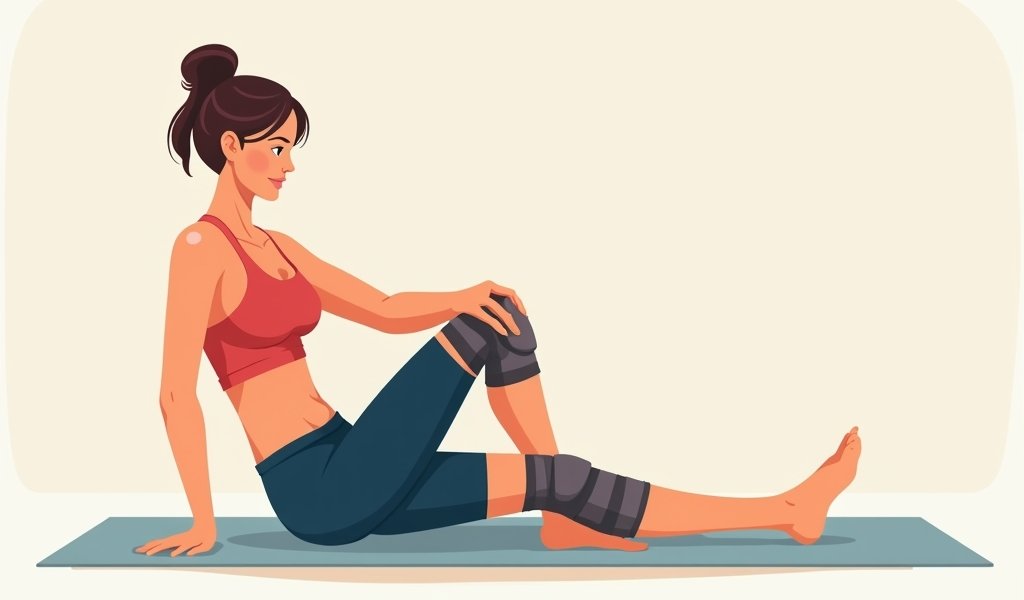
- A neoprene knee sleeve with patella support to improve tracking and reduce pressure on the tendon
- Kinesiology tape applied in a specific pattern to offload the quadriceps tendon (a physical therapist can show you the proper technique)
- Compression wraps to control swelling and provide mild support
When selecting a knee sleeve or brace, look for one that provides moderate support without completely restricting movement. The ideal support should be comfortable enough to wear during daily activities without causing additional discomfort or skin irritation.
Many of my patients find that proper support makes a tremendous difference in their comfort level during the healing process. One patient—a 45-year-old recreational runner—was able to maintain light walking for exercise throughout her recovery by using a combination of kinesiology tape and a lightweight knee sleeve.
Remember that external supports are temporary aids, not permanent solutions. As your tendon heals and strengthens through the rehabilitation process, you’ll gradually reduce reliance on these supports.
Step 4: Progressive Rehabilitation Exercises
This step is absolutely critical for long-term recovery. Without proper rehabilitation, the underlying issues that contributed to your tendonitis will remain, setting you up for recurring problems.
Current research shows that tendons respond best to a progressive loading program that gradually increases stress on the tendon in a controlled way. This approach, known as eccentric training, has shown excellent results in clinical studies on tendon rehabilitation.
Your rehabilitation program should progress through these phases:
- Phase 1 (Weeks 1-2): Isometric exercises like wall sits or gentle quadriceps contractions held for 30-45 seconds
- Phase 2 (Weeks 2-4): Progressive eccentric exercises like slow, controlled step-downs from a small step
- Phase 3 (Weeks 4-8): Functional strengthening with exercises like partial squats, leg presses with light weight, and balance training
- Phase 4 (Weeks 8+): Sport-specific or activity-specific training to prepare for return to full activity
Throughout this process, pay attention to proper form and technique. Quality is far more important than quantity. Start with just 1-2 sets of 8-10 repetitions, gradually increasing as tolerated without provoking pain that persists for hours after exercise.
Don’t forget to address any muscle imbalances that might have contributed to your tendonitis. Proper rehabilitation also includes strengthening the hamstrings, glutes, and core muscles to ensure proper biomechanics during movement.
Incorporating proper nutrition is also vital for tendon healing. Ensuring adequate protein intake and nutrients like vitamin C supports collagen production, while B6 supplements may help with inflammation management in some individuals.
Step 5: Gradual Return to Activity
The final step in treating quadriceps tendonitis is a methodical return to your normal activities or sports. Rushing this phase is a common mistake that can undo weeks of careful rehabilitation.
Follow these guidelines for a successful transition:
- Begin with just 25% of your pre-injury activity level (duration and intensity)
- Increase by no more than 10-15% per week as long as symptoms don’t return
- Incorporate proper warm-up routines before activity (dynamic stretching, light cardio)
- Continue with maintenance strengthening exercises 2-3 times weekly
- Monitor for any return of symptoms and be willing to step back if needed
A return-to-running program, for example, might start with alternating 1 minute of jogging with 4 minutes of walking for a total of 20 minutes. The following week, you might progress to 1:3 ratios, and so on.
Remember that even after symptoms resolve, the remodeling and strengthening of tendon tissue continues for months. Maintaining some level of specific strengthening exercises should become part of your regular fitness routine to prevent recurrence.
One runner I worked with successfully returned to marathon training using this approach after struggling with quadriceps tendonitis for nearly a year. The key was respecting the process and resisting the urge to rush back to high mileage too quickly.
Prevention Strategies
After successfully treating quadriceps tendonitis, the last thing you want is a recurrence. Implementing these preventative measures can significantly reduce your risk:
- Training Modifications: Follow the 10% rule—never increase training volume by more than 10% per week
- Surface Awareness: Vary running surfaces and avoid excessive training on concrete or uphill terrain
- Equipment Evaluation: Ensure proper footwear with adequate support and replace shoes before they’re excessively worn
- Technique Refinement: Work with a coach to optimize movement patterns in your sport
- Regular Strengthening: Maintain quadriceps, hamstring, and hip strength with targeted exercises
- Recovery Prioritization: Schedule regular rest days and deload weeks in your training
Many athletes benefit from incorporating specific tendon-loading exercises into their regular training routine, even when they’re symptom-free. This “tendon conditioning” approach can build resilience against future problems.
When to See a Doctor
While most cases of quadriceps tendonitis respond well to the conservative treatment approach outlined above, some situations warrant professional medical attention. Consider consulting a healthcare provider if:
- You experience severe pain, swelling, or inability to bear weight
- Your symptoms don’t improve after 2-3 weeks of consistent self-care
- You feel or hear a popping sensation accompanied by pain and weakness
- You have a history of rheumatoid arthritis or other inflammatory conditions
- You’re unable to straighten your knee or have significant weakness
A sports medicine physician, physical therapist, or orthopedic specialist can provide advanced diagnostic testing (like ultrasound or MRI) if needed and develop a personalized treatment plan for complicated cases.
Healthcare providers can also offer specialized treatments like extracorporeal shockwave therapy (ESWT) or platelet-rich plasma (PRP) injections for persistent tendonitis, though these approaches are typically considered only after traditional methods have failed.
Conclusion
Treating quadriceps tendonitis successfully requires patience, consistency, and a methodical approach. By following this 5-step guide—rest and activity modification, pain management, proper support, progressive rehabilitation, and gradual return to activity—you can overcome this frustrating condition and return to the activities you love.
Remember that healing tendons takes time, and there are no true shortcuts. The investment you make now in proper rehabilitation will pay dividends in preventing future problems and building resilience in your body.
Throughout your recovery journey, listen to your body’s signals and adjust your approach as needed. Pain is valuable feedback—not an obstacle to push through. With the right approach, quadriceps tendonitis doesn’t have to sideline you permanently.
Ready to take control of your quadriceps tendonitis recovery? Start implementing this 5-step plan today, and consult with a physical therapist or sports medicine doctor for personalized guidance. Your stronger, healthier future self will thank you!
Frequently Asked Questions
How long does it take to recover from quadriceps tendonitis?
Most cases improve within 6-12 weeks with proper treatment. Complete healing and return to full activity may take 3-6 months depending on severity and consistency with rehabilitation.
Can I still exercise with quadriceps tendonitis?
Yes, but you should modify activities to avoid pain. Low-impact exercises like swimming or stationary cycling are often well-tolerated, while jumping and running typically need to be temporarily reduced.
Will I need surgery for quadriceps tendonitis?
Surgery is rarely needed for quadriceps tendonitis. It’s typically only considered after 6+ months of consistent conservative treatment fails or in cases of significant tendon tears.
Is it okay to use a knee brace for quadriceps tendonitis?
A properly fitted knee sleeve or patellar strap can help reduce pain during daily activities. However, braces should be a temporary support while you address the underlying causes through rehabilitation exercises.
What’s the difference between quadriceps tendonitis and patellar tendonitis?
They affect different tendons around the knee—quadriceps tendonitis involves the tendon above the kneecap, while patellar tendonitis affects the tendon below the kneecap connecting to the shin bone. Both respond to similar treatment approaches but require slightly different rehabilitation exercises.