

Overview
Knee tendons are like your joint’s unsung heroes—they silently hold everything together until they snap, and then suddenly they’re all you can talk about at dinner parties. This article presents six targeted exercises (wall sits, straight leg raises, hamstring curls, step-ups, calf raises, and single-leg balance) to strengthen knee tendons, emphasizing the importance of proper form, consistency, and gradual progression for improved joint stability, reduced pain, and enhanced mobility.
Table of Contents
- Understanding Knee Tendons: Function and Importance
- The Benefits of Strengthening Knee Tendons
- Exercise 1: Wall Sits for Tendon Strength
- Exercise 2: Straight Leg Raises for Stability
- Exercise 3: Hamstring Curls for Posterior Knee Support
- Exercise 4: Step-Ups for Functional Strength
- Exercise 5: Calf Raises for Lower Leg Support
- Exercise 6: Single-Leg Balance for Proprioception
- Creating an Effective Tendon Strengthening Routine
- Precautions and Modifications
- Conclusion
- Frequently Asked Questions
Understanding Knee Tendons: Function and Importance
The tendons in knee joints are crucial connective tissues that link your muscles to bones, enabling movement while providing stability. As a physical therapist with over 15 years of experience, I’ve seen firsthand how healthy knee tendons can make the difference between pain-free mobility and chronic discomfort. The major tendons around the knee include the patellar tendon (connecting the kneecap to the shinbone), quadriceps tendon (connecting thigh muscles to the kneecap), and hamstring tendons (linking hamstring muscles to bones below the knee).
These remarkable structures absorb shock, distribute force, and stabilize your knee during everyday activities. Unfortunately, tendons in knee joints often get overlooked until problems arise. Through repetitive strain, aging, or injury, these vital connective tissues can weaken, leading to tendinopathy, tendinitis, or even tears.
The good news? Targeted exercises can significantly strengthen these tendons, enhancing their resilience and promoting better knee health. Unlike muscles that respond quickly to training, tendons adapt more gradually due to their limited blood supply. This makes consistency and proper form essential when working to strengthen tendons in knee joints.
The Benefits of Strengthening Knee Tendons
Dedicating time to strengthen tendons in knee joints offers numerous advantages beyond just avoiding injury. When these connective tissues are robust, they become more efficient at transferring force between muscles and bones, enhancing overall movement quality and athletic performance.
Strong knee tendons provide better joint stability, which is particularly valuable during activities requiring quick directional changes or sudden stops. This added stability can significantly reduce your risk of joint pain that often accompanies menopause and other age-related changes.
For athletes, healthy tendons in knee joints mean improved power output and reduced recovery time between training sessions. For older adults, strengthened tendons contribute to better balance and mobility, reducing fall risk and supporting independence. And for anyone dealing with existing knee issues, properly strengthening these tendons can be a vital component of rehabilitation and pain management.
According to research published in the Journal of Orthopaedic & Sports Physical Therapy, progressive tendon-strengthening exercises can lead to positive structural changes in the tendons themselves, improving their load-bearing capacity and resistance to injury.
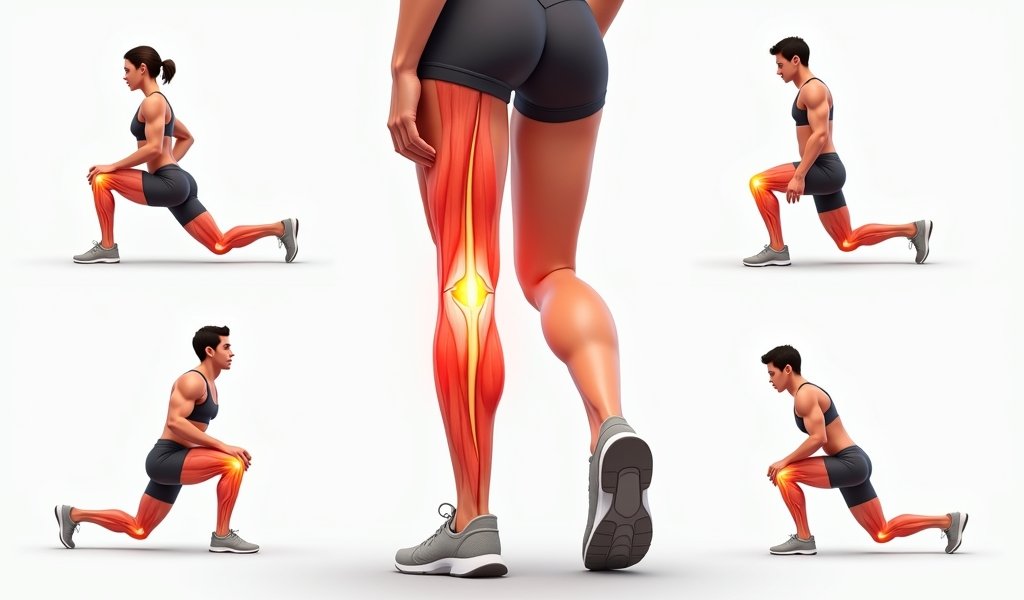
Exercise 1: Wall Sits for Tendon Strength
Wall sits are exceptional for building isometric strength in the tendons in knee joints, particularly the patellar tendon. This exercise creates tension without movement, allowing for controlled loading that tendons respond well to.
To perform a wall sit correctly:
- Stand with your back against a wall, feet shoulder-width apart and about 2 feet from the wall
- Slowly slide your back down the wall until your thighs are parallel to the ground (like sitting in an invisible chair)
- Ensure your knees are directly above your ankles, not pushed forward beyond your toes
- Keep your back flat against the wall and core engaged
- Hold this position for 20-60 seconds, building duration over time
- Return to standing position by pushing through your heels
For beginners, start with 3 sets of 20-second holds with 30 seconds of rest between sets. As you progress, aim for longer holds of up to 60 seconds. The beauty of wall sits is that they create constant tension across the knee tendons without the impact forces that come with dynamic movements, making them ideal for tendon conditioning.
If you experience pain (rather than the normal burning of muscle fatigue), adjust your position or reduce your hold time. Remember, the goal is to strengthen tendons in knee joints progressively, not to cause additional stress.
Exercise 2: Straight Leg Raises for Stability
Straight leg raises specifically target the quadriceps tendon while minimizing stress on the knee joint itself. This makes them particularly valuable for those recovering from knee injuries or dealing with chronic knee pain who still want to strengthen tendons in knee areas.
To perform straight leg raises correctly:
- Lie on your back with one leg extended and the other bent with foot flat on the floor
- Tighten the quadriceps muscle of your straight leg, pressing the back of your knee toward the floor
- Keeping the leg straight, lift it to the height of your opposite bent knee
- Hold at the top for 2-3 seconds, focusing on the contraction
- Lower slowly with control
- Complete 10-15 repetitions before switching legs
The key to maximizing benefits for the tendons in knee joints is maintaining perfect form. Keep your movements slow and controlled, avoiding any swinging or momentum. Focus on the quadriceps contraction throughout the movement.
For progression, you can add ankle weights once you can complete 3 sets of 15 repetitions with perfect form. Start with light weights (1-2 pounds) and increase gradually. The American College of Sports Medicine recommends increasing resistance only when you can perform the current level with proper technique for two consecutive sessions.
Exercise 3: Hamstring Curls for Posterior Knee Support
While much attention goes to the front of the knee, the hamstring tendons at the back play an equally important role in knee stability and function. Hamstring curls specifically target these posterior tendons in knee joints, creating balanced strength around the entire knee.
To perform hamstring curls at home:
- Lie face down on a flat surface (a mat or carpeted floor works well)
- Keep your legs straight and relaxed
- Slowly bend one knee, bringing your heel toward your buttocks
- Focus on using your hamstring muscles rather than momentum
- Hold the contracted position for 2 seconds
- Lower your leg with control
- Complete 12-15 repetitions before switching legs
If you have access to a gym, the seated or lying hamstring curl machines offer additional resistance options. However, for home-based training to strengthen tendons in knee joints, you can use resistance bands or ankle weights to progress this exercise.
For those dealing with joint issues that might benefit from supplements like Laminine, hamstring curls are generally well-tolerated as they don’t place significant compressive forces on the knee joint while still effectively loading the tendons.
According to research published in the Journal of Sports Rehabilitation, balanced strength between quadriceps and hamstrings significantly reduces knee injury risk, making this exercise an essential complement to your anterior knee strengthening work.
Exercise 4: Step-Ups for Functional Strength
Step-ups brilliantly simulate real-world movements while progressively loading the tendons in knee joints. This functional exercise builds strength in a way that directly translates to everyday activities like climbing stairs or hiking.
To perform step-ups properly:
- Stand facing a sturdy step, bench, or box (8-12 inches high to start)
- Place your right foot completely on the step
- Push through your right heel to lift your body up until your right leg is straight
- Bring your left foot up to briefly touch the step (without putting weight on it)
- Lower your left foot back to the floor with control
- Complete 10-12 repetitions before switching legs
The key to targeting the tendons in knee joints effectively is maintaining proper alignment. Your knee should track over your second toe throughout the movement, never caving inward. The majority of your weight should be in your heel rather than your toes, which engages the posterior chain more effectively.
As you progress, you can increase step height or add hand weights to increase resistance. The functional nature of this exercise makes it particularly valuable for athletes and active individuals looking to strengthen tendons in knee joints for improved performance and injury prevention.
Step-ups have been shown to effectively activate both the quadriceps and hamstring muscle groups according to research in the Journal of Strength and Conditioning Research, making them an efficient choice for balanced knee tendon strengthening.
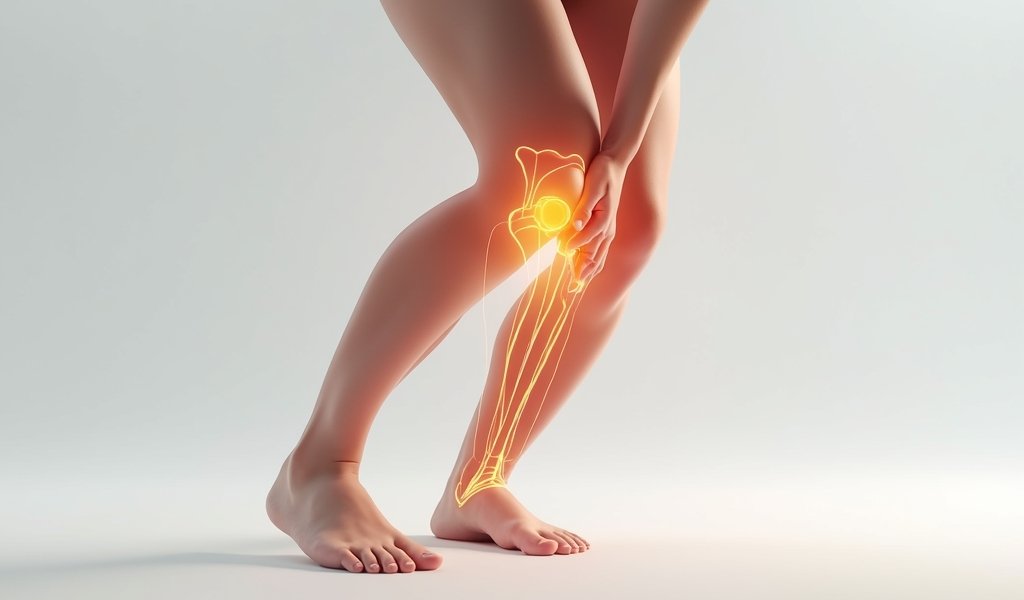
Exercise 5: Calf Raises for Lower Leg Support
While not directly targeting the main tendons in knee joints, calf raises strengthen the gastrocnemius tendon which crosses the back of the knee. This contributes to overall knee stability and function, creating a more integrated support system for the knee.
To perform calf raises correctly:
- Stand with feet hip-width apart near a wall or chair for balance if needed
- Raise your heels off the floor by pushing through the balls of your feet
- Rise as high as possible, feeling the contraction in your calf muscles
- Hold the top position for 2 seconds
- Lower your heels slowly back to the floor
- Complete 15-20 repetitions for 3 sets
To maximize benefits for the tendons, perform this exercise slowly and with control. The eccentric phase (lowering) is particularly important for tendon adaptation, so take 3-4 seconds during this portion of the movement.
As your strength improves, progress to single-leg calf raises. These create greater load on each leg individually, further strengthening the tendons in knee areas and improving balance. For additional challenge, try performing calf raises with your toes elevated on a small step or book, which increases the range of motion.
Those interested in nutritional support like Liquid Gold supplements for joint health might find that combining these supplements with regular calf raises offers comprehensive support for connective tissues throughout the lower leg.
Exercise 6: Single-Leg Balance for Proprioception
Proprioception—your body’s awareness of its position in space—is crucial for protecting tendons in knee joints during movement. Single-leg balance exercises enhance this sense while strengthening the stabilizing muscles and tendons around your knee.
To practice single-leg balance effectively:
- Stand near a counter or wall for safety if needed
- Shift your weight onto one foot and slightly bend the supporting knee
- Lift your other foot off the floor, holding the position
- Maintain a tall posture with your core engaged
- Hold for 30-60 seconds before switching legs
- Perform 3 sets on each leg
What makes this exercise particularly effective for tendons in knee regions is the constant micro-adjustments your body makes to maintain balance. These subtle movements train the tendons to respond quickly to changing forces, improving their resilience in real-world situations.
To progress this exercise, try closing your eyes (which removes visual cues and increases difficulty), standing on an unstable surface like a foam pad, or adding small movements while balancing. According to research published in the International Journal of Sports Physical Therapy, these proprioceptive exercises significantly reduce injury risk by improving neuromuscular control around the knee joint.
Creating an Effective Tendon Strengthening Routine
To effectively strengthen tendons in knee joints, consistency trumps intensity. Unlike muscles, tendons adapt more slowly due to their limited blood supply, so a gradual, persistent approach yields the best results.
Here’s a sample weekly routine to strengthen tendons in knee areas:
- Monday & Thursday: Wall sits, Step-ups, and Single-leg balance
- Tuesday & Friday: Straight leg raises, Hamstring curls, and Calf raises
- Wednesday & Saturday: Light activity like walking or swimming (active recovery)
- Sunday: Complete rest to allow adaptation
For each exercise session, perform 3 sets of each exercise with proper form. Rest 60-90 seconds between sets to allow for recovery. The entire routine should take approximately 20-30 minutes, making it realistic to maintain consistently.
Progressive overload is essential but should be implemented cautiously for tendon health. Increase duration (for holds) or repetitions before adding resistance. A good rule is to increase by no more than 10% each week.
Remember that tendons in knee joints respond best to consistent, moderate loading rather than occasional intense sessions. This patient approach might seem slow, but it produces more sustainable improvements in tendon strength and resilience.
Precautions and Modifications
While strengthening tendons in knee joints is beneficial for most people, certain precautions should be observed, especially if you have existing knee issues or are recovering from injury.
Always begin with a proper warm-up to increase blood flow to the tendons and prepare them for loading. Five minutes of light walking, gentle knee circles, or stationary cycling works well. Cold tendons are more susceptible to injury, so this step shouldn’t be skipped.
Listen carefully to your body during these exercises. While some muscle fatigue is expected and productive, sharp pain in the tendons in knee areas indicates you should stop immediately. The difference between beneficial loading and harmful overloading can be subtle, so err on the side of caution.
For those with arthritis or significant knee pain, consider these modifications:
- Perform wall sits at a higher position (less knee bend)
- Use a lower step height for step-ups
- Reduce the range of motion in hamstring curls
- Add support during balance exercises if needed
If you’re over 50 or have a history of tendon issues, recovery becomes even more important. Allow at least 48 hours between sessions that target the same tendons in knee joints. This gives these tissues adequate time to adapt and strengthen.
When in doubt, consult with a physical therapist who can assess your specific needs and customize exercises to strengthen tendons in knee joints safely and effectively.
Conclusion
Strengthening the tendons in knee joints is a worthwhile investment in your long-term mobility and comfort. These six proven exercises—wall sits, straight leg raises, hamstring curls, step-ups, calf raises, and single-leg balance work—provide a comprehensive approach to building resilient knee tendons that can withstand the demands of daily life and athletic pursuits.
Remember that tendon strengthening is a gradual process that rewards patience and consistency. Unlike muscle building, which can show visible results relatively quickly, improvements in tendon strength might be less obvious but are equally valuable. The real payoff comes in the form of pain-free movement, reduced injury risk, and enhanced performance in all your activities.
By incorporating these exercises into your regular routine, you’re not just addressing the tendons in knee joints in isolation—you’re creating a more integrated, stable, and resilient lower body. Start with the variations that match your current fitness level, progress gradually, and enjoy the benefits of stronger knee tendons for years to come.
Your knees support you through countless steps each day—taking the time to strengthen their tendons is one of the best ways to ensure they continue to serve you well throughout your life’s journey.
Frequently Asked Questions
How long does it take to strengthen tendons in knee joints?
Tendons typically require 6-8 weeks of consistent training to show meaningful improvements in strength. Due to their limited blood supply, tendons adapt more slowly than muscles but maintain strength longer once developed.
Can I strengthen knee tendons if I already have knee pain?
Yes, but you should start with the gentlest exercises like straight leg raises and seek guidance from a physical therapist. Proper form becomes even more crucial when working around existing knee pain.
How often should I do these exercises for optimal tendon strength?
Aim for 2-3 sessions per week with at least 48 hours between sessions targeting the same tendons. This frequency provides sufficient stimulus for adaptation while allowing necessary recovery time.
Are there any supplements that help strengthen tendons?
Some evidence suggests collagen, vitamin C, and certain amino acids may support tendon health when combined with appropriate exercise. Consult with a healthcare provider before starting any supplement regimen.
Can I continue running while working on strengthening my knee tendons?
Yes, but you may need to temporarily reduce running volume or intensity. Gradually reintroduce running as your tendon strength improves, and consider alternating running days with tendon strengthening days.