
Overview
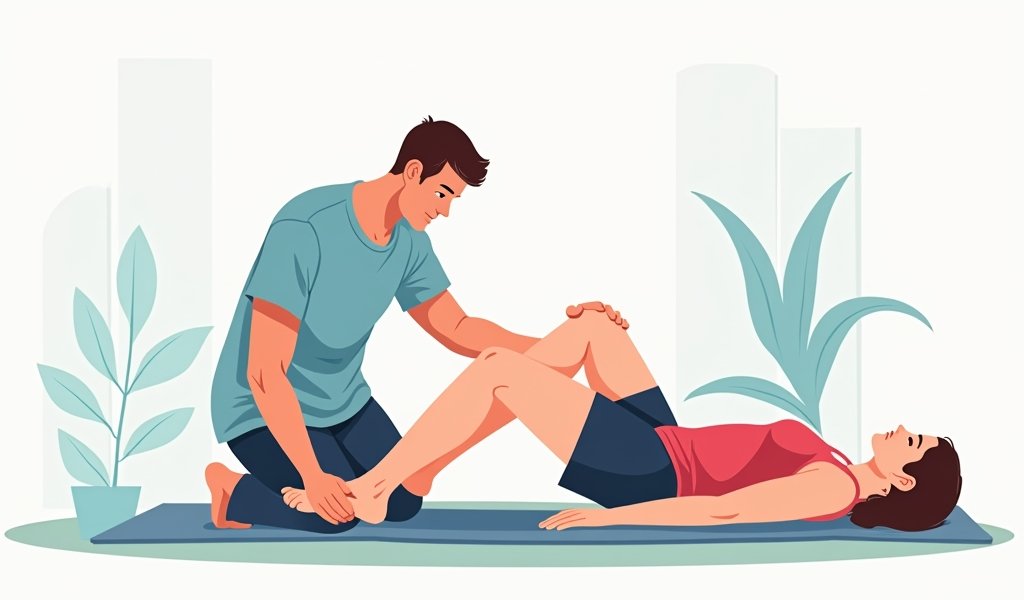
When your Achilles betrays you like a dramatic soap opera villain, recovery follows a five-step approach: immediate RICE treatment (rest, ice, compression, elevation), professional diagnosis, gentle rehabilitation exercises, progressive strengthening, and careful return to activity. This methodical rehabilitation process, typically spanning 4-8 weeks for slight tears, emphasizes patient-guided movement progression using the “traffic light” pain monitoring system, with continued maintenance exercises recommended to prevent future injuries.
Table of Contents
- Understanding Slight Achilles Tear
- Step 1: Immediate Response (RICE Method)
- Step 2: Professional Assessment and Diagnosis
- Step 3: Gentle Rehabilitation Exercises
- Step 4: Progressive Strengthening Program
- Step 5: Gradual Return to Activity
- Preventing Future Injuries
- Conclusion
- Frequently Asked Questions
Understanding Slight Achilles Tear
That dreaded twinge in your heel can stop you in your tracks. A slight Achilles tear, while not as dramatic as a complete rupture, is still enough to sideline your daily routine and athletic pursuits. As a physical therapist who’s helped countless patients through this recovery process, I can tell you that understanding what’s happening is your first step toward healing.
The Achilles tendon connects your calf muscles to your heel bone, making it possible for you to walk, run, and jump. When some of the fibers in this crucial tendon become damaged but the tendon remains largely intact, that’s what we call a slight tear or partial tear.
Typical symptoms include mild to moderate pain at the back of your ankle, especially during physical activity. You might notice tenderness when touching the area, some swelling, and a feeling of stiffness that’s often worst first thing in the morning. Unlike a complete rupture, you can still walk—albeit uncomfortably—and you probably didn’t hear the notorious “pop” sound that accompanies more severe injuries.
The good news? With proper care, most slight Achilles tears heal well. The challenge lies in the tendon’s naturally poor blood supply, which can slow the healing process. That’s why a strategic approach to recovery is essential for getting back on your feet quickly and safely.

Step 1: Immediate Response (RICE Method)
When you first notice that telltale Achilles pain, quick action can dramatically reduce your recovery time. Think of it as damage control—the sooner you implement the right measures, the less clean-up you’ll need to do later.
The tried-and-true RICE protocol remains your best first-line defense:
- Rest: Take a load off that injured tendon! Continuing to push through pain is like ignoring the check engine light on your car—it only leads to bigger problems. Minimize walking and completely avoid activities that cause pain. For more severe cases, crutches might be necessary for a few days.
- Ice: Cold therapy is your friend in the first 48-72 hours after injury. Apply ice to the affected area for 15-20 minutes every 2-3 hours. A frozen water bottle rolled under your foot can provide targeted cold therapy while gently stretching the tendon—a two-for-one approach we often recommend at our integrated wellness center.
- Compression: A gentle compression bandage helps control swelling and provides mild support. Wrap your ankle and lower leg with an elastic bandage, starting at the foot and working upward. It should feel snug but not tight enough to cause discomfort or restrict circulation.
- Elevation: Keep that injured leg elevated above heart level whenever possible to help reduce swelling. This allows fluid to drain away from the injury site rather than pooling around your already irritated tendon.
While RICE is excellent first aid, it’s important to recognize that this is just the beginning of your recovery journey. Think of it as laying the groundwork for the healing that’s to come, not the entire solution.
During this initial phase, over-the-counter pain relievers like ibuprofen can help manage discomfort and reduce inflammation. However, some research suggests limiting anti-inflammatory medications to just the first 48 hours, as some inflammation is actually a necessary part of the healing process.
Step 2: Professional Assessment and Diagnosis
After implementing immediate care measures, getting a proper diagnosis is crucial. While Dr. Google might seem convenient, nothing replaces a hands-on assessment from a healthcare professional who can accurately determine the extent of your injury.
When should you see a doctor? If you can’t bear weight on the affected leg, if the pain is severe or doesn’t improve after a few days of RICE, or if swelling is significant, it’s time to make an appointment. Even with milder symptoms, a professional evaluation can help you avoid weeks of inappropriate self-treatment.
Your healthcare provider will likely perform a physical examination, checking for tenderness, swelling, and range of motion. They might also ask you to perform specific movements to assess functionality. For a more detailed look, they might recommend imaging tests:
- Ultrasound: This non-invasive imaging technique can visualize the tendon’s structure and identify partial tears.
- MRI: For more complex cases, magnetic resonance imaging provides detailed views of soft tissue damage.
The diagnosis will help determine the severity of your tear and guide your treatment plan. A Grade 1 strain indicates minimal damage to a few fibers, while a Grade 2 partial tear involves more significant damage but still leaves the tendon intact. A Grade 3 tear (complete rupture) typically requires surgical intervention and falls outside the scope of this article.
During your appointment, don’t hesitate to ask questions about your specific injury, expected recovery timeline, and any activities you should avoid. This information will be invaluable as you progress through the healing process.
Many patients find that consulting with a physical wellness specialist early in their recovery can provide a clear roadmap for rehabilitation and prevent setbacks. According to a study published in the Journal of Orthopaedic & Sports Physical Therapy, early intervention with appropriate exercises significantly improves outcomes for Achilles tendon injuries.
Step 3: Gentle Rehabilitation Exercises
Once acute pain and swelling have subsided—typically after 3-7 days—it’s time to introduce gentle movement. This phase is about finding the sweet spot: too little movement leads to stiffness and weakness, while too much too soon can aggravate the injury.
Start with pain-free range of motion exercises, gradually increasing intensity as comfort allows. Here are three effective starter exercises:
- Ankle Alphabets: Sit with your leg extended and trace the alphabet with your foot, moving only at the ankle. This gentle exercise improves mobility in all directions without placing stress on the healing tendon.
- Towel Stretch: While seated with your leg straight, loop a towel around your foot and gently pull toward you, creating a mild stretch in your calf and Achilles. Hold for 15-30 seconds and repeat 3 times.
- Gentle Isometrics: Press your foot against an immovable surface (like a wall) with minimal force. Hold for 5-10 seconds, relax, and repeat 10 times. This activates the muscle-tendon unit without creating movement that could stress the healing fibers.
During this phase, pain is your guide. Use what I call the “traffic light” approach:
- Green zone: No pain or minimal discomfort that doesn’t increase during or after exercise—proceed confidently.
- Yellow zone: Mild pain that subsides quickly—exercise with caution and perhaps reduce intensity.
- Red zone: Sharp or increasing pain—stop immediately and return to more basic movements.
Remember, rehabilitation is not about pushing through pain—it’s about finding the therapeutic edge where healing is stimulated without causing further damage. Think of yourself as a gardener nurturing a seedling, not a bulldozer clearing a path.
As a recent systematic review demonstrated, controlled early movement promotes collagen fiber alignment during healing, resulting in stronger repair than immobilization alone. This scientific finding confirms what we see clinically: tendons heal better when they’re appropriately challenged during recovery.
Step 4: Progressive Strengthening Program
After 1-2 weeks of gentle rehabilitation (timing varies based on your healing progress), it’s time to introduce strengthening exercises. This phase is crucial for rebuilding the resilience of your Achilles tendon and supporting musculature.
You’re ready for strengthening when you can perform basic stretches with minimal discomfort, walking is relatively pain-free, and swelling has significantly decreased. Here’s a progressive approach that has worked wonders for my patients:
- Seated Heel Raises: Sit with feet flat on the floor and lift your heels while keeping toes down. Hold for 3 seconds, then lower. Start with 2 sets of 10 repetitions, gradually increasing to 3 sets of 15 as strength improves.
- Standing Double-Leg Heel Raises: Hold onto a counter for stability and rise onto your tiptoes using both legs, then lower slowly. Aim for 3 sets of 10-15 repetitions.
- Resistance Band Exercises: Using a resistance band around your foot, gently push your foot away from your body, then control its return. Perform in all four directions—pointing toes, pulling toes toward shin, and moving foot inward and outward. Complete 2-3 sets of 10 repetitions in each direction.
- Eccentric Heel Drops: This advanced exercise should only be attempted after mastering the basics. Standing on a step with heels hanging off, rise up on both toes, then lower yourself slowly using only the injured foot. Start with 2 sets of 8-10 repetitions, progressing to 3 sets of 15.
Eccentric exercises—where the muscle lengthens under tension—have shown particularly promising results for Achilles rehabilitation. According to research published in the Journal of Orthopaedic & Sports Physical Therapy, eccentric training can significantly improve tendon structure and function when implemented appropriately.
The key to successful strengthening is progressive overload—gradually increasing demands on the tendon as it heals. Increase intensity by no more than 10% per week, whether that’s adding more repetitions, sets, or resistance.
Throughout this phase, continue to monitor pain levels using our traffic light system. Some mild discomfort during exercise is expected, but pain shouldn’t persist after you’ve finished, and you shouldn’t wake up the next morning with increased symptoms.

Step 5: Gradual Return to Activity
The moment you’ve been waiting for! Typically occurring 4-8 weeks after the initial injury (for slight tears), this phase should be approached with strategic patience. Rushing back to full activity is the most common reason I see patients with recurring Achilles problems.
A successful return-to-activity plan follows a progressive pattern that might look something like this:
- Week 1: Begin with longer walking distances on flat surfaces
- Week 2: Introduce short intervals of very light jogging interspersed with walking
- Week 3: Gradually increase jogging duration and incorporate gentle directional changes
- Week 4: Begin sport-specific movements at reduced intensity
- Weeks 5-6: Progressively increase intensity toward normal activity levels
This timeline is approximate—your body will provide feedback about the appropriate pace. Signs you’re ready to progress include completing the current activity level without pain, minimal or no morning stiffness, and confidence in your Achilles during movement.
During this transition phase, supportive equipment can provide an extra layer of protection. Consider:
- Shoes with proper arch support and cushioned heels to reduce strain on the Achilles
- Temporary heel lifts that can be gradually removed as your tendon adapts
- Compression sleeves for additional support during more demanding activities
- Athletic tape for specific activities with higher demands on the tendon
Remember that returning to full activity doesn’t mean your healing journey is complete. The remodeling phase of tendon healing continues for months after symptoms have resolved. Continuing with maintenance exercises and avoiding sudden increases in training intensity remains important for long-term tendon health.
Many of my patients benefit from following the holistic approach to wellness during this phase, considering not just the physical demands but also ensuring proper nutrition, adequate sleep, and stress management to support optimal tissue healing.
Preventing Future Injuries
An Achilles injury is often a wake-up call—your body’s way of sending a registered letter saying, “We need to talk about how you’re treating me.” Taking this message to heart can help you prevent future problems.
Incorporate these maintenance exercises into your regular routine:
- Calf stretching and strengthening: Regular heel raises and calf stretches keep the muscle-tendon unit supple and strong.
- Balance exercises: Single-leg standing improves proprioception and coordination, reducing injury risk.
- Core strengthening: A stable core improves overall movement patterns and reduces strain on extremities.
Lifestyle adjustments can significantly impact tendon health:
- Hydration: Tendons need adequate water to maintain elasticity.
- Nutrition: Collagen-rich foods and vitamin C support tendon healing and strength.
- Recovery time: Ensure adequate rest between intense workouts to allow tissue adaptation.
- Footwear: Replace athletic shoes regularly and choose options appropriate for your foot type and activity.
Pay attention to warning signs of potential re-injury, including returning morning stiffness, pain during or after activity, tenderness when pressing on the tendon, or visible thickening of the tendon. These symptoms suggest your Achilles is under stress and may benefit from modified activity and renewed attention to your rehabilitation exercises.
According to research in the British Journal of Sports Medicine, consistent implementation of preventative exercises can reduce the risk of Achilles tendon injuries by up to 50% in athletic populations—making those few minutes of daily maintenance well worth your time.
Conclusion
Recovering from a slight Achilles tear doesn’t have to be a marathon of frustration. With the right approach—immediate RICE treatment, appropriate professional guidance, gentle rehabilitation, progressive strengthening, and a strategic return to activity—you can navigate this healing journey efficiently and effectively.
Remember that healing timelines vary based on individual factors including age, overall health, and injury severity. What remains constant is the importance of respecting the healing process and giving your body the time it needs to rebuild this crucial tendon properly.
Throughout my years helping patients recover from Achilles injuries, I’ve witnessed remarkable comebacks from what initially seemed like activity-ending setbacks. Your Achilles can heal—and with proper care, it can return stronger and more resilient than before.
The key lies in balancing patience with persistence, listening to your body while gently challenging it, and focusing not just on healing the injury but on building a foundation for better movement in the future. By following these five proven steps, you’re not just recovering from a slight Achilles tear—you’re paving the way for healthier, more resilient movement for years to come.
Frequently Asked Questions
How long does it take to recover from a slight Achilles tear?
Most slight Achilles tears heal within 4-8 weeks with proper treatment. The exact timeline depends on the severity of the tear, your age, overall health, and how well you follow the rehabilitation protocol.
Can I still walk with a slight Achilles tear?
Yes, most people can still walk with a slight Achilles tear, though you’ll likely experience discomfort. Minimize walking during the initial healing phase and avoid activities that increase pain.
Do I need surgery for a slight Achilles tear?
Surgery is rarely needed for slight Achilles tears or partial tears. Conservative treatment with rest, rehabilitation exercises, and gradual return to activity is usually effective for these injuries.
How can I tell if my Achilles tear is slight or severe?
A slight tear typically causes pain, mild swelling, and discomfort but still allows you to walk and move your foot. Severe tears or complete ruptures usually cause sudden, severe pain, an audible “pop,” significant weakness, and inability to stand on tiptoes.
Can I continue running with a slight Achilles tear?
Running with a slight Achilles tear is not recommended during the initial healing phase. After appropriate rehabilitation and when pain-free, you can gradually return to running following a structured progression plan.