

Overview
The Paleo diet meal plan focuses on whole, unprocessed foods that mimic ancestral eating patterns by eliminating grains, legumes, dairy, and refined sugars while emphasizing quality proteins, vegetables, healthy fats, and limited fruits and nuts. This nutritional approach aims to improve health markers like blood sugar control and inflammation while offering practical strategies for meal planning, grocery shopping, and overcoming common challenges to create a sustainable eating pattern.
Table of Contents
- Understanding the Paleo Diet: Back to Our Roots
- Key Benefits of Following a Paleo Meal Plan
- Structure of an Effective Paleo Diet Meal Plan
- Energizing Paleo Breakfast Options
- Satisfying Lunches and Dinners on the Paleo Diet
- Smart Paleo Snack Ideas
- Paleo Shopping Guide: Navigating the Grocery Store
- Meal Prep Strategies for Paleo Success
- Overcoming Common Challenges on the Paleo Diet
- Conclusion: Is a Paleo Diet Meal Plan Right for You?
- Frequently Asked Questions
Understanding the Paleo Diet: Back to Our Roots
The paleo diet meal plan draws inspiration from our ancient ancestors, focusing on foods that humans presumably consumed during the Paleolithic era. This nutritional approach emphasizes whole, unprocessed foods while eliminating grains, legumes, dairy, and refined sugars – essentially anything unavailable to our hunter-gatherer predecessors.
As a nutritionist who’s worked with hundreds of clients exploring various dietary approaches, I’ve seen remarkable transformations when people adopt a well-structured paleo diet meal plan. This isn’t simply about mimicking caveman eating habits; it’s about reconnecting with nutrient-dense, natural foods that our bodies are biologically adapted to process.
The core philosophy centers around consuming foods that support optimal health through evolutionary compatibility. By eliminating modern processed foods and agricultural products, proponents believe we can avoid many contemporary health issues linked to the Western diet. Research published in the Journal of Clinical Nutrition suggests that adopting paleolithic nutrition patterns may improve various biomarkers related to chronic disease.
Key Benefits of Following a Paleo Meal Plan
Implementing a paleo diet meal plan offers numerous potential benefits beyond simple weight management. Let’s explore what scientific research and clinical experience reveal about this ancestral eating pattern:
- Improved blood lipids, including reduced triglycerides and increased HDL cholesterol
- Better blood sugar control and enhanced insulin sensitivity
- Reduced inflammation and oxidative stress
- Natural appetite regulation through increased protein and fat intake
- Potential improvements in autoimmune conditions and digestive health
- Elimination of potential food sensitivities common with modern processed foods
Many of my clients report increased energy levels within just 10-14 days of transitioning to a paleo approach. The elimination of blood sugar spikes and crashes often leads to more consistent energy throughout the day. This stabilization effect is particularly noticeable for those previously consuming high-carbohydrate, processed diets.
Furthermore, the emphasis on quality protein and healthy fats supports lean muscle maintenance during weight loss. A study in the journal Nutrients found that paleo diet adherents demonstrated improved body composition compared to those following conventional dietary recommendations.

Structure of an Effective Paleo Diet Meal Plan
Creating a sustainable paleo diet meal plan requires thoughtful structure rather than simply eliminating food groups. The foundation should include adequate protein, healthy fats, and abundant vegetables, with occasional fruits and nuts.
A well-designed weekly paleo meal plan typically includes:
- 4-6 ounces of quality protein per meal (grass-fed meat, wild-caught fish, pasture-raised poultry and eggs)
- 2-3 cups of non-starchy vegetables per meal
- 1-2 tablespoons of healthy fats (olive oil, avocado oil, coconut oil)
- Limited portions of fruits, nuts, and seeds
- Abundant herbs and spices for flavor complexity
Meal timing follows natural hunger patterns rather than arbitrary schedules. Some paleo adherents naturally drift toward intermittent fasting patterns, while others prefer three structured meals. Both approaches can be effective when customized to individual needs and lifestyle factors.
The key to success lies in adaptation. Your paleo diet meal plan should evolve based on your energy needs, activity level, and health goals. Athletes may require more carbohydrates from starchy vegetables and fruits, while those seeking weight loss might emphasize protein and non-starchy vegetables.
Energizing Paleo Breakfast Options
Breakfast on a paleo diet meal plan breaks free from conventional grain-based options, opening up creative alternatives that provide sustained energy. These morning meals prioritize protein and healthy fats to support stable blood sugar and lasting satiety.
Try these paleo-friendly breakfast ideas:
- Vegetable frittata with leftover protein (prepare ahead for busy mornings)
- Coconut yogurt parfait with berries, sliced almonds, and a drizzle of raw honey
- Sweet potato hash with diced vegetables and fried eggs
- Smoothie bowl with coconut milk, frozen berries, avocado, and collagen peptides
- Grain-free “noatmeal” made with ground nuts, coconut flakes, and chia seeds
For those transitioning from carb-heavy breakfasts, the adjustment period may take 1-2 weeks. Be patient with your body as it adapts to utilizing fat for morning energy rather than quick-burning carbohydrates. Many clients report that morning brain fog lifts and energy levels stabilize once this adaptation occurs.
Preparation is crucial for successful paleo breakfasts. Consider batch cooking egg cups, preparing chia puddings overnight, or having portable options ready for hectic mornings. This prevents falling back on convenient but non-compliant choices when pressed for time.
Satisfying Lunches and Dinners on the Paleo Diet
Lunch and dinner in a paleo diet meal plan feature simple yet satisfying combinations of quality proteins, non-starchy vegetables, and healthy fats. These meals should leave you feeling nourished rather than stuffed or craving additional foods shortly after eating.
For lunch, consider these options that work well for home or office:
- Large salads topped with grilled chicken, avocado, and olive oil dressing
- Lettuce wraps filled with ground meat, chopped vegetables, and guacamole
- Leftover protein with roasted vegetables and tahini sauce
- Seafood ceviche with citrus, avocado, and plantain chips
- Bone broth soup with added protein and vegetables
Dinner options can be equally simple or more elaborate depending on your schedule:
- One-pan roasted protein with seasonal vegetables
- Zucchini noodles with bolognese sauce (made with quality ground meat)
- Grilled fish with cauliflower “rice” pilaf and roasted brussels sprouts
- Slow-cooker stews with bone broth, meat, and root vegetables
- Stuffed bell peppers with seasoned ground meat and tomato sauce
Batch cooking becomes your greatest ally for weekday success. Dedicate 1-2 hours on weekends to prepare protein options, chop vegetables, and assemble components that can be mixed and matched throughout the week. This approach dramatically increases adherence to your paleo diet meal plan during busy periods.
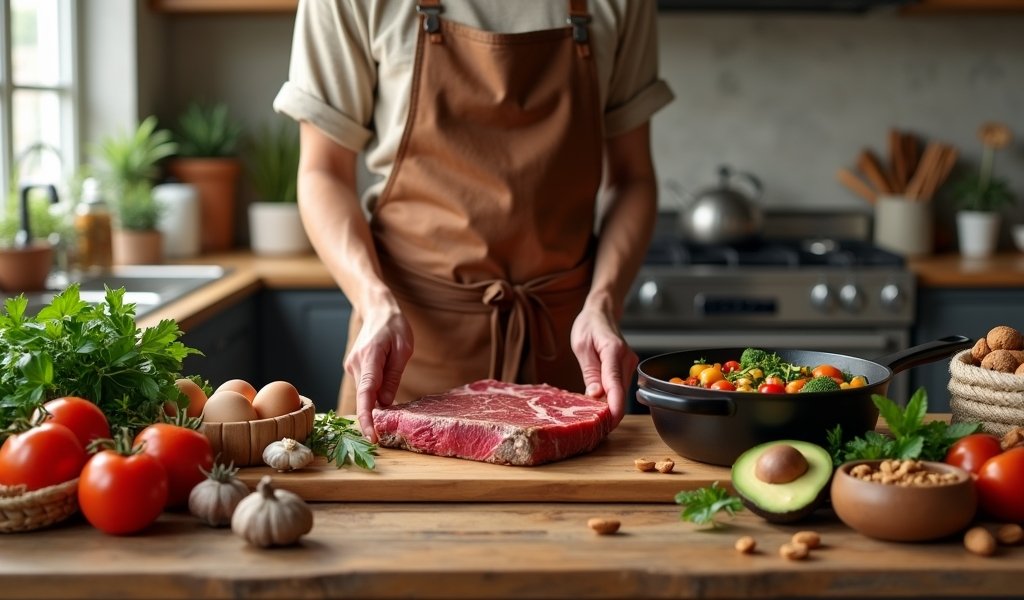
Smart Paleo Snack Ideas
Ideally, balanced paleo meals should provide enough satiety to eliminate the need for frequent snacking. However, strategic snacks can bridge longer gaps between meals, fuel workouts, or support higher caloric needs. The key is choosing options that maintain blood sugar stability rather than triggering energy crashes.
Convenient paleo-friendly snacks include:
- Hard-boiled eggs with sea salt and avocado
- Apple slices with almond butter
- Beef or turkey jerky (without added sugars or preservatives)
- Small handful of mixed nuts and dried berries
- Celery sticks with guacamole
- Olives and compliant deli meat roll-ups
- Coconut yogurt with cinnamon and berries
When selecting packaged snack options, scrutinize ingredient lists carefully. Many products labeled “paleo” still contain questionable additives or sweeteners. Remember that simplicity usually indicates better alignment with true paleo principles.
For those with higher energy needs, don’t hesitate to include mini-meals rather than traditional snacks. A small portion of leftover dinner often provides better nutrition than packaged snack options and helps maintain your connection to real, whole foods.
Paleo Shopping Guide: Navigating the Grocery Store
Successfully implementing your paleo diet meal plan begins with strategic shopping. The perimeter of most grocery stores contains the majority of paleo-friendly options – produce, meat, and seafood sections – while the interior aisles require more selective navigation.
Prioritize these foods on your shopping list:
- Quality proteins: grass-fed beef, pasture-raised poultry, wild-caught fish, organic eggs
- Vegetables: focus on variety and seasonality for nutrient diversity
- Healthy fats: avocados, olives, coconut products, nuts, seeds, and their oils
- Fruits: primarily berries and lower-sugar options
- Herbs and spices: these add flavor complexity without additives
Consider sourcing options beyond conventional grocery stores. Farmers markets, community supported agriculture (CSA) programs, and direct-from-farm purchasing often provide higher quality options at competitive prices. Many clients find that the increased food quality justifies any additional cost through improved satiety and reduced snacking.
For pantry staples, seek out minimally processed options. Coconut aminos can replace soy sauce, arrowroot powder works as a thickener instead of cornstarch, and almond flour provides a grain-free baking alternative. These substitutions maintain the spirit of paleo eating while allowing culinary creativity.
Meal Prep Strategies for Paleo Success
Consistent meal preparation becomes the cornerstone of long-term success with your paleo diet meal plan. Without preparation, even the most committed individuals eventually succumb to convenience foods during busy periods.
Implement these meal prep strategies:
- Dedicate 2-3 hours weekly for batch cooking proteins and chopping vegetables
- Prepare versatile components rather than fully assembled meals for greater variety
- Utilize freezer storage for portioned proteins and paleo-friendly soups/stews
- Pre-portion snacks and portable options for busy days
- Keep a “paleo emergency kit” at work containing shelf-stable options
Kitchen tools that streamline paleo cooking include slow cookers, pressure cookers, food processors, and quality storage containers. These investments quickly pay dividends through time savings and reduced food waste.
Remember that meal prep doesn’t require culinary expertise. Simple proteins with basic seasonings, roasted vegetables, and easy sauces create the foundation for numerous meal combinations. Focus on mastering a few techniques rather than complicated recipes when beginning your paleo journey.
Overcoming Common Challenges on the Paleo Diet
Even the most well-designed paleo diet meal plan encounters obstacles. Addressing these challenges proactively prevents temporary setbacks from derailing your progress.
Social situations often present the greatest difficulty. Consider these strategies:
- Review restaurant menus before dining out to identify paleo-friendly options
- Eat a small protein-rich snack before attending functions with limited food choices
- Offer to bring a shareable dish to gatherings that aligns with your paleo approach
- Focus on the social connection rather than food as the primary purpose of gatherings
Family resistance can undermine consistency. Instead of forcing household-wide adoption, showcase the deliciousness of paleo meals while maintaining alternatives for family members. Many clients report that family skeptics gradually incorporate more paleo elements as they experience the flavorful options.
Initial adaptation symptoms, sometimes called “paleo flu,” may include fatigue, headaches, or cravings during the first 7-14 days. These temporary effects signal your body’s transition from carbohydrate to fat metabolism. Staying hydrated, ensuring adequate sodium intake, and gradually reducing carbohydrates can minimize these symptoms.
Remember that sustainable implementation matters more than perfect adherence. The 85/15 approach (following paleo principles 85% of the time) allows flexibility for special occasions while maintaining health benefits. This balanced perspective prevents the all-or-nothing thinking that undermines long-term success.
Conclusion: Is a Paleo Diet Meal Plan Right for You?
The paleo diet meal plan offers a compelling framework for reconnecting with whole, nutrient-dense foods while eliminating many modern dietary pitfalls. Its emphasis on quality protein, abundant vegetables, and natural fats creates a solid nutritional foundation that many find transformative for energy, body composition, and overall wellbeing.
However, like any nutritional approach, success depends on personalization and sustainability. Rather than viewing paleo as a rigid set of rules, consider it a template that guides food choices while allowing adaptation to your unique needs, preferences, and lifestyle factors.
Begin with a 30-day structured implementation to experience the potential benefits firsthand. This trial period provides sufficient time to move beyond initial adaptation challenges and assess genuine impacts on your energy, sleep, digestion, and other biomarkers.
Remember that evolution – both human and dietary – involves ongoing adaptation. The most successful paleo practitioners maintain core principles while incorporating new scientific understanding and personal observations. This balanced approach transforms the paleo diet meal plan from a temporary intervention into a sustainable lifestyle that supports long-term health.
Frequently Asked Questions
What foods are strictly prohibited on a paleo diet meal plan?
Grains, legumes, dairy, refined sugars, and highly processed foods are eliminated on a standard paleo diet. These foods were unavailable to our Paleolithic ancestors and are considered evolutionarily mismatched to human physiology.
Can I lose weight effectively on a paleo diet meal plan?
Yes, many people experience significant weight loss by following a paleo approach. The diet naturally reduces caloric intake through improved satiety and elimination of calorie-dense processed foods.
How strict do I need to be for the paleo diet to work?
Most people achieve significant benefits with an 80-90% adherence level. Perfect compliance isn’t necessary for results, though a stricter approach during the initial adaptation phase (first 30 days) often provides clearer insights into personal food responses.
Is the paleo diet meal plan suitable for athletes?
Yes, but active individuals may need modifications, particularly more carbohydrates from fruits and starchy vegetables. Strategic carbohydrate timing around workouts helps optimize performance while maintaining paleo principles.
How expensive is following a paleo diet meal plan?
While quality proteins and organic produce can increase grocery costs, many find that reduced snacking and dining out offset these expenses. Strategic shopping, bulk purchasing, and focusing on seasonal foods can make paleo eating quite economical.