

Overview
Who knew the secret to modern wellness might be hiding under a wide-brimmed hat? This article explores ten evidence-based health principles from the Mennonite lifestyle—including natural movement through daily work, community accountability, wholesome nutrition, mindful eating, seasonal living, simple living for stress reduction, nature connection, natural sleep patterns, technology boundaries, and purpose-driven physical activity—that can be adapted to contemporary life for sustainable wellbeing.
Table of Contents
- Introduction to Mennonite Lifestyle Fitness
- Natural Movement Through Daily Work
- Community-Based Accountability
- Wholesome, Home-Prepared Nutrition
- Mindful Eating Practices
- Seasonal Living and Eating
- Simple Living Reduces Stress
- Connection to Nature and Outdoor Activity
- Early Rising and Natural Sleep Patterns
- Technology Boundaries for Mental Wellness
- Purpose-Driven Physical Activity
- Bringing Mennonite Wisdom Into Modern Life
- Frequently Asked Questions
Introduction to Mennonite Lifestyle Fitness
In our endless pursuit of the next fitness breakthrough, we often overlook wisdom hiding in plain sight. The Mennonite lifestyle, though not deliberately designed as a health regimen, offers remarkable wellness benefits that align perfectly with modern health science.
As a health professional who’s studied various cultural approaches to wellness, I’ve been fascinated by how the Mennonite lifestyle naturally incorporates what we now consider “best practices” in health maintenance. Their approach isn’t about chasing aesthetics or following rigid programs – it’s about living in harmony with nature, community, and purpose.
The beauty of these Mennonite lifestyle principles is their sustainability. Unlike trendy 30-day challenges that fade as quickly as they appear, these practices have sustained communities for generations. They represent a holistic approach to wellness that addresses physical, mental, and spiritual health simultaneously.
Let’s explore ten evidence-based “fitness hacks” we can adapt from the Mennonite lifestyle – no barn-raising skills required (though that would certainly count as cross-training!).
Natural Movement Through Daily Work
The Mennonite approach to physical activity doesn’t involve dedicated “workout time” – movement is seamlessly integrated throughout the day. Traditional communities naturally engage in what fitness experts now call “functional fitness” – practical movements that serve real-life purposes.
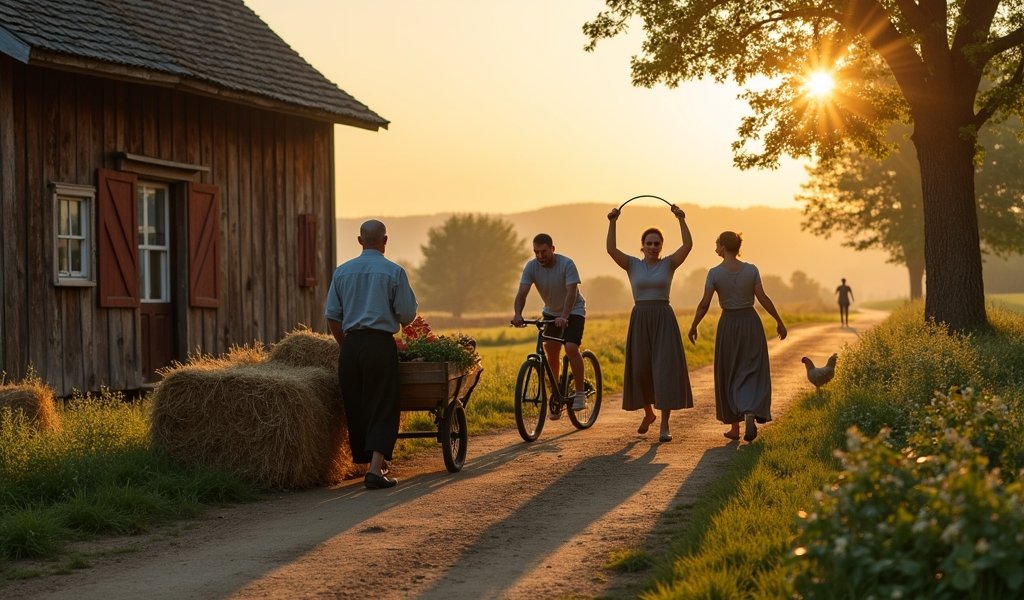
Research from the Harvard Medical School confirms that functional movements improve quality of life and reduce injury risk more effectively than isolated exercises. The Mennonite lifestyle incorporates this naturally – from gardening to handcrafts to building projects.
Here’s how to incorporate natural movement into modern life:
- Choose manual options over automated ones (push mowers, hand mixers, raking)
- Stand and move while on phone calls
- Create “movement snacks” throughout your day – short bursts of activity between tasks
- Walk or cycle for errands when possible
- Split household chores into daily segments rather than marathon cleaning sessions
This approach turns everyday activities into fitness opportunities. I’ve found that clients who adopt this mindset often maintain consistent activity levels long after those with rigid gym schedules have fallen off track. By viewing movement as life-enhancing rather than time-consuming, you’ll naturally become more active.
Community-Based Accountability
Perhaps the most powerful aspect of Mennonite wellness is its community foundation. Traditional Mennonites don’t pursue health as isolated individuals – they work, eat, and live in tight-knit communities where accountability happens naturally.
The power of community support for health goals can’t be overstated. A landmark study published in the New England Journal of Medicine found that health behaviors spread through social networks – we’re significantly influenced by those around us.
How to create community accountability in modern life:
- Join a walking or running group that meets regularly
- Schedule standing active dates with friends (Sunday hikes, Tuesday tennis)
- Participate in community gardens or food co-ops
- Find a workout buddy with compatible goals
- Use technology to create virtual accountability with distant friends
- Join community projects that require physical work
I’ve seen remarkable transformations when people shift from solo health pursuits to community-supported ones. One client who struggled with consistency for years finally maintained her walking routine after joining a neighborhood “sunrise strollers” group – the social connection provided motivation her fitness tracker never could.
Wholesome, Home-Prepared Nutrition
Long before “clean eating” became trendy, Mennonites were practicing it out of necessity and tradition. Their approach to food is refreshingly straightforward: eat whole foods, prepare them simply, and waste nothing.
This aligns perfectly with contemporary minimalist lifestyle principles and nutrition science. Research consistently shows that diets centered around unprocessed foods reduce inflammation and chronic disease risk while supporting optimal energy levels.
How to adopt Mennonite-inspired nutrition:
- Cook one extra portion at dinner to provide lunch the next day
- Learn basic food preservation techniques (freezing, canning, fermenting)
- Establish a small kitchen garden, even if it’s just herbs on a windowsill
- Create a weekly meal preparation routine
- Shop predominantly from the perimeter of grocery stores
- Replace one processed convenience food with a homemade version each week
The key insight from Mennonite nutrition isn’t just what they eat, but their relationship with food. Food preparation is viewed as meaningful work rather than a chore to be minimized. This mindset transforms cooking from a burden into a form of self-care and connection.
Mindful Eating Practices
Mealtime in traditional Mennonite communities isn’t rushed or distracted. Meals often begin with silence or prayer, creating natural mindfulness. Families eat together, focusing on the food and conversation rather than screens.
Modern research validates this approach. According to studies published in the American Journal of Clinical Nutrition, mindful eating leads to better digestion, greater satisfaction with smaller portions, and improved metabolic response to meals.
How to practice Mennonite-inspired mindful eating:
- Begin meals with a moment of gratitude or reflection
- Turn off all screens during mealtimes
- Set regular family or community meal times
- Use smaller plates to naturally moderate portions
- Take time to actually taste your food
- Sit down for proper meals rather than eating while multitasking
I’ve found that clients who adopt mindful eating practices often report not just better digestion but a renewed enjoyment of food. One client described it as “rediscovering the taste of things I’ve been eating for years.” This deeper satisfaction often naturally leads to more moderate consumption.
Seasonal Living and Eating

Mennonites traditionally live in harmony with natural seasons, adapting their work, activities, and diets accordingly. This natural rhythm aligns perfectly with our bodies’ needs and the availability of nutrient-dense foods.
Modern research confirms the benefits of this approach. Studies show that seasonal produce contains higher nutrient density, and our bodies may have different nutritional needs throughout the year. Connecting to seasonal rhythms may also help regulate our circadian biology.
How to embrace seasonal living:
- Shop at farmers’ markets or join a CSA (Community Supported Agriculture)
- Learn which fruits and vegetables naturally grow in your region each season
- Adjust physical activities to match seasonal energy patterns
- Embrace seasonal foods’ natural nutritional profiles (vitamin C-rich citrus in winter, hydrating melons in summer)
- Preserve seasonal abundance through freezing, drying, or canning
- Create seasonal rituals that connect you to natural cycles
Reconnecting with seasonal rhythms can be profoundly grounding in our “always on” culture. By aligning with natural cycles, we honor what herbal wellness traditions have long recognized – that our bodies have different needs throughout the year.
Simple Living Reduces Stress
Mennonite communities embrace simplicity not as deprivation but as freedom. Their modest approach to possessions and commitments creates space for what truly matters – relationships, purposeful work, and spiritual connection.
The health benefits of simplicity are increasingly validated by research. A study from the University of California found that physical clutter elevates stress hormones, particularly in women. Psychological research links simpler lifestyles to reduced anxiety and improved mental wellbeing.
How to adopt simplicity for better health:
- Practice the “one in, one out” rule for possessions
- Create clear spaces in your home free from visual clutter
- Evaluate commitments regularly and eliminate those that don’t align with core values
- Establish technology-free zones in your home
- Focus on experiences rather than acquisitions
- Consider whether new purchases truly improve your life
The connection between simplicity and health extends beyond stress reduction. By consuming less, we often make more conscious choices about what we bring into our lives. This consciousness naturally extends to food, activity, and other health behaviors.
Connection to Nature and Outdoor Activity
Mennonites typically maintain strong connections to the natural world through farming, gardening, and outdoor work. This constant nature exposure provides benefits that modern science is just beginning to fully understand.
Research now confirms what Mennonites have practiced for generations – nature heals. Studies show that time in natural environments reduces stress hormones, lowers blood pressure, improves mood, and enhances immune function. Even brief nature exposure can provide measurable benefits.
How to strengthen your nature connection:
- Take “green breaks” during workdays
- Exercise outdoors when weather permits
- Practice “forest bathing” – mindful time in natural settings
- Bring elements of nature indoors through plants and natural materials
- Seek outdoor recreation opportunities in local parks and natural areas
- Start your day with brief outdoor exposure to regulate circadian rhythms
As both a health professional and someone who experiences seasonal mood changes, I’ve found regular nature connection to be transformative for mental health. The Japanese concept of “shinrin-yoku” or forest bathing has scientific validation, but you don’t need to live near a forest to benefit – even urban parks and gardens provide meaningful nature connection.
Early Rising and Natural Sleep Patterns
Traditional Mennonite communities typically align their schedules with natural light, rising early and concluding activities as darkness falls. This approach naturally supports healthy circadian rhythms – our internal biological clocks that regulate countless bodily functions.
Modern sleep science validates this wisdom. Research from institutions like the National Sleep Foundation confirms that aligning sleep patterns with natural light cycles optimizes hormone production and supports overall health.
How to adopt healthier sleep patterns:
- Maintain consistent sleep and wake times, even on weekends
- Get morning sunlight exposure shortly after waking
- Reduce artificial light exposure in the evening hours
- Create a consistent bedtime routine that signals “sleep time” to your body
- Make your bedroom a technology-free sanctuary
- Consider using orange-tinted glasses in the evening to block blue light
The impact of improved sleep extends far beyond feeling rested. Sleep quality affects hormone balance, immune function, cognitive performance, and even weight management. By honoring our natural sleep rhythms as Mennonite communities do, we support virtually every aspect of health.
Technology Boundaries for Mental Wellness
While Mennonite communities vary in their technology adoption, most maintain thoughtful boundaries around technologies that might disrupt community connections or values. This intentional approach offers valuable lessons for our hyperconnected world.
The mental health benefits of digital boundaries are increasingly clear. Research links excessive screen time to anxiety, depression, and attention problems. Constant connectivity creates stress and often leaves us feeling more isolated despite endless virtual connections.
How to create healthier technology relationships:
- Designate technology-free times each day
- Create physical boundaries (no phones in bedrooms or at dinner tables)
- Use apps to monitor and limit screen time
- Practice regular digital sabbaths – entire days unplugged
- Turn off non-essential notifications
- Establish email and messaging response expectations
As someone who helps people improve their financial wellness and overall health, I’ve observed that technology boundaries often create space for deeper connections and more meaningful activities. The Mennonite approach reminds us that technology should serve our values and well-being, not dominate our attention.
Purpose-Driven Physical Activity
Perhaps the most profound Mennonite fitness lesson is the integration of physical activity with meaningful purpose. Traditional communities don’t exercise for appearance or even explicitly for health – physical work is the means to care for community, family, and land.
This purpose-driven approach creates sustainable motivation that transcends appearance goals. Research in exercise psychology confirms that intrinsic motivation (doing activities because they’re meaningful or enjoyable) leads to better long-term adherence than extrinsic motivation (exercising solely for appearance or to please others).
How to find purpose in physical activity:
- Volunteer for physical service projects
- Connect fitness goals to causes you care about (charity walks/runs)
- Choose activities that produce something tangible (gardening, building)
- Focus on functional goals (staying healthy for family) rather than aesthetic ones
- Find physical activities that bring genuine joy
- Create rituals that connect movement with meaning
When physical activity connects to our deeper values, consistency becomes natural. I’ve seen clients transform their relationship with exercise by shifting focus from “looking good” to “living fully” – a perspective that traditional Mennonite communities have embodied for generations.
Bringing Mennonite Wisdom Into Modern Life
The Mennonite approach to health wasn’t developed by fitness gurus or wellness influencers – it emerged naturally from a way of life centered around community, simplicity, and purposeful work. Yet the principles align remarkably well with what modern science tells us about sustainable health.
You don’t need to adopt all ten practices at once. Start with the one that resonates most with your current challenges. Perhaps it’s creating technology boundaries, connecting more with nature, or finding a community to support your health journey.
What makes these approaches powerful is their integration – they work together to create a lifestyle that supports health on multiple levels. By addressing nutrition, movement, stress, sleep, and connection simultaneously, the Mennonite lifestyle offers a truly holistic approach.
As we navigate an increasingly complex world of health information, sometimes the wisest path is to look back at what has sustained communities for generations. The Mennonite approach reminds us that peak health emerges not from extreme measures or complicated regimens, but from a life aligned with our fundamental human needs.
After all, the most sustainable health practices are those that don’t feel like “health practices” at all – they’re simply part of a life well-lived.
Frequently Asked Questions
What exactly is the Mennonite lifestyle?
The Mennonite lifestyle centers around community, simplicity, faith, and connection to the land. Mennonites are a Christian group with Anabaptist roots who typically value modest living, practical work, and strong community bonds.
Do I need to become Mennonite to benefit from these practices?
Not at all! These principles can be adapted to any lifestyle regardless of religious affiliation. The core practices of community connection, mindful eating, purposeful movement, and simple living can benefit anyone.
Are Mennonites and Amish the same?
While related, they are distinct groups with different practices regarding technology, community organization, and engagement with the wider world. Both stem from the Anabaptist tradition, but Mennonites typically integrate more with modern society than the Amish.
How do Mennonites approach mental health?
Traditional Mennonite communities address mental wellbeing through strong social support, meaningful work, spiritual practices, and connection to nature. Modern Mennonite communities increasingly recognize the value of professional mental health services alongside community support.
Can Mennonite health principles work in urban environments?
Absolutely! Urban dwellers can adapt these principles through community gardens, walking groups, home cooking, mindful technology use, and creating intentional community. The core values translate well to any environment with thoughtful adaptation.