

Overview
This article provides a practical guide to implementing a Mediterranean diet through meal preparation, covering essential ingredients, preparation techniques, a 7-day meal plan, and solutions for common challenges. It emphasizes the diet’s health benefits, flexibility, and budget-friendly nature while offering specific strategies for sustainable adoption into modern lifestyles.
Table of Contents
- What is the Mediterranean Diet?
- The Science-Backed Benefits of the Mediterranean Diet
- Mediterranean Diet Meal Prep: The Basics
- Essential Ingredients for Mediterranean Meal Prep
- A 7-Day Mediterranean Diet Meal Prep Plan
- Time-Saving Mediterranean Meal Prep Tips
- Overcoming Common Mediterranean Diet Challenges
- Budget-Friendly Mediterranean Meal Prep
- Conclusion
- Frequently Asked Questions
What is the Mediterranean Diet?
The Mediterranean diet isn’t just another eating plan—it’s a lifestyle approach based on the traditional foods and eating patterns of countries bordering the Mediterranean Sea. As a registered dietitian with over 15 years of experience, I’ve seen firsthand how this way of eating can transform health outcomes. The Mediterranean diet meal prep focuses on abundant plant foods, healthy fats (particularly olive oil), moderate fish and seafood consumption, and limited red meat and processed foods.
What truly sets this diet apart is its emphasis on fresh, whole foods and social dining experiences. Unlike restrictive diets that focus on elimination, the Mediterranean approach celebrates food as nourishment and connection. It’s remarkably flexible, making it perfect for meal preparation—a practice that can save you time, money, and mental energy throughout your busy week.
The foundation of Mediterranean diet meal prep includes vegetables, fruits, whole grains, legumes, nuts, seeds, and olive oil. These foods aren’t just delicious; they’re packed with nutrients that support overall health and longevity. Fish and seafood appear regularly, while poultry, eggs, and dairy (particularly fermented varieties like yogurt and traditional cheeses) are consumed in moderation. Red meat makes only occasional appearances, typically as a small side rather than the centerpiece of a meal.
The Science-Backed Benefits of the Mediterranean Diet
The Mediterranean diet stands out as one of the most thoroughly researched dietary patterns in scientific literature. Countless studies have demonstrated its remarkable benefits, making it a top recommendation among healthcare professionals worldwide. Perhaps most notably, following this eating pattern can significantly reduce the risk of cardiovascular disease by up to 30%, according to research published in the New England Journal of Medicine.
Beyond heart health, the Mediterranean diet has been linked to improved cognitive function and a reduced risk of Alzheimer’s disease. The combination of antioxidant-rich foods and healthy fats appears to protect brain cells from oxidative stress and inflammation—two key factors in cognitive decline. In fact, studies have shown that strict adherence to this eating pattern is associated with up to a 40% lower risk of developing Alzheimer’s.
Weight management becomes more intuitive with the Mediterranean approach. Unlike crash diets that deliver short-term results followed by rebound weight gain, this eating pattern supports sustainable weight management through its focus on fiber-rich foods that promote satiety. The abundance of plant foods and healthy fats helps regulate appetite hormones, making it easier to maintain a healthy weight without counting calories or feeling deprived.
Additionally, the Mediterranean diet shows promise for reducing inflammation, improving insulin sensitivity, and even supporting healthy aging at the cellular level. Its emphasis on antioxidant-rich foods helps combat oxidative stress, while its balanced macronutrient profile supports metabolic health. The diet’s anti-inflammatory properties may also help manage conditions like arthritis, psoriasis, and other inflammatory disorders.

Mediterranean Diet Meal Prep: The Basics
Successful Mediterranean diet meal prep begins with understanding the fundamental principles that make this approach both effective and sustainable. The key lies in batch preparation of versatile components that can be mixed and matched throughout the week, rather than preparing complete meals that might become monotonous. This flexibility is absolutely essential for long-term adherence.
Start by designating 2-3 hours one day per week (typically Sunday) for your meal preparation session. During this time, focus on preparing several core components:
- Batch-cook whole grains like farro, bulgur, or brown rice
- Roast a variety of seasonal vegetables with olive oil and herbs
- Prepare a large batch of legumes (lentils, chickpeas, white beans)
- Make a versatile Mediterranean sauce or two (tahini dressing, herb pesto)
- Wash and prep raw vegetables and fruits for easy snacking
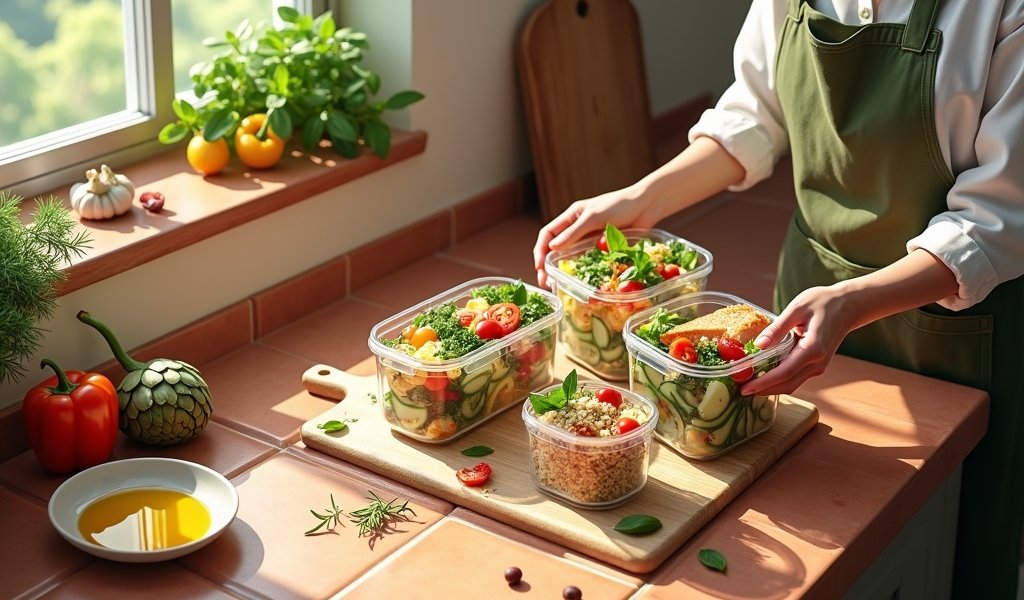
Investing in quality storage containers makes a tremendous difference in both food freshness and organization. Glass containers with secure lids not only keep food fresher longer but also prevent leaks and allow for easy visual inventory of your prepared foods. I strongly recommend a mix of sizes to accommodate different components of your meal prep.
Strategic planning is the cornerstone of successful Mediterranean diet meal prep. Before your prep session, take 15 minutes to plan which components you’ll prepare based on your schedule for the upcoming week. Consider which nights you’ll need fully prepared meals and which evenings you might have time to assemble fresh components with your prepped basics.
Remember that not everything needs to be prepared in advance. Some elements of Mediterranean cooking shine brightest when prepared fresh—particularly fish, which can develop unpleasant textures and aromas when stored too long. Instead, prep the accompaniments and leave the quick-cooking protein for day-of preparation.
Essential Ingredients for Mediterranean Meal Prep
Building a well-stocked Mediterranean pantry forms the foundation of efficient meal preparation. These shelf-stable staples allow you to create flavorful, nutritious meals even when your fresh produce is running low. The beauty of Mediterranean cooking lies in its ability to transform simple ingredients into extraordinary meals through thoughtful preparation and seasoning.
Your Mediterranean pantry essentials should include:
- Extra virgin olive oil (the highest quality you can afford)
- Vinegars (red wine, balsamic, white wine)
- Whole grains (farro, bulgur, barley, whole grain pasta)
- Legumes (chickpeas, lentils, white beans, both dried and canned)
- Nuts and seeds (almonds, walnuts, pine nuts, tahini)
- Dried herbs and spices (oregano, thyme, rosemary, cumin, coriander)
- Canned fish (sardines, tuna in olive oil)
- Preserved vegetables (sun-dried tomatoes, artichoke hearts, olives)
Fresh ingredients form the vibrant heart of Mediterranean cuisine. Prioritize seasonal produce for maximum flavor and nutritional value. During your weekly shopping trip, focus on acquiring:
- Colorful vegetables (bell peppers, eggplant, tomatoes, leafy greens)
- Fresh fruits (especially berries, citrus, and stone fruits)
- Aromatic herbs (basil, parsley, mint, dill)
- Fresh fish and seafood (aim for 2-3 servings weekly)
- Free-range eggs and poultry (for occasional meals)
- Fermented dairy (plain Greek yogurt, feta, small amounts of aged cheeses)
The Mediterranean diet emphasizes high-quality proteins from primarily plant sources with moderate amounts of fish, seafood, and poultry. These proteins not only provide essential amino acids but also deliver unique nutrient profiles that support overall health. Rotating through different protein sources ensures nutritional variety and prevents meal fatigue.
When selecting fish, prioritize small, oily varieties like sardines, mackerel, and anchovies, which contain the highest levels of omega-3 fatty acids and tend to have lower levels of environmental contaminants than larger fish. For plant proteins, legumes offer exceptional nutritional value with their combination of protein, fiber, and micronutrients.
A 7-Day Mediterranean Diet Meal Prep Plan
Implementing a systematic approach to Mediterranean meal prep transforms this healthy eating pattern into a sustainable lifestyle. This 7-day plan serves as your blueprint for successful preparation—each component builds upon the others to create a cohesive weekly menu that maximizes flavor while minimizing kitchen time.
Begin your prep session by preparing these versatile base components:
- 3 cups cooked farro or barley
- 2 cups cooked lentils
- 1 large batch of roasted vegetables (eggplant, bell peppers, zucchini)
- 1 container of homemade hummus
- 1 jar of Greek yogurt tzatziki
- 1 batch of herb-infused olive oil
With these fundamentals prepared, here’s your day-by-day meal plan:
Monday: Mediterranean Grain Bowl
Combine farro with roasted vegetables, chickpeas, a sprinkle of feta, and herb-infused olive oil. Prepare enough for Tuesday’s lunch as well.
Tuesday: Greek-Style Stuffed Peppers
Fill bell peppers with a mixture of pre-cooked lentils, herbs, and a small amount of crumbled feta. Bake until peppers are tender.
Wednesday: Mediterranean Flatbread
Top whole grain flatbread with hummus, sliced vegetables, olives, and fresh herbs for a quick, satisfying dinner.
Thursday: Quick-Seared Fish with Vegetable Medley
Pan-sear fresh fish (a task best done day-of) and serve with your pre-prepped roasted vegetables and a lemon-herb sauce.
Friday: Lentil and Vegetable Soup
Combine pre-cooked lentils with fresh vegetables, herbs, and vegetable broth for a warming soup that improves with time.
Saturday: Mediterranean Mezze Platter
Arrange hummus, tzatziki, olives, fresh vegetables, and whole grain crackers for a relaxed weekend meal.
Sunday: Herb-Roasted Chicken with Grain Salad
Roast chicken with Mediterranean herbs and serve alongside a grain salad made from your prepped farro, fresh herbs, and lemon.
For breakfasts, prepare a large batch of Mediterranean-style overnight oats using Greek yogurt, honey, berries, and chopped nuts. Alternatively, stock ingredients for quick morning meals like whole grain toast with tahini and sliced fruit or savory Greek yogurt bowls with olive oil, herbs, and cucumbers.
Time-Saving Mediterranean Meal Prep Tips
The Mediterranean diet’s emphasis on fresh, whole foods sometimes creates the misconception that it’s time-intensive. In reality, strategic meal preparation can dramatically reduce your daily cooking time while preserving the diet’s nutritional integrity. These professional-grade efficiency techniques can transform your meal prep process.
Batch cooking forms the cornerstone of efficient Mediterranean meal prep. Rather than preparing individual meals, focus on versatile components that can be recombined throughout the week. For example, roasting a large tray of vegetables with olive oil and herbs provides a ready-to-use ingredient for grain bowls, omelets, sandwiches, and side dishes.
Embrace the “cook once, eat twice” philosophy by intentionally making extra portions of protein-rich foods. A batch of lentils can become a warm side dish one night and a cold salad component the next day. Roasted chicken can serve as a main dish for dinner and then be incorporated into a Greek-inspired wrap for lunch.
Strategic freezing extends your meal prep beyond a single week. Mediterranean soups, stews, and grain dishes typically freeze exceptionally well. Prepare large batches of these foods and portion them into individual containers for quick thawing when your schedule gets especially hectic. This approach provides a safety net of healthy options during particularly busy periods.
Kitchen equipment investments can dramatically reduce your active preparation time. Consider these valuable additions:
- Instant Pot or pressure cooker (reduces bean and grain cooking time by up to 70%)
- Food processor (for quick hummus, dips, and vegetable prep)
- Quality chef’s knife (significantly speeds up chopping tasks)
- Immersion blender (for quick soups and sauces)
Don’t overlook strategic shortcuts that maintain nutritional integrity. While the Mediterranean diet emphasizes fresh foods, certain convenience products can save substantial time without compromising quality. Pre-cut vegetables, frozen unsweetened fruits, canned beans (rinsed to reduce sodium), and jarred roasted peppers can all reduce prep time while preserving the diet’s nutritional benefits.
Overcoming Common Mediterranean Diet Challenges
Even the most enthusiastic Mediterranean diet adherents encounter obstacles along their journey. Understanding these common challenges—and having practical solutions at the ready—can mean the difference between short-term experimentation and sustainable lifestyle change.
Meal fatigue represents one of the most pervasive challenges to long-term dietary adherence. Combat this by intentionally incorporating variety through these approaches:
- Explore different Mediterranean regional cuisines (Greek, Italian, Spanish, Moroccan)
- Rotate through various herbs and spice blends
- Experiment with different cooking methods for the same ingredients
- Introduce one new Mediterranean ingredient each week
Finding fresh, high-quality produce year-round can prove challenging, particularly in colder climates or food deserts. Adaptability is key here. Learn to embrace seasonal eating patterns, supplementing with frozen fruits and vegetables when necessary. Frozen produce is typically harvested at peak ripeness and flash-frozen, often containing more nutrients than “fresh” counterparts that have spent days in transit.
Family resistance often emerges when introducing new eating patterns. Rather than overhauling your entire family’s diet overnight, implement gradual transitions. Begin by incorporating Mediterranean components into familiar dishes—adding extra vegetables to pasta sauce, switching to olive oil for cooking, or introducing small Mediterranean-inspired side dishes alongside family favorites. This gradual approach typically generates less resistance than sweeping changes.
Dining out while following the Mediterranean diet can initially seem daunting, but most restaurants offer compatible options with minor modifications. Look for grilled fish or chicken dishes, ask for olive oil instead of butter, request extra vegetables, and don’t hesitate to ask about preparation methods. Many cuisines—particularly Greek, Italian, Spanish, and Middle Eastern—naturally offer Mediterranean-friendly options.
Budget-Friendly Mediterranean Meal Prep
The perception that the Mediterranean diet is expensive represents one of the most persistent myths surrounding this eating pattern. While certain specialty ingredients can be costly, the diet’s fundamental components—vegetables, legumes, and whole grains—rank among the most economical foods available. With strategic shopping and preparation, the Mediterranean diet can actually reduce your overall food budget.
Focus your purchasing power on these budget-friendly Mediterranean staples:
- Dried beans and lentils (providing protein at a fraction of meat’s cost)
- Whole grains purchased in bulk (particularly oats, barley, and rice)
- Seasonal vegetables from farmers’ markets or discount grocers
- Canned tomatoes and tomato paste (foundation ingredients for countless dishes)
- Frozen vegetables and fruits (often more economical than fresh, with comparable nutrition)
Strategic shopping dramatically reduces Mediterranean diet costs. Plan meals around sales, particularly for more expensive components like olive oil, fish, and nuts. Consider joining a community-supported agriculture (CSA) program for direct-from-farm produce at reduced prices. Many communities also offer cooperative buying groups that purchase quality ingredients in bulk at substantial discounts.
Reducing food waste represents another significant opportunity for budget optimization. The average American household wastes approximately 30% of the food it purchases—a substantial financial drain. Implement a “root to stem” cooking approach, utilizing vegetable parts typically discarded. For example, broccoli stems can be peeled and sliced for stir-fries, beet greens can be sautéed like spinach, and herb stems can flavor stocks and sauces.
Growing even small amounts of food can substantially reduce your Mediterranean diet expenses. Fresh herbs—which can be costly at grocery stores—grow readily in small containers, even in apartment settings. Window boxes can support compact vegetable varieties, while community garden plots offer opportunities for growing space in urban environments. Even sprouting seeds and beans on your counter provides fresh, nutritious additions to meals at minimal cost.
Conclusion
The Mediterranean diet meal prep approach offers a remarkable balance of health benefits, culinary enjoyment, and practical sustainability. By embracing these preparation techniques, you’re not simply adopting a temporary eating pattern—you’re cultivating a lifestyle that has sustained vibrant health across generations of Mediterranean communities.
What makes this approach particularly valuable is its flexibility. Unlike rigid diet plans that inevitably lead to burnout, the Mediterranean style accommodates your unique preferences, cultural background, and practical constraints. The meal preparation strategies outlined here serve as a framework that you can adapt to your specific circumstances while maintaining the core nutritional principles.
Remember that perfect adherence isn’t the goal—consistency and gradual improvement are what truly matter. Each meal prep session becomes an opportunity to nourish yourself and your loved ones with foods that support long-term health and well-being. As you become more comfortable with these techniques, you’ll likely find yourself naturally gravitating toward Mediterranean ingredients and flavors even when dining away from home.
Begin your Mediterranean meal prep journey with a spirit of exploration rather than obligation. Start with the strategies that seem most accessible to you, perhaps batch-cooking a few versatile components or preparing a signature Mediterranean sauce. As your confidence grows, gradually incorporate additional techniques until meal preparation becomes an intuitive part of your weekly routine.
The Mediterranean approach reminds us that healthy eating isn’t about restriction—it’s about abundance, pleasure, and connection. Through thoughtful meal preparation, you can make this ancient wisdom a practical reality in your thoroughly modern life.
Frequently Asked Questions
What are the essential components of a Mediterranean diet meal prep plan?
Essential components include olive oil, whole grains, legumes, fresh vegetables, fruits, herbs, fish, and modest amounts of poultry and dairy. Focus on batch-cooking versatile ingredients like roasted vegetables, cooked grains, and homemade dressings that can be mixed and matched throughout the week.
How long do Mediterranean meal prep components typically last in the refrigerator?
Most cooked components (grains, legumes, roasted vegetables) last 3-5 days when properly stored in airtight containers. Fresh cut vegetables typically remain crisp for 2-3 days, while properly stored proteins like cooked chicken or fish should be consumed within 2-3 days.
Can the Mediterranean diet be adapted for vegetarians or vegans?
Absolutely! The Mediterranean diet is already plant-forward, making it easily adaptable for vegetarians and vegans. Simply emphasize legumes, nuts, and seeds for protein while using plant-based yogurts and cheeses if desired.
What’s the most efficient way to prep Mediterranean meals for a family?
Prepare versatile components that family members can customize to their preferences, such as grain bowls with various toppings or build-your-own Mediterranean wraps. Involve family members in the preparation process to increase their investment in the meals.
How can I maintain Mediterranean diet principles when dining out?
Look for grilled fish or chicken, ask for olive oil instead of butter, order extra vegetables, and choose bean-based appetizers when available. Mediterranean, Greek, and Middle Eastern restaurants typically offer the most compatible options.