
Overview
Forget those blurry gym selfies—this article breaks down the essential photography equipment needed to capture stunning fitness imagery, from camera bodies and versatile lenses to lighting that makes muscles pop and post-processing techniques that create the perfect fitness aesthetic. The guide emphasizes that while quality gear matters, the most powerful fitness photography ultimately comes from capturing authentic moments and human stories, with budget-friendly alternatives available for photographers at every level.
Table of Contents
- Understanding Lifestyle Photography in Fitness
- Essential Camera Bodies for Fitness Shoots
- Versatile Lenses for Every Fitness Scenario
- Lighting Equipment That Makes Muscles Pop
- Stabilization Tools for Action Shots
- On-Location Accessories You Can’t Forget
- Post-Processing Tools for the Fitness Aesthetic
- Budget-Friendly Alternatives That Deliver
- Conclusion
- Frequently Asked Questions
Understanding Lifestyle Photography in Fitness
The magic of lifestyle photography in fitness isn’t just capturing what exercises look like—it’s about immortalizing how they feel. As both a fitness professional and photography enthusiast, I’ve discovered that the right equipment transforms ordinary workout documentation into visual stories that inspire and motivate.
Lifestyle photography goes beyond standard posed shots to capture authentic moments that tell a compelling fitness journey. When done right, these images convey determination, progress, and the transformative power of physical activity. They show real people in real environments achieving real results.
The challenge lies in balancing technical excellence with authentic storytelling. Your photography gear needs to be as adaptable as a good training program—capable of performing in varied environments from dim gyms to bright outdoor settings, while capturing split-second expressions of triumph and effort.
In my years helping clients document their fitness journeys through our health and wellness blog, I’ve refined my gear choices to maximize both quality and practicality. Let’s explore the seven essential pieces of equipment that will elevate your fitness photography from amateur snapshots to compelling visual narratives.
Essential Camera Bodies for Fitness Shoots
When selecting a camera for fitness photography, speed and adaptability reign supreme. Your camera must be quick enough to freeze action at its peak—that perfect moment when a weightlifter reaches full extension or a runner’s foot barely touches the ground.
Mirrorless cameras have revolutionized fitness photography with their exceptional autofocus systems. The Sony Alpha series and Canon’s EOS R line offer face and eye-tracking capabilities that maintain focus even when subjects move unpredictably during dynamic workouts. This technology is invaluable when capturing high-intensity interval training or explosive plyometric movements.
For professionals working with fitness brands or athletes, full-frame options like the Sony A7 IV provide superior low-light performance—critical for poorly lit gym environments. However, crop-sensor alternatives like the Fujifilm X-T4 offer impressive capabilities at lower price points, making them perfect entry points for fitness photographers.
Key features to prioritize include:
- Fast autofocus systems with reliable subject tracking
- Burst rates of at least 8-10 frames per second
- Good low-light performance (ISO handling)
- Weather sealing for outdoor training sessions
- Dual memory card slots for critical client work
Remember that consistency trumps perfection. Research shows that visual documentation of fitness progress significantly improves adherence to exercise programs—meaning the best camera is ultimately the one you’ll use consistently.
Versatile Lenses for Every Fitness Scenario
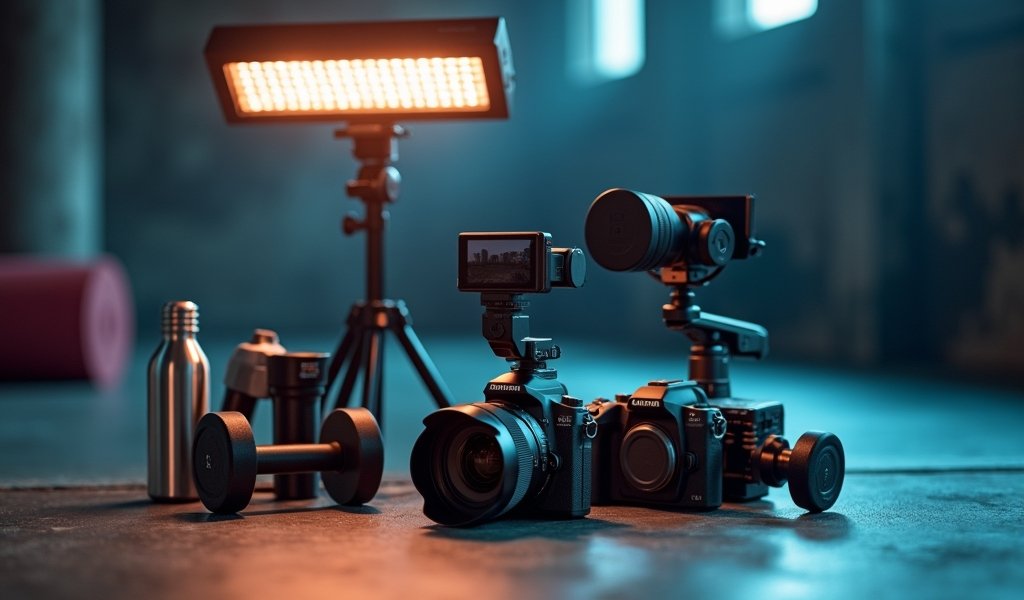
If cameras are the foundation of your setup, lenses are where the magic happens. Different focal lengths create different stories, and knowing which lens to use for each fitness scenario is crucial for creating impactful images.
For close-up shots that highlight muscle definition and form, prime lenses deliver unmatched sharpness and background separation. An 85mm f/1.8 creates beautiful portraits with compression that flatters physiques, while a 35mm f/1.8 captures more environmental context while maintaining that professional-looking background blur.
When documenting dynamic movement across a gym floor or outdoor training space, zoom lenses offer invaluable flexibility. A 24-70mm f/2.8 serves as the perfect all-purpose lens, allowing you to quickly transition from wide establishing shots to closer action frames without changing equipment and potentially missing crucial moments.
My personal lens recommendations for fitness photography include:
- 50mm f/1.8 – Affordable, lightweight, and perfect for natural-looking fitness portraits
- 24-70mm f/2.8 – The workhorse that handles 80% of fitness shooting scenarios
- 70-200mm f/2.8 (or f/4 for budget) – Ideal for outdoor running, sports, and creating compression that emphasizes physique
- 16-35mm f/2.8 – For tight gym spaces and environmental storytelling
The quality of your glass often matters more than your camera body. When photographing lifestyle transformations, investing in quality lenses that allow for lower light shooting will yield more professional results than upgrading camera bodies.
Lighting Equipment That Makes Muscles Pop
Lighting isn’t just important in fitness photography—it’s everything. The right lighting reveals muscle definition, creates mood, and transforms ordinary gym environments into compelling visual stories. Poor lighting, conversely, flattens physiques and diminishes the impact of even the most impressive athletic achievements.
For gym environments with challenging fluorescent lighting, portable flash systems provide the control needed for professional results. The Godox AD200 offers an excellent balance of power and portability that won’t overwhelm most fitness settings but delivers enough light to overpower unflattering ambient conditions.
The direction of light dramatically affects how muscles appear in photographs. Side lighting creates shadows that enhance definition, while frontal lighting minimizes texture—sometimes desirable for more flattering portraits. Research on visual perception confirms that directional lighting significantly affects how we perceive three-dimensional form.
Essential lighting tools for fitness photography include:
- One or two portable flash units (speedlights for beginners, strobes for professionals)
- Light stands with sandbags for stability during active shoots
- Softboxes or octaboxes for flattering, diffused light
- Strip lights for dramatic side lighting that enhances muscle definition
- 5-in-1 reflector for outdoor shoots and subtle fill light
For those just starting out, window light remains the most accessible and flattering natural light source. Position your subject at a 45-degree angle to a large window, and you’ll be amazed at how professional your fitness portraits can look without any artificial lighting.
Stabilization Tools for Action Shots
Sharp images require stable platforms, especially when capturing fast-moving fitness activities. While high shutter speeds freeze action, they don’t eliminate camera shake—that’s where quality stabilization equipment becomes essential.
A good tripod is the foundation of stability for controlled environment work. Look for carbon fiber options that balance weight and stability, with a ball head that allows quick repositioning. For fitness photography specifically, choose models that can get low to the ground for dynamic angles and creative perspectives during floor exercises.
Monopods offer the perfect compromise between stability and mobility. They’re invaluable when following athletes during events or moving quickly around a workout session. Think of them as the perfect spotter—there when you need support but not restricting your movement.
For video content—increasingly important in today’s fitness industry—gimbals have transformed what’s possible for solo creators. Devices like the DJI RS 3 create cinema-quality stable footage even when moving alongside runners or circling weightlifters. Studies on visual documentation in sports training show that stable, well-composed footage significantly improves the learning process when reviewing technique.
When choosing stabilization equipment, consider:
- Weight and portability relative to your shooting locations
- Maximum load capacity (must exceed your heaviest camera/lens combination)
- Setup speed (crucial for dynamic fitness environments)
- Versatility for different shooting heights and angles
On-Location Accessories You Can’t Forget
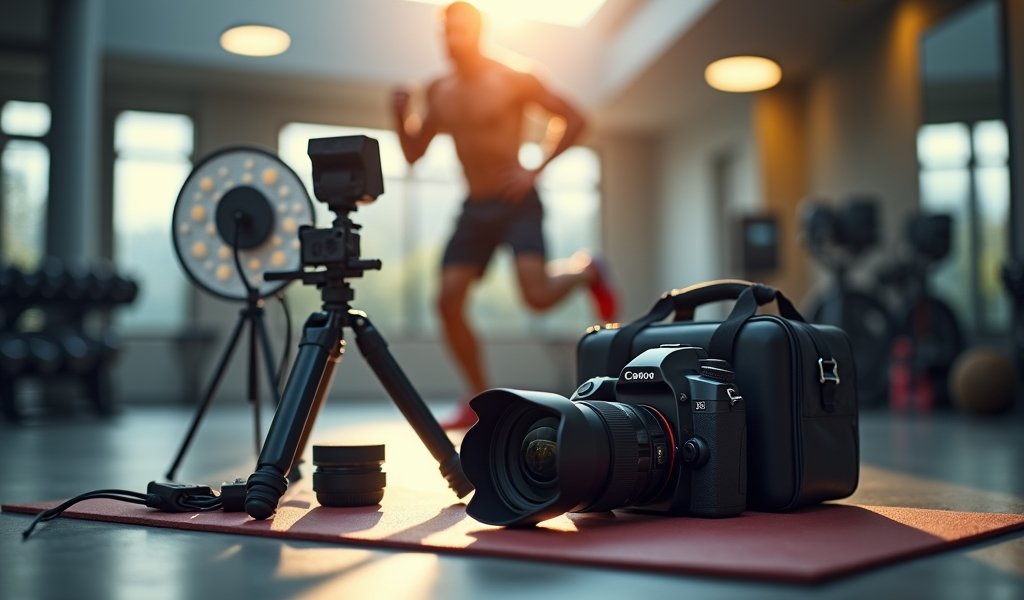
The difference between amateur and professional fitness photography often comes down to preparation. These accessories ensure you’re ready for whatever challenges arise during on-location fitness shoots.
Weather protection gear is non-negotiable for outdoor sessions. Think rain covers for cameras, lens cloths for unexpected splashes during beach workouts, and appropriate bags that protect gear from both elements and gym chalk dust. Nothing ends a productive shoot faster than equipment damage from preventable environmental exposure.
Portable backgrounds can transform any location into a studio. Collapsible options from companies like Lastolite create clean, distraction-free environments when the gym wall isn’t doing your subject justice. A simple black or white backdrop can elevate the professional look of fitness portraits with minimal setup time.
Other essential on-location accessories include:
- Extra batteries and memory cards (the fitness photography equivalent of emergency protein bars)
- Lens cleaning supplies for sweat and fingerprint mishaps
- Gaffer tape for securing cords in high-traffic workout areas
- Portable changing tent/privacy screen for outdoor wardrobe changes
- Small LED continuous lights for video interviews or detail shots
Transport solutions matter more than you might think. A good photography backpack with appropriate compartments protects your investment while distributing weight properly—saving your own back while you photograph others strengthening theirs. Look for options with quick-access side panels for fast lens changes during dynamic fitness shoots.
Post-Processing Tools for the Fitness Aesthetic
Even the best in-camera images benefit from thoughtful post-processing. The distinctive “fitness aesthetic” that dominates social media requires specific editing approaches to highlight definition, enhance energy, and create visual cohesion across your portfolio.
Adobe Lightroom remains the industry standard for organizing and editing fitness photography. Its catalog system helps manage extensive photoshoots while providing non-destructive editing tools that preserve your original files. For fitness imagery specifically, Lightroom’s clarity, texture, and dehaze sliders can enhance muscle definition without creating an unnatural appearance.
For more advanced retouching—like removing temporary blemishes or distracting elements from gym backgrounds—Adobe Photoshop provides pixel-level control. The frequency separation technique has become particularly popular for fitness photography, as it allows enhancing texture (muscle definition) while smoothing tone (skin) separately.
Consider these post-processing approaches for fitness imagery:
- Contrast adjustments that enhance muscle definition without looking artificial
- Color grading that complements common gym environments (neutralizing yellow/green fluorescent casts)
- Clarity and texture enhancements applied selectively to muscular areas
- Skin retouching that maintains texture while reducing distractions
Mobile editing has evolved dramatically, with apps like Lightroom Mobile and Snapseed offering sophisticated tools for quick edits between sessions or immediate social sharing. These applications enable fitness photographers to deliver preview images to clients or athletes while still on location—an increasingly expected service in the fast-paced fitness industry.
Budget-Friendly Alternatives That Deliver
Quality fitness photography doesn’t require remortgaging your house. Just as there are effective workout routines for every budget, there are equipment strategies that deliver professional results without breaking the bank.
For those just starting out, entry-level mirrorless cameras paired with a “nifty fifty” 50mm f/1.8 lens provide remarkable image quality at an accessible price point. This combination offers the beautiful background blur and low-light capability essential for fitness environments without the investment in professional zoom lenses.
Lighting presents the biggest opportunity for budget creativity. A single speedlight with a collapsible softbox creates professional-looking portraits for under $200. For even tighter budgets, a $30 reflector bouncing window light can produce results that rival much more expensive setups when used skillfully.
Budget-friendly alternatives that deliver professional results include:
- Used previous-generation camera bodies (80% of the features at 50% of the cost)
- Manual-focus prime lenses from brands like Rokinon/Samyang
- DIY light modifiers using foam core and white shower curtains
- Rental equipment for special projects requiring specific gear
- Godox lighting systems that offer professional features at fraction of premium brand prices
Remember that creativity and skill ultimately matter more than equipment. Research on visual perception shows that viewers respond more strongly to composition, lighting, and emotional connection than to technical perfection—meaning thoughtful photography with modest equipment will outperform careless work with expensive gear every time.
Conclusion
The perfect lifestyle photography kit for fitness isn’t about collecting the most expensive gear—it’s about building a toolkit that captures authentic moments of strength, determination, and transformation. Like an effective training program, your equipment should evolve with your skills, adapting to new challenges while remaining true to your creative vision.
Start with the essentials: a capable camera, versatile lenses, and basic lighting. Master these foundations before expanding to more specialized equipment. Remember that consistency trumps perfection—the best camera is the one you’ll actually bring to every session.
As you grow as a fitness photographer, prioritize investments that solve specific problems or open new creative possibilities. Just as targeted accessory exercises complement the main lifts in a training program, specialized photography gear should support your core equipment rather than replace it.
Most importantly, never lose sight of the human stories behind the images. The most technically perfect photograph falls flat without the emotional connection that makes lifestyle photography powerful. Whether documenting a client’s first pull-up or an elite athlete’s competition preparation, your gear should help reveal the journey, not just the aesthetics.
With the right tools and techniques, your fitness photography can inspire others to begin their own health transformations—perhaps the most valuable outcome of all.
Frequently Asked Questions
What camera settings work best for fitness photography?
Use faster shutter speeds (1/200 and above) to freeze action and apertures between f/2.8-4.0 to balance subject sharpness with background blur. In gyms, don’t be afraid to raise ISO to 1600-3200 to maintain these settings in low light.
How do I capture authentic moments in fitness photography?
Shoot in continuous burst mode during actual training, not just posed exercises. Give minimal direction and focus on capturing genuine effort, letting subjects get comfortable with your presence before expecting their best expressions.
What’s the minimum gear needed for professional fitness photos?
A camera with decent low-light performance, a 50mm f/1.8 lens, and a speedlight with a simple diffuser will handle 80% of fitness photography scenarios. Add a reflector for outdoor work and you’re professionally equipped on a modest budget.
How important is post-processing for fitness photography?
Post-processing is essential for creating the defined, energetic aesthetic expected in fitness imagery. Focus on enhancing existing muscle definition rather than creating it artificially, and develop a consistent editing style that clients recognize.
Can I use my smartphone for professional fitness photography?
Modern flagship smartphones can produce impressive fitness content, especially with add-on lenses and portable LED lights. While they have limitations in low light and action scenarios, their convenience makes them valuable tools for behind-the-scenes content and social media stories.