

Overview
Forget limping around with fungus-ridden toes that look like they’ve been through a zombie apocalypse—laser treatment for toenail fungus offers five key advantages over traditional remedies: it’s non-invasive with minimal pain, causes no systemic side effects, requires zero downtime, effectively tackles severe infections, and provides long-lasting results. This innovative treatment penetrates even thick nails to destroy fungal cells at their source, with success rates of 70-85% compared to the measly 20-30% of topical treatments, making it an ideal solution for patients who’ve tried everything else or can’t take oral medications due to health concerns.
Table of Contents
- Understanding Toenail Fungus: Causes and Symptoms
- How Laser Treatment Works for Toenail Fungus
- Benefit 1: Non-invasive Treatment with Minimal Pain
- Benefit 2: No Systemic Side Effects
- Benefit 3: Quick Procedure with No Downtime
- Benefit 4: Effective for Severe Infections
- Benefit 5: Long-lasting Results
- Comparing Laser Treatment to Other Toenail Fungus Treatments
- What to Expect During a Laser Treatment Session
- Who Are Ideal Candidates for Laser Treatment?
- Prevention Tips After Laser Treatment
- Conclusion
- Frequently Asked Questions
Toenail fungus, medically known as onychomycosis, affects millions of people worldwide. This stubborn condition not only compromises the appearance of your nails but can also lead to discomfort and more serious complications if left untreated. While traditional treatments exist, laser treatment for toenail fungus has emerged as an innovative and effective solution that addresses many of the shortcomings of conventional methods. As a podiatrist with over a decade of experience treating fungal nail infections, I’ve witnessed firsthand the remarkable benefits this technology offers to patients seeking relief.
In this comprehensive review, we’ll explore the five proven benefits of laser treatment for toenail fungus, examining the scientific evidence supporting its efficacy while providing you with practical insights to help determine if this treatment option might be right for you. Whether you’ve struggled with persistent infections or are exploring treatment options for the first time, understanding the advantages of laser therapy could be your first step toward healthier nails.
Understanding Toenail Fungus: Causes and Symptoms
Before we dive into the benefits of laser treatment, it’s important to understand what we’re dealing with. Toenail fungus is primarily caused by dermatophytes, a group of fungi that thrives in warm, moist environments. These opportunistic organisms infiltrate the nail through tiny cracks or separations between the nail and nail bed, gradually colonizing the area and causing infection.
Common risk factors include frequent exposure to damp environments like swimming pools or communal showers, wearing tight-fitting shoes, having a weakened immune system, and being over the age of 60. Diabetes patients are particularly vulnerable due to compromised circulation in the extremities. In fact, studies show that 30% of diabetic patients will develop a nail fungus infection at some point.
The symptoms typically develop gradually and include:
- Thickening of the nail
- Yellowing or browning discoloration
- Brittle, crumbly, or ragged nail edges
- Distorted nail shape
- Darkening of the affected nail
- Slight odor in severe cases
Many patients who visit our local wellness clinic have attempted various over-the-counter treatments with limited success. The frustration is understandable – toenail fungus is notoriously difficult to eliminate because the infection resides deep within and beneath the nail, areas that topical treatments struggle to reach effectively.
How Laser Treatment Works for Toenail Fungus
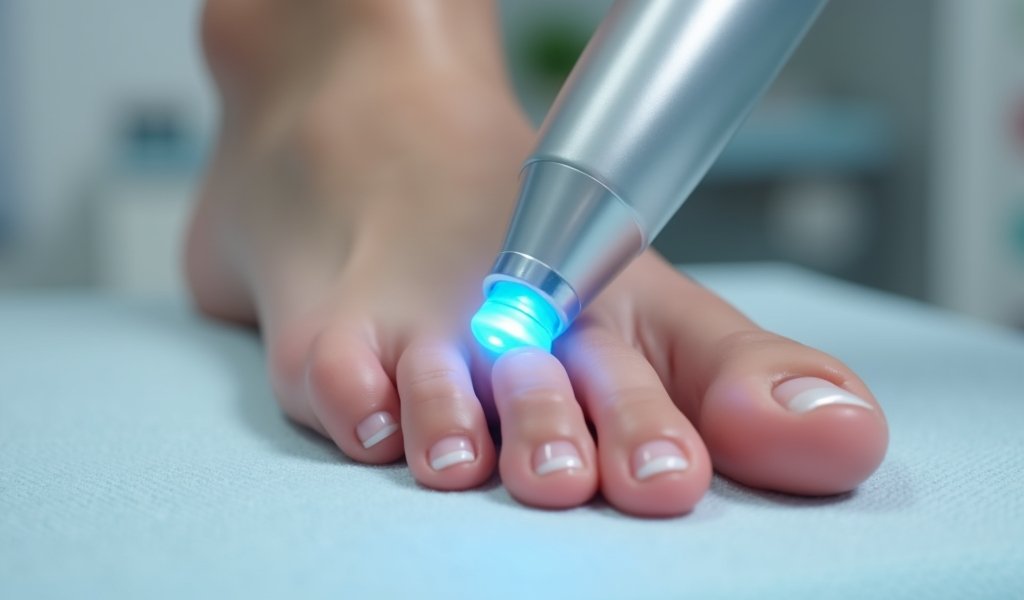
Laser treatment represents a significant advancement in the battle against onychomycosis. This innovative approach utilizes specific wavelengths of light that penetrate the nail plate to target the fungus directly, without damaging surrounding healthy tissue. The precision is what makes this technology particularly remarkable.
During treatment, the laser emits pulses of energy that create heat within the infected area. This thermal effect achieves two critical objectives: it directly damages the fungal cells responsible for the infection, and it denatures the proteins essential for fungal survival. Importantly, the temperature reached is carefully calibrated to destroy fungi while remaining safe for human tissue.
Benefit 1: Non-invasive Treatment with Minimal Pain
One of the most significant advantages of laser treatment for toenail fungus is its non-invasive nature. Unlike surgical approaches that might involve nail removal, laser therapy leaves the nail intact while targeting the underlying infection. This approach respects the body’s natural barriers while still delivering effective treatment.
Patients frequently ask about pain during the procedure, and I’m always pleased to reassure them. Most individuals report feeling only a mild warming sensation during treatment, with occasional moments of pinpoint heat that quickly dissipate. For particularly sensitive patients, we can adjust the settings or provide brief cooling breaks between pulses.
The non-invasive nature of laser therapy also means the risk of secondary infections is dramatically reduced compared to surgical interventions. There’s no breaking of the skin barrier, no wounds to heal, and consequently, no entry points for opportunistic bacteria.
As one patient at our skin wellness center described it: “I was bracing myself for pain similar to what I’d imagined – like a dental procedure – but it was nothing like that. Just some warmth and occasional hot spots that lasted seconds. I could have almost fallen asleep during it!”
Benefit 2: No Systemic Side Effects
Traditional oral antifungal medications, while effective, come with a significant downside: potential systemic side effects. These medications work by entering the bloodstream to reach the infection site, but this systemic distribution means they can affect organs throughout the body, particularly the liver.
Common side effects of oral antifungals include:
- Headaches
- Digestive discomfort
- Rashes
- Taste disturbances
- Liver enzyme abnormalities requiring monitoring
In contrast, laser treatment for toenail fungus works locally, targeting only the infected area without introducing any substances into the bloodstream. This localized approach eliminates the risk of systemic side effects entirely. For patients with existing health concerns, particularly those with liver conditions or who take multiple medications, this benefit cannot be overstated.
Research from the American Academy of Dermatology supports this advantage, noting that laser therapy provides a valuable alternative for patients unable to tolerate oral antifungal medications due to drug interactions or underlying health conditions.
Benefit 3: Quick Procedure with No Downtime
In our busy lives, treatments that respect our time constraints are increasingly valuable. Laser treatment for toenail fungus excels in this regard. A typical session lasts between 15-30 minutes, depending on how many nails require treatment. This efficiency means you can literally schedule an appointment during your lunch break.
Even more impressive is the lack of downtime following treatment. Unlike surgical interventions that might require recovery periods and activity restrictions, patients can resume normal activities immediately after laser therapy. You can walk out of the treatment room and continue with your day as planned – no special care requirements, no bandages to change, no antibiotics to remember.
The treatment schedule is also patient-friendly. While protocols vary based on the severity of the infection and the specific laser system used, most patients require 2-4 sessions spaced approximately 4-6 weeks apart. This spacing allows time to assess the response to treatment while minimizing disruption to your schedule.
Many visitors to our wellness foot spa appreciate being able to combine their laser treatment with other foot care services, maximizing the efficiency of their visit while still addressing their fungal infection effectively.
Benefit 4: Effective for Severe Infections
Severe or long-standing fungal nail infections present particular challenges for traditional treatments. When a nail is significantly thickened or the infection has spread across multiple nails, topical treatments often prove inadequate as they simply cannot penetrate to the infection’s core. Similarly, oral medications may struggle to reach sufficient concentrations in heavily damaged nails.
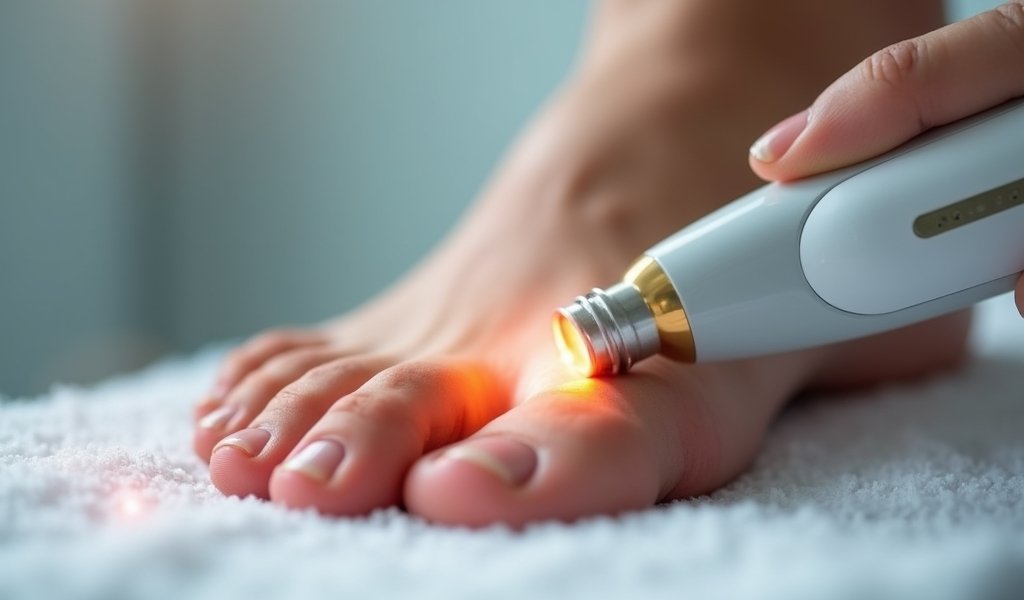
Laser treatment excels in precisely these challenging scenarios. The laser energy can penetrate even severely thickened nails, reaching the fungus wherever it resides. This penetrating capability makes laser therapy particularly valuable for patients who have struggled with persistent infections that have resisted other treatment approaches.
Clinical evidence supports this benefit. A study published in the Journal of Clinical and Aesthetic Dermatology demonstrated that laser treatment produced significant improvement in patients with moderate to severe onychomycosis, with success rates comparable or superior to traditional treatments.
For elderly patients, who often present with more severe infections and may have contraindications to oral medications, this advantage is particularly meaningful. The treatment provides an effective option without adding medication burden or risking drug interactions with their existing prescriptions.
Benefit 5: Long-lasting Results
Perhaps the most compelling benefit of laser treatment for toenail fungus is the durability of results. While no treatment can guarantee permanent fungus elimination (since reinfection is always possible), laser therapy offers impressive long-term outcomes when compared to alternatives.
Several factors contribute to this longevity:
- Comprehensive targeting of the infection throughout the nail bed
- Destruction of fungal cells rather than merely inhibiting their growth
- Treatment of the surrounding skin that might harbor fungal spores
- Improvement in nail quality that reduces vulnerability to reinfection
Follow-up studies tracking patients for 12-24 months after completing laser therapy show success rates of 70-85% for patients who follow post-treatment care recommendations. This compares favorably to the long-term success rates of topical treatments, which typically hover around 20-30%.
It’s worth noting that optimal results develop gradually as the healthy nail grows out. Toenails grow at approximately 1mm per month, so complete visual improvement may take 9-12 months as the new, healthy nail replaces the infected portion. Patience during this growth phase is essential, but the results are worth waiting for.
Comparing Laser Treatment to Other Toenail Fungus Treatments
To fully appreciate the benefits of laser treatment, it helps to understand how it compares to other available options:
- Topical medications: Less expensive but require daily application for 6-12 months with success rates of only 20-30%. They struggle to penetrate the nail plate effectively.
- Oral medications: More effective than topicals with success rates of 50-70%, but require 3-6 months of daily pills, liver monitoring, and carry risk of side effects and drug interactions.
- Surgical removal: Removes infected nail but is invasive, requires recovery time, and doesn’t necessarily prevent recurrence.
- Laser treatment: Non-invasive with no systemic side effects, requires only 2-4 sessions, and offers success rates of 70-85% with proper aftercare.
When considering cost-effectiveness, it’s important to factor in not just the upfront expense but also the likelihood of success. Failed treatments that require subsequent interventions ultimately prove more costly, both financially and in terms of prolonged discomfort and embarrassment.
According to Podiatry Today, while laser treatments may have a higher initial cost than some alternatives, their efficacy and reduced need for retreatment often make them economically sound choices in the long run.
What to Expect During a Laser Treatment Session
Understanding the treatment process helps alleviate anxiety and ensures you’re prepared for your appointment. Here’s what a typical laser treatment session entails:
- Pre-treatment assessment: Your podiatrist will examine your nails, confirm the fungal infection, and discuss your medical history to ensure you’re a suitable candidate.
- Nail preparation: The nails are cleaned, and any nail polish is removed. In cases of severely thickened nails, gentle thinning might be performed to enhance laser penetration.
- Protection setup: You and your provider will wear protective eyewear as a safety precaution.
- Treatment application: The laser handpiece is positioned over each affected nail, delivering pulses of energy. You’ll feel warmth and occasional hot spots, but rarely significant discomfort.
- Post-treatment care: Your provider will discuss aftercare instructions and schedule any follow-up sessions.
The entire process typically takes 15-30 minutes, depending on how many nails require treatment. You can drive yourself to and from the appointment and resume normal activities immediately afterward.
Who Are Ideal Candidates for Laser Treatment?
While laser treatment offers benefits for most people with toenail fungus, certain individuals may find it particularly valuable:
- Patients who have tried topical treatments without success
- Those with contraindications to oral antifungal medications
- People with multiple medications who wish to avoid potential drug interactions
- Patients with liver concerns who cannot take oral antifungals
- Individuals with diabetes (with physician approval)
- Those seeking treatment without daily maintenance requirements
- People with moderate to severe infections where topicals are unlikely to penetrate
There are few absolute contraindications to laser treatment, but your provider will need to know if you:
- Are pregnant (as a precautionary measure)
- Have peripheral neuropathy with loss of sensation in your feet
- Have significant vascular disease in your lower extremities
- Have a history of certain photosensitivity disorders
Prevention Tips After Laser Treatment
To maximize the benefits of your laser treatment and reduce the risk of reinfection, follow these evidence-based prevention strategies:
- Keep feet clean and dry: Thoroughly dry your feet after bathing, paying special attention to the spaces between toes.
- Use antifungal powder: Apply antifungal powder to feet and inside shoes to create an inhospitable environment for fungi.
- Rotate footwear: Allow shoes to fully dry between wearings by alternating pairs.
- Choose breathable materials: Wear socks made of moisture-wicking fabrics and shoes that allow airflow.
- Sanitize footwear: Consider using UV shoe sanitizers or antifungal sprays for footwear.
- Protect feet in public areas: Wear shower shoes in locker rooms, public pools, and similar environments.
- Don’t share nail care items: Keep nail clippers, files, and other pedicure tools for personal use only.
- Maintain regular foot checks: Monitor for any early signs of recurrence so prompt action can be taken.
Many patients find that establishing a simple foot care routine incorporating these measures becomes second nature over time. The minor adjustments to your habits are well worth the continued nail health they help maintain.
Conclusion
Laser treatment for toenail fungus represents a significant advancement in podiatric care, offering patients an effective solution without the drawbacks associated with traditional treatments. Its five key benefits – non-invasive approach with minimal pain, absence of systemic side effects, quick procedure with no downtime, effectiveness for severe infections, and long-lasting results – make it a compelling option for those struggling with fungal nail infections.
As with any medical treatment, results can vary based on individual factors such as infection severity, overall health, and adherence to aftercare recommendations. A consultation with a qualified podiatrist or dermatologist who offers laser therapy can help determine if this treatment is right for your specific situation.
Remember that healthy, clear nails aren’t just a cosmetic consideration – they’re a reflection of your overall foot health and can significantly impact your confidence and quality of life. If you’ve been hiding your feet due to embarrassment or struggling with uncomfortable thick nails, laser treatment may offer the solution you’ve been seeking.
Frequently Asked Questions
How many laser treatment sessions are typically needed to cure toenail fungus?
Most patients require 2-4 treatment sessions spaced 4-6 weeks apart. The exact number depends on infection severity and your body’s response to treatment.
Does laser treatment for toenail fungus hurt?
Most patients experience minimal discomfort during treatment, describing it as a warming sensation with occasional hot spots. No anesthesia is required for the procedure.
Is laser treatment for toenail fungus covered by insurance?
Most insurance plans consider laser treatment for toenail fungus cosmetic and don’t provide coverage. However, some podiatrists offer financing options to make treatment more accessible.
How soon will I see results after laser treatment?
You’ll begin to see improvement as the healthy nail grows out, typically noticeable within 3-6 months. Complete results may take 9-12 months as toenails grow slowly at about 1mm per month.
Can I get a pedicure after laser treatment for toenail fungus?
It’s best to wait 1-2 weeks after treatment before getting a pedicure. When you do, bring your own tools and choose salons with proper sterilization protocols to prevent reinfection.