

Overview
This article outlines five key exercises for managing vertigo symptoms: the Epley Maneuver for repositioning ear crystals, Brandt-Daroff exercises for brain adaptation, gaze stabilization techniques for visual steadiness, balance training exercises for stability, and progressive walking patterns for movement confidence. Consistent practice of these targeted exercises can significantly improve vertigo symptoms by retraining the brain’s vestibular system, with most patients experiencing relief within 1-2 weeks of regular practice.
Table of Contents
- Understanding Vertigo: When Your World Won’t Stop Spinning
- The Importance of Exercise for Vertigo Management
- The Epley Maneuver: Resetting Your Inner Balance
- Brandt-Daroff Exercises: Training Your Brain to Adapt
- Gaze Stabilization Exercises: Steadying Your Vision
- Balance Training: Building Your Stability Foundation
- Walking Exercises: Progressive Movement Therapy
- Creating an Effective Vertigo Exercise Routine
- When to Seek Professional Help
- Conclusion: Finding Steady Ground Again
- Frequently Asked Questions
Vertigo can make your world spin in ways that are both disorienting and distressing. Like being trapped on a perpetual carnival ride you never purchased a ticket for, the sudden sensation that you or your surroundings are rotating can strike without warning, leaving you grasping for stability in a world that seems to have lost its anchoring. For the millions who experience vertigo, everyday activities become challenging obstacles, and the simplicity of standing upright transforms into a complex balancing act worthy of a tightrope walker. But there’s hope on the horizon. Specific exercises for vertigo relief, developed and refined by medical professionals, have shown remarkable effectiveness in relieving symptoms. In this comprehensive guide, we’ll explore five proven exercises that can help you find your balance again, regain your confidence, and navigate life with greater steadiness.
Understanding Vertigo: When Your World Won’t Stop Spinning
Vertigo isn’t simply feeling dizzy – it’s as if someone has placed your equilibrium on a spinning top. This sensation typically results from issues within the vestibular system – the delicate network in your inner ear responsible for maintaining balance and spatial orientation. Like a ship’s navigation system gone awry, when these structures malfunction, your brain receives conflicting signals about your position and movement.
There are two primary types of vertigo: peripheral and central. Peripheral vertigo stems from inner ear problems and accounts for about 80% of cases. The most common culprit is Benign Paroxysmal Positional Vertigo (BPPV), occurring when tiny calcium crystals in your inner ear become dislodged. Central vertigo, meanwhile, originates from neurological issues affecting the brain, such as migraines, strokes, or multiple sclerosis.
Common symptoms accompanying vertigo include nausea (like seasickness without the sea), vomiting, sweating, and difficulty maintaining balance. Many patients describe the feeling as though they’re being pulled in one direction or that the room is spinning around them – a disorienting carousel they desperately want to exit. Wouldn’t it be wonderful if there were a simple off switch?
The Importance of Exercise for Vertigo Management
Why should exercise be your ally in battling vertigo? Think of your balance system as a muscle that needs training. Just as a pianist practices scales to maintain dexterity, your vestibular system requires regular “workouts” to function optimally. Health-related fitness isn’t just about cardiovascular endurance or strength – balance is a crucial component that directly impacts quality of life.
Exercise for vertigo works through a process called vestibular rehabilitation. These specialized movements stimulate the vestibular system, essentially re-training your brain to properly process balance information. Over time, this neuroplasticity – your brain’s remarkable ability to rewire itself – allows your central nervous system to compensate for the inner ear dysfunction.
According to research published in the Journal of Vestibular Research, patients who regularly perform vestibular exercises experience significant improvement in symptoms compared to those who don’t. The effectiveness lies in consistency – much like watering a plant daily rather than drowning it once a month.
Before diving into these exercises, however, it’s crucial to obtain proper diagnosis from a healthcare provider. What works for BPPV might not be appropriate for vestibular neuritis or Ménière’s disease. Your physician or vestibular therapist can tailor recommendations to your specific condition – a bespoke approach rather than one-size-fits-all.
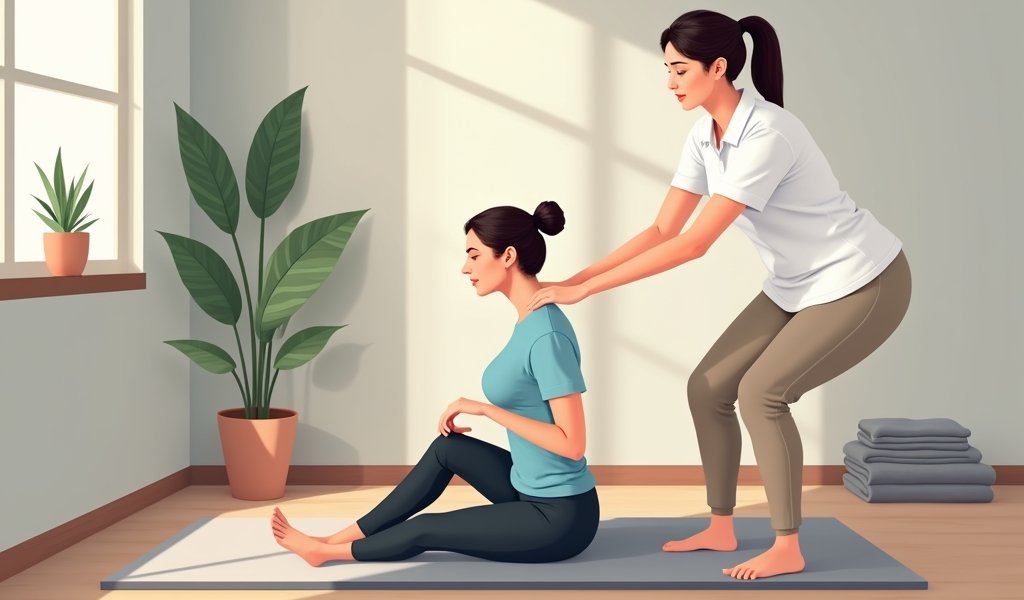
The Epley Maneuver: Resetting Your Inner Balance
The Epley Maneuver stands as the gold standard for treating BPPV – like a reset button for your inner ear. Developed by Dr. John Epley in 1980, this sequence of head movements helps guide displaced calcium crystals back to their proper home in the inner ear. Think of it as a gentle roller coaster designed to transport these microscopic particles through the semicircular canals to where they belong.
To perform the Epley Maneuver correctly:
- Sit upright on a bed or examination table with your legs extended
- Turn your head 45 degrees toward the affected ear
- Quickly lie back with your head still turned, shoulders on the pillow, neck extended slightly over the edge (maintain this position for 30 seconds)
- Turn your head 90 degrees in the opposite direction without raising it (hold for 30 seconds)
- Roll your entire body in the direction you’re facing while keeping your head in position (hold for 30 seconds)
- Slowly return to a sitting position and remain still for a moment
This maneuver boasts an impressive success rate, with Cochrane reviews showing complete resolution in up to 80% of patients after just one session. For many, it’s like finding the key to a lock that’s kept them imprisoned in dizziness. However, precision matters – performing these movements incorrectly might prove ineffective or potentially exacerbate symptoms.
Initially, the Epley Maneuver may trigger vertigo symptoms – a necessary storm before the calm. Most practitioners recommend having someone assist you the first few times, acting as your guide through this inner ear journey. With repetition, the procedure typically becomes easier as symptoms improve.
Brandt-Daroff Exercises: Training Your Brain to Adapt
While the Epley Maneuver works to reposition crystals, Brandt-Daroff exercises take a different approach – they help your brain adapt to the vertigo-triggering signals. These exercises function like exposure therapy; by repeatedly experiencing controlled vertigo in safe settings, your brain gradually learns to ignore these false alarms. Imagine teaching your dog to ignore the mailman’s arrival – at first, there’s commotion, but eventually, they barely notice.
The Brandt-Daroff sequence involves these simple steps:
- Begin by sitting upright on the edge of your bed
- Quickly lie down on one side with your nose pointed up at about a 45-degree angle (hold for 30 seconds or until dizziness subsides)
- Return to the sitting position (stay for 30 seconds)
- Repeat the movement on the opposite side
- Complete 5-10 repetitions, three times daily
Unlike the precise repositioning of the Epley Maneuver, Brandt-Daroff exercises work through habituation – gradually desensitizing your brain to motion-triggered vertigo. They’re particularly effective for those who experience persistent symptoms despite repositioning maneuvers. Think of them as strength training for your vestibular system; each repetition builds resilience.
Consistency is crucial with these exercises. Many patients see significant improvement within two weeks of diligent practice, though the full benefit may take longer to manifest. Like learning any new skill, your brain needs repetition to establish new neural pathways. Wouldn’t you invest a few minutes daily if it meant reclaiming your balance and confidence?
Gaze Stabilization Exercises: Steadying Your Vision
Have you ever noticed how vertigo makes the world seem like it’s viewed through a shaky camera lens? Gaze stabilization exercises target this precise problem by improving the vestibulo-ocular reflex – the coordination between your eyes and inner ear that keeps vision steady during head movements. Like a sophisticated image stabilization system in a camera, these exercises help recalibrate your visual processing.
Start with these fundamental techniques:
- Focus and Head Turns: Hold a small object (like a pen) at arm’s length. Focus on it while slowly turning your head from side to side, maintaining clear vision of the object.
- Target Viewing: Place two distinct targets on a wall. Focus on one, then quickly shift your gaze to the other without moving your head.
- Near-Far Focus Shifts: Hold your thumb about 10 inches from your face and choose a target about 10 feet away. Alternate focus between your thumb and the distant target.
Begin with small, slow movements and gradually increase speed and range as your symptoms allow. The key lies in challenging your system just enough to promote adaptation without triggering severe symptoms – like wading into a pool gradually rather than diving into the deep end.
These exercises can be particularly beneficial for those whose vertigo is triggered by visual stimulation, such as watching moving traffic or scrolling on screens. By strengthening the connection between visual input and balance processing, you’re essentially teaching your brain to better interpret what your eyes are seeing, even when your balance system sends conflicting signals.
For optimal results, perform these exercises in short sessions (3-5 minutes) several times daily. Remember that mild dizziness during practice is normal and even necessary for the adaptation process – but if symptoms become severe, take a break and resume when comfortable. Just as bird dog exercises build core stability, gaze stabilization builds visual-vestibular harmony.

Balance Training: Building Your Stability Foundation
Balance isn’t merely the absence of falling – it’s an intricate dance between your vestibular system, vision, proprioception (body position awareness), and muscular responses. For those with vertigo, this orchestra often plays out of tune. Balance training exercises serve as the conductor, helping harmonize these elements once again.
Begin with these foundational balance exercises:
- Modified Romberg Stance: Stand with feet together, arms crossed over chest. Maintain this position for 30 seconds with eyes open, then progress to eyes closed when comfortable.
- Single Leg Stance: Balance on one foot while holding onto a stable surface. Gradually reduce your grip as balance improves.
- Weight Shifts: Stand with feet hip-width apart. Slowly shift weight from one foot to the other, eventually progressing to gentle swaying in different directions.
- Heel-to-Toe Walking: Place the heel of one foot directly in front of the toes of the opposite foot, as if walking on a tightrope.
Safety comes first with these exercises – perform them near a sturdy support like a countertop or sturdy chair. Much like a child learning to ride a bicycle, you’ll need this support less and less as your confidence grows. Many physical therapists recommend practicing on different surfaces as you progress – from firm floors to carpet to foam pads, each presenting a new challenge for your balance system.
The beauty of balance training lies in its versatility and progressive nature. You can easily modify these exercises to match your current abilities, then gradually increase difficulty as your stability improves. It’s like building a house – you start with a solid foundation before attempting the roof.
Research published in the Frontiers in Neurology journal demonstrates that consistent balance training significantly reduces fall risk in individuals with vestibular disorders. Beyond vertigo management, these exercises offer the added benefit of improving overall physical confidence – wouldn’t it be wonderful to walk through a crowded space without fear of losing your balance?
Walking Exercises: Progressive Movement Therapy
Walking – something most of us took for granted until vertigo turned this simple act into a challenging endeavor. Like a sailor finding sea legs after a storm, regaining confident walking abilities requires deliberate practice. Progressive walking exercises serve as a bridge between controlled balance training and real-world movement.
Begin with these structured walking patterns:
- Corridor Walking: Walk in a straight line along a hallway, focusing on a fixed point ahead. As comfort increases, try turning your head slightly while maintaining your course.
- Figure-Eight Paths: Walk in a figure-eight pattern, gradually decreasing the size of your loops as your balance improves.
- Direction Changes: Practice stopping and changing direction on command, first with slow, planned movements, then with increasingly rapid transitions.
- Walking with Head Movements: While walking a straight path, gently nod your head up and down or turn it side to side.
Each of these exercises should be progressed gradually. Think of them as chapters in your recovery story – each building upon the last. As you master these controlled environments, you can advance to more challenging scenarios: walking in crowded places, navigating uneven terrain, or even incorporating a walking workout into your routine.
The psychological benefits of these exercises often match the physical ones. Many vertigo sufferers develop anxiety about moving through the world – a natural response to the unpredictability of their symptoms. By gradually reintroducing controlled movement in safe environments, you rebuild not just physical capability but also confidence.
Remember that progress may not follow a straight line. Some days will feel like two steps forward, others like one step back – but the overall trajectory should point toward improvement. Document your progress to recognize even small victories, which can provide motivation during challenging periods.
Creating an Effective Vertigo Exercise Routine
Crafting an effective exercise routine for vertigo resembles assembling a puzzle – each piece serves a purpose, but the complete picture only emerges when they’re properly arranged together. How can you design a program that addresses your specific needs while maximizing recovery?
Consider these guidelines when establishing your routine:
- Consistency trumps intensity: Brief, daily sessions yield better results than occasional marathon efforts. Aim for 10-15 minutes, twice daily.
- Progression should be gradual: Increase difficulty only when current exercises become comfortable. Rushing ahead is like skipping chapters in a book – you’ll miss critical development.
- Incorporate variety: Include elements from each exercise category to comprehensively address different aspects of vestibular function.
- Schedule strategically: Perform exercises when you’re well-rested and have time to rest afterward if symptoms flare.
- Document your journey: Keep a simple log of exercises performed and symptom responses to identify patterns and progress.
A sample beginner routine might include:
- Morning: Gaze stabilization exercises (3 minutes), modified Romberg stance (2 minutes), corridor walking (5 minutes)
- Evening: Brandt-Daroff exercises (5 minutes), weight shifts (2 minutes), single-leg stance attempts (3 minutes)
As you progress, you might incorporate more challenging variations or longer durations. Think of it as training for a marathon – you wouldn’t start with 26.2 miles on day one. Instead, you build endurance and capability over time.
Remember that mild symptoms during exercises are expected and even necessary for adaptation. However, if exercises provoke severe dizziness, nausea, or vomiting, you’ve likely pushed too far too fast. Scale back to a comfortable level and advance more gradually. Your vestibular system requires gentle challenges – not overwhelming assault – to adapt effectively.
When to Seek Professional Help
While self-directed exercise can be remarkably effective for many vertigo sufferers, sometimes professional guidance becomes necessary – like when a ship needs a harbor pilot to navigate treacherous waters. How do you know when to seek that expert assistance?
Consider consulting a healthcare provider if:
- Your vertigo symptoms are new and haven’t been properly diagnosed
- Exercises consistently worsen your symptoms rather than gradually improving them
- You experience accompanying symptoms like hearing loss, severe headaches, or neurological changes
- Your vertigo resulted from head trauma or injury
- Symptoms persist without improvement despite two weeks of consistent exercises
- You’re unsure which exercises are appropriate for your specific condition
Vestibular physical therapists specialize in diagnosing and treating balance disorders. These professionals can conduct comprehensive assessments, identify your specific type of vertigo, and design personalized treatment plans. Their expertise is particularly valuable for complex cases or when multiple factors contribute to your symptoms.
During professional evaluation, you might encounter specialized equipment like infrared goggles that track eye movements or computerized balance platforms that measure weight distribution. These tools provide objective measurements to guide treatment – similar to how a mechanic uses diagnostic equipment to identify precisely what’s wrong with an engine.
Don’t view seeking professional help as a failure of self-management – rather, it’s a strategic decision to optimize your recovery. Many patients find that even one or two sessions with a specialist can dramatically improve their understanding and execution of exercises, accelerating progress substantially.
Conclusion: Finding Steady Ground Again
Living with vertigo can feel like navigating through life on a perpetually rocking boat – exhausting, disorienting, and sometimes frightening. Yet the exercises outlined in this guide offer a compass toward calmer waters. Like a skilled sailor learning to work with the waves rather than fighting against them, these techniques help your brain and body adapt to vestibular challenges.
The journey to vertigo relief isn’t typically a straight line, but rather a winding path with occasional setbacks and surprising breakthroughs. What matters most is consistent practice, gradual progression, and belief in your body’s remarkable ability to adapt. The vestibular system, complex and delicate though it may be, responds to thoughtful training with remarkable resilience.
Remember that these exercises for vertigo represent more than just physical movements – they’re tools for reclaiming independence, confidence, and quality of life. Each repetition builds not just neural pathways but also psychological strength, reminding you that vertigo, while challenging, doesn’t define your capabilities or limit your horizons.
So begin where you are, with what you can manage today. Trust the process, celebrate small victories, and imagine the steady ground that awaits beyond the spinning. After all, isn’t regaining your balance worth the patient investment of time and effort? Your world doesn’t have to keep spinning forever – with these proven exercises, you can find your footing once again.
Frequently Asked Questions
How quickly can exercises improve vertigo symptoms?
Many people notice improvement within 1-2 weeks of consistent practice. Complete resolution typically takes 4-8 weeks, depending on the cause and severity.
Is it normal to feel worse when first starting vertigo exercises?
Yes, temporary symptom increases are normal and even necessary for adaptation. If symptoms become severe or don’t improve within a few days, consult your healthcare provider.
How often should I perform vertigo exercises?
Most vestibular therapists recommend 2-3 short sessions daily (10-15 minutes each). Consistency is more important than duration.
Can I perform these exercises during a vertigo episode?
It’s generally best to wait until acute symptoms subside before performing exercises. Once the severe spinning decreases, gentle exercises may help speed recovery.
Will these exercises cure my vertigo permanently?
For conditions like BPPV, exercises can provide complete resolution, though recurrences may happen. For chronic vestibular disorders, exercises help manage symptoms rather than providing a permanent cure.