
Overview
This article presents seven evidence-based strategies for maximizing fat loss on exercise bikes, including interval training, heart rate zone targeting, resistance techniques, extended low-intensity sessions, fasted cardio, post-strength training cycling, and building consistency through convenience. The strategies are supported by scientific research, expert insights, and success stories from customers who have achieved significant weight loss results by implementing these methods on their home exercise equipment.
Table of Contents
- Understanding Exercise Bike Benefits
- Why Exercise Bikes Are Perfect for Fat Loss
- Hack #1: Interval Training Intensity
- Hack #2: Heart Rate Zone Targeting
- Hack #3: Resistance Training Techniques
- Hack #4: Extended Low-Intensity Sessions
- Hack #5: Fasted Cardio Approach
- Hack #6: Post-Strength Training Cardio
- Hack #7: Consistency Through Convenience
- Putting It All Together
- Frequently Asked Questions
Understanding Exercise Bike Benefits
The stationary bike sitting in the corner of your living room might just be your ticket to sustainable weight loss. Once considered a gym staple, exercise bikes have pedaled their way into our homes, becoming centerpieces of the modern fitness revolution. But are you maximizing your bike’s fat-burning potential?
At Achieve Health Goals, we’ve guided thousands of clients through transformative fitness journeys using quality exercise equipment. What makes bikes particularly special is their remarkable ability to torch calories while being incredibly joint-friendly – something your knees will thank you for after decades of workouts.
As Dr. Melissa Chen, a sports medicine specialist at Stanford, explains in her research, “Cycling provides the ideal combination of cardiovascular stimulus and mechanical efficiency, making it uniquely positioned for sustainable fat loss programming.”
Take Jennifer from Portland, one of our long-term customers: “I tried everything from running to HIIT classes, but my exercise bike from Achieve Health Goals finally gave me results without aggravating my old knee injury. I’ve lost 27 pounds in five months, and for the first time, I actually look forward to my workouts!”
Why Exercise Bikes Are Perfect for Fat Loss
Before diving into specific techniques, let’s understand why exercise bikes deserve their reputation as fat-burning powerhouses. The magic lies in their ability to create significant caloric deficits – the fundamental requirement for weight loss – without overwhelming your body’s recovery systems.
Exercise bikes excel in three critical areas:
- Sustainability: You can ride longer with less physical strain than high-impact exercises
- Intensity control: Precise resistance and effort adjustments allow perfect workout calibration
- Consistency factor: Home accessibility removes barriers to regular exercise
Research published in the Medicine & Science in Sports & Exercise journal found that stationary cycling burns between 400-600 calories per hour for the average adult – comparable to running but with significantly reduced injury risk.
Hack #1: Interval Training Intensity
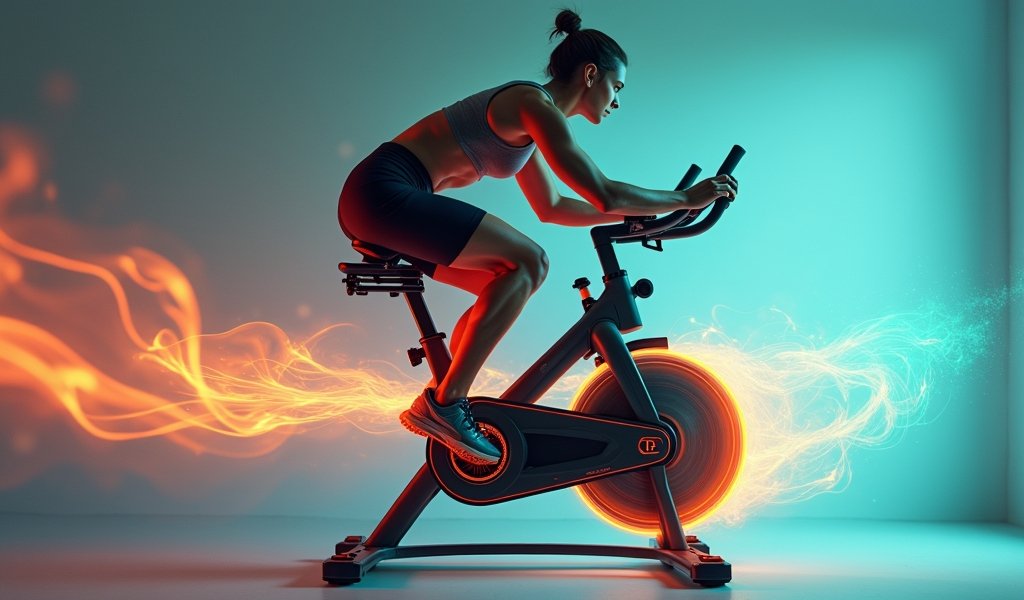
If your exercise bike sessions feel more like leisurely Sunday rides than calorie-crushing workouts, interval training will revolutionize your approach. High-Intensity Interval Training (HIIT) transforms ordinary cycling into metabolic magic.
The formula is simple but powerful: alternate between periods of near-maximum effort and strategic recovery. A research-backed protocol involves 30-second sprints at 90% effort followed by 90-second recovery periods at 40% effort. Repeat this cycle 8-10 times after a proper warm-up.
What makes this approach so effective? Your body enters excess post-exercise oxygen consumption (EPOC) – a state where you continue burning calories at an elevated rate for hours after finishing your workout. This “afterburn effect” is like getting free fat loss while you go about your day.
Mark, a financial advisor and Achieve Health Goals customer, shares: “I was skeptical about fitting effective workouts into my schedule until the team recommended 20-minute HIIT sessions. Three months later, I’ve dropped two belt sizes while actually spending less time exercising than before!”
Implementation tip: Start with just 4-5 intervals and gradually build up. Quality always trumps quantity with HIIT – proper form during intense efforts prevents injury and maximizes results.
Hack #2: Heart Rate Zone Targeting
Your heart rate serves as your body’s built-in intensity gauge, and learning to read it transforms ordinary bike sessions into precisely calibrated fat-burning workouts. Different heart rate zones trigger different metabolic responses – some optimize immediate calorie burn while others preferentially target stored fat.
For maximum fat utilization, aim for sustained periods in your “fat-burning zone” – approximately 60-70% of your maximum heart rate. This moderate intensity maximizes the percentage of calories derived directly from fat stores rather than glycogen (stored carbohydrates).
For accelerated overall calorie burn, incorporate intervals in your “cardio zone” (70-85% of maximum), which burns more total calories, though a smaller percentage comes from fat. The ideal approach combines both strategies.
To calculate your target zones:
- Estimate maximum heart rate: 220 minus your age
- Fat-burning zone: 60-70% of maximum
- Cardio zone: 70-85% of maximum
Stephanie, a teacher who purchased her exercise bike from Achieve Health Goals during the pandemic, notes: “Using the heart rate monitor completely changed my approach. Instead of pushing too hard every session and burning out, I learned to maintain the right zones. The weight started coming off consistently after that – 31 pounds so far!”
Hack #3: Resistance Training Techniques
That resistance dial on your exercise bike might be the most underutilized tool in your fitness arsenal. Strategic resistance manipulation simulates the muscle-building benefits of strength training while maintaining cycling’s cardiovascular advantages.
Progressive resistance cycling involves gradually increasing tension throughout your workout, challenging different muscle fibers and preventing adaptation. This approach activates more muscle groups, particularly in your glutes and quadriceps, creating a higher caloric demand both during and after exercise.
Try this resistance ladder approach:
- Minutes 1-3: Low resistance warm-up
- Minutes 4-7: Medium resistance, comfortable cadence
- Minutes 8-10: High resistance, slower cadence
- Minutes 11-13: Very high resistance, standing position
- Minutes 14-16: Medium resistance, high cadence
- Minutes 17-20: Decreasing resistance cooldown
The key is finding the sweet spot between challenge and form. Resistance should be high enough to create muscle tension but not so high that your pedaling becomes jerky or your back rounds. Maintain a minimum cadence of 60 RPM even during high-resistance segments.
David, a busy attorney and father of three, shares his experience: “The Achieve Health Goals team taught me to use resistance strategically instead of just pedaling mindlessly. The difference was immediate – I could feel muscles working that I didn’t even know existed! Six weeks in, my legs look defined for the first time in decades.”
Hack #4: Extended Low-Intensity Sessions
While high-intensity training captures headlines, longer steady-state cycling sessions hold the secret to targeting stubborn fat deposits. These extended rides – typically 45-60 minutes at a moderate pace – create the perfect metabolic environment for fat oxidation once initial glycogen stores begin depleting.
The beauty of low-intensity steady state (LISS) training lies in its sustainability. You can maintain these sessions 3-4 times weekly without overtaxing your recovery systems, making them perfect for consistent fat loss over time.
The key challenge with longer sessions isn’t physical – it’s mental engagement. Combat boredom with these proven strategies:
- Create cycling-specific playlists that last exactly your target duration
- Reserve certain podcasts or audiobooks exclusively for bike sessions
- Use virtual riding apps that simulate scenic routes around the world
- Break the session into smaller “checkpoints” to celebrate progress
Carol, who’s been using her Achieve Health Goals exercise bike for over a year, offers this insight: “The combination of two weekly interval sessions and two longer rides completely transformed my body. The longer sessions felt almost meditative once I found engaging content to listen to. I’ve lost 42 pounds and actually look forward to my ‘me time’ on the bike.”
Hack #5: Fasted Cardio Approach
Early birds, this strategy might be your new secret weapon. Fasted cardio – exercising before your first meal – leverages your body’s overnight fasting state to potentially enhance fat utilization during workouts.
When you wake up, your insulin levels are naturally lower and glycogen stores partially depleted, creating prime conditions for tapping directly into fat reserves. A moderate 20-30 minute session on your exercise bike before breakfast can amplify this effect.
For optimal results, maintain intensity in the moderate range (60-70% of maximum heart rate) rather than pushing into high-intensity zones, which might be challenging without proper fueling. Hydrate with water before starting, even if you’re avoiding food.
Important caveat: Fasted cardio isn’t suitable for everyone. Those with certain medical conditions, pregnant women, or individuals who experience dizziness should prioritize proper nutrition before exercise. As always, listen to your body’s signals over any training protocol.
Michael, a financial analyst who integrated fasted cardio into his routine after consulting with our Achieve Health Goals specialists, reports: “Morning rides on an empty stomach were challenging the first week, but my body quickly adapted. Three months in, I’ve lost 19 pounds and find I have more consistent energy throughout the day. It’s become my non-negotiable morning ritual.”
Hack #6: Post-Strength Training Cardio
If you’re already incorporating strength training into your fitness routine (and you absolutely should be), the sequencing of your workout components can dramatically impact fat loss results. Exercise bikes offer the perfect complement to resistance training when timed strategically.
Here’s the science: After completing strength exercises, your body has typically depleted a significant portion of its glycogen stores, creating a metabolic environment primed for fat utilization. Additionally, your heart rate is already elevated, allowing you to quickly transition into effective cardio zones.
For maximum benefit, try these guidelines:
- Complete your strength training first (30-45 minutes)
- Transition to your exercise bike within 5 minutes
- Perform 15-20 minutes of moderate-intensity cycling (65-75% max heart rate)
- Focus on steady cadence rather than high resistance
This approach creates a powerful one-two punch: strength training builds metabolically active muscle while the strategic cardio accelerates fat utilization. The combined effect exceeds what either component would achieve in isolation.
James, who incorporated this technique after purchasing equipment from Achieve Health Goals, shares: “Adding just 15 minutes on the bike after lifting completely transformed my results. I was skeptical about such a short cardio session making a difference, but the before-and-after pictures don’t lie. My definition improved dramatically in just six weeks!”
Hack #7: Consistency Through Convenience
The most scientifically perfect workout plan means nothing if you don’t actually do it consistently. This final strategy might seem simple, but it’s arguably the most powerful: leverage your exercise bike’s convenience to build unshakable consistency.
Home exercise bikes eliminate countless barriers to regular workouts: no travel time, no weather concerns, no waiting for equipment, and no public performance anxiety. This accessibility is your secret weapon for long-term success.
At Achieve Health Goals, we’ve helped thousands of clients develop “habit stacks” – linking bike sessions to existing daily routines to ensure consistency:
- The “Netflix rule”: Only watch certain shows while pedaling
- Morning pairing: Coffee brews while completing a quick ride
- Work-cycle integration: Pedal during appropriate phone meetings
- Evening unwinding: Replace 20 minutes of social media scrolling with a gentle ride
Rebecca, a marketing executive who struggled with consistency before purchasing her Achieve Health Goals bike, offers this perspective: “What finally worked wasn’t finding more motivation – it was eliminating excuses. Positioning my bike where I could hop on during my daughter’s nap time made all the difference. I’ve lost 36 pounds over eight months simply through consistency, not through extreme workouts.”
Putting It All Together
Like ingredients in a recipe, these seven strategies work together to create fat-burning results greater than what any single approach could achieve alone. The beauty of this system is its flexibility – you can start with just two or three techniques that resonate with your lifestyle and gradually incorporate others.
For beginners, we recommend this simple implementation sequence:
- Week 1-2: Focus on consistency (Hack #7) with regular, moderate sessions
- Week 3-4: Add basic heart rate zone awareness (Hack #2)
- Week 5-6: Incorporate one interval session weekly (Hack #1)
- Week 7-8: Experiment with resistance variation (Hack #3)
- Beyond: Gradually integrate the remaining strategies based on preferences and schedule
At Achieve Health Goals, we’ve witnessed remarkable transformations when clients approach their exercise bike with these strategic methods. That stationary bike in your home isn’t just equipment – it’s a vehicle transporting you toward your health aspirations.
Your journey to better fitness doesn’t require excessive time, superhuman motivation, or complex training systems. It simply requires applying these proven strategies consistently on the exercise bike you already own. Your future self – energetic, confident, and healthy – is just a pedal stroke away.
Frequently Asked Questions
How long should I exercise on a stationary bike to lose weight?
For weight loss, aim for at least 150 minutes weekly, spread across 3-5 sessions. More important than duration is consistency and gradually increasing intensity as your fitness improves.
Is a stationary bike good for belly fat?
Yes, exercise bikes are effective for reducing belly fat as part of an overall fat loss strategy. While you can’t spot-reduce fat from specific areas, consistent cycling creates the caloric deficit necessary for total-body fat reduction.
Are exercise bikes better than treadmills for weight loss?
Neither is universally “better” – both can be effective for weight loss when used consistently. Exercise bikes typically offer advantages in joint safety, lower perceived exertion, and the ability to multitask during workouts.
How soon will I see results from using an exercise bike?
Most people notice improved energy and mood within 2 weeks, visible body composition changes within 4-6 weeks, and significant fat loss within 2-3 months of consistent use. Your individual results depend on workout intensity, frequency, and dietary habits.
Can I use an exercise bike if I have joint problems?
Exercise bikes are generally excellent for people with joint issues due to their low-impact nature. The controlled movement pattern minimizes stress on knees, hips, and ankles while still providing effective cardiovascular training.
Pingback: Health Related Fitness: 5 Energy Hacks - achievehealthgoals.com