
Overview
In a world where fitness advice is more abundant than gym-goers on January 1st, this article offers seven practical strategies for achieving lasting health and fitness results: personalized nutrition, effective workouts, consistent habits, proper recovery, mental wellbeing, smart progress tracking, and community support. The article emphasizes that sustainable health is a holistic journey requiring both scientific knowledge and self-awareness, with success coming not from perfection but from persistence and an integrated approach that addresses all dimensions of wellness.
Table of Contents
- Understanding Health and Fitness: A Holistic Approach
- Tip 1: Personalized Nutrition Plans That Actually Work
- Tip 2: Designing an Effective Workout Routine
- Tip 3: Building Consistency Through Healthy Habits
- Tip 4: The Overlooked Importance of Recovery
- Tip 5: Mental Wellbeing and Fitness Success
- Tip 6: Smart Ways to Track Your Progress
- Tip 7: Harnessing the Power of Community Support
- Conclusion: Your Journey to Ultimate Health and Fitness
- Frequently Asked Questions
Understanding Health and Fitness: A Holistic Approach
The journey toward ultimate health and fitness is deeply personal and multifaceted. As a health professional with over a decade of experience guiding clients through their transformations, I’ve observed that sustainable results come from understanding that health isn’t merely the absence of illness—it’s a state of complete physical, mental, and social well-being.
Too often, we compartmentalize health and fitness into isolated goals: losing weight, building muscle, or improving cardiovascular endurance. While these objectives are valuable, they’re most powerful when integrated into a comprehensive lifestyle approach that honors your unique body, preferences, and circumstances.
The most successful health journeys begin with honest self-assessment. What’s your current fitness level? What nutritional habits support or hinder your goals? How does your mental state influence your physical wellness? According to research from Harvard Medical School, the mind-body connection plays a crucial role in overall health outcomes, yet it’s frequently overlooked in traditional fitness programs.
In this comprehensive guide, I’ll walk you through seven evidence-based strategies that address all dimensions of health and fitness. Whether you’re just beginning your journey or looking to optimize an established routine, these principles will help you create sustainable changes that lead to lasting results.
Tip 1: Personalized Nutrition Plans That Actually Work
Nutrition advice can feel overwhelming with contradictory information bombarding us daily. The truth? There’s no one-size-fits-all approach to optimal eating. Your ideal nutrition plan depends on your unique body composition, metabolic profile, health history, and personal goals.
Instead of following the latest trending diet, focus on creating a sustainable eating pattern that works specifically for you. Begin by tracking your current intake for a week—without judgment—to establish your baseline habits. Notice not just what you eat, but when you eat, how you feel afterward, and what triggers certain food choices.
Once you understand your patterns, implement these evidence-based principles:
- Prioritize whole, unprocessed foods that provide nutrient density without empty calories
- Balance your macronutrients (proteins, carbohydrates, and fats) according to your activity level and body’s needs
- Stay adequately hydrated—aim for at least half your body weight in ounces daily
- Practice mindful eating by eliminating distractions and savoring each bite
- Allow flexibility for social occasions and favorite foods to maintain sustainability
Research published in the International Journal of Environmental Research and Public Health confirms that personalized nutrition approaches lead to better adherence and improved health outcomes compared to generic diet plans. Remember that consistency matters more than perfection—aim for nutritional choices that support your health goals 80-90% of the time.
For those with specific health conditions or performance goals, consider consulting with a registered dietitian who can provide tailored guidance and help you navigate nutritional challenges with confidence and clarity.

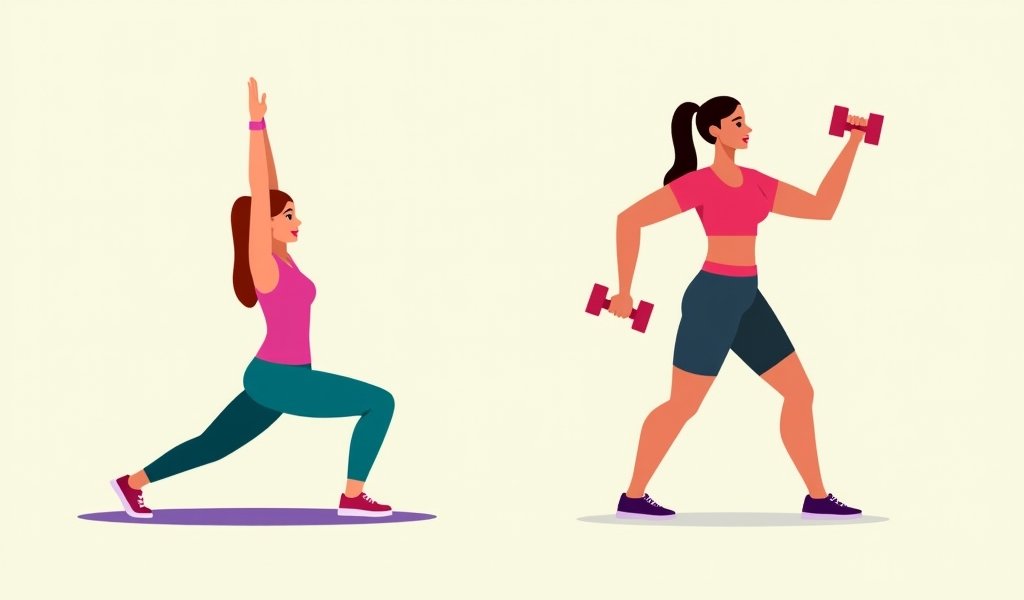
Tip 2: Designing an Effective Workout Routine
Creating an exercise program that delivers results requires more than randomly selecting workouts—it demands intentional design based on your goals, preferences, and current fitness level. The most effective routines balance challenge with enjoyment, pushing you beyond your comfort zone while remaining sustainable long-term.
Begin by honestly assessing your fitness starting point. If you’re new to exercise or returning after a break, start gradually to build a foundation and prevent injury. For those with an established fitness base, periodically introducing new stimuli prevents plateaus and maintains progress.
Consider these key elements when designing your routine:
- Incorporate both cardiovascular conditioning and strength training for comprehensive fitness
- Follow the principle of progressive overload by gradually increasing intensity, volume, or complexity
- Include mobility work to maintain joint health and functional movement patterns
- Schedule appropriate rest days to allow for recovery and adaptation
- Select activities you genuinely enjoy—adherence matters more than the “perfect” workout
According to the American College of Sports Medicine, adults should aim for at least 150 minutes of moderate-intensity aerobic activity weekly, plus strength training for all major muscle groups at least twice weekly. However, this represents minimum guidelines—your optimal program may include more frequent or intense training depending on your specific goals.
Remember that consistency trumps intensity. A sustainable program you can maintain for months and years will always outperform an extreme regimen you abandon after a few weeks. Listen to your body’s signals and adjust accordingly—some days call for pushing your limits, while others benefit from scaled-back recovery sessions.
Tip 3: Building Consistency Through Healthy Habits
Consistency is the true cornerstone of health and fitness success. Even the most scientifically-sound program delivers minimal results without regular implementation. The secret to consistency isn’t motivation or willpower—it’s developing systems and habits that make healthy choices your default response.
According to research from James Clear, author of Atomic Habits, small, consistent actions compound over time to create remarkable results. Rather than attempting massive lifestyle overhauls, focus on establishing “tiny habits” that eventually become automatic behaviors requiring minimal conscious effort.
Consider implementing these habit-building strategies:
- Stack new health behaviors onto existing habits (e.g., doing push-ups after brushing your teeth)
- Reduce friction for positive choices by preparing environments in advance (meal prepping, keeping workout clothes visible)
- Increase friction for less-desirable options (removing processed foods from easy reach)
- Track behaviors you want to reinforce to create awareness and accountability
- Celebrate small wins to strengthen neural pathways associated with healthy choices
Remember that habit formation takes time—studies suggest anywhere from 18 to 254 days depending on complexity and individual factors. Be patient with yourself during the establishment phase and focus on consistency rather than perfection.
When inevitable disruptions occur (travel, illness, major life changes), have predetermined “minimal viable routines” ready to deploy. These simplified versions of your ideal habits maintain continuity during challenging periods, preventing the complete abandonment of healthy practices.
Tip 4: The Overlooked Importance of Recovery
In our achievement-oriented culture, recovery is often mistakenly viewed as unproductive time—yet it’s during these periods that your body adapts and strengthens from training stimuli. Without adequate recovery, progress stalls, injury risk increases, and motivation plummets.
Sleep represents the cornerstone of effective recovery. During deep sleep stages, your body releases growth hormone, repairs tissues, and consolidates neural adaptations from training. Research published in the International Journal of Sports Medicine demonstrates that inadequate sleep negatively impacts performance, hormone balance, and cognitive function.
Beyond sleep, implement these recovery practices into your routine:
- Incorporate active recovery days with gentle movement like walking, swimming, or yoga
- Practice self-myofascial release through foam rolling or massage to address tissue restrictions
- Utilize contrast therapy (alternating hot and cold exposure) to improve circulation and reduce inflammation
- Prioritize proper hydration and post-exercise nutrition to replenish glycogen stores and provide building blocks for repair
- Implement stress management techniques to reduce cortisol’s catabolic effects on muscle and recovery
Learn to distinguish between productive discomfort (the challenging sensation of growth) and warning signals (pain indicating potential injury). Developing this body awareness allows you to train intensely when appropriate while respecting your physiology’s need for recuperation.
Remember that recovery needs vary based on training intensity, sleep quality, nutritional status, age, and overall stress levels. Rather than following rigid protocols, develop personalized recovery strategies that respond to your body’s changing signals and requirements.

Tip 5: Mental Wellbeing and Fitness Success
The connection between mental and physical health cannot be overstated—your mindset profoundly influences everything from workout performance to nutritional choices. Developing psychological skills proves just as important as physical training for sustainable fitness results.
Begin by examining your relationship with exercise and nutrition. Do you approach health behaviors as punishment or opportunity? Research from the American Psychological Association shows that individuals who exercise for enjoyment and wellbeing maintain consistency longer than those motivated by appearance-based goals or guilt.
Cultivate these mental fitness skills alongside physical training:
- Practice self-compassion during setbacks rather than harsh self-judgment
- Develop intrinsic motivation by connecting with deeper values behind your health goals
- Use visualization techniques to enhance performance and strengthen commitment
- Implement mindfulness practices to reduce stress and improve body awareness
- Challenge negative self-talk and cognitive distortions that undermine progress
Consider implementing a regular mindfulness meditation practice, even starting with just 5-10 minutes daily. Studies demonstrate that meditation reduces stress hormones, improves attention, and enhances recovery between training sessions. The ability to remain present during challenging workouts also allows for better technique and reduced injury risk.
Remember that mental wellness requires ongoing attention, just like physical fitness. Periodically assess your psychological state and implement supportive practices during particularly stressful periods. The integration of mind and body creates a foundation for truly sustainable health and fitness success.
Tip 6: Smart Ways to Track Your Progress
Meaningful progress tracking provides objective feedback that guides program adjustments and reinforces motivation. However, many people either track too many variables (becoming overwhelmed) or focus exclusively on scale weight (missing valuable indicators of improved health and fitness).
Effective tracking begins with identifying metrics aligned with your specific goals. While weight can provide useful information, consider these additional indicators that often reveal progress when the scale hasn’t changed:
- Body measurements (waist, hips, chest, arms, thighs) to assess compositional changes
- Performance metrics (strength improvements, endurance gains, movement quality)
- Biomarkers (blood pressure, resting heart rate, blood glucose, cholesterol levels)
- Subjective indicators (energy levels, sleep quality, stress resilience, mood)
- Photographic documentation to visualize changes that numbers might not capture
Track consistently but not obsessively—weekly or bi-weekly measurements typically provide sufficient data without creating unhealthy fixations. Remember that physiological adaptations follow natural fluctuations and plateaus, so evaluate trends over time rather than daily variations.
Technology can enhance tracking efficiency through fitness apps, smart scales, and wearable devices. However, research from the Journal of Medical Internet Research suggests that the most effective tracking methods are those you’ll use consistently—whether digital or analog.
Periodically review your tracking methods to ensure they still provide meaningful feedback for your current goals. As your health journey evolves, the metrics that matter most may shift, requiring adjustments to your tracking approach.
Tip 7: Harnessing the Power of Community Support
The journey to optimal health and fitness challenges us in deeply personal ways, yet paradoxically, we rarely succeed entirely alone. Research consistently demonstrates that social support significantly improves adherence to health behaviors and overall outcomes.
A study published in the Journal of Health Psychology found that participants with strong social support were 80% more likely to maintain exercise programs compared to those attempting changes in isolation. The accountability, encouragement, and shared knowledge within supportive communities create powerful motivation that internal drive alone cannot sustain.
Consider these approaches to building your supportive network:
- Find a workout partner with compatible schedules and similar goals
- Join group fitness classes that combine structured instruction with community
- Participate in online fitness communities that provide virtual accountability
- Share your journey with family members and enlist their support
- Consider working with a qualified health coach or personal trainer for professional guidance
The ideal community provides encouragement without enabling excuses. Seek relationships that respect your autonomy while offering genuine support during challenging periods. Remember that different types of support—informational, emotional, and practical—may come from various sources within your network.
If your current social circle doesn’t support your health goals, deliberately seek communities aligned with your aspirations. Many find that relationships naturally evolve as health priorities shift, creating space for connections that reinforce rather than undermine positive changes.
Conclusion: Your Journey to Ultimate Health and Fitness
The path to lasting health and fitness represents a deeply personal journey requiring both scientific knowledge and self-awareness. By implementing these seven evidence-based strategies—personalized nutrition, effective workouts, consistent habits, prioritized recovery, mental wellbeing, smart tracking, and community support—you create a comprehensive approach that addresses all dimensions of wellness.
Remember that health isn’t a destination but an ongoing practice. There will be periods of remarkable progress followed by inevitable plateaus and occasional setbacks. What distinguishes those who achieve lasting transformation isn’t perfection but persistence—the willingness to continually learn, adjust, and recommit to prioritizing wellbeing.
Throughout your journey, maintain perspective on why health matters in your broader life context. Physical vitality serves as a foundation that supports your ability to pursue meaningful relationships, professional aspirations, and personal fulfillment. When motivation wavers, reconnect with these deeper values driving your commitment to health.
Begin where you are, use what you have, and take the next small step forward. Your future self will thank you for the investment you’re making today in creating a foundation for lifelong health, energy, and wellbeing.
Frequently Asked Questions
How quickly will I see fitness results?
Initial changes in energy and mood often appear within 2-3 weeks of consistent effort. Visible physical changes typically emerge after 6-8 weeks, though individual timelines vary based on genetics, starting point, and program consistency.
Is it better to focus on diet or exercise first?
Both components work synergistically, but nutrition typically drives weight management while exercise shapes body composition and functional capacity. For sustainable results, gradually implement manageable changes in both areas rather than overhauling everything simultaneously.
How many days per week should I exercise?
Most adults benefit from 3-5 structured workouts weekly, combining strength and cardiovascular training. The optimal frequency depends on your goals, recovery capacity, and existing activity levels—consistency matters more than frequency.
Will lifting weights make women bulky?
No—women typically lack the testosterone levels required for substantial muscle bulk without specific training programs and nutrition approaches. Strength training helps women develop lean tissue, improve metabolism, and create defined muscle tone.
How do I break through a weight loss plateau?
Plateaus result from physiological adaptation and often require strategic adjustments to overcome. Evaluate your caloric intake (which may need recalculation as your body changes), increase training variety or intensity, address potential sleep or stress issues, and ensure proper hydration.