

Overview
Think of Skilled Nursing Facilities (SNFs) as rehab boot camps with better food and fewer drill sergeants screaming in your face! These specialized healthcare settings provide intensive rehabilitation through five key strategies: personalized rehabilitation programs, multidisciplinary team approaches, progressive mobility techniques, cognitive rehabilitation integration, and family involvement—all designed to help patients transition successfully from hospital to home while maximizing their recovery and independence.
Table of Contents
- Understanding SNF: Skilled Nursing Facility Explained
- Who Needs SNF Care? Recognizing When It’s Time
- Strategy 1: Personalized Rehabilitation Programs
- Strategy 2: Multidisciplinary Team Approach
- Strategy 3: Progressive Mobility Techniques
- Strategy 4: Cognitive Rehabilitation Integration
- Strategy 5: Family Involvement and Support Systems
- SNF Insurance Coverage and Medicare Benefits
- Finding a Quality SNF: What to Look For
- Conclusion: Maximizing Recovery Through SNF Care
- Frequently Asked Questions
Understanding SNF: Skilled Nursing Facility Explained
When you encounter the snf medical abbreviation in healthcare documents or conversations with medical professionals, it stands for “Skilled Nursing Facility.” These specialized healthcare settings serve as a crucial bridge between hospital care and home recovery for patients requiring ongoing medical attention and rehabilitation services. As a healthcare provider with over 15 years of experience, I’ve witnessed how SNFs transform recovery journeys for countless patients.
Skilled nursing facilities provide 24-hour nursing care, specialized rehabilitation programs, and medical services under the supervision of licensed healthcare professionals. Unlike traditional nursing homes that focus primarily on assistance with daily living, SNFs deliver clinical interventions including wound care, IV therapy, medication management, and intensive rehabilitation services. The goal is clear: to help patients regain independence and improve their quality of life after acute illnesses, surgeries, or significant health events.
These facilities operate under strict federal guidelines and must maintain specific staff-to-patient ratios, with registered nurses always present. According to the Centers for Medicare & Medicaid Services, SNFs must provide skilled care by or under the supervision of licensed nursing personnel. This distinction is important both for quality of care and for understanding insurance coverage parameters.
Who Needs SNF Care? Recognizing When It’s Time
Determining when someone might benefit from a skilled nursing facility involves evaluating several factors. Typically, SNF care becomes appropriate after an acute hospital stay when a patient still requires skilled nursing or rehabilitation services, but doesn’t need the intensity of hospital care. The transition to SNF often occurs when patients show potential for improvement but aren’t quite ready to return home safely.
Common conditions that may warrant SNF placement include recovery from major surgeries (like joint replacements), stroke rehabilitation, complex wound care, or recovery from severe respiratory conditions. Many patients enter SNF care following hospitalization for heart failure, pneumonia, or after experiencing significant functional decline during a hospital stay. Additionally, patients managing multiple chronic conditions who need help regaining strength and mobility often benefit from the structured environment of a skilled nursing facility.
The decision to transition to SNF care should be collaborative, involving the patient, family members, physicians, and case managers. A comprehensive evaluation will assess the patient’s medical needs, functional abilities, and recovery potential. Research published in the JAMA Network Open indicates that appropriate SNF placement can significantly reduce hospital readmissions and improve long-term outcomes for many patients.

Strategy 1: Personalized Rehabilitation Programs
The cornerstone of effective SNF care lies in developing truly personalized rehabilitation programs tailored to each patient’s unique needs, goals, and medical history. Unlike one-size-fits-all approaches, individualized care plans in the SNF setting address specific functional limitations while building on existing strengths. This personalization significantly improves outcomes and accelerates recovery timelines.
When creating these plans, rehabilitation specialists conduct thorough assessments measuring baseline function across multiple domains, including mobility, self-care abilities, cognitive status, and specific impairments related to the patient’s condition. From there, they establish clear, measurable, and time-bound goals that align with the patient’s personal priorities. For instance, a post-stroke patient might focus on regaining speech and hand coordination, while someone recovering from hip replacement might prioritize safe transfers and stair navigation.
Evidence-based interventions form the foundation of these programs. Physical therapy might include progressive resistance training, balance exercises, and gait training using specialized equipment. Occupational therapy focuses on activities of daily living through adaptive techniques and assistive devices. Speech therapy addresses communication, swallowing difficulties, and cognitive rehabilitation when needed. Throughout the rehabilitation journey, the plan evolves based on the patient’s progress, with regular team conferences ensuring all providers are aligned in their approach.
What makes SNF rehabilitation particularly effective is the frequency and intensity of therapy sessions. Most patients receive therapy multiple times daily, with each session targeting different aspects of recovery. This concentrated approach, which isn’t feasible in outpatient settings, accelerates neuroplasticity and physical reconditioning. A study in the Archives of Physical Medicine and Rehabilitation found that higher therapy intensity in SNFs correlates with improved functional outcomes and shorter lengths of stay.
Strategy 2: Multidisciplinary Team Approach
The magic of skilled nursing facility rehabilitation lies in its multidisciplinary team approach, where professionals from various specialties collaborate seamlessly to address all aspects of patient recovery. This coordinated care model ensures that physical recovery doesn’t happen in isolation from psychological adjustment, nutritional support, or medication management. Instead, the entire team works in concert toward common goals.
At the core of this team are physical, occupational, and speech therapists who deliver specialized rehabilitation services. Nursing staff provide 24-hour medical monitoring, medication administration, and wound care while helping patients practice new skills outside formal therapy sessions. Physicians oversee medical management and adjust treatment plans as needed, while social workers coordinate discharge planning and connect patients with community resources. Nutritionists ensure dietary needs support recovery, particularly important for conditions like diabetes or wound healing.
Regular team conferences are essential to this approach. These structured meetings allow all disciplines to share observations, coordinate interventions, and adjust strategies based on patient progress. For example, if physical therapists notice increased fatigue affecting therapy participation, the team might collaborate with the physician to review medications or with the nutritionist to optimize meal timing and composition.
Communication extends beyond the professional team to include patients and their families as active participants in care planning. This inclusive approach empowers patients, improves motivation, and ensures that rehabilitation goals align with what matters most to them. According to research published in the Annual Review of Public Health, this integrated team approach significantly improves functional outcomes and reduces complication rates during rehabilitation.
Strategy 3: Progressive Mobility Techniques
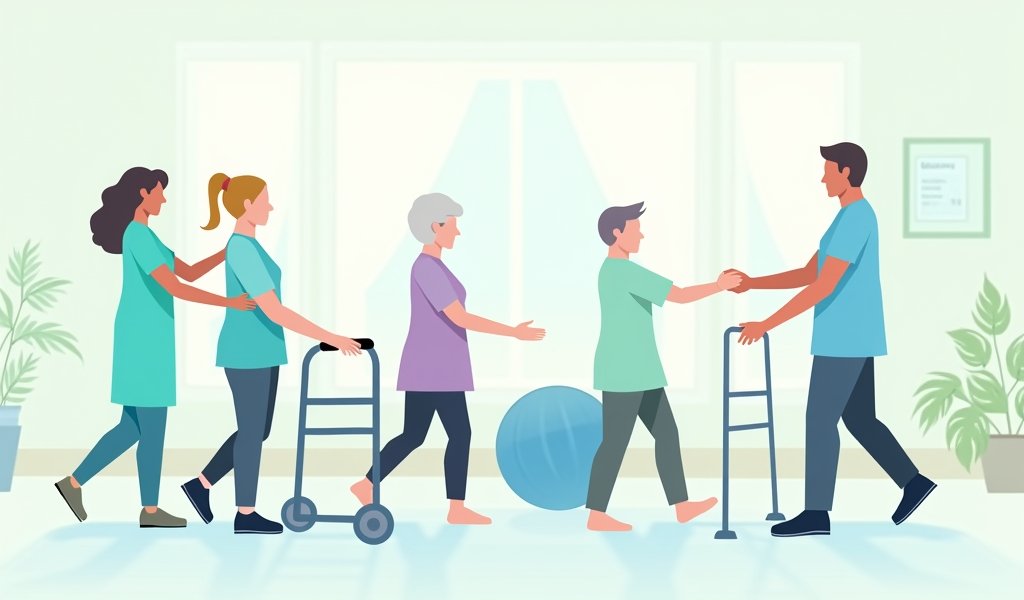
Progressive mobility represents one of the most powerful rehabilitation strategies employed in skilled nursing facilities. This systematic approach gradually increases a patient’s physical activity and independence through carefully sequenced mobility challenges. Rather than pushing patients too quickly or holding them back unnecessarily, progressive mobility meets them exactly where they are while continuously advancing their capabilities.
The technique typically begins with basic bed mobility exercises—rolling, bridging, and repositioning—even for severely deconditioned patients. As strength and endurance improve, activities progress to sitting at the edge of the bed, then standing with assistance, and eventually walking with appropriate support devices. Each stage builds upon the previous one, with safety measures adjusted according to the patient’s stability and confidence.
What makes this approach particularly effective is its focus on functional movements rather than isolated exercises. Therapists incorporate real-life activities that patients will need to perform at home, such as navigating doorways, managing household obstacles, or getting in and out of a vehicle. This practical focus ensures that improvements translate directly to increased independence after discharge.
The benefits of progressive mobility extend far beyond musculoskeletal recovery. Early and consistent mobilization has been shown to prevent complications like pressure injuries, deep vein thrombosis, and pneumonia. It improves cardiovascular conditioning, enhances cognitive function, and often reduces pain perception. Most importantly, achieving visible progress through mobility milestones provides powerful psychological motivation that fuels the entire rehabilitation process.
Skilled nursing facilities implement specialized protocols to track mobility progression using validated assessment tools like the Functional Independence Measure (FIM). These objective measurements help the team celebrate small victories while making data-driven decisions about advancing activity levels and preparing for discharge.
Strategy 4: Cognitive Rehabilitation Integration
While physical recovery often takes center stage in SNF rehabilitation, cognitive rehabilitation plays an equally crucial role in optimizing outcomes. Many patients requiring skilled nursing care experience cognitive changes due to their primary condition, medication effects, or the disorientation that can accompany hospitalization and relocation. Addressing these cognitive components through structured interventions significantly enhances overall rehabilitation success.
Cognitive rehabilitation begins with thorough assessment to identify specific areas of challenge, whether in attention, memory, executive function, or processing speed. Based on these findings, speech-language pathologists and occupational therapists implement targeted interventions that both remediate impaired functions and teach compensatory strategies. For example, a patient with memory deficits might practice spaced retrieval techniques while also learning to use smartphone reminders or written checklists.
What separates exceptional SNF cognitive rehabilitation from basic approaches is the integration of cognitive techniques throughout all daily activities. Physical therapists might incorporate dual-task training, having patients solve simple math problems while walking to improve divided attention. Nursing staff reinforce orientation strategies during medication administration. Meal times become opportunities to practice decision-making and sequencing skills.
This integrated approach acknowledges the critical relationship between cognitive function and physical recovery. A patient struggling with attention will have difficulty following complex physical therapy instructions. Similarly, executive function challenges can impact medication adherence after discharge. By addressing these cognitive components alongside physical rehabilitation, SNFs prepare patients more comprehensively for the cognitive demands they’ll face when returning home.
Research from the American Congress of Rehabilitation Medicine confirms that integrated cognitive rehabilitation produces superior outcomes compared to approaches focusing solely on physical recovery, particularly for patients with neurological conditions like stroke or traumatic brain injury.
Strategy 5: Family Involvement and Support Systems
The fifth proven rehabilitation strategy in skilled nursing facilities revolves around meaningful family involvement and building robust support systems. Recovery doesn’t happen in isolation, and the transition from SNF to home requires preparation not just for the patient, but for everyone who will be involved in their continued care. Facilities that excel in rehabilitation outcomes prioritize family education and integration from admission through discharge.
Family education begins with helping loved ones understand the patient’s condition, rehabilitation goals, and expected recovery trajectory. Rather than limiting family to visitor roles, top SNFs invite them to observe and participate in therapy sessions where appropriate. This hands-on involvement allows family members to learn proper assistance techniques, recognize safety concerns, and understand the rationale behind treatment approaches.
As discharge approaches, family training becomes more structured and intensive. Caregivers practice specific skills they’ll need to support the patient at home, from safe transfer techniques to medication management. They learn to recognize warning signs that might indicate complications and understand when to contact healthcare providers. Many facilities offer simulated home environments where patients and families can practice real-life scenarios before actual discharge.
Beyond immediate family, comprehensive SNF rehabilitation addresses broader support systems. Social workers connect patients with community resources like meal delivery services, transportation options, home health agencies, and outpatient rehabilitation providers. They help navigate insurance complexities and identify financial assistance programs when needed. Support groups, both within the facility and in the community, provide emotional support and practical advice from others who have navigated similar challenges.
This holistic approach to family and support systems directly impacts rehabilitation outcomes. According to a study in the Journal of Nursing Care Quality, patients with actively engaged families experience less anxiety, greater motivation, and better functional gains. Moreover, family-centered care significantly reduces hospital readmission rates following SNF discharge.
SNF Insurance Coverage and Medicare Benefits
Understanding insurance coverage for skilled nursing facility care is crucial for patients and families navigating this level of care. Medicare remains the primary insurer for most SNF patients, but its coverage comes with specific requirements and limitations that patients should understand before admission. Being informed about these financial aspects can prevent unexpected bills and help maximize available benefits.
Medicare Part A covers SNF care when specific criteria are met. Patients must have a qualifying hospital stay of at least three consecutive days (not counting the discharge day), require skilled services daily that can only be provided in an SNF, and have these services ordered by a physician for a condition related to the hospital stay. When these conditions are satisfied, Medicare covers the first 20 days in full, then requires a significant daily coinsurance for days 21-100. After 100 days in a benefit period, Medicare coverage ends, and patients become responsible for all costs unless they have supplemental insurance.
Many Medicare Advantage plans offer different SNF benefits and may not require the three-day hospital stay, especially under newer care models. These plans often work with preferred provider networks, so it’s essential to verify whether a specific SNF participates with your plan. Similarly, private insurance coverage varies widely, with some policies offering more generous benefits than traditional Medicare, while others impose stricter limitations or higher out-of-pocket costs.
For patients with limited resources, Medicaid may cover long-term SNF care after Medicare benefits are exhausted, though eligibility requirements vary by state. The annual wellness visit covered by Medicare can be an excellent opportunity to discuss potential future needs and insurance options with your healthcare provider before a crisis occurs.
Navigating these insurance complexities can be challenging during an already stressful time. Most SNFs employ financial counselors or social workers who can help estimate costs, verify benefits, and identify additional resources. These professionals can also assist with applying for Medicaid or other assistance programs when appropriate. Taking advantage of these services early in the admission process helps families prepare financially for both the SNF stay and post-discharge care needs.
Finding a Quality SNF: What to Look For
Selecting the right skilled nursing facility significantly impacts rehabilitation outcomes, yet many families make this critical decision with limited information during stressful circumstances. Knowing what differentiates exceptional facilities from adequate ones empowers patients and families to make informed choices aligned with specific recovery needs.
Start by examining objective quality measures through Medicare’s Nursing Home Compare tool, which provides star ratings based on health inspections, staffing levels, and quality indicators. While these ratings offer valuable insights, they shouldn’t be your only criteria. Look specifically at rehabilitation-focused metrics like the percentage of patients who improve functionally during their stay and the rate of successful discharges to home rather than back to hospitals.
Staffing patterns reveal much about a facility’s quality. Beyond just meeting minimum requirements, exceptional SNFs maintain higher staff-to-patient ratios and employ more specialized rehabilitation professionals. Ask about staff turnover rates, the presence of rehabilitation specialists (like neurologic or orthopedic certified specialists), and whether the same therapists will work consistently with the patient throughout their stay.
When possible, tour prospective facilities in person, preferably during therapy hours. Observe whether therapy spaces are well-equipped, spacious, and busy with active treatment sessions. Note whether patients appear engaged during activities and how staff interact with them. Quality facilities demonstrate respectful, person-centered communication rather than task-oriented approaches. The physical environment should be clean, safe, and designed to support rehabilitation activities.
Ask pointed questions about rehabilitation programming: How many minutes of therapy do patients typically receive daily? Are weekend sessions available? How does the facility handle missed therapy sessions? Quality programs offer therapy at least five days weekly, make provisions for weekend coverage when needed, and reschedule missed sessions whenever possible.
Finally, consider the facility’s expertise with your specific condition. Some SNFs specialize in neurological rehabilitation, others in orthopedic recovery, and still others in cardiac or pulmonary rehabilitation. Choosing a facility with experience treating similar conditions typically results in more targeted interventions and better outcomes. Don’t hesitate to ask for outcome data specific to your condition and compare it across facilities before making your final decision.
Conclusion: Maximizing Recovery Through SNF Care
The SNF medical abbreviation represents far more than just a healthcare setting—it embodies a comprehensive approach to rehabilitation that can dramatically alter recovery trajectories. Through personalized rehabilitation programs, multidisciplinary teamwork, progressive mobility techniques, cognitive rehabilitation integration, and family involvement, skilled nursing facilities provide the intensive, structured support many patients need to regain independence after serious illness or injury.
Each of the five proven strategies we’ve explored works in concert with the others, creating a rehabilitation experience greater than the sum of its parts. The effectiveness of this approach is reflected in improved functional outcomes, reduced hospital readmissions, and enhanced quality of life for countless patients who might otherwise face permanent dependency or institutional care.
Understanding SNF care options, insurance coverage, and quality indicators empowers patients and families to advocate effectively for optimal rehabilitation services. By recognizing when SNF care is appropriate and knowing how to select a facility that excels in the specific areas most relevant to your needs, you can maximize recovery potential and ensure the best possible outcomes.
While skilled nursing facility rehabilitation demands significant effort from patients, families, and healthcare providers alike, the results justify the investment. For many individuals facing complex medical and functional challenges, the intensive, structured rehabilitation provided in SNFs offers the most efficient path toward reclaiming independence and returning to meaningful life activities.
Frequently Asked Questions
What does the SNF medical abbreviation stand for?
SNF stands for Skilled Nursing Facility. These are specialized healthcare settings that provide 24-hour nursing care and intensive rehabilitation services under medical supervision.
How is an SNF different from a nursing home?
While both provide residential care, SNFs focus on short-term rehabilitation and skilled nursing for patients recovering from specific medical conditions or surgeries. Traditional nursing homes typically provide long-term custodial care for those needing assistance with daily activities.
How long do patients typically stay in an SNF?
The average SNF stay ranges from 20-38 days, depending on the patient’s condition and progress. Medicare covers up to 100 days per benefit period when all eligibility requirements are met.
Does Medicare cover SNF care?
Medicare Part A covers SNF care when a patient has a qualifying 3-day hospital stay and requires skilled services daily. Coverage includes 100% of costs for days 1-20, with coinsurance required for days 21-100.
Can family members participate in SNF rehabilitation sessions?
Yes, quality SNFs encourage family involvement in rehabilitation. Family members can observe therapy sessions, learn proper assistance techniques, and receive training for supporting the patient after discharge.