
Overview
Ever seen Popeye’s bulging bicep? That’s what happens when your distal bicep tendon decides to call it quits and tears at the elbow! This article details the causes, symptoms, and treatment options for distal bicep tendon tears, highlighting both surgical and non-surgical approaches, rehabilitation strategies, and prevention methods to help patients regain function and return to normal activities.
Table of Contents
- Understanding Distal Bicep Tendon Tears
- Symptoms and Diagnosis
- Non-Surgical Treatment Options
- Surgical Interventions
- Rehabilitation Process
- Prevention Strategies
- When to Seek Medical Help
- Conclusion
- Frequently Asked Questions
Understanding Distal Bicep Tendon Tears
A distal bicep tendon tear is a challenging injury that affects the connection between your bicep muscle and your radius bone in the forearm. When this tendon ruptures, it typically occurs at the elbow joint, causing pain, weakness, and a noticeable change in the appearance of your upper arm. As an orthopedic specialist with over 15 years of experience, I’ve treated countless patients with this condition, and I understand the frustration and limitations it can cause.
This injury most commonly affects middle-aged men between 40-60 years old, particularly those engaged in heavy lifting or resistance training. The tear typically happens during a sudden, forceful extension of the elbow while the bicep is contracting – imagine lowering a heavy box or catching a falling object. The good news is that with proper treatment, most patients can regain significant function and return to their normal activities.
Distal bicep tendon tears account for approximately 10% of all bicep tendon injuries, making them less common than proximal tears but often more functionally limiting. The anatomical location of the distal attachment makes this injury particularly problematic for activities requiring supination (rotating your palm upward) and elbow flexion, movements we use countless times throughout our day.
Symptoms and Diagnosis
Recognizing the signs of a distal bicep tendon tear is crucial for early intervention. Most patients report a sudden, sharp pain at the front of the elbow, often accompanied by an audible “pop” during the moment of injury. In the days following, bruising and swelling typically develop around the elbow joint and may extend down the forearm.
One of the most telling signs is a visible deformity of the bicep muscle, sometimes called a “Popeye muscle,” where the bicep appears to ball up toward the shoulder. This occurs because the torn tendon allows the muscle to retract upward. You might also notice significant weakness when attempting to bend your elbow or rotate your palm upward.
Diagnosing a distal bicep tendon tear typically involves a physical examination where your doctor will assess your arm strength and look for the “hook test” – an examination technique where the physician attempts to hook a finger under the bicep tendon. If the tendon is torn, this becomes impossible. For confirmation, your doctor may order imaging tests such as MRI scans, which can clearly show the extent of the tear and help guide treatment decisions.

Non-Surgical Treatment Options
For partial tears or complete tears in patients who are older, less active, or have medical conditions that make surgery risky, non-surgical approaches can provide relief and maintain function. Let’s explore the most effective conservative treatments:
1. RICE Protocol
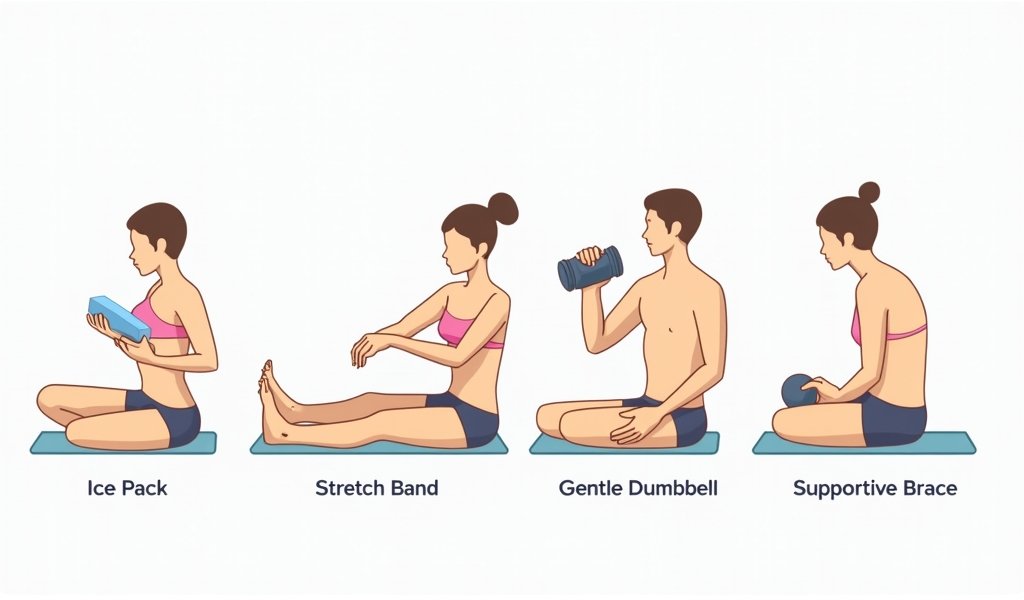
The RICE method remains the gold standard for initial management of most soft tissue injuries, including distal bicep tendon tears. Rest the affected arm, apply Ice for 20 minutes several times daily, use Compression with a elastic bandage to minimize swelling, and Elevate the arm above heart level when possible. This approach is most effective during the first 48-72 hours after injury and can significantly reduce pain and inflammation.
Don’t underestimate the power of proper rest. Continuing to use the injured arm, especially for lifting or gripping activities, can exacerbate the tear and complicate recovery. Consider using a sling for the first week to remind yourself to protect the area and allow healing to begin.
2. Pain Management
Over-the-counter non-steroidal anti-inflammatory drugs (NSAIDs) like ibuprofen or naproxen can help manage pain and reduce inflammation. Take these medications as directed, particularly with food to minimize stomach irritation. For more severe pain, your doctor might prescribe stronger pain relievers for short-term use.
Some patients find significant relief through topical analgesics that can be applied directly to the painful area. These come in various forms, including creams, gels, and patches, and can provide localized pain relief without systemic side effects.
3. Physical Therapy
Once the acute pain has subsided, typically after 1-2 weeks, physical therapy becomes crucial for recovery. A skilled therapist will guide you through exercises designed to gradually restore range of motion, strength, and function to your arm without placing excessive stress on the healing tendon.
Therapy typically begins with passive range of motion exercises and progresses to gentle active movements, eventually incorporating light resistance training as healing allows. Consistency is key – patients who diligently follow their home exercise program typically experience better outcomes than those who rely solely on in-clinic sessions.
4. Therapeutic Ultrasound and Electrical Stimulation
These modalities may help promote healing and provide pain relief during the recovery process. Therapeutic ultrasound uses sound waves to generate deep heat in tissues, potentially increasing blood flow to the area and accelerating healing. Electrical stimulation can help manage pain and may assist in maintaining muscle tone while the tendon heals.
According to research published in the Journal of Orthopaedic & Sports Physical Therapy, these treatments show modest benefits when used as part of a comprehensive rehabilitation program, though they shouldn’t be relied upon as standalone treatments.
Surgical Interventions
For complete tears, especially in younger or active individuals, surgical reattachment often provides the best functional outcome. The decision for surgery should be made in consultation with an orthopedic surgeon who specializes in upper extremity injuries.
1. Surgical Timing
Ideally, surgery should be performed within 2-3 weeks of injury. Delayed surgical intervention becomes more challenging as the tendon retracts and tissue quality deteriorates. This timing allows for optimal healing potential while giving any significant swelling time to subside.
If you’re considering surgery, don’t delay your consultation with a specialist. The window for optimal surgical outcomes is relatively narrow, and waiting too long may necessitate more complex surgical approaches or grafting techniques.
2. Surgical Techniques
Several approaches exist for reattaching the distal bicep tendon:
- Single-incision technique – Uses one incision at the front of the elbow
- Two-incision technique – Utilizes a front elbow incision and a smaller posterior incision
- Suture anchor fixation – Uses small anchors to secure the tendon to bone
- Bone tunnel technique – Threads the tendon through holes drilled in the radius
According to research published in JBJS, all techniques show good results when performed by experienced surgeons. Your surgeon will recommend the approach best suited to your specific injury pattern and needs.
3. Post-Surgical Care
Following surgery, your arm will typically be immobilized in a splint or brace for 1-2 weeks. You’ll need to avoid lifting anything heavier than a cup of coffee for at least 6 weeks. Most surgeons recommend wearing a protective brace when returning to more strenuous activities, even after healing appears complete.
Adherence to post-surgical protocols dramatically influences outcomes. Patients who follow their surgeon’s guidance regarding activity restrictions and rehabilitation tend to experience fewer complications and better functional recovery.
Rehabilitation Process
Whether you’ve opted for surgical or non-surgical management, rehabilitation is crucial for optimal recovery. The process typically spans 3-6 months and progresses through several phases.
Phase 1: Protection (Weeks 0-6)
During the initial phase, the priority is protecting the healing tendon. For surgical patients, this means following immobilization protocols exactly as prescribed. Even non-surgical patients should minimize stress on the tendon during this period. Gentle passive range of motion exercises may be introduced under the guidance of a physical therapist.
Patience during this phase is crucial – attempting to rush recovery by pushing through pain or ignoring activity restrictions can lead to re-injury or compromised healing. Focus on maintaining fitness through activities that don’t stress the injured arm, such as walking or stationary cycling.
Phase 2: Movement Restoration (Weeks 6-12)
As pain and swelling subside, therapy focuses on restoring full range of motion to the elbow and forearm. Your therapist will introduce progressive strengthening exercises using light resistance, gradually increasing as your healing and comfort allow. This phase typically includes exercises targeting not just the bicep but the entire arm to ensure balanced strength development.
Everyday activities can usually be resumed during this phase, though lifting restrictions typically remain in place. Many patients benefit from specialized exercise programs designed to address their specific work or recreational needs.
Phase 3: Strengthening and Return to Activity (Months 3-6)
The final rehabilitation phase focuses on progressive strengthening and preparation for return to full activity. Resistance training gradually increases, and sport or occupation-specific movements are incorporated into your program. Your therapist may utilize functional testing to assess when you’re ready to return to specific activities safely.
For athletes and those with physically demanding jobs, this phase is critical for preventing re-injury. Working closely with your healthcare team to develop appropriate progression timelines can help ensure you return to full activity safely.

Prevention Strategies
While not all distal bicep tendon tears can be prevented, several strategies may help reduce your risk, particularly if you participate in activities that place stress on these tendons.
1. Proper Warm-Up
Never skip warming up before physical activity, especially before heavy lifting or resistance training. A proper warm-up increases blood flow to muscles and tendons, making them more pliable and resistant to injury. Spend at least 5-10 minutes performing light cardio and dynamic stretching before engaging in more intense activities.
For the upper body specifically, include arm circles, light band work, and gradual loading before attempting maximum effort exercises involving the biceps.
2. Technique Matters
Poor lifting technique is a major contributor to tendon injuries. When lifting heavy objects, bend at the knees, keep the load close to your body, and avoid sudden jerking movements. During resistance training, maintain control throughout the entire range of motion, avoiding excessive momentum or bouncing at the end ranges.
Consider working with a qualified strength coach or personal trainer to ensure your technique is sound, especially for exercises that heavily load the biceps like curls, rows, and pull-ups.
3. Progressive Loading
Gradually increase the intensity and volume of your training rather than making sudden jumps. This allows tendons time to adapt to increasing demands. Remember that tendons adapt more slowly than muscles – just because you feel strong enough to lift heavier doesn’t mean your tendons are ready for the increased load.
Consider incorporating proper nutritional support to optimize tendon health. Adequate protein, vitamin C, and collagen intake may support tendon strength and resilience.
4. Listen to Your Body
Pain is your body’s warning system. If you experience persistent pain in the front of your elbow, especially during lifting or twisting movements, reduce your activity and consult a healthcare professional. Early intervention for tendonitis or partial tears may prevent progression to complete rupture.
Taking regular deload weeks during intense training periods can also help prevent overuse injuries by giving tendons time to recover and strengthen.
When to Seek Medical Help
While this article provides guidance on managing distal bicep tendon tears, certain situations warrant immediate medical attention:
- Sudden, severe pain at the front of the elbow, especially accompanied by a “pop” or snap
- Visible deformity of the bicep muscle or significant bruising around the elbow
- Inability to bend your elbow or rotate your palm upward
- Pain that doesn’t improve with rest, ice, and over-the-counter pain medications
- Symptoms that interfere with daily activities or work requirements
Early diagnosis improves outcomes regardless of whether you ultimately pursue surgical or non-surgical treatment. Most primary care physicians can perform initial evaluations, but referral to an orthopedic specialist is typically necessary for definitive diagnosis and treatment planning.
Remember that complete tears treated non-surgically typically result in permanent strength deficits of 30-40% for elbow flexion and up to 50% for supination. If maintaining full strength is important for your work or recreational activities, discussing surgical options with a specialist is advisable.
Conclusion
Managing a distal bicep tendon tear requires a comprehensive approach that may include both immediate care strategies and long-term rehabilitation. Whether you opt for surgical or non-surgical treatment, understanding the recovery process and committing to proper rehabilitation is essential for regaining function and preventing future injuries.
Remember that recovery timelines vary based on injury severity, treatment approach, and individual factors like age and overall health. Most patients can expect significant improvement within 3-6 months, though some strength deficits may persist, particularly with non-surgical management.
By following the seven proven treatments outlined in this article – from the initial RICE protocol to comprehensive rehabilitation and preventive strategies – you can optimize your recovery and return to the activities you enjoy. Don’t hesitate to seek professional guidance throughout your healing journey, as individualized care often leads to the best outcomes for distal bicep tendon tears.
Frequently Asked Questions
How long does it take to recover from a distal bicep tendon tear?
Recovery typically takes 3-6 months, depending on whether you have surgery and your adherence to rehabilitation. Full strength may not return until 6-12 months after injury.
Can I still use my arm with a torn distal bicep tendon?
Yes, but with significant limitations. You’ll experience weakness with lifting, pulling, and rotating your palm upward.
Will I need surgery for my distal bicep tendon tear?
It depends on your age, activity level, and the severity of the tear. Young, active individuals typically benefit most from surgical repair.
What happens if I don’t treat my distal bicep tendon tear?
Untreated complete tears typically result in permanent strength deficits of 30-50% for elbow flexion and supination. You may adapt to these limitations over time.
Can I prevent distal bicep tendon tears?
While not entirely preventable, proper warm-up, good lifting technique, and avoiding sudden heavy loads can reduce your risk. Listen to your body and address early signs of tendon irritation.