
Overview
Who knew your feet were secretly plotting against you all this time, just waiting for their tendons to weaken before staging a full-body rebellion? This article outlines eight essential exercises to strengthen foot tendons—including toe curls, heel raises, arch lifts, and barefoot walking—which can prevent injury, improve balance and athletic performance, and maintain mobility as you age.
Table of Contents
- Understanding Foot Tendons: Your Foundation for Movement
- The Importance of Strong Tendons in the Foot
- 8 Essential Exercises for Strong Tendons in the Foot
- 1. Toe Curls: Building Intrinsic Strength
- 2. Heel Raises: Strengthening the Achilles
- 3. Arch Lifts: Supporting Your Foundation
- 4. Resistance Band Exercises for Ankle Stability
- 5. Marble Pickup: Fine Tuning Foot Muscles
- 6. Barefoot Walking: Natural Foot Strengthening
- 7. Single-Leg Balance Exercises
- 8. Foam Rolling and Self-Massage
- Incorporating These Exercises Into Your Routine
- Warning Signs: When to See a Professional
- Conclusion
- Frequently Asked Questions
Understanding Foot Tendons: Your Foundation for Movement
The tendons in the foot are remarkable structures that connect muscles to bones, enabling every step you take. As a podiatrist with 15 years of clinical experience, I’ve seen firsthand how these tough yet flexible tissues serve as the unsung heroes of our mobility. Your foot contains over 30 tendons that work together in a complex choreography, providing stability, absorbing shock, and facilitating the intricate movements required for walking, running, and jumping.
The most well-known tendon in the foot is the Achilles tendon, which attaches your calf muscles to your heel bone. However, equally important are the posterior tibial tendon (supporting your arch), the anterior tibial tendon (lifting your foot), and the peroneal tendons (stabilizing the outside of your foot). These tendons must be both strong and flexible – strong enough to handle the force of your body weight with each step, yet flexible enough to adapt to different surfaces and movements.
Unfortunately, many of us take our foot tendons for granted until problems arise. Tendonitis, tendon tears, and other injuries can result from neglect, causing pain that significantly impacts daily activities. The good news? With targeted exercises, we can strengthen these essential structures and reduce the risk of injury.
The Importance of Strong Tendons in the Foot
Strong tendons in the foot provide the foundation for overall physical health and mobility. Think about it – every time you stand up, walk to the kitchen, climb stairs, or chase after your kids, your foot tendons are hard at work. When these tendons are weak or damaged, the effects cascade throughout your entire body, potentially causing knee, hip, and even back pain.
Research published in the Journal of Orthopedic & Sports Physical Therapy confirms that foot tendon strength directly correlates with balance, stability, and injury prevention. Strong tendons help maintain proper foot mechanics, which in turn supports optimal alignment through the kinetic chain.
Beyond injury prevention, strengthening the tendons in your feet can improve athletic performance. Whether you’re a dedicated runner, a weekend warrior, or simply someone who wants to move comfortably through life, your foot tendons are crucial performance enhancers. They store and release energy with each step, making your movements more efficient and powerful.
As we age, tendons naturally lose some elasticity and strength. However, regular targeted exercises can significantly slow this process, helping you maintain mobility and independence. Let’s explore the eight essential exercises that can help you build and maintain strong, resilient foot tendons.
8 Essential Exercises for Strong Tendons in the Foot
The following exercises target the various tendons in the foot, helping to build strength, improve flexibility, and enhance overall foot function. For optimal results, perform these exercises 3-4 times per week, gradually increasing intensity as your foot strength improves. Always start gently, especially if you’re recovering from an injury or have existing foot conditions.
1. Toe Curls: Building Intrinsic Strength
Toe curls target the smaller intrinsic muscles and tendons in your feet, particularly those that support your arches. These muscles often become weak from wearing restrictive footwear, making this exercise especially valuable.
To perform toe curls:
- Sit in a chair with your feet flat on the floor
- Place a small towel on the floor in front of you
- Using only your toes, grab the towel and pull it toward you
- Release and repeat 10-15 times
- For an added challenge, place a light weight (like a book) on the edge of the towel
This exercise strengthens the flexor tendons in your toes and feet, which play a crucial role in maintaining balance and providing push-off power during walking. Many of my patients report improved arch support and reduced foot fatigue after incorporating toe curls into their routine for just a few weeks.
2. Heel Raises: Strengthening the Achilles
The Achilles tendon is the largest and strongest tendon in the foot, connecting your calf muscles to your heel. Strengthening this powerhouse is essential for jumping, running, and even normal walking.
To perform heel raises:
- Stand with feet hip-width apart, holding onto a counter or chair for balance if needed
- Slowly rise onto your toes, lifting your heels as high as possible
- Hold for 2-3 seconds at the top
- Lower down with control
- Complete 3 sets of 15 repetitions
As you progress, try performing this exercise on one foot at a time to increase the challenge. Research from the American Journal of Sports Medicine indicates that consistent heel raise exercises can increase Achilles tendon thickness and strength by up to 22%, potentially reducing injury risk.
For clients recovering from Achilles tendonitis, I typically recommend starting with seated heel raises before progressing to standing versions. This gentler variation allows you to strengthen the tendon while minimizing strain.
3. Arch Lifts: Supporting Your Foundation
Arch lifts target the posterior tibial tendon, which is primarily responsible for supporting your arch and preventing flat feet. This often-neglected exercise can make a significant difference in foot comfort and function.
To perform arch lifts:
- Sit with your feet flat on the floor
- Keep your toes and heels in contact with the ground
- Lift the arch of your foot by activating the muscles along the inner foot
- Hold for 5 seconds, then release
- Repeat 10-12 times on each foot
The key to effective arch lifts is subtlety – you shouldn’t be curling your toes or flexing your calf. Instead, focus on isolating just the arch. When performed correctly, you’ll feel gentle activation along the inner border of your foot.
For those with flat feet or fallen arches, these exercises can be particularly beneficial. Strengthening the posterior tibial tendon helps provide natural arch support, potentially reducing the need for orthotic devices.
4. Resistance Band Exercises for Ankle Stability
Resistance band exercises target the tendons that wrap around the ankle, including the anterior tibial tendon (front of ankle) and the peroneal tendons (outside of ankle). These tendons are crucial for ankle stability and proper foot positioning.
Try these four resistance band movements:
- Dorsiflexion (pointing toes up): Secure band around forefoot, pull toes toward shin
- Plantarflexion (pointing toes down): Secure band around forefoot, point toes away from body
- Inversion (turning sole inward): Wrap band around outer foot, turn sole toward midline
- Eversion (turning sole outward): Wrap band around inner foot, turn sole away from midline
Perform 12-15 repetitions of each movement, using a resistance level that challenges you but allows for proper form. According to research published by physical therapists, these multi-directional exercises help balance the strength of opposing tendons, which is essential for preventing ankle sprains and maintaining proper foot mechanics.
I’ve found resistance band work particularly effective for my athletic patients, as it builds stability in multiple planes of movement – something that’s crucial for sports that involve cutting, pivoting, or uneven terrain.
5. Marble Pickup: Fine Tuning Foot Muscles
This exercise may seem playful, but it’s seriously effective for strengthening the intricate tendons that control your toes. The marble pickup improves dexterity and activates muscles that are often dormant in our day-to-day lives.
To perform marble pickup:
- Sit in a chair with your feet flat on the floor
- Place 15-20 marbles (or small objects like pencil erasers) on the floor
- Using only your toes, pick up one marble at a time and place it in a bowl
- Complete the exercise by picking up all the marbles
- Perform with both feet
This exercise engages the flexor digitorum brevis and other intrinsic foot muscles, helping to strengthen the tendons that support your arch and toes. The fine motor control required for this exercise also improves proprioception – your body’s awareness of where your foot is in space – which is crucial for balance and coordination.
Don’t have marbles? No problem. Small pebbles, cotton balls, or even crumpled paper can work just as well. The key is picking up objects that challenge your toe dexterity without causing frustration.
6. Barefoot Walking: Natural Foot Strengthening
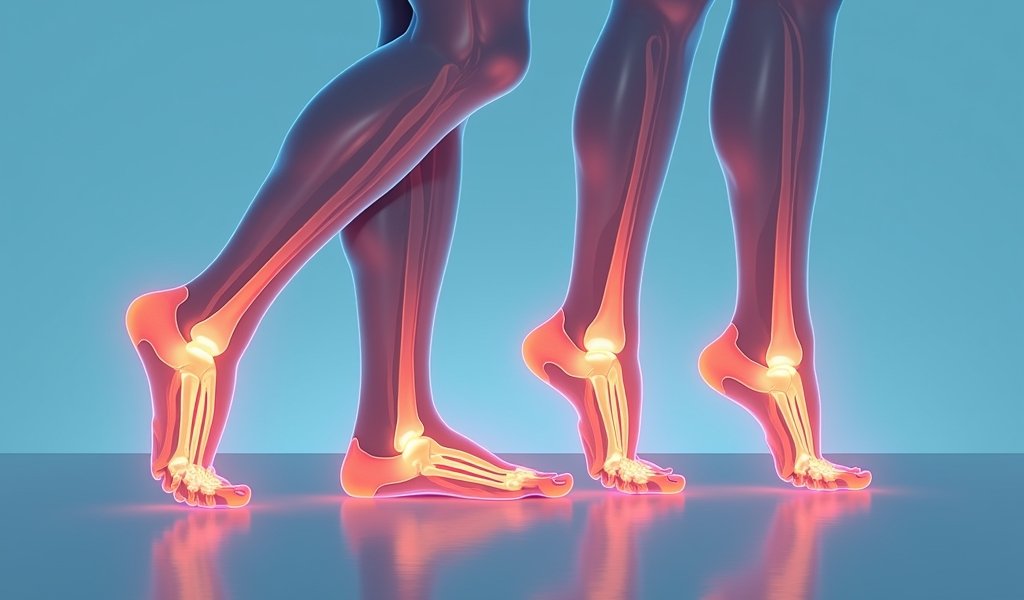
Walking barefoot on varied surfaces provides natural stimulation and strengthening for all the tendons in the foot. This practice harkens back to our evolutionary design – humans walked barefoot for thousands of years before modern footwear came along.
To incorporate barefoot walking:
- Start with short periods (5-10 minutes) of barefoot walking on safe surfaces
- Gradually increase duration as your feet adapt
- Explore different textures: grass, sand, smooth stones, carpet
- Focus on mindful walking – notice how your foot naturally spreads and grips the ground
A study published in the Journal of Foot and Ankle Research found that individuals who regularly walk barefoot have wider feet and more uniform pressure distribution than those who consistently wear shoes. This suggests that barefoot walking can help develop more natural foot mechanics and stronger intrinsic muscles.
If you’re new to barefoot walking or have sensitive feet, start on forgiving surfaces like grass or sand. Those with diabetes or peripheral neuropathy should consult their healthcare provider before attempting barefoot walking, as reduced sensation increases injury risk.
7. Single-Leg Balance Exercises
Balance exercises might not seem directly related to tendon strength, but they’re actually one of the most effective ways to build functional tendon capability. When you stand on one leg, all the tendons in your foot work together to make thousands of micro-adjustments that keep you stable.
Try these balance progressions:
- Basic balance: Stand on one foot for 30 seconds
- Eyes closed: Same position but with eyes closed
- Dynamic balance: Stand on one foot while gently bouncing a ball or moving the other leg
- Unstable surface: Balance on a folded towel or foam pad to increase difficulty
Aim to practice balance exercises daily, alternating feet and gradually increasing difficulty as you improve. The beauty of balance work is that it forces your tendons to work together as a functional unit, mimicking the demands of real-life activities.
For older adults or those concerned about falling, perform these exercises near a counter or sturdy chair that can provide support if needed. Even with this precaution, the tendon-strengthening benefits remain substantial.
8. Foam Rolling and Self-Massage
While not technically an exercise, self-massage techniques are vital companions to any tendon-strengthening program. Foam rolling and massage help improve blood flow to tendons, break up adhesions, and maintain healthy tissue elasticity.
Effective foot massage techniques include:
- Rolling your foot over a tennis ball or specialized foot roller
- Using your thumbs to apply pressure to the arch of your foot
- Gently massaging the Achilles tendon with your fingers
- Rolling a frozen water bottle under your foot (especially helpful for plantar fasciitis)
Spend 3-5 minutes on each foot, focusing on areas that feel particularly tight or tender. The ideal time for self-massage is after your strengthening exercises when increased blood flow can help deliver nutrients to the worked tissues.
Many of my patients find that consistent self-massage not only improves foot comfort but also enhances the effectiveness of their strengthening exercises. The combination creates a virtuous cycle – stronger, more flexible tendons lead to better foot function, which in turn supports further strength development.
Incorporating These Exercises Into Your Routine
Consistency is the key to building strong tendons in the foot. Rather than trying to do all eight exercises in a single marathon session, I recommend integrating them strategically into your existing routine. This approach makes tendon strengthening sustainable over the long term.
Here’s a practical weekly schedule:
- Daily: Balance exercises and barefoot walking (5 minutes total)
- 3x per week: Comprehensive routine including toe curls, heel raises, arch lifts, and resistance band work (15 minutes)
- After workouts: Self-massage techniques (3-5 minutes)
When beginning these exercises, focus on proper form rather than quantity. Ten perfect toe curls will benefit you more than thirty sloppy ones. As with any training program, progression is important. Gradually increase repetitions, resistance, or time as your foot tendons adapt and strengthen.
For those recovering from foot injuries or dealing with chronic conditions like plantar fasciitis, I suggest working with a physical therapist to modify these exercises appropriately. They can provide personalized guidance to ensure you’re strengthening without aggravating your condition.
Warning Signs: When to See a Professional
While strengthening exercises are generally beneficial for foot tendons, it’s important to recognize when you might need professional intervention. Your body will usually send clear signals when something isn’t right.
Consult a healthcare provider if you experience:
- Sharp or severe pain during or after exercises
- Persistent swelling around tendons
- A popping or snapping sensation accompanied by pain
- Increasing limitation in foot movement
- Pain that worsens with activity and doesn’t improve with rest
These symptoms could indicate tendonitis, tendon tears, or other conditions that require medical attention. Remember that mild discomfort during strengthening is normal, but pain is not. The goal is to build tendon resilience, not push through injury.
Many foot issues respond well to a combination of professional treatment and at-home exercises. Podiatrists, physical therapists, and sports medicine physicians can provide valuable guidance tailored to your specific needs and foot structure.
Conclusion
Strong tendons in the foot form the foundation for an active, pain-free life. By incorporating these eight essential exercises into your routine, you’re investing in mobility, balance, and resilience that will serve you well for years to come. Whether you’re an athlete looking to enhance performance, someone recovering from a foot injury, or simply wanting to maintain healthy feet as you age, tendon strengthening offers significant benefits.
Remember that tendons respond relatively slowly to strengthening programs compared to muscles. While you might not see or feel dramatic changes in the first week or two, consistent practice over months leads to remarkable improvements in foot function and comfort. Be patient with the process and celebrate small victories along the way.
Your feet carry you through life’s journey – every step, dance, run, and leap. By giving them the attention they deserve through targeted tendon strengthening, you’re ensuring they can continue to support your adventures with stability and strength. Here’s to happy, healthy feet that carry you confidently wherever you want to go!
Frequently Asked Questions
How long does it take to strengthen tendons in the foot?
Tendons typically respond more slowly than muscles, requiring 6-8 weeks of consistent exercise to show measurable strength improvements. Full remodeling of tendon tissue can take 3-6 months of regular training.
Can weak foot tendons cause pain in other areas?
Yes, weak tendons in the foot can alter your gait and biomechanics, potentially causing knee, hip, and lower back pain. The foot is the foundation of the kinetic chain, affecting alignment throughout the body.
Is it normal for foot exercises to cause some discomfort?
Mild muscle fatigue or stretching sensations are normal, but sharp pain indicates you should stop the exercise. The difference between beneficial challenge and harmful strain is important to recognize.
Should I do foot exercises if I have plantar fasciitis?
Gentle foot exercises can help with plantar fasciitis, but should be introduced gradually and without pain. Consult with a healthcare provider for personalized guidance on which exercises are appropriate for your specific condition.
Are minimalist shoes good for strengthening foot tendons?
Minimalist shoes can help strengthen foot tendons by allowing more natural foot movement and muscle engagement. Transition gradually from conventional footwear to prevent overloading tendons accustomed to more support.