
Overview
Whoever said “break a leg” for good luck clearly never tore an ACL, as this guide outlines a 6-9 month recovery journey for partial ACL tears through seven evidence-based strategies. The article emphasizes following structured rehabilitation, implementing progressive strength training, maintaining proper nutrition, using appropriate bracing, monitoring pain levels, and employing mental strategies to optimize healing and return to pre-injury activities.
Table of Contents
- Understanding Partial ACL Tears
- Typical Recovery Timeline for Partial ACL Tears
- Tip 1: Rest and Protect Your Knee
- Tip 2: Follow a Structured Rehabilitation Program
- Tip 3: Implement Progressive Strength Training
- Tip 4: Maintain Proper Nutrition for Healing
- Tip 5: Use Appropriate Bracing and Support
- Tip 6: Monitor Pain Levels During Recovery
- Tip 7: Implement Mental Strategies for Recovery
- When to Consult Your Healthcare Provider
- Conclusion
- Frequently Asked Questions
Experiencing a partial ACL tear can be both painful and disruptive to your active lifestyle. As a sports medicine specialist, I’ve guided numerous patients through the partial ACL tear recovery time process, and I understand the frustration that comes with this injury. The anterior cruciate ligament (ACL) plays a crucial role in knee stability, and even a partial tear requires proper attention and care. This comprehensive guide will walk you through the expected recovery timeline and provide seven evidence-based tips to optimize your healing journey.
Understanding Partial ACL Tears
A partial ACL tear occurs when the ligament is damaged but not completely ruptured. Unlike complete tears that often require surgical intervention, partial tears may sometimes heal with conservative treatment. The severity of a partial tear can vary significantly, which directly impacts partial ACL tear recovery time.
The ACL is one of four primary ligaments that provide stability to your knee joint. When partially torn, you might experience symptoms like pain, swelling, instability, and limited range of motion. However, these symptoms are typically less severe than with a complete tear.
Diagnosis usually involves a physical examination, imaging tests like MRI, and sometimes arthroscopic evaluation by an orthopedic surgeon. The grade of your tear (often classified as Grade 1, 2, or 3) will be a major determining factor in your treatment approach and recovery timeline.
According to research published in the Journal of Orthopaedic & Sports Physical Therapy, approximately 50% of partial ACL tears can heal without surgery when appropriate rehabilitation protocols are followed.
Typical Recovery Timeline for Partial ACL Tears
The partial ACL tear recovery time varies considerably depending on several factors, including the extent of the tear, your overall health, age, and adherence to treatment protocols. Here’s a general timeline you might expect:
- Initial Phase (0-2 weeks): Focus on reducing pain, swelling, and protecting the knee
- Early Rehabilitation (2-6 weeks): Gradual restoration of range of motion and light strengthening
- Intermediate Phase (6-12 weeks): Progressive strengthening and functional exercises
- Advanced Rehabilitation (3-6 months): Sport-specific training and gradual return to activities
- Full Recovery (6-9 months): Return to pre-injury activities with minimal restrictions
It’s important to note that this timeline is approximate. Some individuals with minor partial tears might recover more quickly, while others with more significant tears might require longer. A study in Sports Health: A Multidisciplinary Approach found that recovery outcomes improve significantly when patients adhere to structured rehabilitation programs.
Now, let’s explore the seven proven tips that can help optimize your partial ACL tear recovery time.
Tip 1: Rest and Protect Your Knee
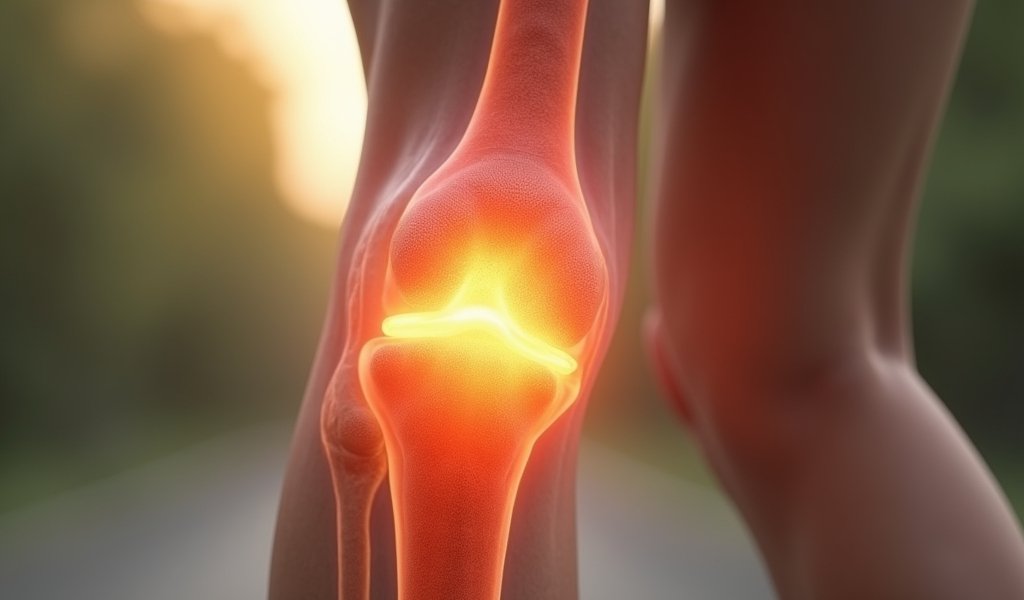
The initial phase of recovery is crucial for partial ACL tear healing. During the first few days after injury, follow the PRICE protocol:
- Protection: Use crutches as recommended to avoid putting weight on the injured knee
- Rest: Minimize activities that cause pain or discomfort
- Ice: Apply ice packs for 15-20 minutes every 2-3 hours to reduce inflammation
- Compression: Use a compression bandage to minimize swelling
- Elevation: Keep your leg elevated above heart level when possible
Allowing your knee adequate rest during this early stage sets the foundation for successful healing. However, complete immobilization is rarely recommended for extended periods. Your healthcare provider will guide you on when to begin gentle movement to prevent stiffness and muscle atrophy.
Remember, this initial protection phase is temporary but vital. As orthopedic surgeon Dr. James Andrews notes, “The first two weeks after injury are when the body initiates its healing response, making proper care during this period essential for long-term outcomes.”
Tip 2: Follow a Structured Rehabilitation Program
A well-designed rehabilitation program is perhaps the most important factor in optimizing your partial ACL tear recovery time. Physical therapy typically begins within days or weeks of the injury and progresses through several phases.
Early rehabilitation focuses on regaining range of motion and basic muscle activation. Your physical therapist will likely incorporate gentle exercises like:
- Heel slides to improve knee flexion
- Quad sets to maintain quadriceps strength
- Straight leg raises to improve muscle control
- Gentle stretching to maintain flexibility
As recovery progresses, your program will advance to include more challenging exercises targeting strength, balance, proprioception, and functional movement patterns. Studies show that supervised physical therapy yields significantly better outcomes than self-directed exercise.
Research from the American Journal of Sports Medicine indicates that patients who complete a comprehensive rehabilitation program have a 60% higher success rate in returning to pre-injury activity levels compared to those who don’t.
Consistency is key. Attend all scheduled therapy sessions and diligently perform your home exercise program as prescribed.
Tip 3: Implement Progressive Strength Training
Strengthening the muscles surrounding your knee is critical for optimizing partial ACL tear recovery time. The quadriceps, hamstrings, glutes, and calf muscles all play important roles in providing stability to the knee joint.
Begin with isometric exercises that activate muscles without moving the joint, then progress to exercises with limited range of motion, and finally to full functional movements as your recovery advances. Some effective exercises include:
- Wall sits and partial squats for quadriceps
- Hamstring curls and bridges for posterior chain strength
- Clamshells and lateral walks for hip stabilizers
- Calf raises for lower leg strength
Research published in Clinical Rehabilitation demonstrates that patients who follow progressive resistance training programs during ACL rehabilitation experience 40% greater improvements in functional outcomes compared to those who focus solely on range of motion exercises.
It’s essential to progress at the appropriate pace—challenging your body enough to stimulate adaptation without overloading the healing ligament. Your physical therapist will monitor your progress and adjust your program accordingly.
Tip 4: Maintain Proper Nutrition for Healing
Nutrition plays a vital but often overlooked role in optimizing partial ACL tear recovery time. Your body needs specific nutrients to repair damaged tissue and reduce inflammation.
Protein is particularly important for ligament healing. Aim to consume 1.6-2.0 grams of protein per kilogram of body weight daily from sources like lean meats, fish, eggs, dairy, legumes, and plant-based alternatives.
Anti-inflammatory foods can help manage pain and swelling naturally. Include these in your diet:
- Fatty fish rich in omega-3 fatty acids (salmon, mackerel, sardines)
- Colorful fruits and vegetables high in antioxidants
- Turmeric, ginger, and other anti-inflammatory spices
- Nuts and seeds for healthy fats and minerals
Stay well-hydrated, as water is essential for all healing processes. Limit alcohol consumption, as it can impair tissue repair and increase inflammation.
According to research in the Journal of the International Society of Sports Nutrition, proper nutritional support can reduce recovery time by up to 25% in soft tissue injuries.
Tip 5: Use Appropriate Bracing and Support
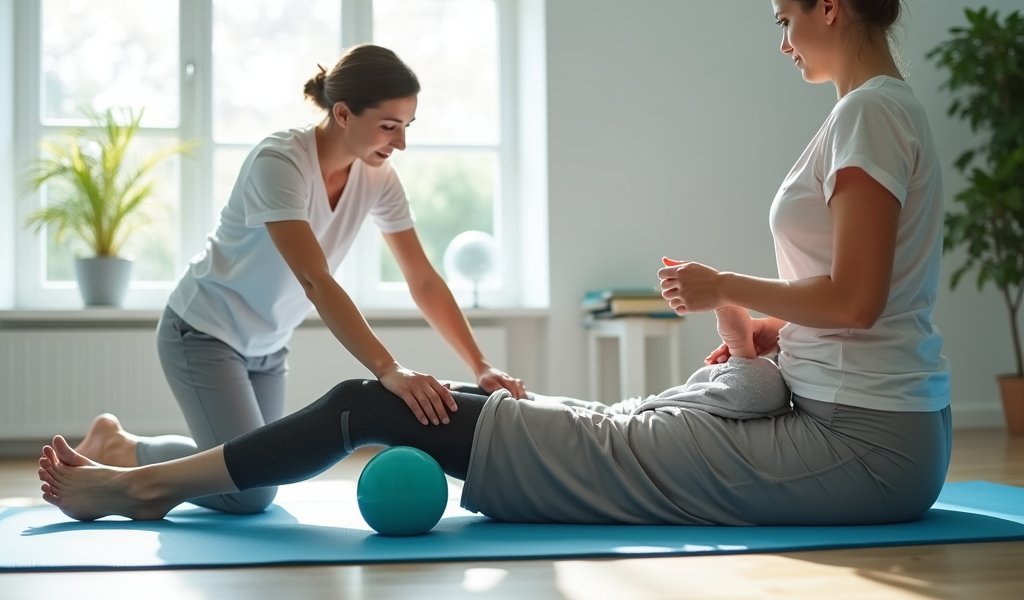
Bracing can play an important role in partial ACL tear recovery, especially during the transition from early healing to more active phases. The right type of brace provides external support while allowing for controlled movement.
Initially, you may be prescribed a hinged knee brace that limits range of motion. As healing progresses, you might transition to a functional ACL brace that allows for more natural movement while still providing stability during activities.
The benefits of proper bracing include:
- Reduced strain on the healing ligament
- Improved proprioception (awareness of knee position)
- Increased confidence during movement
- Prevention of harmful movements during activity
Research published in the British Journal of Sports Medicine suggests that functional bracing can improve outcomes during ACL rehabilitation, particularly in patients with partial tears who are pursuing non-surgical management.
Work closely with your healthcare provider to determine the most appropriate bracing strategy for your specific situation, and follow their guidance on when to wear your brace and for how long.
Tip 6: Monitor Pain Levels During Recovery
Pain is your body’s way of communicating, and learning to interpret these signals is crucial during partial ACL tear recovery time. The old adage “no pain, no gain” doesn’t apply here—excessive pain usually indicates that you’re pushing too hard.
Use a 0-10 pain scale to monitor your symptoms:
- 0-3: Mild discomfort that doesn’t limit activity
- 4-6: Moderate pain that may require modification
- 7-10: Severe pain that indicates you should stop the activity
A good rule of thumb is that therapeutic exercises may cause some discomfort (in the 2-4 range), but this should subside within 24 hours. Persistent or worsening pain, especially pain that disrupts sleep or daily activities, warrants communication with your healthcare provider.
Pain management strategies during recovery might include:
- Over-the-counter anti-inflammatory medications (as recommended by your doctor)
- Ice therapy for acute pain
- Heat therapy for chronic stiffness
- Activity modification to avoid pain-provoking movements
Remember that some discomfort during rehabilitation is normal, but pain should never be ignored.
Tip 7: Implement Mental Strategies for Recovery
The psychological aspect of injury recovery is often underestimated. Mental strategies can significantly impact your partial ACL tear recovery time by influencing adherence to rehabilitation, pain perception, and overall healing.
Setting realistic expectations is essential. Understand that recovery is rarely linear—you’ll likely experience setbacks along with progress. Celebrate small victories and maintain perspective during challenging periods.
Visualization techniques can be powerful tools. Spend a few minutes each day mentally rehearsing proper movement patterns and imagining successful healing. Research from Medicine & Science in Sports & Exercise shows that mental practice can enhance physical rehabilitation outcomes by up to 15%.
Consider these additional mental strategies:
- Stress management techniques like deep breathing and meditation
- Journaling to track progress and express frustrations
- Connecting with others who have recovered from similar injuries
- Working with a sports psychologist if you’re struggling with motivation or anxiety
Remember that your mindset influences your physiology. Cultivating patience, resilience, and optimism can create an internal environment more conducive to healing.
When to Consult Your Healthcare Provider
While following these tips can optimize your partial ACL tear recovery time, certain situations warrant immediate medical attention. Contact your healthcare provider if you experience:
- Severe or worsening pain despite rest and home management
- Significant increase in swelling or warmth around the knee
- Inability to bear weight on the affected leg
- New or increased instability in the knee
- Signs of infection like fever or redness extending from the knee
- Lack of progress in your rehabilitation program
Regular follow-up appointments are essential for monitoring your progress and adjusting your treatment plan as needed. Don’t hesitate to ask questions or express concerns during these visits.
In some cases, particularly if conservative management isn’t yielding expected results, your doctor might recommend additional interventions like platelet-rich plasma (PRP) injections or even surgical repair.
Conclusion
Optimizing your partial ACL tear recovery time requires a multifaceted approach that addresses both physical and psychological aspects of healing. By following these seven proven tips—resting appropriately, adhering to structured rehabilitation, implementing progressive strength training, maintaining proper nutrition, using appropriate bracing, monitoring pain levels, and employing mental strategies—you can create the optimal conditions for recovery.
Remember that every injury is unique, and individual factors will influence your specific timeline. Patience and consistency are perhaps your most valuable assets during this process. With proper care and dedication to your rehabilitation program, most people with partial ACL tears can return to their desired activities and enjoy long-term knee health.
The journey may be challenging at times, but by applying these evidence-based strategies, you’re taking control of your recovery and maximizing your chances for a successful outcome. Stay committed to the process, and your knee will thank you with years of reliable service ahead.
Frequently Asked Questions
How long does it take to recover from a partial ACL tear?
Recovery typically takes 3-9 months depending on the severity of the tear and individual factors. Most patients can return to normal activities within 6 months with proper rehabilitation.
Can a partial ACL tear heal without surgery?
Yes, many partial ACL tears can heal without surgery through conservative treatment. Research shows approximately 50% of partial tears respond well to proper rehabilitation and bracing.
When can I start walking after a partial ACL tear?
Most patients can begin partial weight-bearing with crutches within days of injury, progressing to full weight-bearing within 2-4 weeks. Your doctor will provide specific guidance based on your injury severity.
Will I need a knee brace after recovering from a partial ACL tear?
Many patients benefit from functional bracing during the return to sports or physical activities. Your healthcare provider will determine if long-term bracing is necessary based on your knee stability and activity goals.
Can I run again after a partial ACL tear?
Most patients can return to running after completing appropriate rehabilitation for a partial ACL tear. Typically, running programs begin around 3-4 months post-injury, with gradual progression in distance and intensity.