

Overview
Who knew that tearing your “man shelf” muscle could be such a chest-day buzzkill? This article outlines a five-pronged approach to treating pectoralis major tears—from initial rest and ice, through physical therapy and pain management, to potential surgery and gradual return to activity—while emphasizing that recovery timelines vary based on tear severity, with complete ruptures requiring 6-9 months for full healing.
Table of Contents
- Understanding Pec Muscle Tears
- Symptoms and Diagnosis of Pec Tears
- Treatment 1: Rest and Ice – The First Line of Defense
- Treatment 2: Physical Therapy for Pec Tear Recovery
- Treatment 3: NSAIDs and Pain Management
- Treatment 4: Surgical Intervention for Severe Tears
- Treatment 5: Gradual Return to Activity Protocol
- Prevention Strategies for Pec Muscle Tears
- Recovery Timeline: What to Expect
- Conclusion
- Frequently Asked Questions
Understanding Pec Muscle Tears
A tear in pec muscle, or pectoralis major tear, can be a devastating injury for anyone who enjoys an active lifestyle. As a health professional who’s worked with numerous athletes and fitness enthusiasts, I’ve seen firsthand how this injury can impact daily activities and exercise routines. The pectoralis major—the large, fan-shaped muscle that covers the upper chest—is crucial for movements like pushing, pulling, and lifting.
Pec tears typically occur during activities that place significant strain on the chest, such as bench pressing, powerful throwing motions, or contact sports. In my experience, most tears happen during eccentric contractions—when the muscle is lengthening while still under tension. This is why the bench press, particularly with heavy weights, is often the culprit behind many pec tears.
There are three grades of pec tears, ranging from mild strains (Grade 1) to partial tears (Grade 2) and complete ruptures (Grade 3). The severity of your tear will significantly influence your treatment approach and recovery timeline. While minor strains might heal with conservative treatments, complete ruptures often require surgical intervention for optimal outcomes.
Understanding the nature of your injury is the first step toward effective treatment. Let’s explore the symptoms that might indicate you’re dealing with a tear in your pec muscle, and then dive into the proven treatments that can help you recover and return to the activities you love.
Symptoms and Diagnosis of Pec Tears
Recognizing the symptoms of a pec tear early can make a significant difference in your recovery journey. From my clinical experience, patients typically report a sudden, sharp pain in the chest or shoulder area, often accompanied by an audible “pop” or tearing sensation during the injury-causing activity.
The most common symptoms of a tear in pec muscle include:
- Sudden, sharp pain in the chest or shoulder region
- Visible bruising and swelling across the chest and upper arm
- Weakness when pushing or bringing the arm across the body
- A noticeable deformity or divot in the chest or armpit area (in complete tears)
- Limited range of motion in the affected arm
Diagnosis typically begins with a thorough physical examination. I’ll assess the appearance of your chest, palpate the area for tenderness, and test your strength during various movements. When I suspect a pec tear, I often look for the “dropped pec sign”—a visible deformity where the muscle bunches toward the sternum.
While physical examination can be revealing, imaging is crucial for confirming the diagnosis and determining the extent of the injury. MRI scans are particularly valuable as they clearly show soft tissue damage and can distinguish between partial and complete tears. Ultrasound may also be used as a less expensive initial screening tool.
Once diagnosed, we can develop a targeted treatment plan based on the severity of your tear. Let’s explore the five proven treatments that can help you recover from a tear in pec muscle.
Treatment 1: Rest and Ice – The First Line of Defense
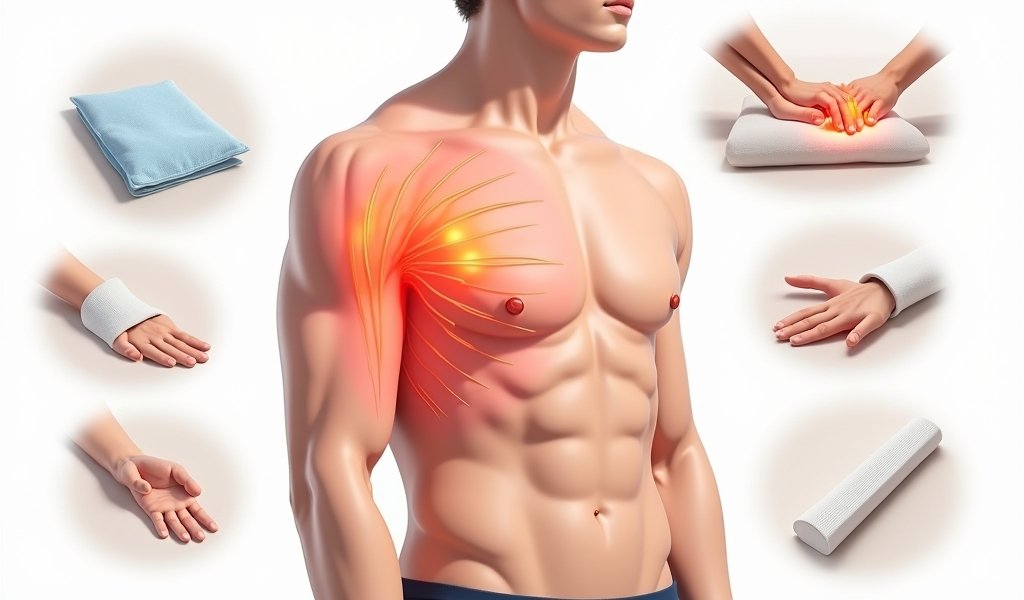
When it comes to treating a fresh tear in pec muscle, sometimes the simplest approaches are the most effective. Rest and ice form the cornerstone of initial treatment, especially in the critical first 48-72 hours after injury.
Rest doesn’t mean complete immobility—it means protecting your injured muscle from activities that could worsen the tear. For my patients with pec tears, I typically recommend:
- Avoiding all chest exercises and heavy lifting
- Limiting movements that cause pain, including pushing motions
- Using a sling if necessary to restrict movement and provide support
- Focusing on gentle range of motion exercises once acute pain subsides
Ice therapy (cryotherapy) works wonders for reducing inflammation and managing pain in the early stages. Apply ice to the injured area for 15-20 minutes every 2-3 hours during the first few days. Always use a cloth barrier between the ice and your skin to prevent tissue damage.
I’ve found that consistent application of rest and ice can significantly reduce the initial inflammatory response, creating a better environment for healing to begin. Remember, though, that while these measures are excellent first steps in improving your physical wellness, they’re just part of a comprehensive recovery plan.
For Grade 1 (minor) tears, this conservative approach might be sufficient when combined with appropriate rehabilitation. However, more severe tears will require additional interventions, which we’ll explore next.
Treatment 2: Physical Therapy for Pec Tear Recovery
Physical therapy is perhaps the most critical component of recovery from a tear in pec muscle, regardless of whether you’ve had surgery or are pursuing conservative treatment. As someone who’s guided numerous patients through this process, I can attest that structured rehabilitation makes all the difference in restoring function.
A comprehensive physical therapy program for pec tears typically progresses through distinct phases:
- Phase 1 (Acute): Focus on pain control, gentle range of motion, and protecting the healing tissue
- Phase 2 (Recovery): Progressive stretching and the introduction of light strengthening exercises
- Phase 3 (Functional): Sport-specific or activity-specific training to prepare for return to pre-injury activities
During the early phases, your physical therapist might employ techniques like gentle manual therapy to reduce muscle guarding and improve mobility. Research shows that early mobilization, when appropriate, can prevent excessive scar tissue formation and maintain better long-term flexibility.
As healing progresses, strengthening exercises become increasingly important. These might begin with isometric (static) contractions and gradually advance to dynamic exercises with progressive resistance. Proper form is absolutely crucial—I always emphasize quality over quantity with my patients.
For those looking to complement their recovery with broader wellness tips, maintaining cardiovascular fitness through modified activities like stationary cycling or walking can help preserve overall conditioning while your pec heals.
Remember that patience is key during rehabilitation. Rushing the process can lead to setbacks, while following your therapist’s guidance diligently will build a stronger foundation for lasting recovery.
Treatment 3: NSAIDs and Pain Management
Managing pain effectively is an essential component of recovering from a tear in pec muscle. Comfortable patients heal better—they sleep more soundly, move more naturally, and engage more fully in their rehabilitation exercises.
Nonsteroidal anti-inflammatory drugs (NSAIDs) serve a dual purpose in pec tear recovery. First, they help manage pain, making daily activities and rehabilitation exercises more tolerable. Second, they reduce inflammation, potentially creating a more favorable environment for healing, especially in the early stages.
Common NSAIDs used for pec tears include:
- Ibuprofen (Advil, Motrin): Typically 400-800mg every 6-8 hours
- Naproxen (Aleve): Usually 500mg initially, then 250mg every 6-8 hours
- Aspirin: Though less commonly used specifically for this injury
It’s worth noting that recent research has questioned the long-term use of NSAIDs during soft tissue healing. While they’re excellent for short-term pain and inflammation control, some studies suggest they might potentially delay certain aspects of the healing process if used for extended periods.
For this reason, I typically recommend that my patients use NSAIDs most aggressively during the first 1-2 weeks, then taper as tolerated. This approach helps manage the most intense pain while minimizing any potential impact on the healing process.
For those with more severe pain or those who cannot tolerate NSAIDs, your physician might prescribe short-term muscle relaxants or, rarely, opioid medications. These should be used judiciously and exactly as prescribed, as they carry risks of dependency and side effects.
Alternative pain management strategies I’ve found helpful include gentle heat therapy (after the initial inflammation has subsided), targeted massage of surrounding muscles, and in some cases, transcutaneous electrical nerve stimulation (TENS) therapy.
Treatment 4: Surgical Intervention for Severe Tears
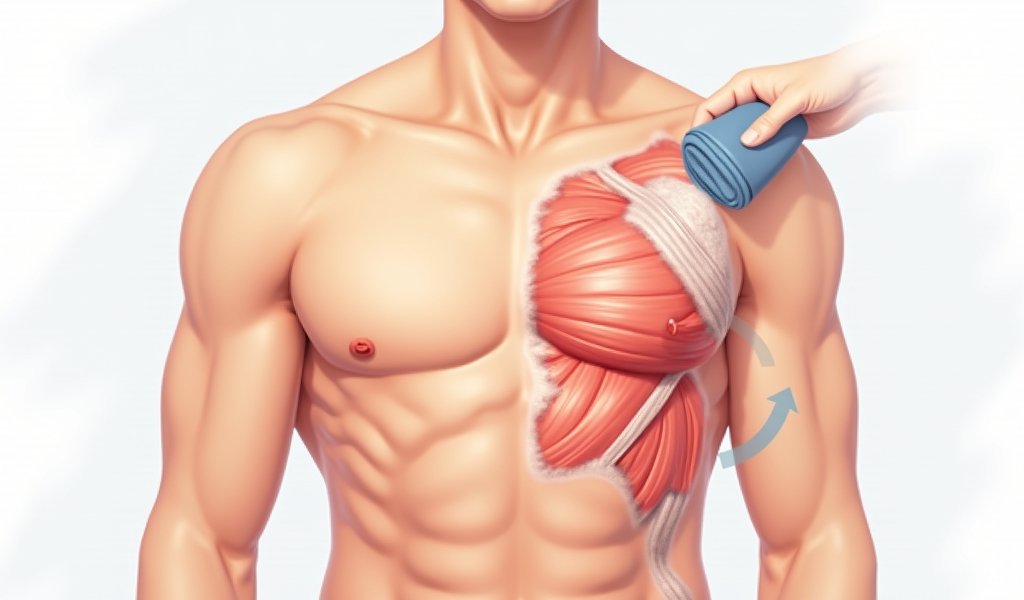
While conservative treatments work well for minor to moderate pec tears, complete ruptures (Grade 3) or significant partial tears often require surgical intervention for optimal outcomes. As someone who’s both referred patients for these procedures and helped them through post-surgical rehabilitation, I can share what this process typically entails.
Surgery for a tear in pec muscle generally involves reattaching the torn tendon to its insertion point, most commonly on the humerus (upper arm bone). This procedure, called pectoralis major repair, aims to restore the normal anatomy and function of the muscle.
The decision for surgery is typically based on several factors:
- The severity and location of the tear
- Your activity level and performance demands
- Your overall health and suitability for surgery
- The timing of the injury (fresh tears have better surgical outcomes)
For athletes and those engaged in bodybuilding wellness practices, surgical repair is often recommended even for partial tears, as it provides the best chance of returning to high-level performance. Research indicates that surgical outcomes are generally better when the procedure is performed within the first few weeks after injury.
The surgical technique has evolved significantly in recent years. Modern approaches utilize strong suture anchors and techniques that allow for earlier mobilization during recovery. This has substantially improved the rehabilitation process and final outcomes.
Post-surgical rehabilitation is crucial and typically involves a more structured protocol than conservative management. Initially, your surgeon will likely restrict certain movements to protect the repair, with a gradual progression to more challenging exercises over the course of 3-6 months.
While surgery comes with inherent risks, including infection, anesthesia complications, and re-rupture, the success rate for pectoralis major repairs is quite high when performed by experienced surgeons. Most patients can expect to regain 85-95% of their pre-injury strength with proper rehabilitation.
Treatment 5: Gradual Return to Activity Protocol
The final—and perhaps most crucial—phase of recovering from a tear in pec muscle is the structured return to activity. This isn’t simply about jumping back into your pre-injury routine; it’s a methodical process that, when done correctly, minimizes re-injury risk while rebuilding confidence and function.
Based on my experience guiding patients through this phase, a successful return-to-activity protocol typically follows these principles:
- Progressive loading: Gradually increasing the stress placed on the healing tissue
- Movement pattern retraining: Ensuring proper biomechanics during functional activities
- Sport-specific or activity-specific training: Mimicking the demands of your target activities
- Testing and assessment: Objective measurements to gauge readiness for advancement
For someone recovering from a pec tear, this might look like a 12-16 week progression that begins with light resistance exercises (like band-resisted movements and modified push-ups) and culminates in a full return to bench pressing, throwing, or other chest-intensive activities.
I typically establish clear strength benchmarks before allowing patients to progress to more demanding activities. For instance, I might require that they demonstrate at least 80% of their contralateral (uninjured side) strength before returning to moderate-intensity training, and 90% before resuming competitive activities.
This phase requires patience. I’ve seen too many patients suffer setbacks because they rushed this process. Remember that tissue healing continues for many months after you feel “back to normal.” Respecting this biological reality is key to a sustainable recovery.
For my patients eager to return to lifting, I often recommend a modified program that temporarily substitutes direct chest work with shoulder stabilization and back strengthening exercises. This maintains overall fitness while protecting the healing pec muscle.
Prevention Strategies for Pec Muscle Tears
While we’ve focused on treatment, preventing a tear in pec muscle is certainly preferable to treating one. Through my years working with athletes and fitness enthusiasts, I’ve identified several evidence-based strategies to reduce your risk.
Proper warm-up is non-negotiable. Before any chest-intensive activity, spend at least 5-10 minutes gradually increasing your heart rate and body temperature, followed by dynamic stretches that prepare the chest muscles for work. This increases blood flow and tissue elasticity, making your pecs more resilient to stress.
Technique matters enormously, especially in resistance training. For bench pressing—the most common activity associated with pec tears—ensure you:
- Maintain a stable shoulder position (avoid excessive flaring of the elbows)
- Control the eccentric (lowering) phase rather than bouncing the weight
- Use a range of motion appropriate for your individual anatomy
- Consider using a spotter for heavier sets to prevent forced repetitions
Progressive loading is another key principle. I advise my patients to increase weight by no more than 5-10% per week for chest exercises. This allows the tissue to adapt gradually to increasing demands.
Balanced training is essential for preventing not just pec tears but many other injuries. Ensure you’re strengthening both the chest and its antagonist muscles (primarily the upper back) equally. This creates optimal muscle balance around the shoulder joint.
Finally, listen to your body’s warning signs. Persistent pain or unusual sensations during chest exercises should never be ignored. These could be precursors to more serious injuries and warrant modification of your training approach.
Recovery Timeline: What to Expect
Having a realistic timeline for recovery from a tear in pec muscle can help set appropriate expectations and reduce frustration during the healing process. While individual recovery varies based on factors like age, overall health, and injury severity, here’s a general framework of what to expect:
For Grade 1 (mild) tears treated conservatively:
- Weeks 1-2: Focus on pain management, rest, and gentle mobility
- Weeks 3-6: Progressive stretching and introduction of light resistance
- Weeks 7-12: Gradual return to normal activities with modified intensity
- 3-4 months: Return to full activity for most patients
For Grade 2 (moderate) tears treated conservatively:
- Weeks 1-3: Protection phase with more significant activity limitations
- Weeks 4-8: Controlled rehabilitation with gradual strength progression
- Weeks 9-16: Sport-specific training and progressive loading
- 4-6 months: Return to previous level of activity
For Grade 3 (complete) tears requiring surgical repair:
- Weeks 1-4: Protection of the surgical repair, very limited mobility
- Weeks 5-12: Progressive rehabilitation with careful strength development
- Months 3-6: Advanced strengthening and functional training
- 6-9 months: Return to full activities including contact sports and heavy lifting
These timelines represent general guidelines rather than strict rules. Some patients progress faster, while others may require additional time. Age can be a significant factor—younger patients typically heal more quickly than older ones. Similarly, those with excellent baseline fitness often recover more rapidly than those with a more sedentary background.
Throughout recovery, you should experience a steady improvement in pain levels, range of motion, and strength. If you find yourself plateauing or regressing at any point, that’s a signal to consult with your healthcare provider, as your treatment plan may need adjustment.
Conclusion
Recovering from a tear in pec muscle requires patience, dedication, and a multi-faceted approach. The five proven treatments we’ve explored—rest and ice, physical therapy, pain management, surgical intervention when necessary, and a gradual return to activity—provide a comprehensive framework for healing and returning to the activities you love.
Remember that each recovery journey is unique. While the principles remain consistent, your individual healing timeline and response to treatment will depend on factors like the severity of your injury, your overall health, and your commitment to the rehabilitation process.
By following the guidance of your healthcare providers and respecting the natural healing process of your body, you can overcome this challenging injury. Many of my patients not only recover fully from pec tears but return to their activities with improved body awareness and training approaches that serve them well for years to come.
Whether you’re an athlete looking to return to competition or simply someone who wants to get back to pain-free daily activities, these proven treatments offer the best path forward. With the right approach and support, a tear in pec muscle can be effectively treated, allowing you to regain strength, function, and confidence in your chest muscles.
Frequently Asked Questions
How long does it take to heal a torn pec muscle?
Recovery time varies by severity, with Grade 1 tears healing in 4-6 weeks, Grade 2 tears in 2-3 months, and Grade 3 tears requiring surgery with 6-9 months for full recovery. Individual factors like age and overall health also influence healing timelines.
Can I still work out with a torn pec muscle?
You should avoid chest exercises and activities that stress the pectoralis muscle until cleared by a healthcare provider. However, modified exercises focusing on unaffected body parts may be possible under professional guidance.
Will I need surgery for my pec tear?
Surgery is typically recommended for complete (Grade 3) tears or significant partial tears, especially in athletes or physically active individuals. Minor to moderate tears can often be treated successfully with conservative approaches.
How can I tell if I’ve torn my pec muscle?
Common signs include sudden pain during chest-intensive activities, visible bruising, weakness in pushing movements, and possible deformity in the chest or armpit area. A medical evaluation with imaging is necessary for definitive diagnosis.
Can I prevent pec tears during weightlifting?
Prevent pec tears by properly warming up, using appropriate weight and technique, avoiding sudden increases in training load, and ensuring balanced muscle development. Listen to your body and avoid pushing through pain during chest exercises.