

Overview
Feeling like your shoulder blade is secretly plotting against you? This article outlines seven effective strategies for relieving subscapular pain, including proper stretching, hot/cold therapy, posture correction, self-massage, OTC medications, targeted strengthening exercises, and lifestyle modifications, while emphasizing the importance of seeking medical attention when pain persists or is accompanied by concerning symptoms.
Table of Contents
- Understanding Shoulder Blade Pain
- What Causes Pain Below Shoulder Blade
- Tip 1: Proper Stretching Techniques
- Tip 2: Hot and Cold Therapy
- Tip 3: Posture Correction
- Tip 4: Self-Massage Techniques
- Tip 5: Over-the-Counter Pain Relief
- Tip 6: Strengthen Supporting Muscles
- Tip 7: Lifestyle Modifications
- When to See a Doctor
- Conclusion
- Frequently Asked Questions
That nagging ache below your shoulder blade can turn simple daily activities into painful challenges. If you’re dealing with pain below shoulder blade, you’re not alone – this common complaint affects people of all ages and activity levels. The good news is that most cases respond well to simple, at-home treatments. As a physical therapist with over 15 years of experience, I’ve helped countless patients find relief from this frustrating condition.
Whether your discomfort appeared after an intense workout, a day hunched over your laptop, or seemingly out of nowhere, these proven techniques can help you find relief quickly. Let’s explore effective strategies that target the source of your pain rather than just masking symptoms.
Understanding Shoulder Blade Pain
Pain below shoulder blade (also called subscapular pain) can range from a mild, dull ache to sharp, stabbing sensations. Your scapula is a remarkable triangular bone that serves as an anchor point for 17 different muscles connecting your arm to your torso. This complex intersection creates the perfect storm for various types of discomfort.
The pain may be localized right below your shoulder blade or radiate to your neck, arm, or middle back. Some people describe it as a burning sensation, while others feel more of a pinching or tightness. This variation in symptoms often reflects different underlying causes.
Knowing the difference between temporary discomfort and potentially serious issues is crucial. If your pain is accompanied by chest tightness, difficulty breathing, unexplained weight loss, or follows a traumatic injury, seek immediate medical attention. These could indicate serious conditions requiring professional intervention.
What Causes Pain Below Shoulder Blade

The most common causes of pain below shoulder blade include:
- Poor posture, especially from extended computer use or smartphone scrolling
- Muscle strain from overuse during activities or sports
- Muscle imbalances between chest and back muscles
- Stress and tension that manifests physically in your upper back
- Sleep positions that strain your back and shoulders
Less commonly, this pain can result from underlying medical conditions like spondyloarthritis, herniated discs, or even referred pain from internal organs. According to a study published in the Journal of Orthopaedic & Sports Physical Therapy, approximately 20-25% of all musculoskeletal pain complaints involve the shoulder blade region.
Understanding the specific cause of your pain helps target the most effective treatment. Let’s explore seven proven strategies that provide both immediate relief and long-term prevention of physical wellness issues in this area.
Tip 1: Proper Stretching Techniques
When tension builds up beneath your shoulder blade, the right stretches work like magic to release it. These movements gently lengthen tight muscles and improve circulation to painful areas.
Effective Stretches for Immediate Relief:
- Cat-Cow Stretch: Start on all fours, alternating between arching your back toward the ceiling and allowing it to sag while lifting your head. Perform 10 slow repetitions, breathing deeply.
- Doorway Stretch: Stand in an open doorway with elbows bent at 90 degrees and forearms resting on the doorframe. Gently lean forward until you feel a stretch across your chest and front shoulders.
- Shoulder Blade Squeeze: Sit or stand with good posture, then pull your shoulder blades together as if trying to hold a pencil between them. Hold for 5-10 seconds, release, and repeat 10 times.
For optimal results, perform these stretches 2-3 times daily, holding each position for 20-30 seconds. Consistency is key – irregular stretching provides only temporary relief, while daily practice creates lasting improvement in flexibility and pain reduction.
Never force a stretch to the point of pain. You should feel a gentle tension, not discomfort. If a particular stretch increases your pain, stop immediately and try a different approach or consult a healthcare professional.
Tip 2: Hot and Cold Therapy
Temperature therapy remains one of the simplest yet most effective ways to address pain below shoulder blade. The trick is knowing when to use heat versus cold.
When to Use Heat:
Apply heat when your muscles feel stiff and tight, typically for chronic conditions or after the initial injury phase (48-72 hours) has passed. A warm shower directed at the affected area, a heating pad, or a microwaveable heat pack increases blood flow and relaxes tense muscles.
Heat works particularly well before stretching or exercise, making muscles more pliable and responsive. For chronic tension, 15-20 minutes of heat application can provide hours of relief.
When to Use Cold:
Cold therapy is your first defense against fresh injuries and acute inflammation. Ice packs wrapped in a thin towel or frozen vegetables reduce blood flow to the area, decreasing inflammation and numbing pain.
Recent research from the National Institutes of Health suggests alternating between heat and cold may provide enhanced relief for stubborn muscle pain. Try 10 minutes of heat followed by 10 minutes of cold, ending with heat for optimal comfort.
Whether using heat or cold, limit application to 15-20 minutes at a time, with at least an hour between sessions. Never apply ice directly to your skin to avoid tissue damage.
Tip 3: Posture Correction
Poor posture is perhaps the leading cause of pain below shoulder blade in our desk-bound world. Many of us unwittingly adopt the “tech neck” position—head forward, shoulders rounded, upper back curved—creating the perfect environment for pain.
Good posture isn’t about rigidly sitting at attention. It’s finding your body’s natural alignment where muscles work efficiently with minimal strain. Here’s how to achieve it:
Sitting Posture:
- Keep feet flat on the floor with knees at hip level
- Support your lower back against your chair
- Position your computer screen at eye level
- Keep elbows close to your body at approximately 90 degrees
- Take a posture break every 30 minutes
Creating an ergonomic workspace is essential health and wellness maintenance. Consider investing in an adjustable chair, keyboard tray, and monitor stand. These aren’t luxuries—they’re investments in preventing chronic pain.
For additional support, posture-correcting devices like shoulder braces or smart posture sensors can provide gentle reminders when you begin to slouch. According to research in the Journal of Spinal Disorders & Techniques, even small improvements in posture can significantly reduce muscle strain and pain in the shoulder blade region.
Tip 4: Self-Massage Techniques
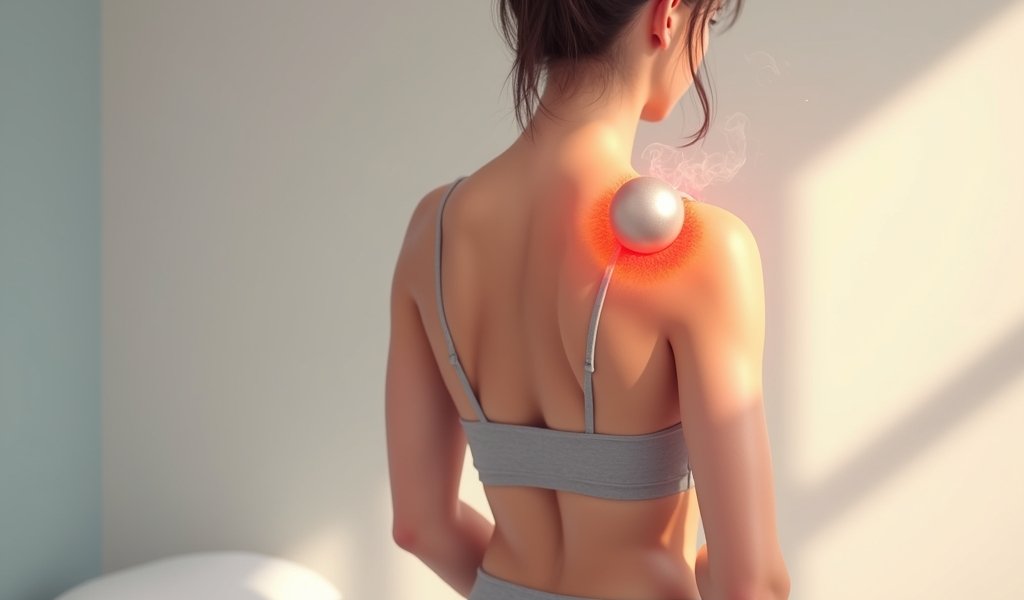
When professional massage isn’t an option, becoming your own massage therapist can provide remarkable relief for pain below shoulder blade. These techniques target trigger points—hyper-irritable spots in muscle tissue that often refer pain to the shoulder blade area.
Effective Self-Massage Tools and Techniques:
- Tennis Ball Massage: Place a tennis ball between your back and a wall, positioning it just below your shoulder blade. Gently roll around the painful area, pausing on tender spots for 20-30 seconds.
- Foam Roller: Lie with the roller perpendicular to your spine, just below your shoulder blades. Slowly roll up and down, allowing your body weight to apply pressure. Extend your arms overhead to open up the shoulder blade area.
- Massage Gun: If available, a percussion massage device can effectively target tense muscles around the shoulder blade. Use on the lowest setting initially and avoid bony areas.
Focus on the rhomboid muscles (between your shoulder blades) and the trapezius (upper back and neck), as these commonly harbor tension. The areas where your neck meets your shoulders and around the edges of your shoulder blades are frequent culprits.
Perform these self-massage techniques for 3-5 minutes, once or twice daily. Start gently—aggressive massage can sometimes increase inflammation. You’re looking for that “good hurt” sensation, not pain that makes you hold your breath.
Tip 5: Over-the-Counter Pain Relief
When the pain persists despite your best efforts, over-the-counter medications can provide temporary relief while you address the underlying causes of pain below shoulder blade.
Oral Medications:
Non-steroidal anti-inflammatory drugs (NSAIDs) like ibuprofen (Advil, Motrin) and naproxen (Aleve) reduce both pain and inflammation. Acetaminophen (Tylenol) addresses pain without the anti-inflammatory effects. Always follow package instructions and be aware of potential side effects with prolonged use.
Topical Treatments:
For those preferring external applications, topical analgesics offer targeted relief without systemic side effects:
- Menthol-based creams create a cooling sensation that distracts from pain signals
- Capsaicin products (derived from hot peppers) deplete substance P—a pain transmitter
- Lidocaine patches provide localized numbing for particularly painful areas
Remember that medications are temporary solutions, not long-term strategies. They mask symptoms without addressing causes and should be part of a comprehensive approach to managing your pain.
If you find yourself regularly relying on pain relievers for more than two weeks, it’s time to consult a healthcare provider at a wellness center near me to explore more sustainable solutions.
Tip 6: Strengthen Supporting Muscles
Weak muscles around your shoulder blades often contribute to persistent pain. Strengthening the supporting cast—particularly the rhomboids, lower trapezius, and serratus anterior—creates stability and prevents future discomfort.
Effective Strengthening Exercises:
- Wall Angels: Stand with your back against a wall, arms raised in a “goal post” position. Slowly slide your arms up and down while maintaining contact with the wall.
- Seated Rows: Using resistance bands or light weights, sit tall and pull your elbows back alongside your torso, squeezing your shoulder blades together.
- Superman Holds: Lie face down, then lift your arms and legs off the floor simultaneously, holding briefly before lowering.
Start with 2-3 sets of 10-12 repetitions, 2-3 times weekly. Use lighter resistance initially and increase gradually as your strength improves. The goal is not to build bulky muscles but to create endurance and stability in these often-neglected muscle groups.
Research published in the BMC Musculoskeletal Disorders journal found that specific scapular strengthening exercises reduced pain and improved function in patients with chronic shoulder and upper back pain by up to 72% after just 6 weeks of consistent practice.
Tip 7: Lifestyle Modifications
Sometimes, the solution to pain below shoulder blade lies not in what you do for fifteen minutes of exercise, but in how you live the other 23+ hours of your day.
Sleep Position Optimization:
Your sleeping position might be sabotaging your pain relief efforts. Side sleepers should ensure their pillow fills the gap between their head and shoulder to maintain spinal alignment. Back sleepers benefit from a medium-firm mattress and a pillow that supports the natural curve of the neck. Consider placing a small pillow under your knees to relieve pressure on your lower back, which affects your entire spinal alignment.
Stress Management:
Chronic stress causes muscles to tense, creating a physical manifestation of your mental state. Incorporate stress-reduction practices like deep breathing, progressive muscle relaxation, or mindfulness meditation. Even five minutes of conscious relaxation can interrupt the stress-pain cycle.
Hydration and Nutrition:
Dehydrated muscles are more prone to cramping and pain. Aim for at least eight 8-ounce glasses of water daily, adjusting upward for exercise and hot weather. Additionally, an anti-inflammatory diet rich in omega-3 fatty acids, colorful fruits and vegetables, and whole grains can reduce systemic inflammation that contributes to muscle pain.
Activity Modification:
Identify and modify activities that exacerbate your pain. This doesn’t mean abandoning your favorite hobbies, but rather finding ways to engage in them with better body mechanics. Simple adjustments like taking breaks during extended computer work, adjusting the height of your workstation, or modifying your exercise technique can prevent pain from recurring.
When to See a Doctor
While self-care strategies work for many cases of pain below shoulder blade, certain scenarios warrant professional evaluation.
Seek medical attention if you experience:
- Pain persisting beyond two weeks despite home treatment
- Numbness, tingling, or weakness in your arms or hands
- Pain accompanied by fever, unexplained weight loss, or night sweats
- Inability to perform daily activities due to pain
- Pain that wakes you from sleep consistently
- Pain that coincides with difficulty breathing or chest discomfort
Depending on your symptoms, your primary care physician might refer you to specialists such as orthopedists, rheumatologists, or physical therapists. Be prepared to describe your pain in detail—when it started, what makes it better or worse, and how it affects your daily activities.
Diagnostic tools might include physical examination, X-rays, MRI, or ultrasound to visualize the affected structures. Don’t delay seeking care if your symptoms align with any of these warning signs.
Conclusion
Living with pain below shoulder blade doesn’t have to become your new normal. By implementing these seven proven strategies—proper stretching, appropriate temperature therapy, posture correction, self-massage techniques, judicious use of over-the-counter pain relief, targeted strengthening exercises, and thoughtful lifestyle modifications—you can address both the symptoms and causes of your discomfort.
The key to success lies in consistency and a multi-faceted approach. While one technique might provide temporary relief, combining several strategies creates a comprehensive solution that addresses the complex nature of shoulder blade pain.
Start with the techniques that seem most relevant to your specific situation, and gradually incorporate others as they become habitual. Small, consistent actions often yield greater results than sporadic, dramatic interventions.
Remember, your body has an incredible capacity for healing when given the right support. These strategies don’t just mask symptoms—they create an environment where genuine healing can occur, leading to lasting relief and improved quality of life.
Frequently Asked Questions
What causes sudden severe pain below the shoulder blade?
Sudden severe pain below the shoulder blade often results from muscle strain, pinched nerves, or rarely, serious conditions like heart problems or lung issues. If accompanied by chest pain, difficulty breathing, or radiating pain down the arm, seek immediate medical attention.
How long does pain below shoulder blade typically last?
Most muscle-related pain below the shoulder blade resolves within 2-4 weeks with appropriate self-care measures. Pain lasting beyond this timeframe warrants medical evaluation to rule out underlying conditions.
Can stress cause pain below shoulder blade?
Yes, stress commonly causes muscle tension that manifests as pain below the shoulder blade. When stressed, we often unconsciously tighten muscles in the neck, shoulders, and upper back, creating painful trigger points.
Is it normal to have pain below one shoulder blade but not the other?
One-sided pain below the shoulder blade is common and often relates to posture, dominant-hand activities, or sleeping position. Persistent one-sided pain without clear cause should be evaluated by a healthcare provider.
Can poor posture cause chronic pain below shoulder blade?
Poor posture is one of the leading causes of chronic pain below the shoulder blade. Extended periods of slouching or forward head posture places excess strain on the muscles supporting the shoulder blades, leading to persistent discomfort.