
Overview
This article discusses seven essential leg exercise equipment options—leg press machines, squat racks, leg extension machines, hamstring curl machines, calf raise machines, exercise bikes, and Smith machines—highlighting their benefits for strength development, injury prevention, and overall health. The author, drawing from 15 years of physical therapy experience, emphasizes that consistent leg training using appropriate equipment is crucial for maintaining quality of life as we age, improving mobility, and supporting whole-body fitness goals.
Table of Contents
- Why Leg Training Is Non-Negotiable for Overall Health
- How to Choose the Right Leg Exercise Equipment
- 1. Leg Press Machines: Powerhouse for Lower Body Strength
- 2. Squat Racks: The Versatile Foundation of Leg Training
- 3. Leg Extension Machines: Targeted Quad Development
- 4. Hamstring Curl Machines: Balance Your Leg Training
- 5. Calf Raise Machines: Don’t Skip Those Lower Legs
- 6. Exercise Bikes: Cardio and Strength Combined
- 7. Smith Machines: Safety and Versatility
- Home Equipment vs. Gym Equipment: Making the Right Choice
- Sample Leg Workout Routine Using These Machines
- Conclusion: Building Strong Legs for Life
- Frequently Asked Questions
When I first started my career as a physical therapist, I remember a client named Mike who came to me after knee replacement surgery. His legs had atrophied significantly from years of neglect and focusing only on his upper body. “I wish someone had told me how important leg training was before I ended up here,” he said. His journey back to functional strength was long and challenging—something that could have been prevented with proper exercise equipment for legs and consistent training.
Over my 15 years in health and fitness, I’ve seen countless cases like Mike’s that highlight why leg training isn’t just about aesthetics—it’s about maintaining quality of life as we age. The right exercise equipment for legs can make all the difference in building strength, preventing injury, and supporting overall mobility.
Let’s explore the seven best options that I consistently recommend to my clients for developing powerful, functional lower body strength—whether you’re a beginner or an advanced fitness enthusiast.
Why Leg Training Is Non-Negotiable for Overall Health
Your legs contain some of the largest muscle groups in your body. When you train them effectively, you’re not just building stronger legs—you’re triggering hormonal responses that benefit your entire physiology. In my practice, I’ve observed that clients who prioritize leg training experience faster overall fitness progress.
Regular leg training using appropriate exercise equipment for legs has been shown to increase bone density, improve insulin sensitivity, and boost cardiovascular health. According to research published in the Journal of Strength and Conditioning Research, compound leg exercises stimulate the release of growth hormone and testosterone more effectively than upper body training alone.
Beyond the physiological benefits, strong legs provide the foundation for everyday activities—from climbing stairs to picking up your children. As one of my senior clients once told me, “I didn’t realize how important leg strength was until I started losing it.”
How to Choose the Right Leg Exercise Equipment
Selecting the right exercise equipment for legs depends on your fitness goals, experience level, available space, and any specific limitations you might have. Here are some factors I recommend my clients consider:
- Fitness goals: Strength, endurance, rehabilitation, or sport-specific training
- Space constraints: Home gym setups vs. commercial gym access
- Experience level: Beginner, intermediate, or advanced
- Existing injuries or limitations: Knee, hip, or back issues that may require modifications
- Budget considerations: Investment level you’re comfortable with
I always remind clients that the best equipment is the one you’ll actually use consistently. That $2,000 machine gathering dust in your basement won’t help nearly as much as a simple, affordable option that you enjoy using three times a week.
1. Leg Press Machines: Powerhouse for Lower Body Strength
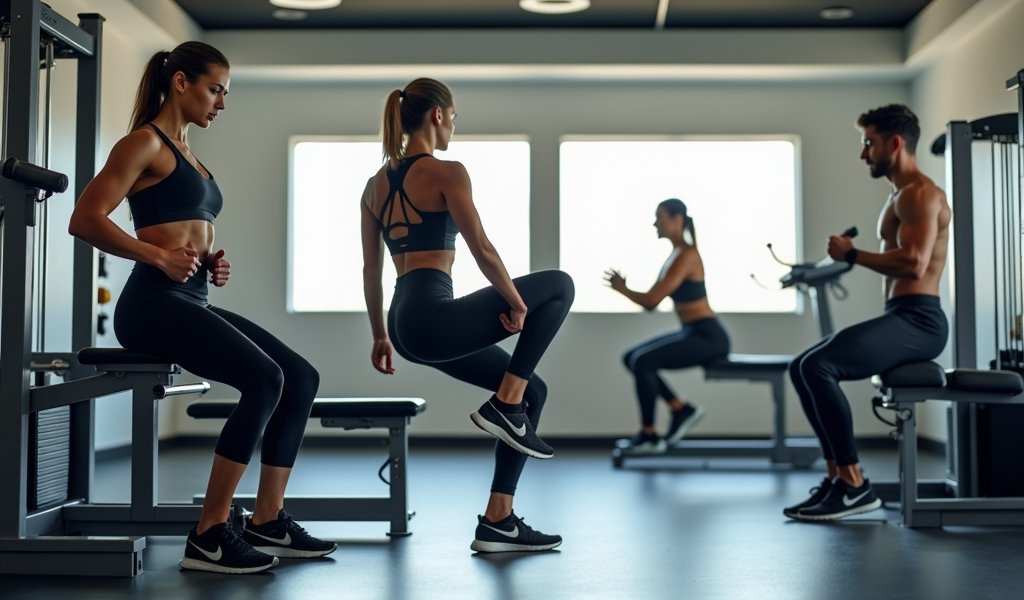
The leg press machine is my go-to recommendation for clients looking to build serious lower body strength with reduced risk of back injury. Unlike free-weight squats, the leg press allows you to move heavy loads while keeping your spine in a supported position.
I had a client named Sarah who was intimidated by traditional squats due to a previous back injury. The leg press became her sanctuary—a place where she could progressively challenge her legs without fear. Within three months, she had doubled her pressing strength and noticed significant changes in her overall leg definition.
The beauty of modern leg press machines is their versatility. By adjusting your foot placement, you can target different aspects of your leg musculature:
- Higher foot placement: Greater emphasis on glutes and hamstrings
- Lower foot placement: More quadriceps engagement
- Wider stance: Inner thigh focus
- Narrower stance: Outer quad development
For home use, look for compact versions like the vertical leg press, which takes up significantly less space than the 45-degree models commonly found in commercial gyms. While investing in a quality leg press machine represents a significant upfront cost (typically $1,000-$3,000 for home models), the versatility and safety features make it worth considering for serious fitness enthusiasts.
2. Squat Racks: The Versatile Foundation of Leg Training
If I could recommend just one piece of exercise equipment for legs, the squat rack would likely be it. Nothing quite matches its versatility and potential for progressive overload. The squat is often called the “king of exercises” for good reason—it engages nearly every muscle in your lower body while also challenging your core and back.
I remember working with Jason, a former college athlete who had let his fitness slide for nearly a decade. We started with just the bar in the squat rack, focusing on perfect form. Six months later, he was squatting 275 pounds with confidence and had transformed not just his legs, but his entire physique.
Modern squat racks come with a variety of features that enhance safety and versatility:
- Adjustable safety arms or pins that prevent accidents
- Multiple bar hooks at different heights to accommodate various exercises
- Attachment options for bands, dip stations, or pull-up bars
- Storage pegs for plates and accessories
Beyond traditional back squats, the rack enables numerous leg-building exercises like front squats, lunges, Bulgarian split squats, and even deadlift variations. For home gyms, consider space-efficient options like wall-mounted folding racks if you’re dealing with limited room.
A quality squat rack typically costs between $300-$1,000 for home use, making it a more accessible option than many all-in-one machines while offering exceptional versatility for complete leg development.
3. Leg Extension Machines: Targeted Quad Development
Leg extension machines hold a special place in my rehabilitation protocols. When Maria came to me after ACL reconstruction surgery, we needed a way to rebuild her quadriceps strength in a controlled manner. The leg extension machine allowed us to isolate her quads with precisely measured resistance, gradually rebuilding strength without compromising her healing ligament.
While some fitness purists dismiss isolation exercises, I’ve found leg extensions invaluable for:
- Correcting muscle imbalances between legs
- Rehabilitation following knee injuries
- Pre-exhausting the quads before compound movements
- Adding detailed definition to the frontal thigh
The key to using leg extension machines effectively is proper adjustment. The pivot point should align with your knee joint, and the pad should rest comfortably just above your ankle. I always emphasize controlled movement—especially on the eccentric (lowering) phase—rather than focusing on moving heavy weights.
For home use, look for adjustable models that can also perform leg curls, maximizing value and space efficiency. These dual-function machines typically range from $200-$600, making them a reasonable investment for targeted leg training. Just remember that leg extensions should complement, not replace, compound movements in a well-rounded leg routine.
4. Hamstring Curl Machines: Balance Your Leg Training
One of the most common imbalances I see in new clients is overdeveloped quadriceps paired with underdeveloped hamstrings. This not only creates aesthetic imbalances but can also increase the risk of knee injuries. Hamstring curl machines provide the perfect counterbalance to quad-dominant exercises.
During my time working with track athletes, I noticed that those who consistently incorporated hamstring curls experienced fewer posterior chain injuries. The isolation of the hamstrings helped strengthen these crucial muscles for sprinting and jumping performance.
Hamstring curl machines come in several variations:
- Lying hamstring curls: Allow greater weight to be used
- Seated hamstring curls: Often easier on the lower back
- Standing hamstring curls: Provide a more functional challenge
For maximal effectiveness, I recommend varying your foot position occasionally. Pointing your toes inward targets the outer hamstrings more, while pointing them outward shifts emphasis to the inner hamstrings. This minor adjustment can make a significant difference in complete muscle development.
If you’re setting up a home gym, consider a dual leg extension/curl machine to save space and money. For more budget-conscious options, resistance bands with ankle attachments can provide effective hamstring training for under $50, though they won’t offer the same level of isolated resistance as dedicated machines.
5. Calf Raise Machines: Don’t Skip Those Lower Legs
Calves are often the most neglected part of leg training, yet they’re highly visible and crucial for athletic performance. I remember my client Thomas, a basketball player who couldn’t understand why his vertical jump had plateaued despite intensive training. The missing piece? His relatively undeveloped calf muscles weren’t providing the explosive push-off he needed.
Dedicated calf raise machines address this common weakness by isolating the gastrocnemius and soleus muscles. The seated versions particularly target the soleus, which is often undertrained in standard routines but crucial for endurance activities like running and cycling.
What makes calf training unique is the need for both high and low rep ranges:
- Heavy loads with 6-10 reps: Build strength and size in the fast-twitch fibers
- Lighter loads with 15-25 reps: Develop the slow-twitch endurance fibers
- Body weight with 50+ reps: Improve circulation and recovery
For home fitness, dedicated calf machines can be expensive and space-consuming. I often recommend more versatile alternatives like adjustable step platforms or even a simple block of wood with added weight held in your hands or on your shoulders. These budget options can deliver excellent results when used consistently.
One technique I’ve found particularly effective is “time under tension”—slowing down the lowering phase of each calf raise to 3-4 seconds. This approach has helped many clients finally see progress in this stubborn muscle group without requiring expensive equipment.
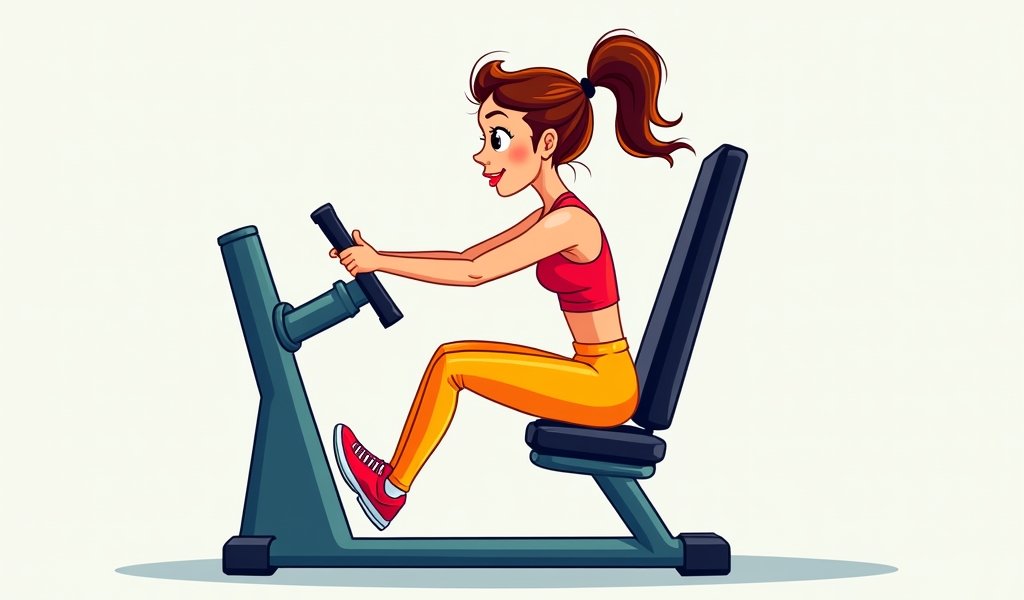
6. Exercise Bikes: Cardio and Strength Combined
Exercise bikes hold a special place in my leg-building arsenal because they offer the perfect blend of strength and endurance training. I’ve had numerous clients with knee issues who couldn’t tolerate high-impact cardio but thrived with stationary cycling.
Lisa, a 62-year-old client with early osteoarthritis, transformed her leg strength through consistent stationary bike workouts. By gradually increasing resistance rather than duration, she built impressive quadricep definition while improving her cardiovascular health—all without joint pain.
Modern exercise bikes offer programming that goes far beyond simple pedaling:
- HIIT sessions with alternating resistance levels
- Hill climb simulations for strength emphasis
- Standing pedaling options that engage different muscle groups
- Data tracking to measure progress over time
What many people don’t realize is that stationary bikes can be legitimate strength-building tools. By setting the resistance high enough that you can only complete 30-60 seconds of work before needing rest, you’re effectively performing resistance training for your legs. This approach is particularly effective for building endurance in the quadriceps and improving cardiovascular conditioning simultaneously.
For home use, quality bikes range from $300 for basic models to $2,000+ for interactive systems with virtual classes. Even the more affordable options can deliver excellent results when used consistently with progressive resistance protocols.
7. Smith Machines: Safety and Versatility
Smith machines often get a bad rap from functional training purists, but I’ve found them invaluable for certain clients and situations. The fixed bar path provides stability that allows beginners to learn movement patterns with confidence before transitioning to free weights.
During my work with senior clients, the Smith machine became our go-to for lower body strength development. Robert, a 70-year-old with balance issues, could perform modified squats with the security of the fixed bar, building functional strength that translated to improved mobility in daily activities.
The Smith machine facilitates numerous leg exercises:
- Squats with various foot positions
- Split squats and lunges with reduced balance demands
- Calf raises with substantial loading options
- Good mornings for posterior chain development
- Box squats for controlled depth training
One particularly effective technique is combining Smith machine exercises with free weight movements. For example, pre-exhausting the legs with Smith machine squats before moving to walking lunges creates a powerful stimulus for growth without requiring extremely heavy free weights.
For home gyms, compact Smith machines start around $500, with commercial-quality options ranging from $1,500-$3,000. While representing a significant investment, their versatility makes them worth considering if safety concerns or confidence issues have limited your leg training progress.
Home Equipment vs. Gym Equipment: Making the Right Choice
In my years advising clients on exercise equipment for legs, the home-vs-gym question comes up constantly. There’s no one-size-fits-all answer, as it depends on your circumstances, goals, and preferences.
Commercial gym equipment offers several advantages:
- Higher quality construction designed for thousands of users
- Greater variety of specialized machines
- Professional maintenance and safety checks
- No space requirements in your home
However, home equipment provides different benefits:
- 24/7 convenience without travel time
- One-time cost vs. ongoing membership fees
- Privacy for those uncomfortable in public settings
- No waiting for equipment during busy hours
My client Derek struggled with consistency until he invested in basic home leg equipment—a squat stand, adjustable bench, and dumbbells. The convenience factor increased his weekly training frequency from once to three times, producing dramatic results within months.
If you’re setting up a home gym focused on leg development, I recommend starting with versatile basics: adjustable dumbbells, a sturdy bench, resistance bands, and perhaps a squat stand if space permits. This foundation allows dozens of effective leg exercises while keeping the initial investment under $1,000. You can always add specialized equipment later as your needs evolve.
Sample Leg Workout Routine Using These Machines
Based on my experience working with hundreds of clients, here’s a balanced leg routine incorporating several of the machines we’ve discussed. This workout hits all the major muscle groups while providing sufficient variety to prevent plateaus:
Complete Leg Machine Workout (60 minutes)
- Warm-up: 5 minutes on exercise bike with gradually increasing resistance
- Squat rack: Barbell squats – 4 sets of 8-12 reps (rest 90 seconds between sets)
- Leg press machine: 3 sets of 10-15 reps, varying foot positions (rest 60 seconds)
- Leg extension machine: 3 sets of 12-15 reps with a 2-second hold at the top (rest 45 seconds)
- Hamstring curl machine: 3 sets of 12-15 reps with controlled eccentric phase (rest 45 seconds)
- Calf raise machine: 4 sets of 15-20 reps (rest 30 seconds)
- Cool-down: 5 minutes on exercise bike at low resistance followed by static stretching
For beginners, I recommend starting with just 2 sets of each exercise at a moderate weight, focusing on perfect form rather than heavy loads. As your fitness improves, you can gradually increase both the weight and volume.
Remember that consistency trumps intensity. A moderate workout performed three times weekly will produce far better results than an occasional extreme session that leaves you too sore to train again for a week. According to research published by the American College of Sports Medicine, training each muscle group 2-3 times per week is optimal for strength development.
Conclusion: Building Strong Legs for Life
Throughout my career in physical therapy and fitness training, I’ve witnessed the transformative power of proper leg training using the right equipment. From the rehabilitation success stories to athletic performance breakthroughs, strong legs truly form the foundation of overall physical wellness.
The seven pieces of exercise equipment for legs we’ve explored—leg press machines, squat racks, leg extension machines, hamstring curl machines, calf raise machines, exercise bikes, and Smith machines—each offer unique benefits. Your ideal selection depends on your specific goals, space constraints, and personal preferences.
Remember Mike from the beginning of our discussion? After integrating regular training with several of these machines, he not only recovered from his knee replacement but eventually built stronger legs than he had in his thirties. “I feel like I’ve gotten a second chance at mobility,” he told me during our final session.
Whether you’re training at home or at a commercial gym, the principles remain the same: progressive overload, consistency, and attention to balanced development across all the leg muscles. Your investment in proper exercise equipment for legs is actually an investment in your future mobility, independence, and quality of life.
Start where you are with what you have access to, focus on proper form before increasing weights, and trust the process. Your legs will thank you not just in the mirror, but in every step you take for decades to come.
Frequently Asked Questions
What is the single best machine for overall leg development?
The leg press machine offers the best balance of effectiveness and safety for overall leg development. It allows you to safely handle heavy loads while targeting multiple muscle groups simultaneously.
How often should I train legs for best results?
Train legs 2-3 times per week with at least 48 hours between sessions for optimal results. This frequency provides sufficient stimulus for growth while allowing adequate recovery time.
Can I build strong legs without machines?
Absolutely—bodyweight exercises like lunges, squats, and step-ups can build impressive leg strength. Machines simply make progressive overload more straightforward and often safer, especially for beginners.
Which leg equipment is best if I have knee problems?
Exercise bikes are typically the gentlest on problematic knees due to their controlled, non-impact nature. Always consult with a physical therapist for personalized recommendations based on your specific condition.
How much should I invest in leg exercise equipment for a home gym?
Start with versatile basics ($500-$1,000 for quality adjustable dumbbells, a bench, and resistance bands). You can progressively add specialized equipment as your budget allows and as you identify specific needs in your training.