
Overview
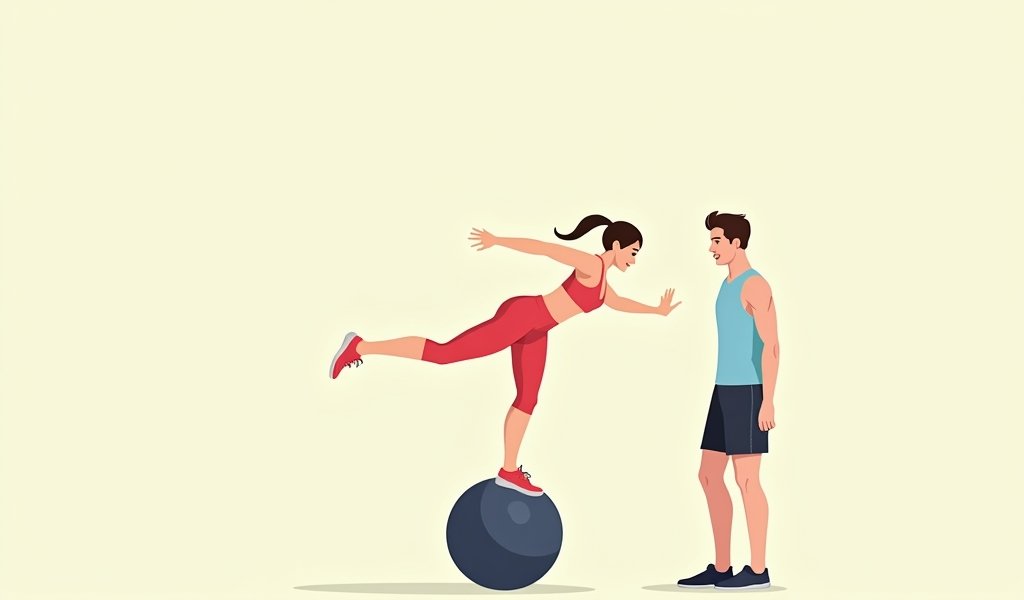
This article presents seven evidence-based techniques for strengthening core muscles using an exercise ball, covering proper positioning, basic stability exercises, advanced crunches, plank variations, lower back strengthening, and guidelines for creating a complete routine. The exercise ball creates an unstable surface that engages multiple muscle groups simultaneously, making it an effective tool for developing core strength that improves posture, reduces injury risk, and enhances overall physical performance.
Table of Contents
- Introduction
- Proper Positioning Fundamentals
- Basic Stability Exercises
- Advanced Ball Crunches
- Plank Variations Using the Ball
- Lower Back Strengthening Moves
- Creating a Complete Core Routine
- Integrating Ball Work into Your Fitness Regimen
- Conclusion
- Frequently Asked Questions
Introduction
Core strength is the foundation of all physical movement. Like a tree’s robust trunk supporting its branches, your core muscles stabilize your entire body, improve posture, and reduce injury risk. As a physical therapist with over 15 years of experience, I’ve seen firsthand how the humble exercise ball can transform core strength training from tedious to dynamic.
The exercise ball (also called stability ball, Swiss ball, or physio ball) creates an unstable surface that engages multiple muscle groups simultaneously. This simple yet effective tool challenges your balance while targeting deep core muscles that traditional floor exercises often miss.
When used correctly, an exercise ball can elevate your core workout from basic to transformative. Let’s explore seven evidence-based techniques to maximize your stability ball training for a stronger, more defined core.
Proper Positioning Fundamentals
Before diving into specific exercises, mastering proper positioning on your exercise ball is crucial. This foundation ensures both safety and effectiveness in every movement you perform.
Start by selecting the right size ball. When seated, your knees should form a 90-degree angle with feet flat on the floor. For most adults:
- Under 5’4″: Use a 55cm ball
- 5’4″ to 5’10”: Choose a 65cm ball
- Over 5’10”: Opt for a 75cm ball
When sitting on the ball, position yourself with feet flat and shoulder-width apart. Sit tall with your shoulders relaxed and core gently engaged. Your body should form a straight line from ears to shoulders to hips.
Common positioning mistakes include slumping forward, perching too far forward on the ball, or placing feet too close together. These errors not only reduce effectiveness but can lead to strain or falls. Remember, proper positioning alone activates core muscles even before adding specific exercises.
Inflation matters too. Your ball should be firm enough to support your weight but have slight give when pressed. Research shows that proper ball inflation significantly impacts muscle activation patterns during exercise.
Basic Stability Exercises
If you’re new to the exercise ball, start with these foundational movements that build core awareness and stability. These seemingly simple exercises create the neural pathways necessary for more advanced work later.
Begin with seated bounces. Maintain proper posture while gently bouncing up and down. This basic movement engages dozens of stabilizing muscles throughout your midsection as they continuously adjust to the ball’s movement.
Next, try seated marches. While properly seated, alternate lifting each foot slightly off the floor for 10-15 repetitions per side. This activates your deep transverse abdominis—a crucial muscle for core stability that’s similar to the engagement in the bug exercise.
For seated rotations, keep your hips stable while rotating your torso slightly from side to side. You’ll feel this primarily in your obliques—the side muscles that help with twisting movements.
As these movements become comfortable, progress by extending arms overhead during bounces, holding the marches longer, or adding a light weight during rotations. Small modifications create significant increases in difficulty.
Aim for quality over quantity. Perform each movement with deliberate control rather than rushing through repetitions. Three sets of 8-10 slow, controlled movements yield better results than 30 rapid, sloppy ones.
Advanced Ball Crunches
Once you’ve mastered basic stability, ball crunches offer tremendous core-sculpting potential. The ball’s curved surface allows a greater range of motion than floor crunches while simultaneously requiring more stabilization.
For the classic ball crunch:
- Position your mid-back on the ball, feet flat on the floor with knees at 90 degrees
- Place hands lightly behind your head (avoid pulling on your neck)
- Engage your core first, then lift your shoulders off the ball just 15-20 degrees
- Lower with control, maintaining core tension throughout
To target different abdominal regions, try these variations:
- Oblique Crunches: Rotate slightly during the upward movement
- Extended Arm Crunches: Reach arms overhead to increase the challenge
- Ball Passes: Hold the ball overhead, perform a crunch while bringing the ball toward your knees
The key to effectiveness is control and proper form. Research in the Journal of Strength and Conditioning found that slower, controlled movements on unstable surfaces produced greater muscle activation than rapid repetitions.
Always focus on the mind-muscle connection. Feel your abdominals contract and do the work rather than using momentum or hip flexors to power the movement. This deliberate approach yields superior results in both strength and definition.
Plank Variations Using the Ball
Planks already rank among the most effective core exercises, but adding an exercise ball elevates their intensity considerably. The instability forces your core to work overtime, recruiting more muscle fibers with each variation.
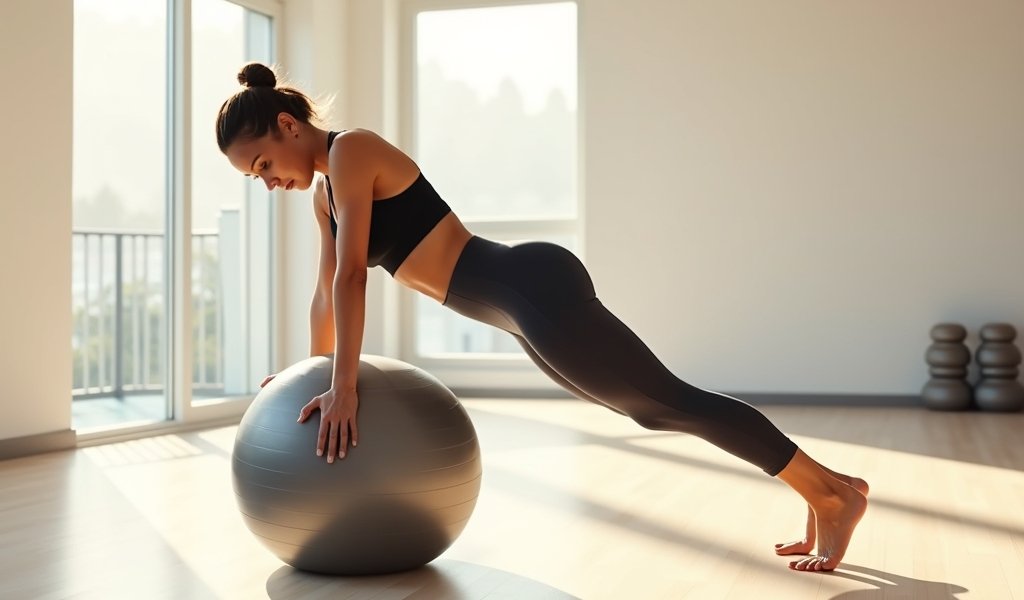
Start with the basic ball plank. Place your forearms on the ball in a standard plank position, maintaining a straight line from head to heels. The unstable surface immediately increases the challenge to your entire core, including the deep stabilizing muscles.
When you’re ready for more, try rolling planks. From the basic position, slowly roll the ball forward and backward with your forearms while maintaining a rigid plank position. Start with small movements, gradually increasing range as strength develops.
Side planks with feet on the ball take core training to another level. With feet on the ball and body in side plank position supported by one arm, you’ll feel intense activation through your abdominals and obliques.
For maximum benefit, focus on maintaining perfect form for shorter durations rather than compromising posture for longer holds. A 30-second perfect plank delivers better results than a 2-minute plank with sagging hips or arched back.
Remember that planks build endurance as well as strength. Gradually increase your hold time as you progress, aiming for quality over duration. For variety, you might combine planks with the bird dog exercise for a comprehensive core challenge.
Lower Back Strengthening Moves
A truly strong core includes a healthy, supported lower back. Many people focus exclusively on abdominal exercises, creating muscular imbalances that can lead to pain and dysfunction. The exercise ball excels at isolating and strengthening the crucial posterior muscles.
Superman extensions target the erector spinae muscles along your spine. Lie face down over the ball with feet against a wall for support, then lift your chest and extend arms forward. Start with 8-10 repetitions, focusing on controlled movement rather than height.
Ball back extensions offer another excellent option. Position the ball under your hips, feet anchored under a sturdy object. With hands behind your head, lift your torso to form a straight line, then lower with control. Keep movements slow and deliberate, avoiding hyperextension of the lower back.
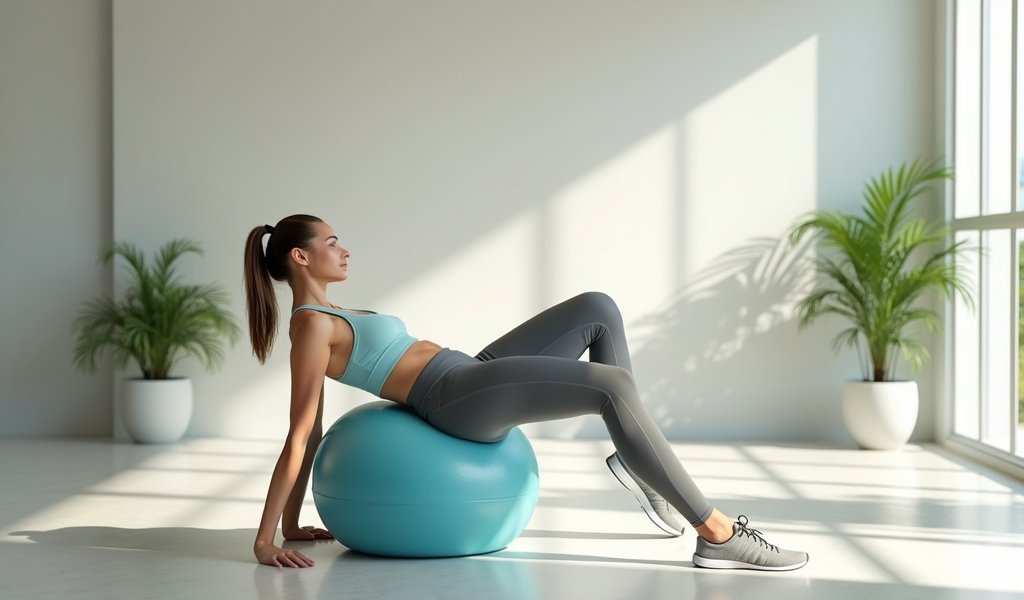
The bridge with feet on ball builds both core stability and posterior chain strength. Lying on your back, place heels on the ball, then lift hips to form a straight line from shoulders to heels. Hold for 2-3 seconds at the top before lowering.
If you have existing back issues, consult a healthcare provider before attempting these movements. For most people, starting with partial ranges of motion and gradually progressing offers the safest approach to building back strength.
Creating a Complete Core Routine
A well-structured exercise ball routine combines movements from different angles to comprehensively target all core muscles. The key is balancing anterior (front), posterior (back), and lateral (side) exercises for complete development.
Here’s a sample progression that builds systematically:
Beginner Routine:
- Seated bounces: 30 seconds
- Seated marches: 10 per side, 2 sets
- Basic ball crunch: 8-12 repetitions, 2 sets
- Supported back extensions: 8-10 repetitions, 2 sets
Intermediate Routine:
- Seated rotations with arms extended: 12 per side, 2 sets
- Ball crunches with oblique twist: 12-15 repetitions, 3 sets
- Basic ball plank: 20-30 seconds, 3 sets
- Bridge with feet on ball: 10-12 repetitions, 3 sets
Advanced Routine:
- Rolling planks: 30-45 seconds, 3 sets
- Ball passes: 15-20 repetitions, 3 sets
- Side planks with feet on ball: 20 seconds per side, 3 sets
- Ball back extensions: 12-15 repetitions, 3 sets
Perform your chosen routine 2-3 times weekly, allowing at least one day between sessions for recovery. Progress by first increasing repetitions, then sets, then exercise difficulty, rather than advancing all variables simultaneously.
Remember to breathe naturally throughout each exercise. Many people hold their breath during core work, which actually inhibits proper muscle activation. Exhale during the effort phase (usually the contraction) and inhale during the release.
Integrating Ball Work into Your Fitness Regimen
For optimal results, exercise ball training should complement your overall fitness approach. Strategic integration ensures maximum benefit without overtraining.
Aim for dedicated ball workouts 2-3 times weekly, with at least 48 hours between sessions to allow for muscle recovery. However, simple seated bouncing can be done daily as a posture enhancer and gentle core activator.
Ball work pairs excellently with traditional strength training. The enhanced core stability from regular ball sessions can significantly improve performance in lifts like squats and deadlifts. Many of my clients report substantial improvements in their main lifts after incorporating consistent ball work.
For those with time constraints, even brief 5-10 minute ball sessions yield benefits when performed consistently. Consider using the ball as an office chair for portions of your workday—it’s a stealth core workout while you work!
Track your progress by noting increases in exercise duration, repetitions, or difficulty. Visual changes typically emerge after 4-6 weeks of consistent training, while strength improvements often appear sooner.
Listen to your body throughout this process. Some muscle fatigue is expected, but sharp pain is never normal. If an exercise causes discomfort beyond normal muscle exertion, modify or skip it until you can consult a fitness professional.
Conclusion
The exercise ball stands as one of the most versatile, effective, and accessible tools for developing core strength and stability. From improved posture and reduced back pain to enhanced athletic performance, the benefits extend far beyond aesthetics—though the toning effects certainly don’t hurt!
These seven proven tips build upon each other, creating a comprehensive approach to core development. Whether you’re rehabilitating from injury, beginning a fitness journey, or looking to enhance performance, the exercise ball provides scalable challenges for every level.
Remember that consistency trumps intensity when it comes to core development. Regular sessions with proper form yield greater long-term results than occasional all-out efforts. Your core is the literal center of physical capability; investing in its development pays dividends throughout your entire body.
Start where you are, progress at your own pace, and enjoy the journey. That colorful ball isn’t just a piece of equipment—it’s a gateway to core strength that supports everything else in your fitness life.
Frequently Asked Questions
How often should I use an exercise ball for core training?
Aim for dedicated exercise ball workouts 2-3 times weekly with at least one day between sessions for muscle recovery. Consistent, quality sessions yield better results than sporadic intense workouts.
What size exercise ball is right for me?
When seated, your knees should form a 90-degree angle with feet flat on the floor. Most adults under 5’4″ need a 55cm ball, those 5’4″ to 5’10” need a 65cm ball, and those over 5’10” need a 75cm ball.
Can I use an exercise ball if I have back problems?
Many physical therapists actually prescribe exercise ball work for certain back conditions, but always consult your healthcare provider first. Start with gentle movements and focus on proper form rather than intensity.
How long before I see results from exercise ball training?
Most people feel increased core engagement immediately and notice stability improvements within 2-3 weeks. Visual changes typically emerge after 4-6 weeks of consistent training.
Can an exercise ball replace my regular core routine?
An exercise ball can form the foundation of an excellent core routine but works best when combined with other modalities. For comprehensive core development, include both ball exercises and traditional movements in your program.